If you're searching for a "2012 SRT8 Charger" today, you're likely either maintaining a beloved 6.4L Hemi V8 muscle sedan or considering what comes next. The 2012 Dodge Charger SRT8 pushed 470 horsepower and returned a combined 15 MPG — a thrilling machine that cost its owners roughly $4,300 a year in fuel at today's prices. For many SRT8 owners now exploring electric vehicles, the biggest unknown isn't range or performance — it's charging. How does it work at home? What does it cost? And what electrical work is actually required?
This guide breaks down every layer of EV charging — from the standard 120V outlet in your garage to 350 kW DC fast chargers on the highway — with the exact numbers, costs, and equipment you need to make an informed transition.
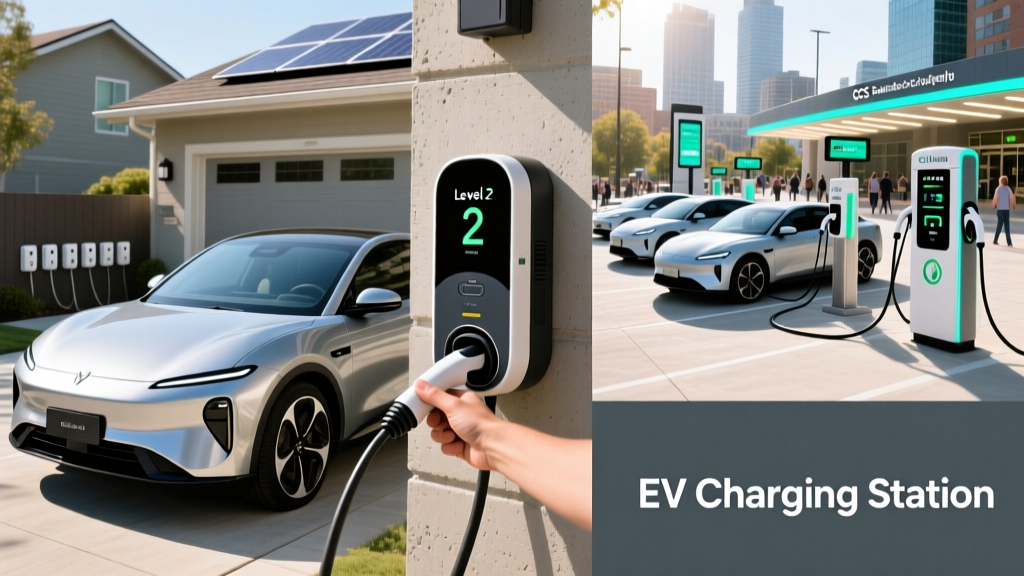
Charging Levels Explained: Speeds, Power, and Real-World Range Added
EV charging operates across three tiers, each defined by its power delivery in kilowatts (kW). Remember: kW measures the rate of energy transfer (like water pressure from a hose), while kilowatt-hours (kWh) measure the total energy stored in your battery (like gallons in a tank). These are never interchangeable.
| Level | Voltage | Typical Power (kW) | Miles of Range Added per Hour | Best For |
|---|---|---|---|---|
| Level 1 (120V) | 120V AC | 1.0–1.4 kW | 3–5 miles/hr | Overnight top-ups, PHEVs, low-mileage drivers |
| Level 2 (240V) | 240V AC | 3.3–19.2 kW | 12–75 miles/hr | Daily home charging, workplace, shopping centers |
| DC Fast Charging | 400–800V DC | 50–350 kW | 150–1,000+ miles/hr (peak) | Road trips, highway corridors, quick top-ups |
Level 1 uses a standard household 120V outlet and the portable cord included with most EVs. It's painfully slow for a large battery — adding just 40 miles overnight on a 10-hour cycle — but perfectly adequate for plug-in hybrids with smaller batteries (e.g., the Toyota RAV4 Prime's 42-mile electric range) or drivers covering under 30 miles daily.
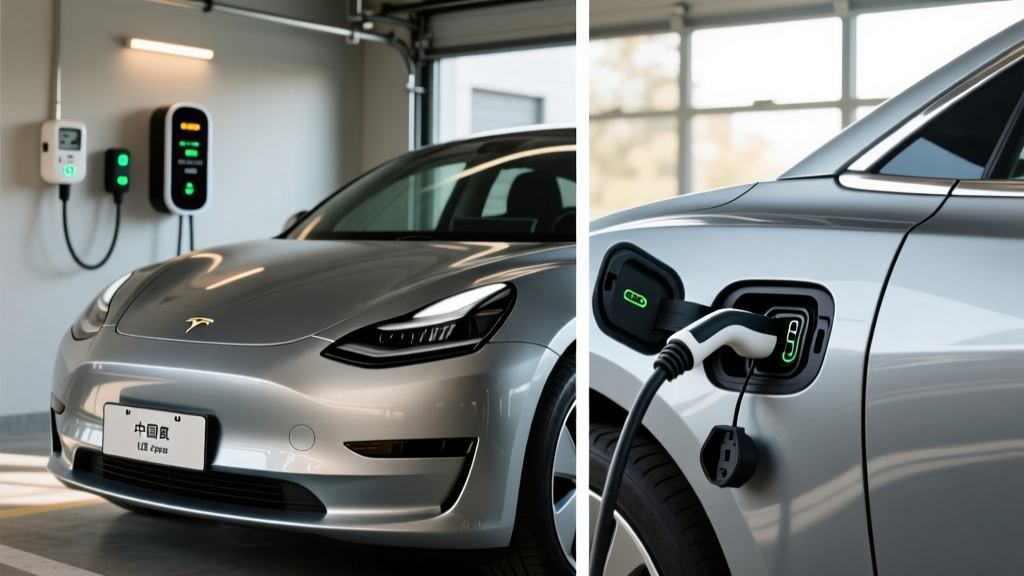
Level 2 is the backbone of practical EV ownership. A 240V circuit — the same voltage your electric dryer uses — delivers enough power to fully recharge most EV batteries overnight. A typical 11.5 kW home charger adds roughly 40–45 miles of range per hour, meaning a 300-mile EV like the Hyundai Ioniq 5 (EPA 305 mi, 77.4 kWh battery) reaches full in about 7 hours.
DC Fast Charging bypasses the vehicle's onboard charger entirely, sending direct current straight to the battery at much higher power levels. Peak speeds are impressive — a Porsche Taycan on an 800V architecture can accept up to 350 kW, adding 60 miles of range in under 5 minutes — but sustained speeds taper significantly above 80% state of charge (SoC). Expect a realistic 10–80% session to take 18–35 minutes depending on the vehicle and charger.
Home Charger Installation: Electrical Requirements, Costs, and Panel Upgrades
Installing a Level 2 home charger is the single highest-impact upgrade an EV owner can make. But the total cost depends heavily on your home's existing electrical infrastructure — especially if you're wiring an older home that may have originally powered that 2012 Charger SRT8's garage parking spot.
Core Electrical Requirements
- Circuit: A dedicated 240V circuit, typically 40A or 60A, protected by a breaker rated 125% above the charger's continuous draw (NEC Article 625 requires this for loads over 3 hours).
- Hardwired vs. plug: Chargers above 40A generally require hardwiring; 40A and below can use a NEMA 14-50 receptacle, which offers portability.
- Wire gauge: 6 AWG copper for 40A circuits; 4 AWG for 60A. Longer runs (over 50 feet from panel) may require upsizing to reduce voltage drop.
- GFCI protection: NEC 2020 and later require GFCI breakers for receptacle-based EV chargers in garages — adding $50–$120 to breaker cost.
Installation Cost Breakdown
| Component | Low End | High End | Notes |
|---|---|---|---|
| Level 2 EVSE (charger unit) | $350 | $750 | Smart Wi-Fi chargers cost more; basic units start lower |
| Electrician labor (standard install) | $400 | $1,200 | Depends on run length, wall type, conduit needs |
| Electrical permit | $50 | $250 | Varies by municipality; some jurisdictions waive for EV |
| Panel upgrade (if needed) | $1,500 | $4,500 | Required if existing panel lacks capacity or open slots |
| Total (no panel upgrade) | $800 | $2,200 | Most homes with 200A service fall in this range |
| Total (with panel upgrade) | $2,300 | $6,700 | Older homes with 100A service often need this |
Which Connector Fits Your EV? NACS, CCS, and CHAdeMO Compatibility
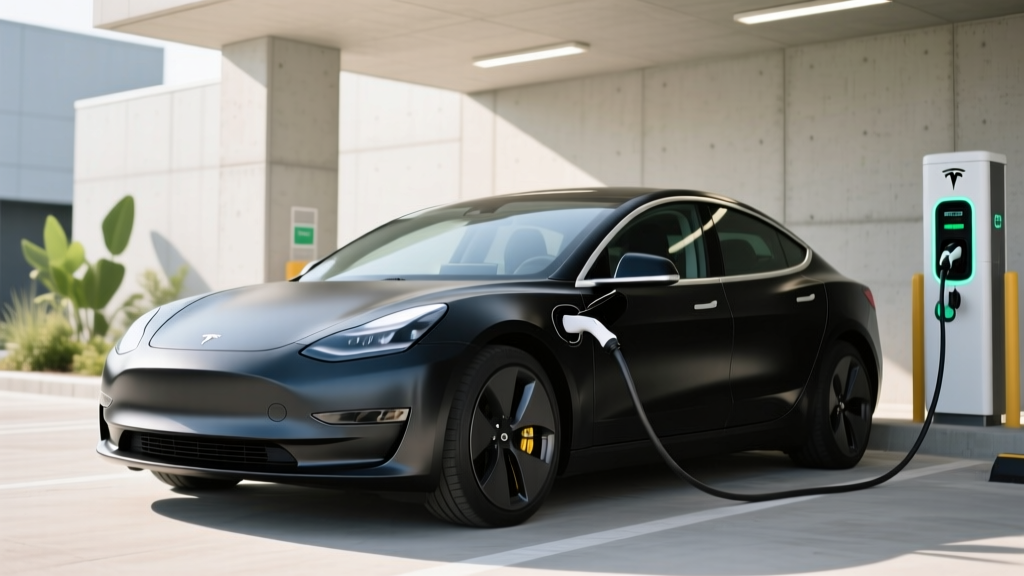
The connector landscape has shifted dramatically. As of 2025–2026, the North American Charging Standard (NACS), developed by Tesla, has become the dominant connector for new EVs. Here's what you need to know:
| Connector | Brands Using It (New Vehicles) | DC Fast Charge Availability | Adapter Needed? |
|---|---|---|---|
| NACS (Tesla) | Tesla, Ford, GM, Rivian, Volvo, Polestar, Hyundai (2025+), Kia (2025+), Mercedes | Tesla Supercharger network + NACS-equipped public stations | None for new vehicles; CCS-to-NACS adapters ~$200–$250 for older CCS cars |
| CCS1 | VW ID.4 (pre-2026), BMW (pre-2025), Stellantis, Honda Prologue, older Hyundai/Kia models | Electrify America, EVgo, ChargePoint DC stations | NACS-to-CCS adapters available from Ford/GM/Tesla (~$199–$250) |
| CHAdeMO | Nissan Leaf (legacy only; discontinued) | Limited and shrinking network | No practical adapter to NACS for DC charging |
For home Level 2 charging, all vehicles use a J1772 connector (or NACS, which includes J1772 Level 2 compatibility). If you buy a NACS-equipped home charger, it will work natively with Tesla and new NACS-adopting vehicles; CCS vehicles will need a simple J1772-to-CCS adapter (usually included with the car). The safest universal choice for a home charger today is a J1772-equipped unit, since every EV sold in North America can accept J1772 Level 2 charging either natively or with a small adapter.
Cost to Charge an EV vs. Fueling That 6.4L Hemi
The 2012 Dodge Charger SRT8 with its 6.4L Hemi V8 was rated at 14 city / 23 highway / 17 combined MPG by the EPA on fueleconomy.gov. In real-world driving — especially with the kind of enthusiastic throttle use that SRT8 owners are known for — 13–15 MPG combined was common. Let's compare the per-mile fueling cost against charging a modern EV.
| Scenario | Energy Source | Cost per Unit | Efficiency | Cost per Mile |
|---|---|---|---|---|
| 2012 Charger SRT8 | Gasoline (premium) | $4.20/gal | 15 MPG combined | $0.280/mi |
| EV — Home Level 2 (off-peak) | Electricity | $0.13/kWh | 3.0 mi/kWh (100 MPGe) | $0.043/mi |
| EV — Home Level 2 (standard rate) | Electricity | $0.18/kWh | 3.0 mi/kWh | $0.060/mi |
| EV — Public Level 2 | Electricity | $0.25/kWh | 3.0 mi/kWh | $0.083/mi |
| EV — DC Fast Charging | Electricity | $0.40/kWh | 3.0 mi/kWh | $0.133/mi |
Charging Time Examples: What to Expect with Common Battery Sizes
Charging time depends on three variables: battery capacity (kWh), charger power output (kW), and the vehicle's charge curve. Most EVs accept peak power only between roughly 10–50% SoC, then taper to protect battery health. Here are realistic 10–80% charge times for popular 2025–2026 EVs:
- Tesla Model Y (75 kWh battery, 250 kW peak DC): 10–80% in approximately 25–30 minutes at a V3 Supercharger. Home Level 2 at 11.5 kW: 0–100% in ~7 hours.
- Hyundai Ioniq 5 (77.4 kWh, 800V architecture, 240 kW peak): 10–80% in approximately 18–22 minutes on a 350 kW charger. Home Level 2 at 10.9 kW: ~7.5 hours.
- Ford F-150 Lightning Extended Range (131 kWh, 150 kW peak): 10–80% in approximately 45–55 minutes. Home Level 2 at 19.2 kW (80A circuit): ~8 hours. On a standard 48A/11.5 kW circuit: ~12 hours.
- Chevrolet Equinox EV (85 kWh, 150 kW peak): 10–80% in approximately 30–35 minutes. Home Level 2 at 11.5 kW: ~7.5 hours.
- BMW iX xDrive50 (111.5 kWh, 200 kW peak): 10–80% in approximately 32–38 minutes. Home Level 2 at 11.5 kW: ~10 hours.
A critical detail for former SRT8 owners accustomed to 5-minute gas station stops: DC fast charging is fastest in the 10–50% range. The final stretch from 50–80% takes nearly as long as 10–50% because the battery management system reduces current to prevent overheating and degradation. On road trips, the optimal strategy is to charge to 80% and drive on — never wait for 100%.
Recommended Home EV Chargers: Equipment Picks for 2026
After testing dozens of Level 2 units across multiple homes and vehicles, here are our top picks based on reliability, power output, smart features, and value:
Best Overall: ChargePoint Home Flex
- Power: Up to 12 kW (50A) on a 60A circuit; adjustable down to 16A
- Connector: J1772 (NACS adapter available)
- Cable: 23 feet
- Smart features: Wi-Fi, app scheduling, energy tracking, Alexa integration
- Price: ~$550–$650
- Why: Flexible amperage lets you match your circuit capacity; excellent app; UL-listed
Best for Tesla/NACS Owners: Tesla Wall Connector
- Power: Up to 11.5 kW (48A) on a 60A circuit
- Connector: NACS native (J1772 adapter included for non-Tesla vehicles)
- Cable: 24 feet
- Smart features: Wi-Fi, OTA updates, power sharing between two units, vehicle integration
- Price: ~$420–$475
- Why: Sleek design, best Tesla integration, competitive price; NACS future-proof
Best Budget Smart Charger: Emporia Level 2 EV Charger
- Power: Up to 11.5 kW (48A) on a 60A circuit
- Connector: J1772
- Cable: 24 feet
- Smart features: Wi-Fi, app scheduling, solar integration, energy monitoring
- Price: ~$350–$400
- Why: Lowest-cost smart charger with full app control; ideal if you have solar panels
Best for High Power: Grizzl-E Smart
- Power: Up to 19.2 kW (80A) on a 100A circuit; adjustable
- Connector: J1772 (NACS version available)
- Cable: 24 feet
- Smart features: Wi-Fi, OCPP support, adjustable amperage via dip switches
- Price: ~$550–$700
- Why: Highest home power available; built in Canada for extreme cold (-40°C rated); built like a tank
Safety, Code Compliance, and Installation Best Practices
EV charging involves sustained high-current draw — often 8+ continuous hours — which places demands on your wiring that most household circuits never experience. Cutting corners here creates fire risk. Here are the non-negotiable requirements:
- Dedicated circuit: Your EV charger must have its own dedicated breaker — never share a circuit with other appliances. NEC Article 625 treats EV charging as a continuous load.
- Proper breaker sizing: The breaker must be rated at 125% of the charger's maximum draw. A 48A charger requires a 60A breaker; a 32A charger requires a 40A breaker.
- GFCI protection: Required for all receptacle-based (non-hardwired) installations in garages per NEC 2020+. Hardwired installations are exempt from GFCI breaker requirements in most jurisdictions.
- Outdoor-rated equipment: If your charger is mounted outside, it must carry a NEMA 4 or NEMA 4X rating for weather resistance. All outdoor receptacles must have weatherproof in-use covers.
- Permit and inspection: Virtually every jurisdiction requires an electrical permit for EV charger installation. The inspection ensures code compliance and protects your homeowner's insurance coverage. Skipping this step can void claims in the event of an electrical fire.
- Load management: If your panel is near capacity, consider a smart charger with built-in load management (e.g., ChargePoint Home Flex or Emporia) that dynamically adjusts charging current to avoid tripping the main breaker.
Making the Transition: What SRT8 Owners Should Know About EV Ownership
Moving from a 470-horsepower, naturally aspirated V8 to an electric vehicle involves real trade-offs — and real benefits. The instant torque of an EV (the Tesla Model S Plaid does 0–60 in 1.99 seconds) delivers a different but equally addictive form of acceleration. The absence of a transmission, exhaust note, and mechanical supercharger whine takes adjustment.
But the economics are compelling. Beyond the ~$2,800 annual fuel savings calculated above, EVs eliminate oil changes, transmission fluid, spark plugs, and exhaust system maintenance. Brake pad life extends dramatically thanks to regenerative braking — many EV owners report original brake pads at 80,000+ miles.
On the federal incentive side, the IRS §30D Clean Vehicle Credit provides up to $7,500 for qualifying new EVs, subject to MSRP caps ($55,000 for sedans, $80,000 for SUVs/trucks), buyer income limits ($150K single / $300K joint), and stringent battery sourcing requirements that change annually. As of 2026, many popular models qualify for the full credit as a point-of-sale discount, effectively reducing the purchase price at the dealer. A used EV credit of up to $4,000 is also available for qualifying pre-owned vehicles under $25,000.
For the SRT8 owner who drove for the sound, the feel, and the attitude — know that modern performance EVs have closed the gap on excitement while cratering the cost per mile. The charging infrastructure, once a legitimate concern, now covers most major corridors. And with a properly installed home Level 2 charger, you'll start every morning with a "full tank" — something that 6.4L Hemi could never offer.
Frequently Asked Questions
How much does it cost to install a home EV charger?
Most homes with a 200A electrical panel and a nearby garage will pay $800–$2,200 total (charger + electrician + permit). Older homes needing a panel upgrade to 200A service should budget $2,300–$6,700. The federal Alternative Fuel Vehicle Refueling Property Credit (IRS Form 8911) can offset up to $1,000 of this cost.
How fast will each charging level add range?
Level 1 (120V) adds 3–5 miles per hour. Level 2 (240V) adds 12–75 miles per hour depending on the charger's kW rating and the vehicle's onboard charger capacity. DC fast charging adds 150–1,000+ miles per hour at peak, but real-world sessions (10–80%) take 18–55 minutes depending on battery size and charger power.
Which connector and charger is compatible with my EV?
New vehicles from Tesla, Ford, GM, Rivian, Hyundai, Kia, and Volvo use the NACS connector. Older non-Tesla EVs and some 2024–2025 models still use CCS1. The Nissan Leaf (now discontinued) used CHAdeMO. For home Level 2 charging, all vehicles accept J1772 either natively or through an adapter — making a J1772 home charger the most universally compatible choice.
How much does charging cost per mile compared to gasoline?
Home charging at off-peak electricity rates ($0.13/kWh) costs approximately $0.043 per mile — about 85% less than fueling a 2012 Charger SRT8 at $0.28 per mile with premium gasoline. Even DC fast charging at $0.40/kWh ($0.133/mile) costs less than half the SRT8's fuel cost.
What electrical upgrades might I need for a home charger?
If your home has a 200A panel with available breaker slots and capacity, you likely only need a new dedicated 240V circuit. Homes with 100A or 150A service, or panels that are already near capacity, may require a panel upgrade to 200A — a $1,500–$4,500 project. A licensed electrician will perform a NEC Article 220 load calculation to determine your exact needs.