Why an EV Conversion Changes Your Charging Plan
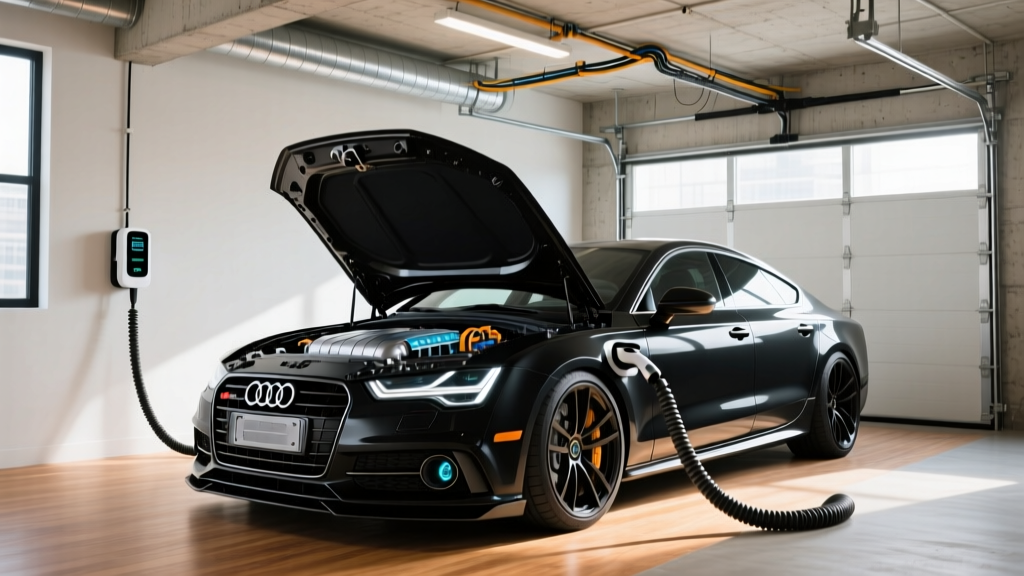
The 2012 Audi A7 Supercharged (3.0T V6) is a popular candidate for EV conversions thanks to its spacious engine bay, robust ZF 8-speed transmission tunnel (often repurposed for battery placement), and premium chassis. But swapping the supercharged V6 for an electric motor and battery pack introduces a challenge most A7 owners don't anticipate: your home electrical system wasn't designed to refill a 60–80 kWh battery pack overnight.
This guide covers exactly what you need to charge a converted 2012 Audi A7 Supercharged at home and on the road — from Level 1 trickle charging to DC fast charging, connector selection, panel upgrades, and real cost-per-mile math. Whether your conversion shop installed a Tesla drive unit, a NetGain Hyper9 motor, or a salvaged Nissan Leaf powertrain, the charging infrastructure requirements follow the same physics.
Charging Levels Explained: Speed, Power, and Range Added
Before sizing your home charger, understand the three charging tiers available to your converted A7. The critical distinction: kW (kilowatts) measures power flow rate — how fast energy moves into the battery. kWh (kilowatt-hours) measures energy capacity — how much the battery holds. Think of kW as the hose diameter and kWh as the bucket size.
| Level | Voltage | Max Power (kW) | Miles of Range Added/Hour | Typical Use Case |
|---|---|---|---|---|
| Level 1 | 120V AC | 1.4–1.9 kW | 3–5 mi/hr | Overnight trickle, emergency top-off |
| Level 2 | 240V AC | 7.2–19.2 kW | 20–60 mi/hr | Primary home and workplace charging |
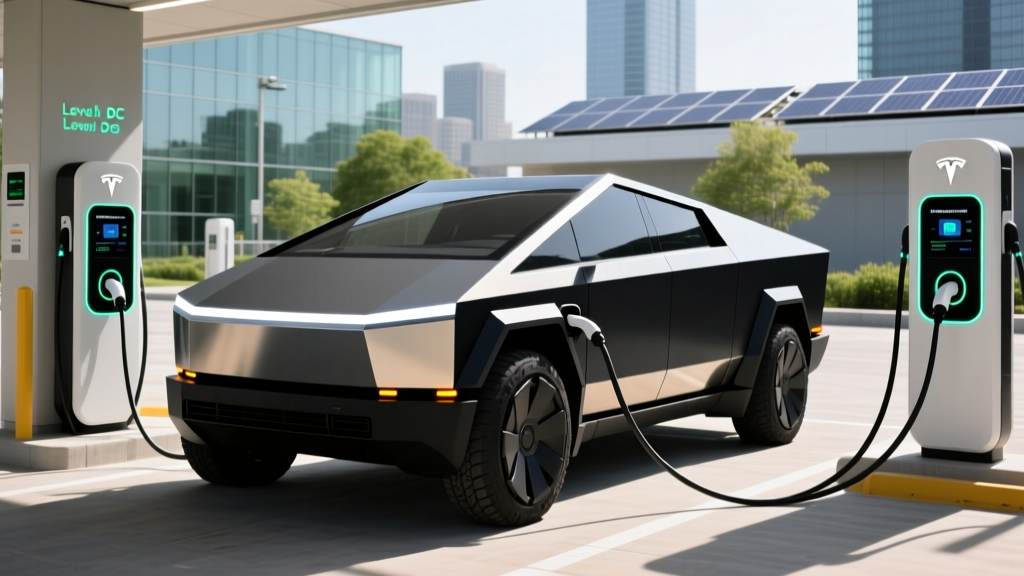
| DC Fast Charge | 400–800V DC | 50–350 kW | 150–800+ mi/hr | Road trips, highway corridors |
For a typical 2012 Audi A7 Supercharged EV conversion with a 60–75 kWh usable battery pack, Level 2 charging at 11.5 kW (48A on a 60A circuit) will refill the pack from 10% to 80% in roughly 4–5 hours. Level 1 at 1.4 kW would take 35+ hours for the same charge — impractical for daily driving.
Home Charger Installation: Electrical Requirements & Costs
Most EV conversions draw between 7.2 kW (32A) and 11.5 kW (48A) on Level 2. Your home's electrical panel and wiring must support this continuous load safely and legally.
What Your Electrician Will Assess
- Panel capacity: A 200-amp service panel is the modern standard. A 48A continuous EV charger load (60A breaker) consumes roughly 11.5 kW — about 48 amps at 240V. If your panel is already near capacity (common in homes with electric ranges, dryers, and HVAC), you may need a panel upgrade to 200A or 400A, or a smart load-management device like the Emporia Smart Load Center.
- Dedicated circuit: The NEC (National Electrical Code) requires a dedicated circuit for EV charging — no sharing with other appliances. For a 48A charger, you need a 60A double-pole breaker with 6 AWG copper wire (or 4 AWG aluminum).
- GFCI protection: NEC 2020 and later require GFCI (Ground Fault Circuit Interrupter) protection for all EV receptacles. Hardwired chargers with integrated ground-fault protection satisfy this requirement.
- Permit: Nearly all jurisdictions require an electrical permit for a new 240V circuit. Your electrician pulls this; the city/county inspects after installation.
| Item | Low End | High End | Notes |
|---|---|---|---|
| Level 2 EVSE equipment | $350 | $750 | 40A–48A smart charger (ChargePoint, Emporia, Wallbox) |
| Electrician labor (standard install) | $500 | $1,200 | Short run from panel to garage, drywall patching |
| Electrician labor (long/complex run) | $1,200 | $3,000 | Conduit, long wire runs, attic/crawlspace routing |
| Electrical permit | $50 | $200 | Varies by municipality |
| Panel upgrade (if needed) | $1,500 | $4,000 | 100A→200A upgrade, or 200A→400A for heavy loads |
| Smart load management device | $300 | $600 | Alternative to panel upgrade; throttles charger when load is high |
Total realistic range: $850–$2,150 for a straightforward install without panel upgrade. If your 2012-era home (or older) needs a panel upgrade, budget $2,500–$6,000+ all-in. According to Energy.gov's home charging guide, most homeowners with 200A panels spend $1,000–$1,800 total.
Connector Compatibility for Your Converted Audi A7
The connector your conversion shop installs determines where you can charge publicly. This is one of the most consequential decisions in the build process.
| Connector | Standard | AC Level 2 | DC Fast Charge | Network Availability |
|---|---|---|---|---|
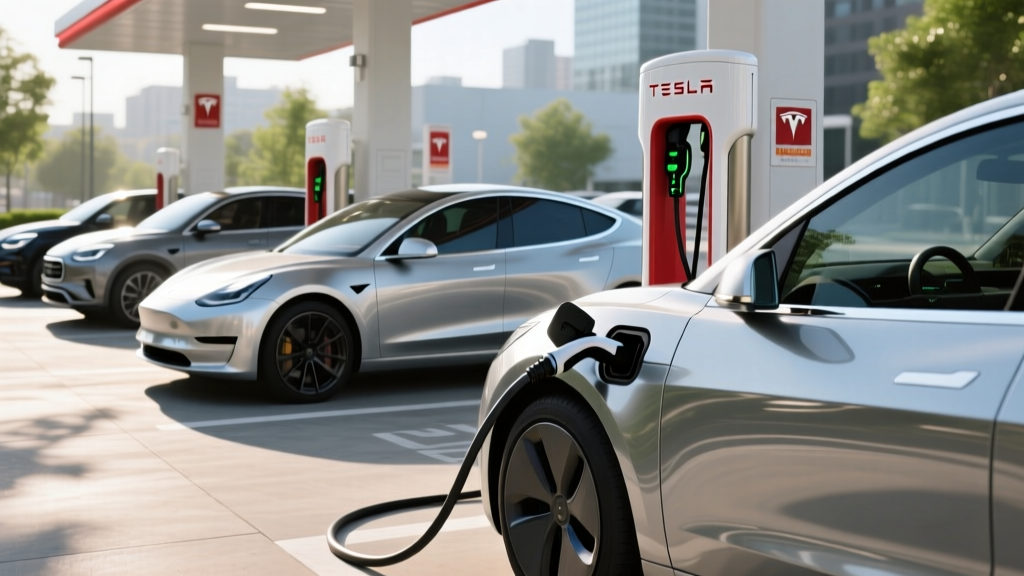
| NACS (Tesla) | SAE J3400 | Yes | Yes (Tesla Supercharger + open networks) | Largest US network — 30,000+ Supercharger stalls; Ford, GM, Rivian, Hyundai, BMW now native NACS |
| CCS1 | SAE J1772 Combo | Yes (J1772) | Yes | Electrify America, EVgo, ChargePoint DC; declining as OEMs shift to NACS |
| CHAdeMO | CHAdeMO | No (separate J1772) | Yes | Limited and shrinking; mainly legacy Nissan Leaf infrastructure |
Recommendation for a 2012 Audi A7 Supercharged EV conversion: Install a J1772 inlet for AC Level 2 (universal compatibility with all public Level 2 stations and home chargers) and, if your conversion includes DC fast-charge capability, choose either CCS1 or NACS depending on your region's dominant network. If you're building with a Tesla drive unit, NACS is the natural choice — you gain direct Supercharger access without an adapter.
If your conversion uses a CCS1 inlet but you want Supercharger access, Tesla sells a CCS-to-NACS adapter (~$200) for vehicles with CCS1 inlets. Verify compatibility with your conversion's charge controller before purchasing.
Level 2 Charger Equipment Picks for Converted EVs
Your converted A7's onboard charger (the device inside the car that converts AC to DC for the battery) determines your maximum Level 2 speed. Most EV conversions use 6.6 kW to 11.5 kW onboard chargers. Size your wall charger to match or slightly exceed that figure.
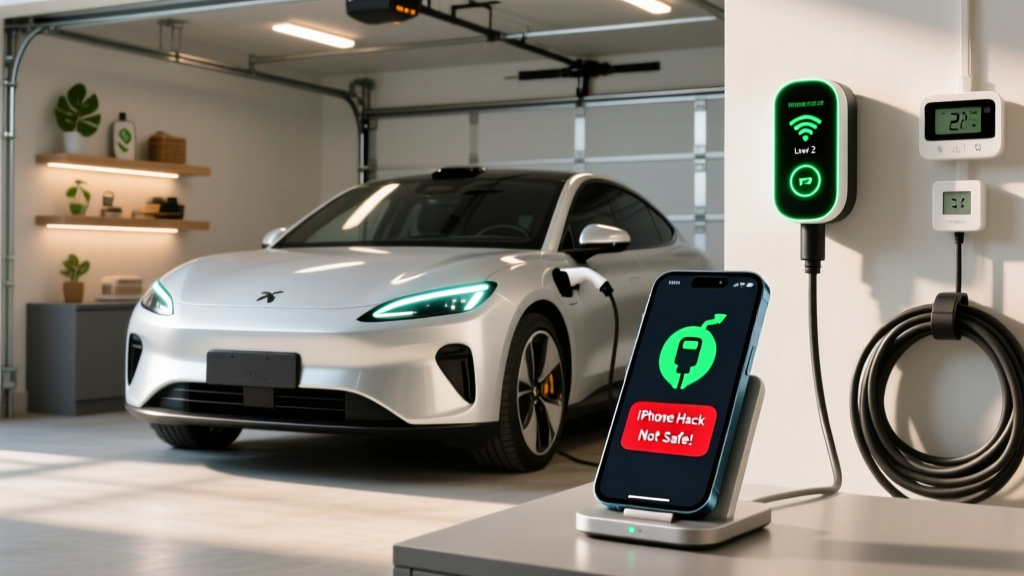
Emporia Vue Level 2 Smart Charger
- Power output: 48A / 11.5 kW (240V, hardwired on 60A circuit)
- Connector: J1772 (universal AC)
- Cable length: 24 ft
- Smart features: Wi-Fi, app scheduling, solar integration, energy monitoring, load management
- Price: ~$399
- Best for: Conversions with solar panels; detailed energy tracking
ChargePoint Home Flex
- Power output: Up to 50A / 12 kW (configurable 16A–50A; NEMA 14-50 plug or hardwired)
- Connector: J1772
- Cable length: 23 ft
- Smart features: Wi-Fi, app scheduling, Alexa integration, amperage dial adjustment
- Price: ~$549
- Best for: Flexibility — plug into existing NEMA 14-50 outlet or hardwire for full 50A
Tesla Wall Connector
- Power output: 48A / 11.5 kW (hardwired on 60A circuit)
- Connector: NACS native (J1772 adapter available)
- Cable length: 24 ft
- Smart features: Wi-Fi, OTA updates, power sharing between two units, access control
- Price: ~$450
- Best for: Tesla-based conversions with NACS inlet
Wallbox Pulsar Plus
- Power output: 40A / 9.6 kW (NEMA 14-50) or 48A hardwired
- Connector: J1772
- Cable length: 25 ft
- Smart features: Wi-Fi + Bluetooth, app control, Eco-Smart solar mode, Power Sharing
- Price: ~$449–$599
- Best for: Compact form factor; outdoor-rated (NEMA 4)
Cost to Charge: Home vs. Public vs. Gas Baseline
One of the biggest financial benefits of converting a 2012 Audi A7 Supercharged from its 3.0T V6 (rated at 18/28 MPG by the EPA) to electric is fuel cost reduction. Here's the real math.
| Scenario | Cost per kWh or Gallon | Efficiency | Cost per Mile |
|---|---|---|---|
| Home charging (off-peak utility rate) | $0.10/kWh | 3.0 mi/kWh (typical conversion) | $0.033/mi |
| Home charging (national avg electricity) | $0.17/kWh | 3.0 mi/kWh | $0.057/mi |
| Public Level 2 (ChargePoint, etc.) | $0.25/kWh | 3.0 mi/kWh | $0.083/mi |
| DC Fast Charging (Electrify America) | $0.43/kWh | 3.0 mi/kWh | $0.143/mi |
| Original 3.0T V6 (premium gas, 23 combined MPG) | $3.85/gal (2026 avg premium) | 23 MPG combined | $0.167/mi |
At 12,000 miles per year, home charging at $0.10/kWh saves roughly $1,600 annually versus premium fuel. Even at public DC fast-charger rates, you're still paying less per mile than the original supercharged V6. Over 5 years of ownership, that's $5,000–$8,000 in fuel savings — a meaningful offset to conversion costs.
Charging Times for Common Conversion Battery Sizes
Conversion battery packs typically range from 40 kWh (short-range city build) to 85 kWh (highway-capable cruiser). Here's what to expect at each charging level, using a realistic 10%–80% state-of-charge window (charging slows significantly above 80% to protect battery chemistry — this taper is governed by the BMS, not the charger).
| Battery (kWh usable) | Level 1 (1.4 kW) | Level 2 (7.2 kW / 32A) | Level 2 (11.5 kW / 48A) | DC Fast (50 kW)* |
|---|---|---|---|---|
| 40 kWh | ~20 hrs | ~3.9 hrs | ~2.4 hrs | ~45 min |
| 60 kWh | ~30 hrs | ~5.8 hrs | ~3.6 hrs | ~60 min |
| 75 kWh | ~37 hrs | ~7.3 hrs | ~4.6 hrs | ~75 min |
| 85 kWh | ~42 hrs | ~8.3 hrs | ~5.2 hrs | ~85 min |
*DC fast charge times assume the conversion's BMS and battery chemistry support 50 kW+ charge rates. Many DIY conversions with salvaged modules are limited to 1C or less — check your pack's C-rate specification. LFP (lithium iron phosphate) cells typically sustain higher charge rates to a higher SoC than NMC cells.
Safety, Code Compliance, and Inspection Checklist
An EV conversion doesn't change your home's electrical code obligations. Your charger installation must meet NEC Article 625 (Electric Vehicle Charging System Equipment). Key requirements:
- Dedicated circuit: Your EVSE must be on its own breaker — no shared circuits with laundry, kitchen, or HVAC equipment.
- GFCI protection: Required for all receptacle-based (plug-in) EV chargers. Hardwired units with built-in ground-fault protection also comply.
- Outdoor rating: If your charger is mounted outside (carport, driveway), it must carry a NEMA 4 or NEMA 4X rating for weather resistance. The Wallbox Pulsar Plus and Emporia Vue both carry NEMA 4 ratings.
- Wire gauge: 48A continuous load requires 6 AWG copper (THHN in conduit) or 4 AWG aluminum on a 60A breaker. Undersized wire creates fire risk — this is not an area to cut corners.
- Cable management: NEC requires the charging cable to be stored to prevent tripping hazards and damage. A wall-mounted holster or retractable cable system satisfies this.
- Inspection: Your jurisdiction's electrical inspector will verify wire gauge, breaker sizing, grounding, GFCI function, and proper mounting. Schedule inspection before your utility activates any EV-specific rate plans.
Frequently Asked Questions
How much does it cost to install a home EV charger for my converted Audi A7?
Expect $850–$2,150 for a standard installation (Level 2 charger + electrician + permit) if your panel has sufficient capacity. If a panel upgrade is required, total cost rises to $2,500–$6,000+. The single biggest variable is wire-run distance from your panel to the charging location.
How fast will each charging level add range to my EV conversion?
Level 1 (120V) adds 3–5 miles of range per hour. Level 2 (240V, 48A) adds roughly 35–45 miles per hour for a typical conversion. DC fast charging at 50 kW can add 100+ miles in 20–30 minutes, depending on battery chemistry and BMS charge-curve programming.
Which connector should I install on my 2012 Audi A7 EV conversion?
For AC Level 2 charging (home and public), install a J1772 inlet — it's the universal North American standard. For DC fast charging, choose NACS if your conversion uses a Tesla drive unit or if Supercharger access is your priority. Choose CCS1 if your charge controller is CCS-native and you rely on Electrify America or EVgo.
How much does charging cost per mile versus the original supercharged V6?
Home charging at off-peak rates ($0.10/kWh) costs roughly $0.033/mile — about 5x cheaper than the original 3.0T V6 on premium gas ($0.167/mile at 23 MPG combined). Even public DC fast charging at $0.43/kWh ($0.143/mile) undercuts premium gasoline.
What electrical upgrades might my home need?
The most common upgrade is a panel replacement from 100A/150A to 200A ($1,500–$3,000). Older homes may also need service-line upgrades from the utility, new grounding electrodes, or sub-panel installation in detached garages. A licensed electrician's load calculation (NEC Article 220) determines your exact requirements — don't skip this step.
Can I use a standard dryer outlet (NEMA 14-50) for my EV charger?
Yes, but with caveats. A NEMA 14-50 outlet on a 50A breaker supports up to 40A continuous charging (9.6 kW). However, NEC 2020+ requires GFCI protection on receptacles used for EV charging, which adds ~$50–$100 for a GFCI breaker. Many electricians now recommend hardwiring the charger to avoid the GFCI breaker requirement (hardwired units with integrated ground-fault protection comply without a separate GFCI breaker) and to eliminate the plug-connection failure point that has caused documented fire incidents with high-amperage receptacles.