The 2011 Nissan Leaf was the car that launched the modern mass-market electric vehicle era. Over a decade later, many of these pioneering EVs are still on the road — serving as commuter cars, around-town runabouts, and affordable entry points into electric driving. But if you own one, are considering buying one used, or simply want to understand what early EV ownership looks like, you need to understand the realities of the 2011 Nissan Leaf range, its charging options, and what it costs to keep one powered up in 2026.
This guide covers everything from the Leaf's original EPA range and real-world expectations to home charging installation, public charging networks, connector compatibility, and cost-per-mile comparisons. Whether you're a current Leaf owner optimizing your setup or a prospective buyer doing your homework, these numbers matter.
The 2011 Nissan Leaf Range: EPA vs. Reality
When new, the 2011 Nissan Leaf carried an EPA-estimated range of 73 miles on a full charge, powered by a 24 kWh lithium-ion battery pack (approximately 21.6 kWh usable). That figure was modest even at launch, and it has only become more critical to understand as these batteries have aged.
Battery degradation is the defining ownership variable for any first-generation Leaf. Nissan's original battery warranty covered 8 years/100,000 miles against capacity loss below 70% — meaning most 2011 Leafs are now well outside warranty coverage. If you're evaluating a used 2011 Leaf, check the battery health indicator on the dashboard (the 12-bar capacity gauge). A car showing 9 or fewer bars has lost more than 25% of its original capacity, which directly compresses your daily driving envelope.
| Spec | Value |
|---|---|
| EPA Range (original) | 73 miles |
| Battery Capacity | 24 kWh total / ~21.6 kWh usable |
| Battery Chemistry | NMC (nickel-manganese-cobalt) |
| Onboard Charger (Level 2) | 3.3 kW (6.6 kW optional on later years, not 2011) |
| DC Fast Charge Max | ~50 kW (CHAdeMO) |
| Motor Output | 80 kW (107 hp) / 207 lb-ft torque |
| 0–60 mph | ~9.9 seconds |
| EPA Efficiency | 99 MPGe combined (34 kWh/100 mi) |
| Connector (AC) | J1772 |
| Connector (DC) | CHAdeMO |
Charging Levels Explained: How Fast Can a 2011 Leaf Charge?
Understanding charging speed requires a quick terminology note: kW (kilowatts) measures power — the rate at which energy flows into the battery. kWh (kilowatt-hours) measures energy — the total capacity of the battery itself. Think of kW as how fast water flows from a hose, and kWh as the size of the bucket. The 2011 Leaf's bucket is ~21.6 kWh usable. How fast you fill it depends on the charging level.
| Level | Voltage / Power | Miles of Range Added per Hour | 0–100% Time (21.6 kWh usable) |
|---|---|---|---|
| Level 1 (120V household outlet) | 120V / 1.4 kW | ~4–5 miles/hr | ~18–21 hours |
| Level 2 (240V home/public) | 240V / 3.3 kW (limited by Leaf's onboard charger) | ~12–14 miles/hr | ~7 hours |
| DC Fast Charge (CHAdeMO) | ~50 kW peak | ~80–100 miles/hr (first 30 min) | ~30 min to 80% |
Critical limitation: The 2011 Leaf's onboard charger is capped at 3.3 kW. Even if you plug into a 7.2 kW or 11.5 kW Level 2 station, the Leaf will only accept 3.3 kW. This means upgrading to a higher-power home charger won't speed up your Leaf — but it will future-proof your installation for a next EV.
On DC fast charging, the Leaf uses the CHAdeMO connector standard, which was common in early EVs but has been largely superseded by CCS1 and NACS (Tesla's North American Charging Standard) in newer vehicles. CHAdeMO stations are still available but increasingly rare at new public charging installations. This is a real consideration for 2011 Leaf owners relying on public fast charging.
Home Charger Installation: Requirements, Costs & Electrical Upgrades
For 2011 Leaf owners, home Level 2 charging is the practical sweet spot. Even though the car can only accept 3.3 kW, charging overnight on a 240V circuit is dramatically more convenient than relying on a 120V household outlet — which would take nearly a full day to refill a depleted battery.
Electrical Requirements
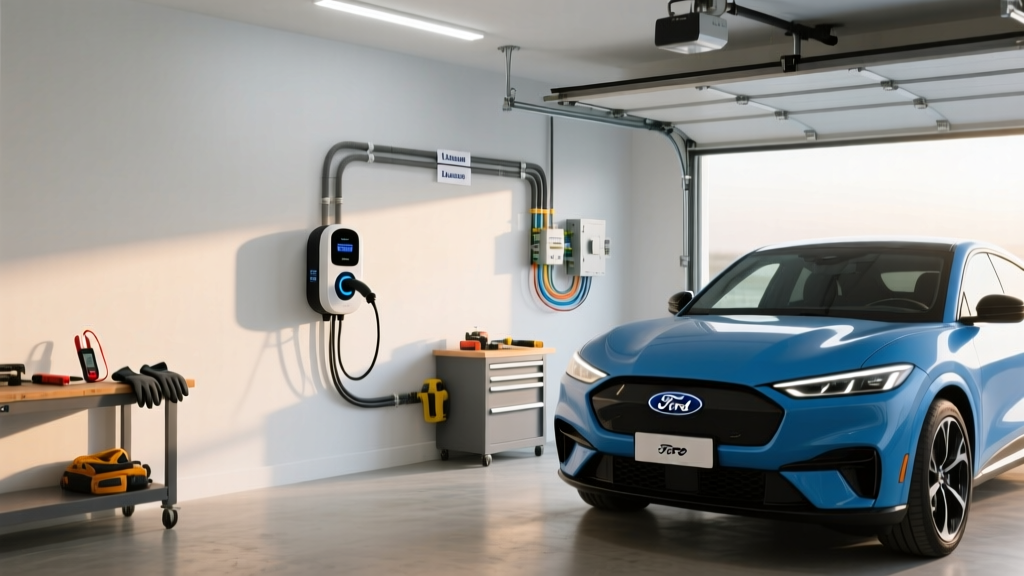
A Level 2 home charger requires a 240-volt dedicated circuit, typically at 40 amps (to support a continuous 32-amp charge, per the National Electrical Code's 80% rule for continuous loads). For the 2011 Leaf specifically, a 20-amp circuit would technically suffice given its 3.3 kW draw (~14 amps), but most electricians and charger manufacturers recommend installing a 40-amp or 50-amp circuit to accommodate future vehicles.
Panel upgrade considerations: Many homes built before 2000 have 100-amp electrical panels. Adding a 40-amp EV circuit may require a panel upgrade to 200 amps, especially if you already have electric appliances (dryer, oven, HVAC). This is one of the most significant — and often overlooked — costs in home EV charging setup. A panel upgrade typically runs $1,500–$3,500 depending on your local utility and the complexity of the work.
Installation Cost Breakdown
| Component | Cost Range | Notes |
|---|---|---|
| Level 2 Charger (Equipment) | $250–$700 | Smart WiFi chargers cost more; basic units are cheaper |
| Electrician Labor | $400–$1,500 | Depends on run length from panel, wall material, conduit |
| Permit & Inspection | $50–$250 | Required in most jurisdictions; varies by municipality |
| Electrical Panel Upgrade (if needed) | $1,500–$3,500 | Only if existing panel lacks capacity |
| Total (no panel upgrade) | $700–$2,450 | Typical scenario for homes with 200A panels |
| Total (with panel upgrade) | $2,200–$5,950 | Older homes with 100A service |
Some utilities and states offer rebates for home charger installation — check with your local utility for current programs. The federal Residential Clean Energy Credit (IRS Form 5695) previously covered 30% of charger installation costs up to $1,000, but verify current-year availability with a tax professional, as incentive rules shift frequently.
Safety & Code Considerations
Your installation should include a dedicated circuit (not shared with other appliances), a GFCI breaker (required by NEC 2020 and later for EV charging outlets), and a NEMA 14-50 receptacle or a hardwired connection. If your charger is installed outdoors, ensure it carries a NEMA 4 weather-resistance rating. Always hire a licensed electrician — improper EV charger wiring is a fire risk and may void your homeowner's insurance coverage in the event of an incident.
Connector Compatibility: What Works With the 2011 Leaf?
The 2011 Nissan Leaf uses two connector types:
- J1772 for Level 1 and Level 2 AC charging — this is the universal standard for all non-Tesla EVs in North America and will plug into any public Level 2 station.
- CHAdeMO for DC fast charging — this is the legacy Japanese standard, also used by the Mitsubishi i-MiEV and early Kia Soul EV.
| Connector | Used By | 2011 Leaf Compatible? |
|---|---|---|
| J1772 | All non-Tesla EVs (Level 1 & 2) | ✅ Yes — native |
| NACS (Tesla) | Tesla vehicles; Ford, GM, Rivian, others from 2025+ | ❌ No adapter available for Leaf AC charging |
| CCS1 | Most modern non-Tesla EVs (DC fast) | ❌ Not compatible — no CHAdeMO-to-CCS adapter exists for consumer use |
| CHAdeMO | Nissan Leaf, Mitsubishi i-MiEV, early Kia Soul EV | ✅ Yes — native (DC fast) |
The CHAdeMO problem: Most new DC fast-charging stations being deployed in 2026 feature CCS1 and NACS connectors, with CHAdeMO increasingly absent. Networks like Electrify America have largely standardized on CCS1. If DC fast charging is critical to your use case, research CHAdeMO availability in your area on apps like PlugShare before relying on the Leaf for longer trips.
How Much Does Charging Cost? Per-Mile Breakdown vs. Gas
One of the strongest arguments for owning even a range-limited EV like the 2011 Leaf is the fuel cost advantage. Here's how charging costs compare across scenarios, using the Leaf's consumption rate of approximately 34 kWh per 100 miles (per fueleconomy.gov):
| Scenario | Rate | Cost per Full Charge (~21.6 kWh) | Cost per Mile |
|---|---|---|---|
| Home (off-peak utility rate) | $0.09/kWh | $1.94 | $0.031 |
| Home (average US rate) | $0.16/kWh | $3.46 | $0.054 |
| Public Level 2 (ChargePoint, etc.) | $0.25–$0.49/kWh | $5.40–$10.58 | $0.084–$0.165 |
| DC Fast Charge (public) | $0.35–$0.55/kWh | $7.56–$11.88 | $0.118–$0.185 |
| Gas car (30 MPG, $3.40/gal) | $3.40/gallon | N/A | $0.113 |
Even at average residential electricity rates, the 2011 Leaf costs roughly half as much per mile to fuel as a comparable 30 MPG gas car. With off-peak home charging (available through most utility time-of-use plans), the savings are even more dramatic — around 70–75% less per mile than gasoline. For a car used primarily as a short-range commuter, those savings compound quickly over 10,000–12,000 annual miles.
However, at DC fast-charging rates, the Leaf's per-mile cost can actually exceed that of a fuel-efficient gas car. This is why home charging access is so critical for Leaf economics.
Recommended Level 2 Chargers for the 2011 Nissan Leaf
Because the 2011 Leaf's onboard charger maxes out at 3.3 kW, you don't need a high-power charger to fill it efficiently. But investing in a quality 32-amp or 40-amp unit makes sense if you plan to upgrade to a newer EV in the future. Here are proven options:
Emporia Level 2 EV Charger
Power: Up to 48A (11.5 kW) — Leaf will draw 3.3 kW
Connector: J1772 (NACS adapter available)
Cable Length: 24 ft
Smart Features: WiFi, app scheduling, energy monitoring, solar integration
Price: ~$399
Verdict: Best value smart charger. Overkill for the Leaf today, but ideal if you'll own a faster-charging EV later.
ChargePoint Home Flex
Power: Up to 50A (12 kW) — configurable via breaker
Connector: J1772 (NACS version available)
Cable Length: 23 ft
Smart Features: WiFi, app scheduling, Alexa integration, flexible amperage
Price: ~$699
Verdict: Premium pick with excellent build quality and flexible amperage settings for older electrical panels.
Lectron V-Box Pro
Power: 40A (9.6 kW)
Connector: J1772
Cable Length: 20 ft
Smart Features: Basic app, scheduling
Price: ~$280
Verdict: Budget-friendly option. Adequate for Leaf-only households where future-proofing isn't a priority.
For the 2011 Leaf specifically, any of these chargers will deliver a full overnight charge in roughly 7 hours. The Emporia and ChargePoint units are the smarter long-term investments if you anticipate owning a modern EV that can accept 7.2 kW, 11.5 kW, or higher AC charging rates.
Public Charging Realities for the 2011 Leaf
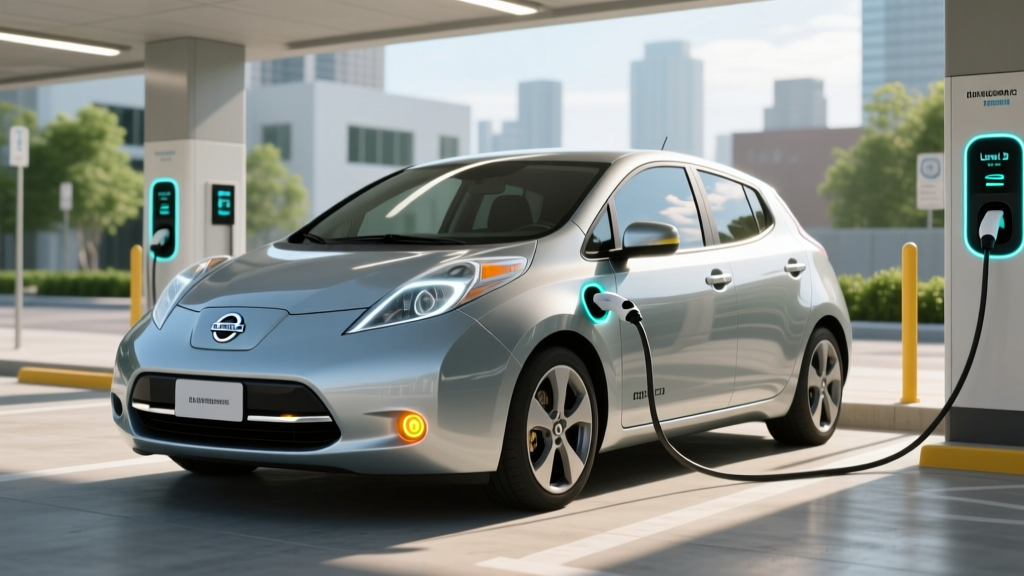
Public Level 2 charging is straightforward — any J1772 station works. Networks like ChargePoint, EVgo, and Blink maintain thousands of Level 2 ports nationwide, and the Leaf will happily charge at any of them (albeit at its 3.3 kW ceiling).
DC fast charging is where the 2011 Leaf owner faces real friction. CHAdeMO-equipped stations are declining as a percentage of the public fast-charging network. According to data tracked by the U.S. Department of Energy's AFDC, CHAdeMO ports have decreased as a share of DC fast-charging infrastructure while CCS1 and NACS have grown rapidly.
Practical tips for 2011 Leaf owners using public charging:
- Use PlugShare or A Better Routeplanner to filter for CHAdeMO-compatible DC stations before trips.
- Don't rely on DC fast charging for daily needs — frequent DC fast charging accelerates battery degradation, especially on the Leaf's passively-cooled battery pack (which lacks active thermal management).
- Level 2 public charging is your friend — a 2-hour stop at a public J1772 station can add 24–28 miles of range, which is meaningful for a car with a ~50-mile real-world envelope.
Is the 2011 Leaf Still Practical in 2026?
The 2011 Nissan Leaf's range was always a city-commuter proposition, and battery degradation has only narrowed that window. But for the right use case — a short, predictable commute with reliable home charging — it remains one of the cheapest ways to drive on electricity. Used 2011 Leafs trade for $3,500–$7,000 depending on battery health, making them arguably the most affordable entry into EV ownership available.
Decision Framework: Is the 2011 Leaf Right for You?
Choose the 2011 Leaf if:
- Your daily round-trip commute is under 35 miles
- You have access to home Level 2 (or at least Level 1) charging
- You want the lowest possible entry cost into EV ownership
- You have a second gas or hybrid car for longer trips
Look elsewhere if:
- Your commute exceeds 40 miles one way
- You lack home charging access and must rely on public infrastructure
- You live in a cold climate where winter range loss compounds the short battery
- You need DC fast charging for regular highway trips (CHAdeMO availability is declining)
Frequently Asked Questions
How much does it cost to install a home EV charger for a 2011 Nissan Leaf?
A typical home Level 2 installation costs $700–$2,450 including equipment, electrician labor, and permits — assuming your electrical panel has sufficient capacity. If a panel upgrade from 100A to 200A is needed, add $1,500–$3,500. Since the 2011 Leaf only accepts 3.3 kW, you could technically use a less expensive 16-amp charger, but most owners install a 32–48 amp unit for future-proofing.
How fast will each charging level add range to the 2011 Leaf?
Level 1 (120V) adds roughly 4–5 miles per hour. Level 2 (240V at 3.3 kW) adds 12–14 miles per hour. DC fast charging on CHAdeMO can add roughly 40–50 miles in 30 minutes (to 80% SoC), though speed tapers significantly above 80%.
Which connector and charger is compatible with my 2011 Leaf?
For AC charging (Level 1 and Level 2), the Leaf uses the J1772 connector — universal across all non-Tesla public Level 2 stations. For DC fast charging, it uses CHAdeMO. There is no CCS1 or NACS compatibility, and no consumer adapter exists to convert CCS1 or NACS to the Leaf's CHAdeMO port.
How much does charging a 2011 Leaf cost per mile compared to gas?
At average home electricity rates ($0.16/kWh), the Leaf costs about $0.054 per mile to fuel. A comparable 30 MPG gas car at $3.40/gallon costs $0.113 per mile. That's roughly a 50% fuel cost reduction. With off-peak rates, savings reach 70%+.
What electrical upgrades might I need for a home charger?
If your home has a modern 200-amp electrical panel with available breaker slots, you likely need nothing beyond a dedicated 40-amp circuit. If you have an older 100-amp panel, especially in a home with electric appliances, you may need a panel upgrade to 200 amps ($1,500–$3,500). A licensed electrician can assess your panel's available capacity during a site visit — most offer free or low-cost estimates.
Does DC fast charging damage the 2011 Leaf's battery?
The 2011 Leaf uses a passively-cooled battery pack (no liquid thermal management). Frequent DC fast charging generates heat that the pack cannot actively dissipate, which accelerates long-term degradation. Occasional DC fast charging for road trips is fine, but daily reliance on it will shorten battery life faster than Level 2 charging alone.
Can I replace the 2011 Leaf's degraded battery?
Yes, but it's expensive relative to the car's value. A replacement 24 kWh pack from Nissan or a third-party refurbisher typically costs $5,000–$8,500 including labor. Some owners opt for a used pack from a salvaged Leaf for $2,500–$4,000, though that pack will also carry degradation. Given that a 2011 Leaf's total market value is $3,500–$7,000, a battery replacement often exceeds the car's worth — making it a decision driven by attachment or necessity rather than economics.
Sources: EPA fuel economy data via fueleconomy.gov; alternative fueling station data via U.S. DOE AFDC; IRS clean energy credits via irs.gov. Specifications reflect original 2011 model-year data. Used vehicle pricing and battery degradation figures are estimates based on market conditions as of early 2026.