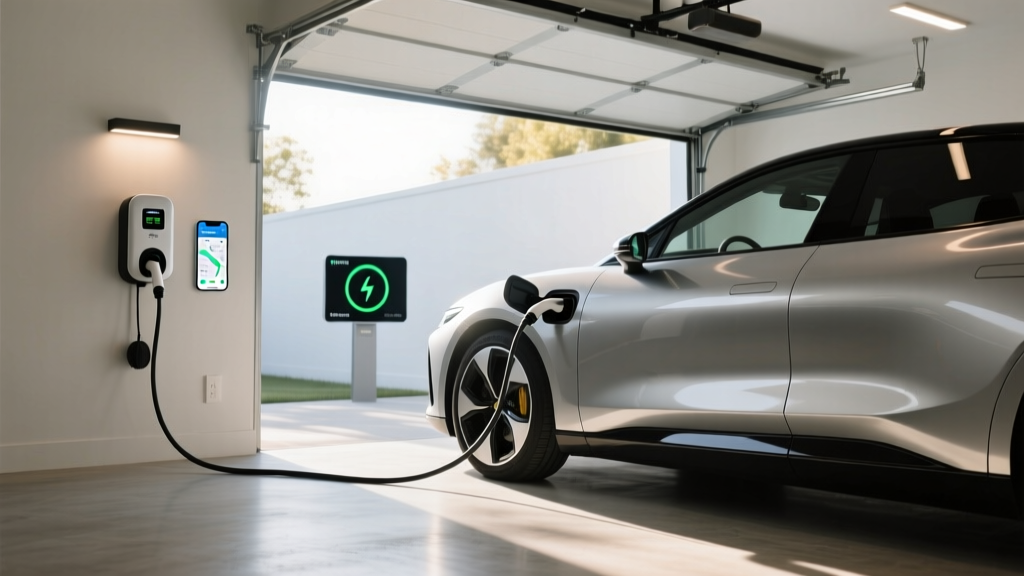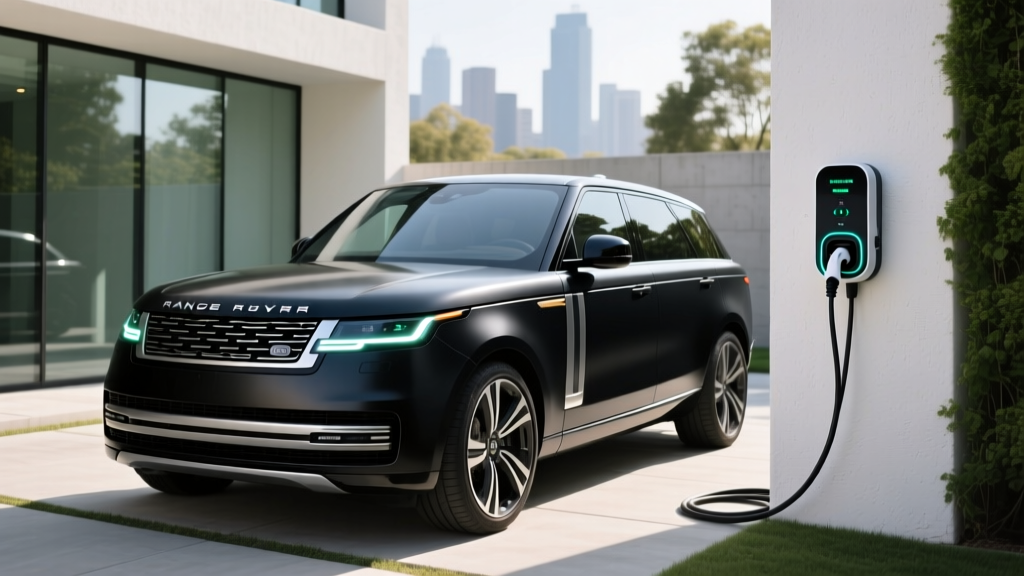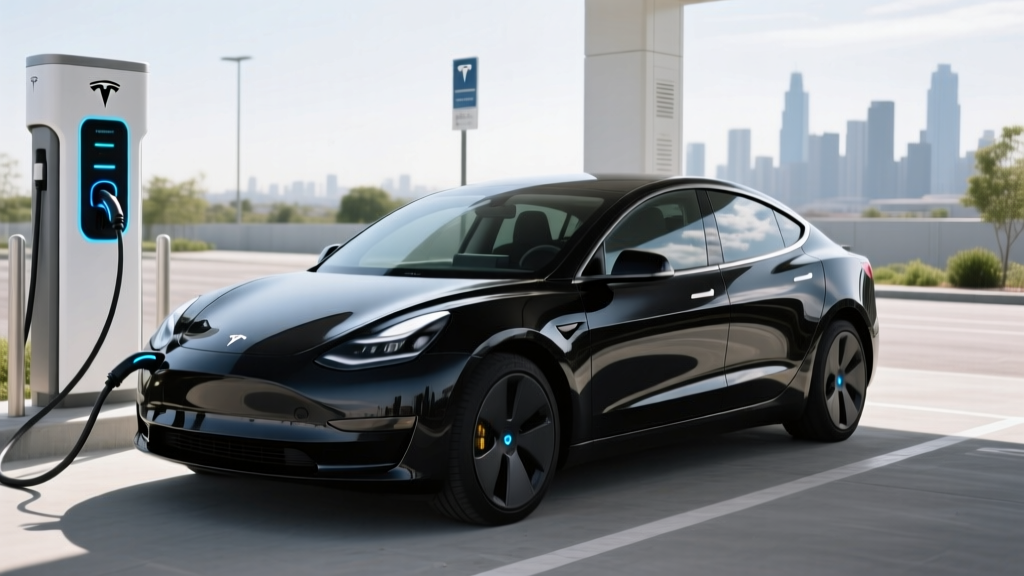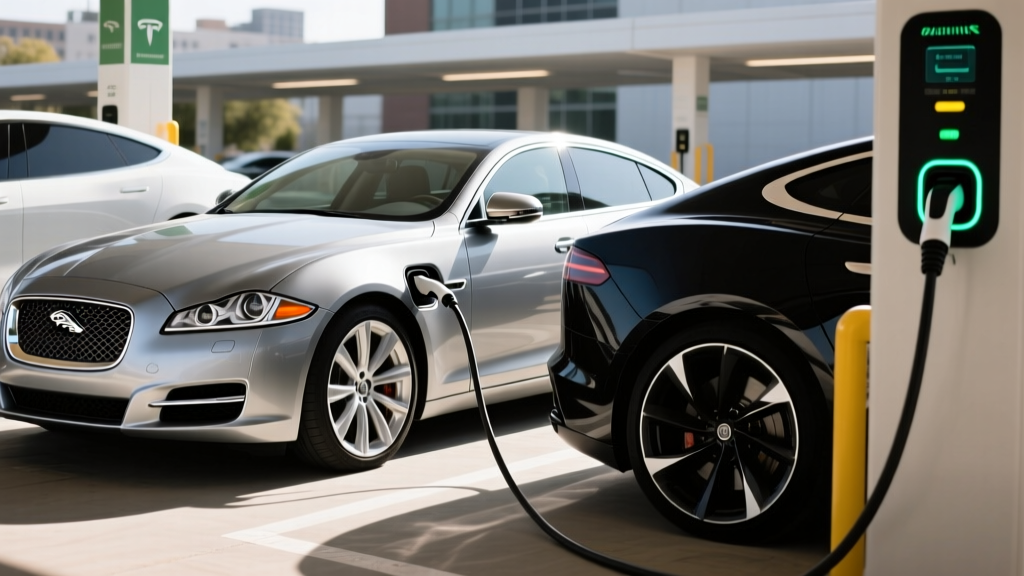
The 2011 Jaguar XJL Supercharged remains a striking luxury sedan — a 5.0L supercharged V8 pushing 470 horsepower, 0-60 mph in roughly 4.7 seconds, and a long-wheelbase cabin that still turns heads. But with fuel prices volatile and EV infrastructure maturing in 2026, many XJL owners and cross-shoppers are asking a practical question: how does fueling this Jaguar compare to charging a modern electric vehicle? This guide breaks down the real numbers — from Level 1 through DC fast charging, home installation costs, connector standards, and per-mile economics — so you can make a data-driven decision whether you're keeping the XJL, cross-shopping, or adding an EV to the same garage.
The 2011 Jaguar XJL Supercharged: Fuel Economy Baseline
Before comparing charging costs, we need a firm baseline for the XJL. The EPA rates the 2011 Jaguar XJL Supercharged at 15 mpg city, 23 mpg highway, and 18 mpg combined. With a 22.1-gallon fuel tank, real-world range hovers around 330-398 miles depending on driving style. At $3.50/gallon (a moderate 2026 national average for premium — the XJL requires premium 91+ octane), filling the tank costs roughly $77 and yields about 398 highway miles.
Combined (18 mpg, $3.50/gal premium): $0.194/mile
Highway (23 mpg, $3.50/gal): $0.152/mile
City (15 mpg, $3.50/gal): $0.233/mile
That's the benchmark any EV must beat on operating cost. Let's see what charging looks like in detail.
EV Charging Levels Explained: kW, Speeds, and Miles Per Hour
EV charging operates at three primary levels. Understanding the distinction between kW (kilowatts — the rate of power delivery, like water pressure from a hose) and kWh (kilowatt-hours — the total energy stored, like gallons in a tank) is essential. Your electricity bill charges you per kWh consumed; your charger's kW rating determines how fast those kWh flow into the battery.
| Level | Voltage / Amperage | Max Power (kW) | Miles of Range Added Per Hour | Typical Use Case |
|---|---|---|---|---|
| Level 1 | 120V / 12A | 1.4 kW | 3-5 mi/hr | Overnight top-up, PHEVs, low-mileage drivers |
| Level 2 | 240V / 32-48A | 7.7-11.5 kW | 25-44 mi/hr | Home daily charging, workplace, destination |
| DC Fast | 400-800V DC | 50-350 kW | 150-1,200+ mi/hr (peak) | Road trips, highway corridors, quick stops |
Real-world charging time examples (10-80% SoC):
- 75 kWh battery (e.g., Tesla Model Y) on a 250 kW DC fast charger: ~22-25 minutes (peak rate tapers above 50-60% SoC)
- 75 kWh battery on a Level 2 home charger (11.5 kW): ~7-8 hours (0-100%), ideal overnight
- 100 kWh battery (e.g., Ford F-150 Lightning Extended Range) on a 150 kW charger: ~38-45 minutes (10-80%)
- 100 kWh battery on Level 2 (7.7 kW): ~12-13 hours (0-100%)
A critical nuance: DC fast charging does not sustain peak kW throughout the session. A vehicle rated for 250 kW peak may only hold that rate for the first 15-20% of the charge before tapering. The "charge curve" matters more than the headline number. Always look at 10-80% time, not just peak kW.
Home EV Charger Installation: Requirements, Costs, and Panel Upgrades
Installing a Level 2 home charger is the single highest-impact upgrade for EV ownership — and the one most likely to surprise buyers with hidden costs. Here's the full breakdown.
Electrical Requirements
A typical Level 2 charger requires a 240V dedicated circuit, similar to a clothes dryer or electric range. Common configurations:
- 32A circuit (7.7 kW): Requires a 40A breaker (NEC rule: continuous loads cannot exceed 80% of breaker rating)
- 40A circuit (9.6 kW): Requires a 50A breaker
- 48A circuit (11.5 kW): Requires a 60A breaker — this is the maximum most residential chargers support and typically requires hardwiring (no plug)
Chargers rated at 48A or higher generally must be hardwired directly to the panel rather than plugged into a NEMA 14-50 outlet. This is a code requirement in many jurisdictions for circuits above 50A.
Do You Need a Panel Upgrade?
This is where costs can escalate. Most modern homes have a 200A main electrical panel. If your panel is already near capacity (running electric heat, A/C, electric range, dryer, and water heater), adding a 40-60A EV circuit may require either:
- A panel upgrade to 300-400A: Common in older homes with 100A or 150A service. Cost: $2,500-$5,000+.
- An energy management system (EMS) / load-sharing device: Devices like the Emporia VUE or SPAN smart panel can dynamically limit charger draw when other appliances are running, avoiding a full panel upgrade. Cost: $300-$1,500 for the device, plus installation.
| Component | Low-End Cost | High-End Cost | Notes |
|---|---|---|---|
| Level 2 charger (equipment) | $200 | $700 | Smart Wi-Fi chargers with 24ft cable |
| Electrician labor (install + wiring) | $400 | $1,800 | Depends on run length from panel to garage |
| Permit and inspection | $50 | $300 | Varies by municipality; required for code compliance |
| Electrical materials (conduit, wire, breaker) | $100 | $500 | Longer runs = more copper wire cost |
| Total (no panel upgrade) | $750 | $3,300 | Typical range for most homes |
| Panel upgrade (if needed) | $2,500 | $5,000+ | 100A→200A or 200A→400A; older homes |
The IRS Residential Clean Energy Credit (§25D) offers a 30% credit on home charging equipment and installation costs (up to $1,000 for the alternative fuel vehicle refueling property credit under §30C, subject to census-tract eligibility). Consult a tax professional to confirm your eligibility.
Connector Compatibility: NACS, CCS1, and CHAdeMO in 2026
The connector landscape has consolidated significantly. As of 2026, nearly all new EVs sold in North America use or are transitioning to the NACS (North American Charging Standard) connector, originally developed by Tesla and now adopted by Ford, GM, Hyundai, Rivian, Volvo, BMW, and most other major automakers.
| Connector | Brands Using It (2026) | Adapter Needed? | Notes |
|---|---|---|---|
| NACS (J3400) | Tesla, Ford, GM, Hyundai/Kia (2025+), Rivian, Volvo, BMW, Mercedes, Nissan (2026+) | No — native on new models | Access to Tesla Supercharger network; becoming the standard |
| CCS1 | VW ID.4 (pre-2026), older Hyundai/Kia, BMW i4 (pre-2025), most 2020-2024 EVs | CCS-to-NACS adapter (~$200-$250) for Supercharger access | Still supported at Electrify America, EVgo, ChargePoint stations |
| CHAdeMO | Nissan Leaf (legacy), Mitsubishi Outlander PHEV (legacy) | Limited adapter options | Effectively discontinued; new infrastructure rarely includes CHAdeMO |
For home Level 2 charging, all EVs (regardless of DC fast-charge connector) use the J1772 connector for AC charging — or NACS, which includes J1772 compatibility via the vehicle's inlet. Every Level 2 home charger ships with either a J1772 or NACS plug, and adapters between the two are widely available ($50-$150).
Charging Cost Per Mile vs the Jaguar XJL Supercharged
This is where the EV value proposition becomes concrete. Let's compare the XJL's fuel cost against typical EV charging scenarios using a vehicle efficiency of 3.0 miles/kWh (representative of a mid-size EV like the Hyundai Ioniq 6 or Tesla Model 3).
| Scenario | Rate ($/kWh) | Cost Per Mile | Savings vs XJL (18 mpg combined) |
|---|---|---|---|
| Home charging (off-peak utility rate) | $0.08/kWh | $0.027/mile | 86% cheaper ($0.167/mile saved) |
| Home charging (national avg residential) | $0.16/kWh | $0.053/mile | 73% cheaper ($0.141/mile saved) |
| Public Level 2 (workplace, destination) | $0.25/kWh | $0.083/mile | 57% cheaper ($0.111/mile saved) |
| DC fast charging (Electrify America, EVgo) | $0.48/kWh | $0.160/mile | 18% cheaper ($0.034/mile saved) |
| Tesla Supercharger (avg 2026) | $0.35/kWh | $0.117/mile | 40% cheaper ($0.077/mile saved) |
| 2011 Jaguar XJL Supercharged (premium fuel) | $3.50/gal (18 mpg) | $0.194/mile | Baseline |
Recommended Home EV Chargers for 2026
Below are three proven Level 2 chargers suited for different budgets and needs. All are UL-listed, support NACS or J1772, and include smart features for scheduling and energy monitoring.
Tesla Wall Connector (Gen 4) — Best Overall
- Power output: Up to 11.5 kW (48A, hardwired) or 9.6 kW (40A, NEMA 14-50)
- Connector: NACS (J1772 adapter included)
- Cable length: 24 feet
- Smart features: Wi-Fi, OTA updates, power sharing with additional Wall Connectors, scheduling via Tesla app, works with all NACS/J1772 vehicles
- Price: ~$475
- Best for: Tesla owners and anyone with a NACS-equipped EV; excellent build quality
ChargePoint Home Flex — Best for Flexibility
- Power output: Configurable from 16A (3.8 kW) to 50A (12 kW) via DIP switches — adapt to your panel capacity
- Connector: J1772 (NACS adapter available separately) or NACS version available
- Cable length: 24 feet
- Smart features: Wi-Fi, Alexa integration, detailed energy tracking, scheduled charging, works with all EVs
- Price: ~$550-$650
- Best for: Homes with limited panel capacity (dial down amperage); multi-EV households
Emporia Level 2 Charger — Best Budget Smart Charger
- Power output: Up to 11.5 kW (48A, hardwired) or 9.6 kW (40A)
- Connector: J1772 or NACS
- Cable length: 24 feet
- Smart features: Wi-Fi, real-time energy monitoring (pairs with Emporia VUE home energy monitor), solar integration, scheduled charging
- Price: ~$200-$250
- Best for: Budget-conscious buyers who want smart features; solar-panel owners
Safety, Code, and Installation Best Practices
EV charger installation is electrical work that must comply with the National Electrical Code (NEC Article 625) and local building codes. Key requirements and best practices:
- Dedicated circuit: Your EV charger must have its own dedicated breaker — it cannot share a circuit with other appliances.
- GFCI protection: NEC 2020 and later requires GFCI (Ground Fault Circuit Interrupter) protection for outdoor outlets used for EV charging. Hardwired installations may have different requirements depending on jurisdiction.
- Outdoor rating: If installing outdoors, the charger must carry a NEMA 4 or NEMA 4X rating (weatherproof). All three chargers recommended above meet this standard.
- Permit and inspection: Most municipalities require an electrical permit and a post-installation inspection. Skipping this can void your homeowner's insurance coverage for electrical fires and cause issues at resale.
- Wire gauge: For a 48A hardwired charger on a 60A breaker, you'll typically need 4 AWG copper wire (or 2 AWG aluminum) for runs up to 50 feet. Longer runs may require thicker wire to minimize voltage drop. Your electrician will calculate this.
- Load calculation: A licensed electrician will perform a NEC Article 220 load calculation on your panel to verify it can handle the new circuit. If it can't, you'll need the panel upgrade or load-management device discussed above.
Always hire a licensed electrician — not a general handyman — for EV charger installation. The continuous high-current draw of EV charging (hours at full load, night after night) is fundamentally different from intermittent appliance use and demands proper connections, torque-spec terminations, and code compliance.
Should XJL Owners Add an EV to the Garage?
For 2011 Jaguar XJL Supercharged owners, the practical play in 2026 is often keeping the XJL for weekend and long-trip use while adding an EV for daily commuting. Here's the math on that strategy:
EV commuting at home rate ($0.16/kWh, 3 mi/kWh): $480/year
XJL weekend driving (3,000 mi, 18 mpg, $3.50/gal): $583/year
Total annual fuel cost: $1,063
Compare to 12,000 miles entirely in the XJL: $2,333/year
Annual savings: $1,270 — plus reduced wear on the Jaguar's supercharged V8, brakes, and transmission.
This two-vehicle strategy also sidesteps the XJL's weakest daily-driver trait — its 15 mpg city rating — while preserving the car's grand-touring strengths on open highway where its 23 mpg is more tolerable.
Frequently Asked Questions
How much does it cost to install a home EV charger?
A typical Level 2 home charger installation costs $750-$3,300 total, including the charger ($200-$700), electrician labor ($400-$1,800), materials ($100-$500), and permit ($50-$300). If your electrical panel needs upgrading from 100A to 200A, add $2,500-$5,000+. Most modern 200A-panel homes do not need an upgrade for a 32-40A charger circuit.
How fast will each charging level add range?
Level 1 (120V) adds 3-5 miles of range per hour — adequate for PHEVs with small batteries. Level 2 (240V, 32-48A) adds 25-44 miles per hour, fully recharging most EVs overnight. DC fast charging (50-350 kW) can add 150-1,200+ miles per hour at peak, though real-world sessions average 10-80% in 18-45 minutes depending on battery size and charge-curve taper.
Which connector/charger is compatible with my EV?
For 2026 models, check your vehicle's charge port: most new EVs now use NACS (Tesla-style). Vehicles from 2020-2024 typically use CCS1 and may need a CCS-to-NACS adapter (~$200-$250) to access Tesla Superchargers. For home Level 2 charging, all EVs accept either J1772 or NACS connectors. The NHTSA and manufacturer spec sheets list your vehicle's connector type.
How much does charging cost per mile vs gas?
At a national average residential electricity rate of $0.16/kWh and a vehicle efficiency of 3 mi/kWh, home EV charging costs roughly $0.053/mile. The 2011 Jaguar XJL Supercharged at 18 mpg combined and $3.50/gallon premium costs $0.194/mile — making home EV charging approximately 73% cheaper per mile. Even DC fast charging at $0.48/kWh ($0.160/mile) undercuts the XJL.
What electrical upgrades might I need?
The most common upgrade is a panel capacity increase (100A to 200A, or 200A to 400A) if your existing panel lacks headroom for a 40-60A dedicated EV circuit. Alternatives include installing a smart load-management device (like an Emporia VUE or SPAN panel) that dynamically throttles charger amperage when other high-draw appliances are running. A licensed electrician's load calculation will determine which path your home requires. The IRS §25D and §30C credits may offset some installation costs.
Can I charge an EV with solar panels?
Yes. A typical 8 kW residential solar system produces roughly 30-40 kWh per day in favorable conditions — enough to add 90-120 miles of EV range daily at effectively $0 marginal cost after the solar system payback period. Smart chargers like the Emporia can be configured to charge only when solar production exceeds home consumption.
Whether you're cross-shopping the 2011 Jaguar XJL Supercharged against a modern EV, planning to run both, or simply want to understand what it takes to charge at home, the numbers are clear: Level 2 home charging delivers the lowest per-mile cost in personal transportation, installation is straightforward for most homes, and the 2026 connector landscape has simplified enough that adapter anxiety is fading. The XJL's supercharged V8 will always have its place — but for daily miles, the electrons win on economics.