If you've spent years behind the wheel of a 2011 Jaguar XJ Supercharged — savoring its 5.0-liter supercharged V8, 470 horsepower, and that unmistakable British grand-tourer waft — the idea of going electric might feel like a leap into the unknown. But the ownership economics have shifted dramatically. That XJ Supercharged returns roughly 15 MPG combined on premium fuel, costing over $3,200 annually in gas at 15,000 miles per year. A modern luxury EV like the BMW i7, Mercedes EQS, or Lucid Air delivers comparable (or superior) refinement at a fraction of the per-mile energy cost — if you have your charging setup dialed in.
This guide walks you through everything a former Jaguar XJ Supercharged owner needs to know about EV charging at home and on the road: the three charging levels, real install costs, connector compatibility, equipment picks, and the actual cost per mile compared to your old V8.
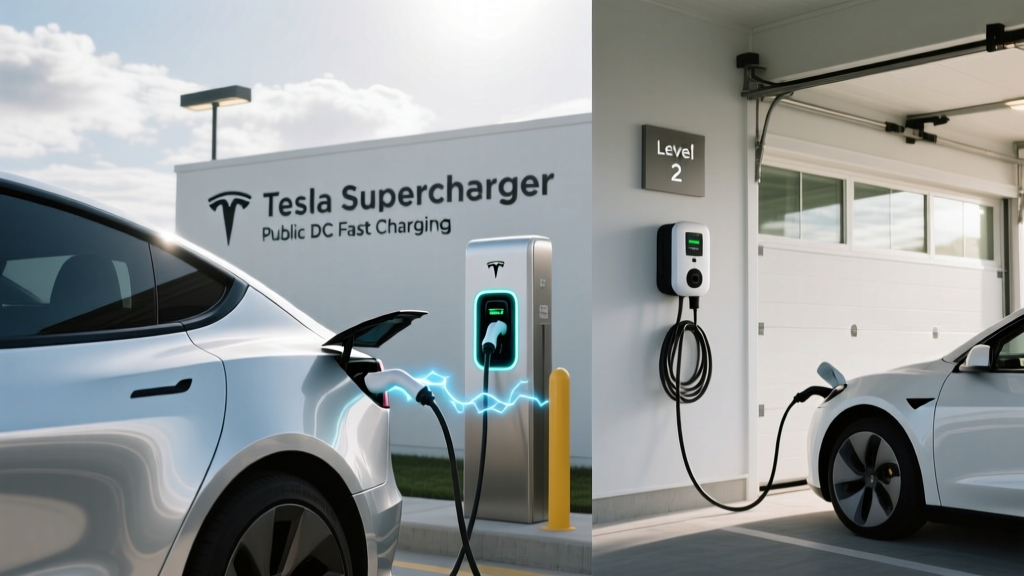
Charging Levels Explained: Level 1, Level 2, and DC Fast Charging
Before buying a charger or an EV, you need to understand the three charging tiers. The distinction between kW (kilowatts — the rate of power flow, like water pressure) and kWh (kilowatt-hours — the total energy stored, like gallons in a tank) is the single most important concept in EV ownership. Your 2011 Jaguar XJ's 19.2-gallon fuel tank is analogous to an EV's battery capacity in kWh; the fuel pump's flow rate in gallons per minute is analogous to a charger's kW rating.
| Level | Voltage | Power (kW) | Miles of Range Added Per Hour | Typical Use Case |
|---|---|---|---|---|
| Level 1 | 120V AC | 1.0–1.4 kW | 3–5 mi/hr | Overnight top-up; low-mileage drivers |
| Level 2 | 240V AC | 7.2–19.2 kW | 25–65 mi/hr | Primary home charging; workplace |
| DC Fast Charge | 400–800V DC | 50–350 kW | 150–1,200 mi/hr (peak) | Road trips; 10–80% in 15–35 min |
Real-world context: A luxury EV with a 100 kWh battery (like the Mercedes EQS 580 or Lucid Air Grand Touring) would take roughly 4 days on Level 1, 10–14 hours on a 7.2 kW Level 2, or about 5–6 hours on an 11.5 kW Level 2 circuit. On a 250 kW DC fast charger, that same 100 kWh pack reaches 10% to 80% in approximately 25–35 minutes, though charge speed tapers significantly above 80% to protect battery health.
How Much Does It Cost to Install a Home EV Charger?
This is the question that stops most luxury-sedan-to-EV converts in their tracks. The answer varies enormously based on your home's electrical panel, the distance from panel to garage, and local permit costs. Here's a realistic breakdown for a 240V / 48A Level 2 home charger installation in 2026:
| Cost Component | Low End | High End | Notes |
|---|---|---|---|
| Level 2 Charger (hardware) | $350 | $750 | Smart Wi-Fi-enabled units (ChargePoint, Wallbox, Tesla) |
| Electrician labor | $500 | $2,000 | Depends on run length, conduit, drywall work |
| Electrical permit | $50 | $300 | Varies by municipality |
| Panel upgrade (if needed) | $1,500 | $4,000 | Required if panel is 100A or near capacity; older homes are higher risk |
| Total (no panel upgrade) | $900 | $3,050 | |
| Total (with panel upgrade) | $2,400 | $7,050 |
The panel-upgrade gotcha: Many homes built before 2000 have 100-amp or 150-amp service panels. A 48A EV charger draws roughly 58A at the breaker (NEC code requires a 125% overcurrent margin: 48A × 1.25 = 60A breaker). If your panel is already running HVAC, electric range, dryer, and other heavy loads near capacity, a 200A panel upgrade may be mandatory. Budget for this possibility — it's the single largest variable in your install cost.
A licensed electrician should perform a load calculation per NEC Article 220 before quoting. Don't accept a quote that skips this step. Some utilities and states offer rebates of $250–$1,000 for charger installation; check your local utility's EV program page and the AFDC state incentive database for current programs.
Electrical Requirements: What Your Home Needs
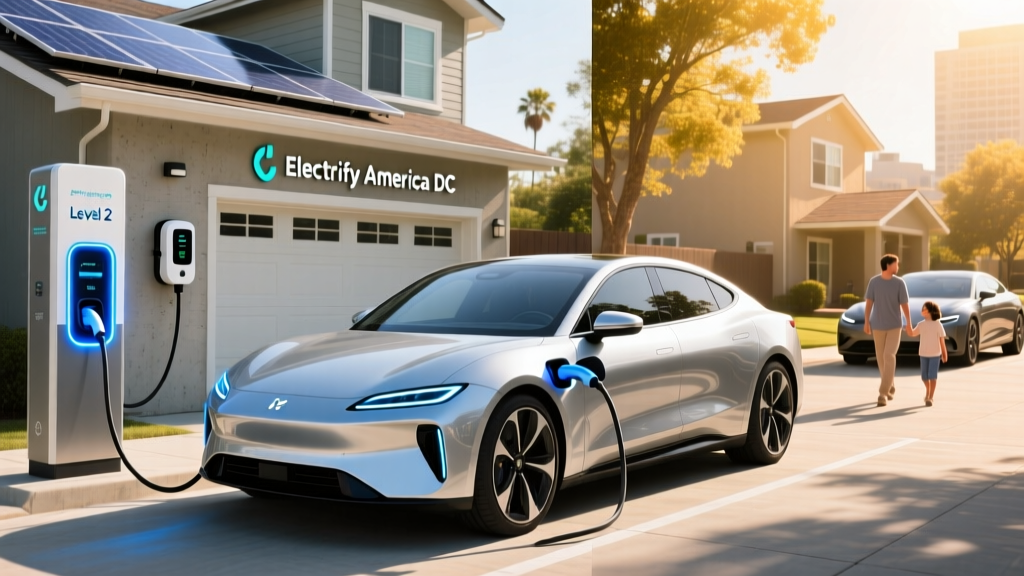
For a standard Level 2 home installation charging at 11.5 kW (48 amps), here's what's required:
- Circuit: Dedicated 60-amp, 240V breaker (for a 48A continuous-load charger per NEC 210.20)
- Wire gauge: 6 AWG copper (THHN in conduit) or 4 AWG aluminum for runs up to ~100 feet; longer runs may need upsized wire to limit voltage drop below 3%
- Outlet vs. hardwired: A NEMA 14-50 receptacle offers portability (take the charger when you move), but hardwired connections are more reliable for outdoor installs and avoid the NEC 2023 requirement for GFCI breakers on receptacles — which can nuisance-trip with some EVSEs
- GFCI protection: Required for outdoor receptacles per NEC 625.54; hardwired units are exempt from this specific GFCI mandate but must still meet ground-fault protection requirements built into the EVSE
- Outdoor rating: If mounting outside, the charger must carry a NEMA 4 or IP65 weather-resistance rating
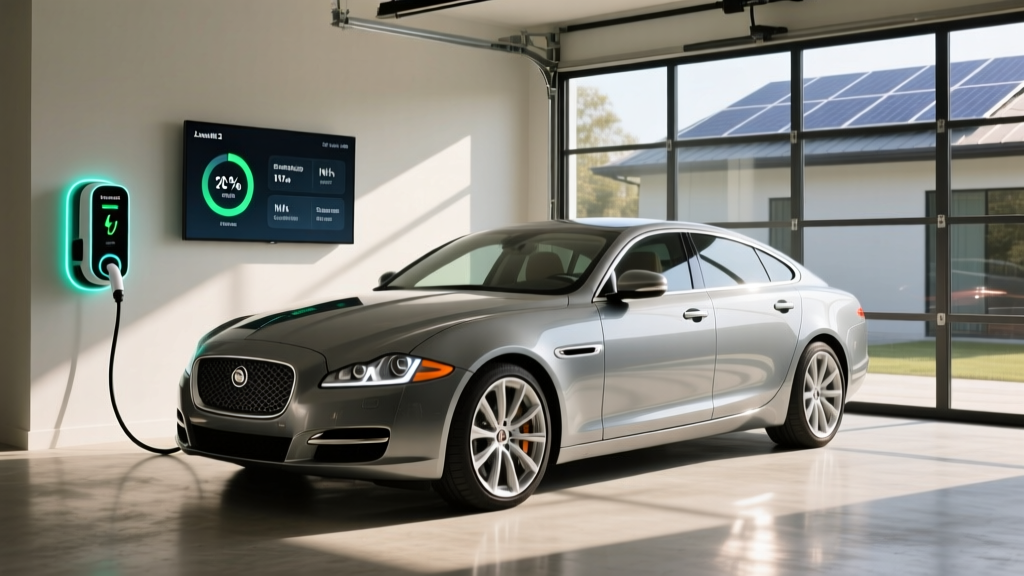
Former XJ Supercharged owners accustomed to pulling into a gas station should note that home Level 2 charging replaces the vast majority of "refueling" stops. Plug in when you park at night; wake up to a full battery. The convenience is genuinely transformative once the infrastructure is in place.
Connector Compatibility: NACS, CCS1, and CHAdeMO
The connector landscape has consolidated significantly by 2026. Here's what you need to know when choosing your next EV:
| Connector Standard | Brands Using It (2026 Models) | DC Fast Charge Availability | Notes |
|---|---|---|---|
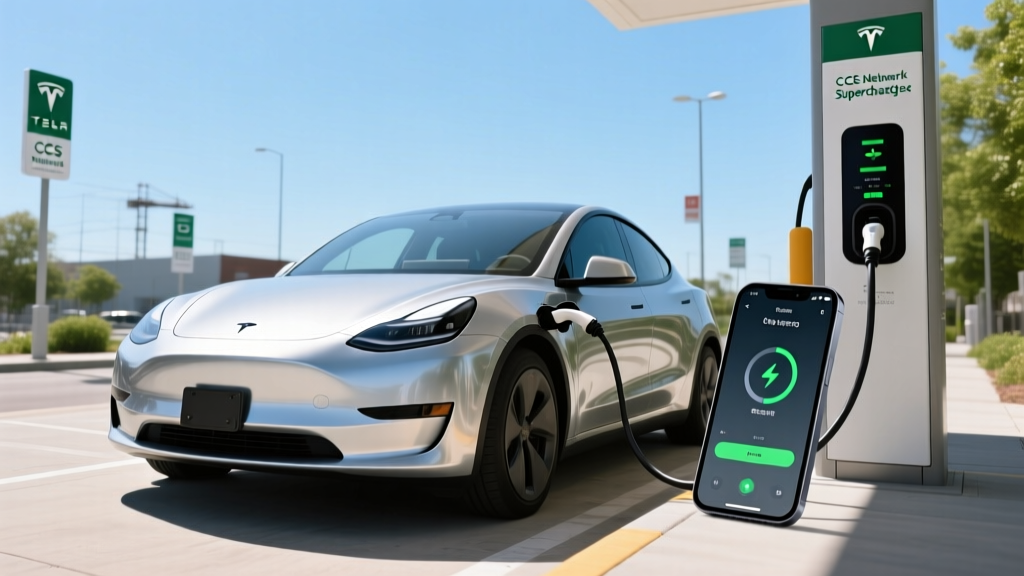
| NACS (Tesla / SAE J3400) | Tesla, Ford, GM, Rivian, Volvo, Polestar, Hyundai, Kia, BMW, Mercedes (select), Lucid, Fisker | Tesla Supercharger network (20,000+ stalls) + growing third-party NACS stations | Now the dominant North American standard; most new EVs ship with NACS ports |
| CCS1 (Combined Charging System) | VW, Audi, Porsche, older BMW/GM/Ford models (pre-2025), Honda Prologue (adapter) | Electrify America, EVgo, ChargePoint DC network | Legacy CCS vehicles can access Tesla Superchargers via adapter (~$200–$250) |
| CHAdeMO | Nissan Leaf (discontinued), Mitsubishi Outlander PHEV (older) | Declining; limited to older Electrify America and independent stations | Effectively deprecated in North America; avoid for new purchases |
Adapter reality: If you buy a CCS1-equipped vehicle (or keep one from the 2023–2024 era), Ford, GM, and other manufacturers sell CCS-to-NACS adapters that grant access to Tesla's Supercharger network. Confirm adapter compatibility with your specific model year before purchasing. The trend is decisively toward NACS, so new buyers should prioritize native NACS ports.
Cost to Charge: EV vs. Your Jaguar XJ Supercharged
Let's run the numbers that matter. The 2011 Jaguar XJ Supercharged with its 5.0L AJ-V8 gets approximately 15 MPG combined per fueleconomy.gov. At $4.20/gallon premium (national average, early 2026) and 15,000 miles/year, that's $4,200 annually in fuel.
| Scenario | Cost per kWh | Cost per Mile (at 3 mi/kWh) | Annual Cost (15k mi) | Savings vs. XJ Supercharged |
|---|---|---|---|---|
| Home charging (off-peak utility rate) | $0.12/kWh | $0.04 | $600 | $3,600/year |
| Home charging (standard residential rate) | $0.18/kWh | $0.06 | $900 | $3,300/year |
| Public Level 2 (ChargePoint, EVgo) | $0.30/kWh | $0.10 | $1,500 | $2,700/year |
| DC Fast Charging (road trips) | $0.48/kWh | $0.16 | $2,400 (if 100% DC) | $1,800/year |
| 2011 Jaguar XJ Supercharged | N/A | $0.28 | $4,200 | Baseline |
Realistic mix: Most EV owners charge 80–90% at home and use DC fast charging only on road trips. A blended annual cost of $800–$1,200 is typical — saving $3,000+ per year compared to the XJ Supercharged's fuel bill. Over a 5-year ownership cycle, that's $15,000–$18,000 in fuel savings alone, which substantially offsets the higher purchase price of a luxury EV.
Charging Time Examples: What to Expect with Common Battery Sizes
Charge times depend on battery capacity (kWh), the charger's maximum power (kW), and the vehicle's onboard charge acceptance rate. Here are realistic estimates for common luxury-EV battery sizes:
- 82 kWh battery (e.g., BMW i7 xDrive50): 10–80% on a 250 kW DC fast charger in ~28 minutes. Level 2 at 11 kW: 0–100% in ~8 hours.
- 100 kWh battery (e.g., Lucid Air Grand Touring): 10–80% on a 300 kW charger in ~22 minutes (Lucid's 900V+ architecture enables exceptional charge speeds). Level 2 at 11.5 kW: ~9.5 hours.
- 108 kWh battery (e.g., Mercedes EQS 580): 10–80% on a 200 kW charger in ~31 minutes. Level 2 at 9.6 kW: ~12 hours.
Charge curve reality check: The "peak" kW figure advertised by manufacturers is sustained only between roughly 10–50% State of Charge. Above 80%, charge speed drops dramatically to protect the battery cells — often to under 30 kW. This is why 10–80% is the standard benchmark rather than 0–100%. On road trips, plan stops around the 10–80% window for maximum efficiency.
Equipment Recommendations: Best Home Chargers for 2026
These are the Level 2 chargers we recommend for luxury-EV owners transitioning from vehicles like the Jaguar XJ Supercharged. All are Wi-Fi-enabled for scheduling, energy monitoring, and utility demand-response programs:
ChargePoint Home Flex
- Power: Up to 12 kW (50A) on a 60A circuit
- Connector: NACS (J3400) or CCS1 — select at purchase
- Cable length: 23 feet
- Smart features: Wi-Fi scheduling, Alexa/Google Home integration, utility demand-response compatible
- Price: ~$599 (NACS version)
- Best for: Versatile, reliable, broad utility program support
Tesla Wall Connector (Gen 4)
- Power: Up to 11.5 kW (48A) on a 60A circuit
- Connector: NACS native
- Cable length: 24 feet
- Smart features: Wi-Fi updates, power sharing between two units on one circuit, Tesla app integration
- Price: ~$475
- Best for: Tesla owners; NACS-native EVs; cleanest aesthetic
Wallbox Pulsar Max
- Power: Up to 11.5 kW (48A) on a 60A circuit
- Connector: NACS or CCS1 — select at purchase
- Cable length: 25 feet (longest in class)
- Smart features: Wi-Fi + Bluetooth, solar-integration mode, dynamic load balancing (optional Power Meter accessory), IP55 outdoor rating
- Price: ~$649
- Best for: Homes with solar panels; longer cable reach needs; outdoor installs
All three units support hardwired or NEMA 14-50 plug installation. For new construction or a dedicated EV circuit, we recommend hardwiring — it eliminates the GFCI breaker requirement and provides a cleaner, more weather-resistant connection.
Safety, Permits, and Code Considerations
EV charging involves continuous high-amperage draw for hours at a time. This is not the same as plugging in a dryer. Key safety and compliance points:
- Permitting is mandatory: Virtually all jurisdictions require an electrical permit for EVSE installation. An unpermitted install can void home insurance claims and create liability in the event of a fire.
- Dedicated circuit: Your EV charger must be on its own dedicated breaker — never shared with other appliances. Sharing circuits risks overcurrent conditions and nuisance tripping.
- Continuous load derating: Per NEC Article 625, EV charging is classified as a continuous load (3+ hours). The circuit must be rated at 125% of the charger's maximum amperage: a 48A charger requires a 60A breaker and 60A-rated wiring.
- Conduit and wire protection: Exposed wiring in garages must be in conduit (EMT or PVC) to protect against physical damage. Outdoor runs require weatherproof conduit and fittings.
- Inspection: After installation, your local electrical inspector will verify code compliance before the system is energized. Factor in 1–3 weeks for inspection scheduling in your timeline.
For a detailed look at the NEC requirements and best practices, the NHTSA EV safety page and the Department of Energy's AFDC charging infrastructure guide are authoritative starting points.
Making the Switch: From Supercharged V8 to Silent Kilowatts
The 2011 Jaguar XJ Supercharged was a masterpiece of its era — hand-built interior, supercharged V8 thrust, and that long-wheelbase presence. But at $4,200/year in fuel, rising maintenance costs (supercharger coolant service, air suspension, ZF transmission), and zero connectivity updates, its ownership arc bends steeply upward.
A modern luxury EV — BMW i7, Lucid Air, Mercedes EQS, Porsche Taycan — delivers comparable or superior refinement with dramatically lower running costs. The missing piece for most buyers isn't the car; it's confidence in the charging setup. With a $1,500–$3,000 home Level 2 installation, off-peak electricity rates, and a NACS-compatible vehicle, you'll charge at home 90% of the time and never think about "range anxiety" again.
Your next step: call a licensed electrician for a load calculation and panel assessment. Once you know your home's capacity, the EV selection becomes a straightforward spec-and-price comparison — one we cover extensively in our luxury EV reviews.
How much does it cost to install a home EV charger?
A typical 240V / 48A Level 2 installation costs $900–$3,050 if your electrical panel has sufficient capacity, or $2,400–$7,050 if a panel upgrade to 200A service is needed. This includes hardware ($350–$750), electrician labor ($500–$2,000), and permits ($50–$300). Utility rebates can offset $250–$1,000 of this cost.
How fast will each charging level add range?
Level 1 (120V) adds 3–5 miles of range per hour — suitable only for low-mileage drivers or PHEVs with small batteries. Level 2 (240V) at 11.5 kW adds roughly 35–40 miles per hour, fully replenishing most EVs overnight. DC fast charging at 150–350 kW adds 150–1,200 miles per hour at peak, taking a typical luxury EV from 10% to 80% in 20–35 minutes.
Which connector/charger is compatible with my EV?
For 2026 model-year EVs, NACS (SAE J3400) is the dominant North American standard, used by Tesla, Ford, GM, Rivian, Hyundai/Kia, BMW, Volvo, and others. CCS1 is found on older models and VW/Porsche vehicles. CHAdeMO is effectively deprecated. Check your vehicle's charge port or manufacturer spec sheet, and buy a home charger with the matching connector. CCS1 vehicles can access Tesla Superchargers via a manufacturer-approved adapter.
How much does charging cost per mile vs gas?
Home charging at off-peak rates (~$0.12/kWh) costs approximately $0.04 per mile in a typical luxury EV. Public DC fast charging averages $0.16/mile. Compare that to the 2011 Jaguar XJ Supercharged at 15 MPG on $4.20/gallon premium — that's $0.28 per mile. Even the most expensive public EV charging is cheaper than fueling a supercharged V8.
What electrical upgrades might I need?
The most common upgrade is a panel replacement from 100A or 150A to 200A service, which costs $1,500–$4,000. This is more likely in homes built before 2000 or homes with electric HVAC, range, and dryer already consuming significant panel capacity. A licensed electrician will perform an NEC Article 220 load calculation to determine if your current panel can support a 60A dedicated EV circuit. Some homes may also need a service lateral upgrade from the utility, which can add $1,000–$3,000.