If you're still driving a 2011 Audi A6 3.0T Supercharged — or considering buying one as a used luxury sedan — you've likely wondered how its fuel costs and ownership experience compare to a modern battery-electric vehicle. The supercharged 3.0L V6 in that A6 produces 310 hp and delivers an EPA-rated 18 city / 27 highway / 21 combined MPG, which was respectable for its era. But with electricity prices and EV charging infrastructure maturing rapidly, the math is shifting.
This guide breaks down exactly what it costs to fuel the 2011 A6 Supercharged versus charging a comparable 2026 EV, walks through every charging level and home-installation cost, and explains the electrical upgrades you might need. Whether you're cross-shopping or planning a garage transition from Audi's C7 generation to a battery-electric platform, the numbers below will give you a precise, apples-to-apples picture.
Fueling the 2011 Audi A6 Supercharged: The Baseline
The 2011 Audi A6 3.0T Quattro with the supercharged V6 requires premium unleaded fuel (91 octane or higher). With a 19.8-gallon fuel tank and the EPA combined rating of 21 MPG, you're looking at roughly 415 miles of real-world range per fill-up — though aggressive driving, cold weather, and highway speeds above 70 mph will push that closer to 350–380 miles.
At a national average premium fuel price of approximately $4.10 per gallon (early 2026 data from EIA), a full tank costs around $81.18. That works out to roughly $0.195 per mile at the EPA combined rating. For a driver covering 12,000 miles annually, that's approximately $2,340 per year in fuel costs alone.
This is the number any modern EV needs to beat. Let's look at how charging compares.
Charging Levels Explained: Speeds, Power, and Miles Per Hour
EV charging is categorized into three levels. Understanding the difference between kW (kilowatts — the rate of power delivery, like water pressure in a hose) and kWh (kilowatt-hours — the total energy stored or delivered, like gallons in a tank) is essential. Your EV's battery is measured in kWh; the charger's speed is measured in kW.
| Charging Level | Voltage / Power | Typical kW Output | Miles of Range Added Per Hour | Best Use Case |
|---|---|---|---|---|
| Level 1 | 120V / 15–20A | 1.4–1.9 kW | 3–5 miles/hr | Overnight trickle; PHEVs; low daily mileage |
| Level 2 | 240V / 30–60A | 7.2–19.2 kW | 20–60 miles/hr | Home daily charging; workplace; destinations |
| DC Fast Charging | 400–800V DC | 50–350 kW | 150–1,200+ miles/hr (peak) | Road trips; rapid top-ups; commercial fleets |
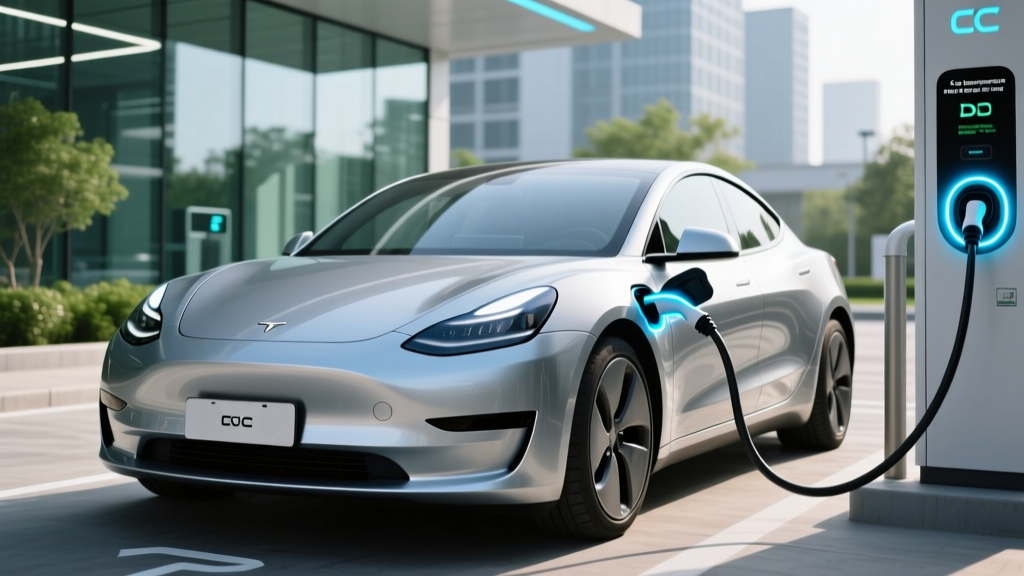
For context, a typical 2026 mid-size electric sedan with an 82 kWh (usable) battery and 3.5 mi/kWh efficiency would gain roughly 287 miles of EPA range on a full charge. On a 48A Level 2 home charger (11.5 kW), that battery charges from 10% to 80% in approximately 5 hours. On a 150 kW DC fast charger, the same 10–80% session takes about 25–30 minutes, depending on the vehicle's charge curve and battery preconditioning.
Home EV Charger Installation: Electrical Requirements and Costs
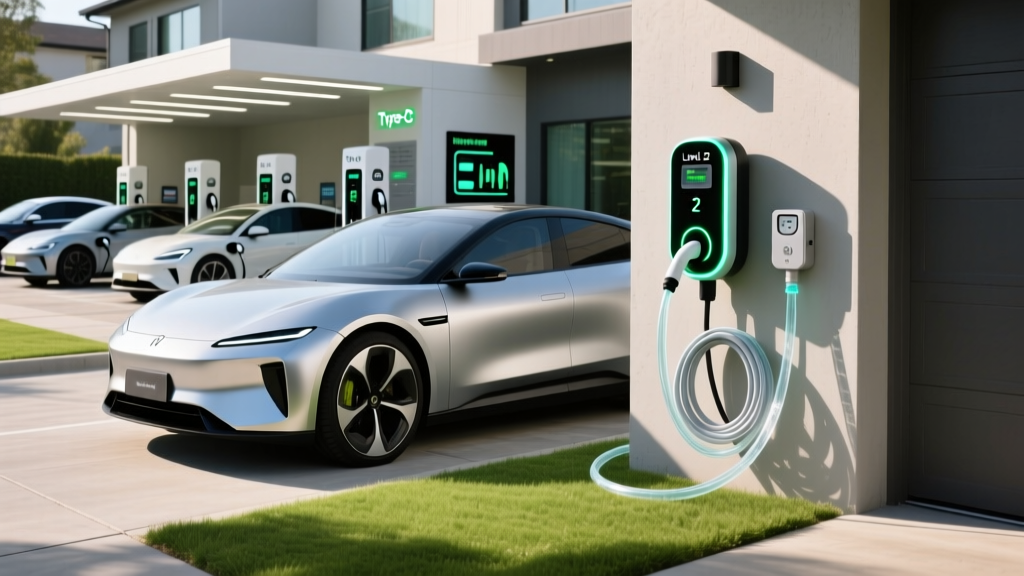
Installing a Level 2 home charger is the single biggest infrastructure decision for an EV owner. Most homes built after the 1990s have a 200-amp electrical panel, which can typically support a 40A–60A dedicated circuit for EV charging. Older homes — including many built around the same era as a 2011 Audi A6 would have been garaged — may have 100A or 150A panels that require an upgrade.
Electrical Requirements for a Typical Level 2 Installation
- Circuit: Dedicated 50A or 60A breaker (240V), sized at 125% of continuous load per NEC Article 625
- Wire: 6 AWG copper (for 50A) or 4 AWG copper (for 60A), run in conduit where exposed
- Outlet: NEMA 14-50 receptacle (for plug-in chargers) or hardwired connection (often preferred for 48A+ chargers to avoid GFCI nuisance trips)
- Permit: Required in nearly all US jurisdictions; involves an electrical inspection after installation
- GFCI: NEC 2020/2023 requires GFCI protection on 240V receptacles used for EV charging in garages — hardwiring bypasses this requirement since the charger has internal ground-fault protection
Installation Cost Breakdown
| Cost Component | Simple Install (panel nearby, short run) | Complex Install (long wire run, panel upgrade) |
|---|---|---|
| Level 2 Charger Equipment | $400–$700 | $500–$800 |
| Electrician Labor (2–8 hours) | $300–$600 | $800–$2,500 |
| Materials (wire, conduit, breaker) | $100–$300 | $300–$800 |
| Permit & Inspection | $50–$200 | $100–$300 |
| Electrical Panel Upgrade (if needed) | $0 (not needed) | $1,500–$4,000 |
| Total Estimated Cost | $850–$1,800 | $3,200–$8,400 |
Which Connector Is Compatible With Your EV?
As of 2026, the North American EV connector landscape has largely consolidated around NACS (North American Charging Standard, originally Tesla's proprietary connector), though CCS1-equipped vehicles remain on the road. Here's how the major connector types break down by manufacturer:
| Connector Type | Brands Using It (Native) | Adapter Availability |
|---|---|---|
| NACS (Tesla / SAE J3400) | Tesla, Ford, GM, Rivian, Volvo, Polestar, Hyundai/Kia (2025+), BMW, Mercedes-Benz (2025+) | Tesla-to-CCS adapter available from Tesla ($195); third-party adapters from Lectron, AKEEYO |
| CCS1 (Combined Charging System) | VW, Audi (e-tron GT, Q8 e-tron), Porsche, BMW (pre-2025), Stellantis, Honda (Prologue) | CCS-to-NACS adapters widely available; needed for Tesla Supercharger access |
| CHAdeMO | Nissan Leaf (legacy); Mitsubishi Outlander PHEV (legacy) | Declining infrastructure; no NACS adapter widely available; CHAdeMO stations being phased out |
If you're transitioning from a gasoline car like the 2011 Audi A6 Supercharged to a modern EV, your new vehicle will almost certainly use either NACS or CCS1. For home Level 2 charging, all EVs use the J1772 connector (or NACS, which includes Level 2 AC pins), so any Level 2 home charger with a J1772 plug will work with any EV sold in North America — with a simple adapter for NACS vehicles if the charger has a J1772 tether.
Cost to Charge an EV Per Mile vs. Fueling the Audi A6 3.0T
This is where the comparison gets concrete. Let's model the cost per mile for a typical 2026 EV (using 3.5 mi/kWh efficiency, representative of vehicles like the Hyundai Ioniq 6 or Tesla Model 3) against the 2011 Audi A6 Supercharged at 21 MPG combined on premium fuel.
| Scenario | Cost Per kWh or Gallon | Cost Per Mile (A6 at 21 MPG) | Cost Per Mile (EV at 3.5 mi/kWh) |
|---|---|---|---|
| Home Charging (off-peak utility rate) | $0.12/kWh | — | $0.034 |
| Home Charging (standard residential rate) | $0.16/kWh | — | $0.046 |
| Public Level 2 (network pricing) | $0.30/kWh | — | $0.086 |
| DC Fast Charging (Electrify America, EVgo) | $0.48/kWh | — | $0.137 |
| Premium Gasoline (national avg.) | $4.10/gallon | $0.195 | — |
Annual savings at 12,000 miles/year: Charging primarily at home on an off-peak rate ($0.12/kWh), the EV costs $408/year in electricity. The Audi A6 costs $2,340/year in premium fuel. That's a $1,932 annual fuel savings — or roughly $161 per month — before factoring in the Audi's higher oil-change and maintenance costs.
Even on the most expensive DC fast chargers at $0.48/kWh, the EV's $0.137/mile cost still undercuts the A6's $0.195/mile. The EV only becomes more expensive per mile if you exclusively use premium-priced urban DC chargers at $0.60+/kWh — a scenario most owners avoid by charging at home.
Charging Time Examples for Common Battery Sizes
How long does charging actually take? Here are real-world estimates for common usable battery capacities at each charging level, assuming a 10–80% session (the practical charging window for daily and road-trip use):
- 40 kWh battery (e.g., base Nissan Leaf): Level 2 at 7.2 kW → ~4 hours; 50 kW DC → ~40 minutes; 150 kW DC → ~20 minutes
- 62 kWh battery (e.g., Chevy Equinox EV): Level 2 at 11.5 kW → ~4.5 hours; 150 kW DC → ~25 minutes
- 82 kWh battery (e.g., Tesla Model 3 Long Range, Hyundai Ioniq 5): Level 2 at 11.5 kW → ~6 hours; 250 kW DC → ~18–22 minutes (with preconditioning)
- 100 kWh battery (e.g., GMC Sierra EV, Rivian R1T Max Pack): Level 2 at 11.5 kW → ~7.5 hours; 350 kW DC → ~20–25 minutes (800V architecture)
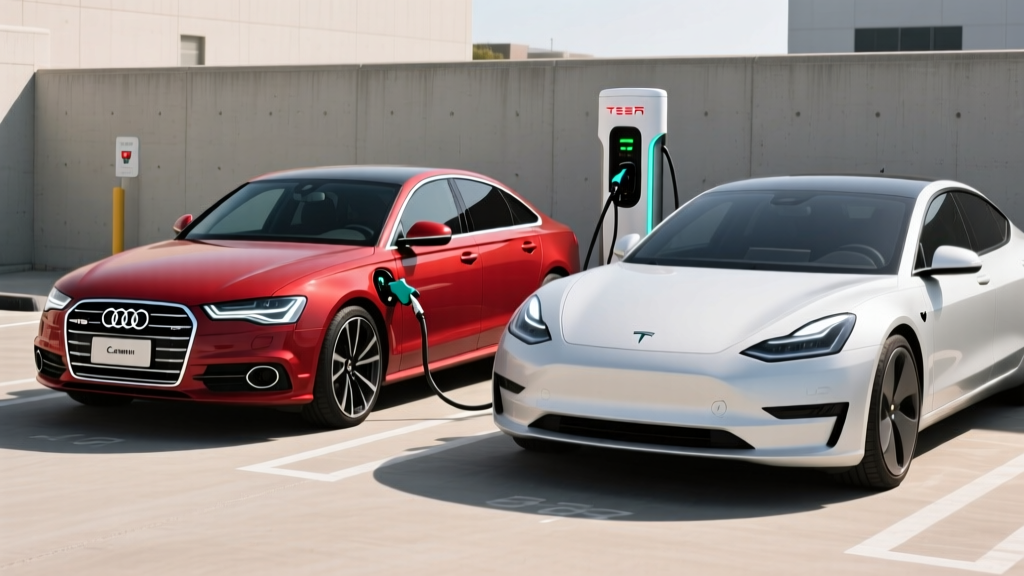
Compare this to the 2011 Audi A6: refueling its 19.8-gallon tank takes about 3–4 minutes at any gas station. The EV trade-off is clear — longer "refueling" times at DC chargers on road trips, but the convenience of starting every morning with a full "tank" at home, which is where 85–90% of EV charging occurs according to the U.S. Department of Energy.
Recommended Level 2 Home Chargers
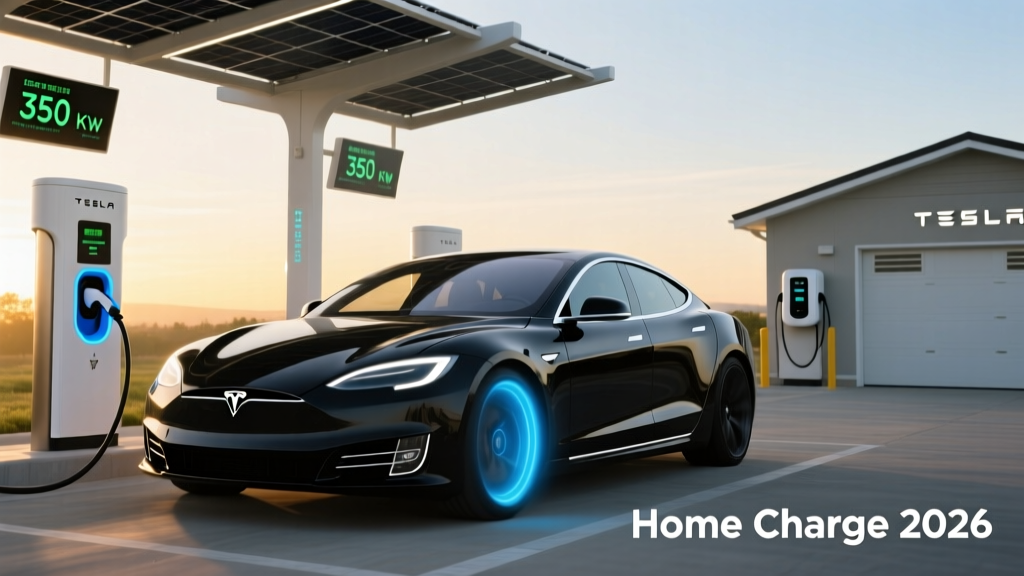
Below are three well-regarded Level 2 home chargers for 2026, selected for reliability, smart features, and value. All are available with either NACS or J1772 connectors:
ChargePoint Home Flex (NACS or J1772)
- Power Output: Up to 12 kW (50A, 240V) — adjustable down to 16A for lower-capacity panels
- Cable Length: 23 feet
- Smart Features: Wi-Fi, scheduling via app, Alexa integration, energy tracking, automatic software updates
- Price: ~$599 (NACS) / ~$549 (J1772)
- Best For: Most EV owners; adjustable amperage accommodates older panels
Tesla Wall Connector (NACS native)
- Power Output: Up to 11.5 kW (48A, 240V)
- Cable Length: 24 feet
- Smart Features: Wi-Fi, over-the-air updates, power-sharing (link up to 6 units on one circuit), Tesla app integration
- Price: ~$475
- Best For: Tesla owners and NACS-native vehicles; cleanest integration with Tesla ecosystem
Emporia Level 2 Smart Charger
- Power Output: Up to 11.5 kW (48A, 240V)
- Cable Length: 24 feet
- Smart Features: Wi-Fi, real-time energy monitoring, solar integration, time-of-use scheduling, works with Emporia Vue energy monitor
- Price: ~$399
- Best For: Budget-conscious buyers who want detailed energy data and solar-aware charging
Safety, Code, and Installation Best Practices
EV charging installations must comply with the National Electrical Code (NEC) Article 625 and any local amendments. Key safety considerations include:
- Dedicated circuit: Your EV charger must have its own dedicated breaker — it cannot share a circuit with other appliances or outlets.
- Hardwired vs. plug-in: Hardwired installations (no NEMA outlet) are preferred for 48A+ chargers. They avoid NEC-mandated GFCI breakers on 240V receptacles, which are prone to nuisance tripping with EV chargers that already have built-in ground-fault protection.
- Outdoor rating: If your charger is installed outside (carport, driveway), ensure it carries a NEMA 4 (weatherproof) rating. Most major chargers (ChargePoint, Tesla, Emporia) are rated for outdoor use.
- Cable management: A 23–24 foot cable is sufficient for most single-car garages. If you need to reach a second parking spot, look for 25-foot options or plan conduit runs for a second unit.
- Utility notification: Some utilities require notification before installing an EV charger, and many offer time-of-use (TOU) rate plans that reduce off-peak electricity costs to $0.06–$0.10/kWh — dramatically improving the cost-per-mile advantage over the Audi A6's premium fuel.
For detailed electrical specifications, always defer to a licensed electrician who can perform a load calculation on your specific panel. The National Fire Protection Association (NFPA) maintains the NEC code reference that governs all EV charging installations.
Frequently Asked Questions
How much does it cost to install a home EV charger?
A straightforward Level 2 installation with a nearby electrical panel typically costs $850–$1,800 (charger + electrician + permit + materials). If your home needs a panel upgrade from 100A to 200A, total costs can reach $3,200–$8,400. Get at least two quotes from licensed electricians, and check whether your utility or state offers EV installation rebates.
How fast will each charging level add range?
Level 1 (120V) adds 3–5 miles of range per hour. Level 2 (240V) adds 20–60 miles per hour depending on amperage. DC fast charging adds 150–1,200+ miles per hour at peak rates, though the charge curve tapers significantly above 80% SoC. For daily driving, Level 2 at home replenishes a full day's driving in 1–3 hours of plug-in time.
Which connector/charger is compatible with my EV?
For 2026 model-year vehicles: Tesla, Ford, GM, Rivian, Hyundai/Kia, Volvo, and BMW use NACS. Volkswagen, Audi (e-tron models), Porsche, and some older BMWs use CCS1. Nissan Leaf (discontinued) used CHAdeMO. All Level 2 home chargers with J1772 plugs work with CCS1 vehicles natively and with NACS vehicles via a simple adapter. When buying a charger, match the connector to your vehicle or choose a J1772 unit with an adapter.
How much does charging cost per mile vs. gas?
At a typical home electricity rate of $0.12–$0.16/kWh and an EV efficiency of 3.5 mi/kWh, charging costs $0.034–$0.046 per mile. Premium gasoline at $4.10/gallon in the 2011 Audi A6 at 21 MPG costs $0.195 per mile. Home charging is approximately 75–83% cheaper per mile than fueling the A6 on premium. Even public DC fast charging at $0.48/kWh ($0.137/mile) remains 30% cheaper.
What electrical upgrades might I need?
If your home has a 100A electrical panel, you'll likely need a 200A panel upgrade ($1,500–$4,000) before adding a 40A–50A EV circuit. Homes with 150A panels may accommodate a 32A (7.7 kW) charger without upgrading, depending on existing loads. A 200A panel can typically support a 48A–60A circuit. Always have an electrician perform a NEC Article 220 load calculation. Some homeowners opt for smart panels (e.g., Span) or load-management devices (e.g., Emporia, Myenergi) that dynamically reduce charger amperage when other household loads spike, avoiding a panel upgrade entirely.