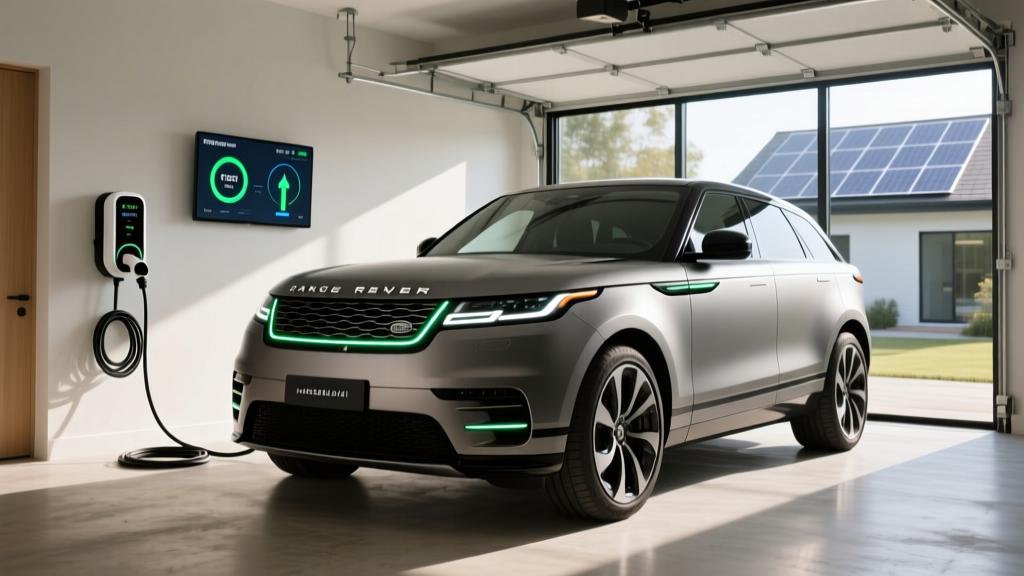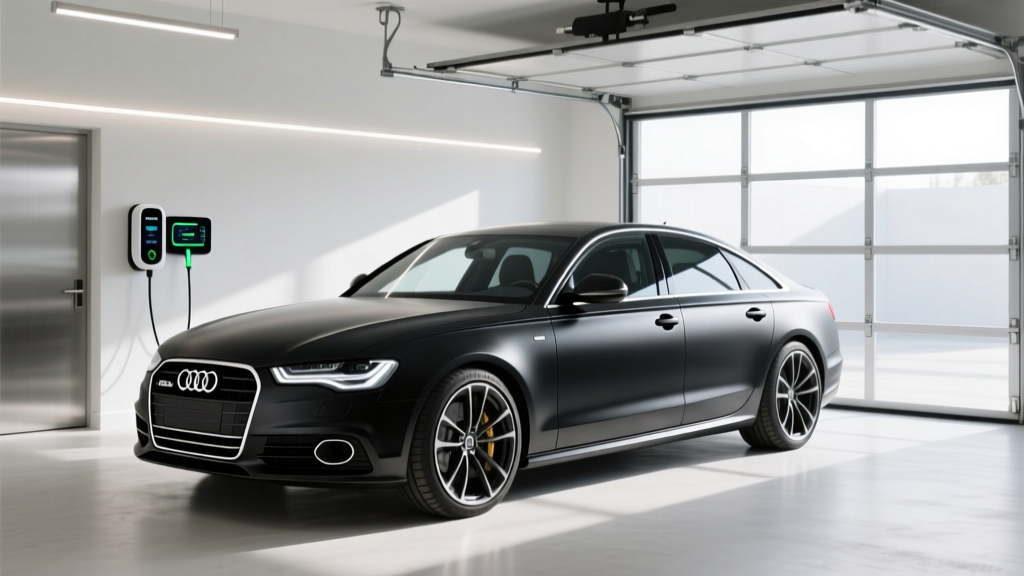
If you're still driving a 2011 Audi A6 3.0T Supercharged — or you've finally decided to trade that beloved 3.0-liter V6 for an electric vehicle — one of the biggest questions you'll face is how charging actually works and what it will cost to set up at home. That Audi's 3.0L supercharged engine delivers around 300 hp and gets roughly 18-19 MPG combined, meaning you're spending close to $0.22 per mile on fuel at current gas prices. An EV can cut that to $0.04-$0.12 per mile, but only if you understand the charging ecosystem before you buy.
This guide is written specifically for drivers coming from performance-oriented luxury sedans like the A6 3.0T. You're used to premium fuel, a refined cabin, and quick acceleration. We'll show you exactly what home charging installation involves, what speeds to expect, which connectors your next EV will use, and how the cost-per-mile math compares to your supercharged Audi.
Charging Levels Explained: Level 1, Level 2, and DC Fast Charging
EV charging falls into three tiers. The critical distinction to internalize: kW (kilowatts) measures power — the rate of charging, while kWh (kilowatt-hours) measures energy — the total capacity of the battery. Think of kW as the width of the pipe and kWh as the size of the tank. Confusing these two is the most common mistake new EV owners make.
| Level | Voltage / Amperage | Max Power (kW) | Miles of Range Added Per Hour | Typical Use Case |
|---|---|---|---|---|
| Level 1 | 120V / 12A | ~1.4 kW | 3-5 miles | Overnight top-up, PHEVs, low daily mileage |
| Level 2 (Home) | 240V / 32-48A | 7.7-11.5 kW | 25-45 miles | Daily home charging, full overnight recharge |
| Level 2 (Public) | 240V / 40-80A | 9.6-19.2 kW | 30-65 miles | Workplace, shopping, apartment buildings |
| DC Fast Charging | 200-800V DC | 50-350 kW | 150-1,200+ miles per hour (theoretical) | Road trips, highway corridors |
For context, a modern EV with a 77 kWh usable battery (like the BMW i4 eDrive40 or Hyundai Ioniq 6 Long Range) needs roughly 7-10 hours on a Level 2 home charger to go from 10% to 100%. That same charge on a 150 kW DC fast charger takes about 25-30 minutes from 10% to 80%. Below 80%, DC charging is rapid; above 80%, the battery management system throttles the charge rate to protect cell health — this is called the charge curve taper.
Home Charger Installation: Electrical Requirements and Real Costs
Coming from a 2011 Audi A6, you may own a home built in the 1990s or early 2000s with a 100-amp or 150-amp electrical panel. That matters because a Level 2 EV charger draws significant continuous current, and electrical code requires the circuit to be rated at 125% of the continuous load.
| Component | Simple Install (Panel Nearby) | Complex Install (Panel Upgrade / Long Run) |
|---|---|---|
| Level 2 Charger Equipment | $400-$700 | $400-$700 |
| Electrician Labor (240V/50A circuit, 40A charger) | $500-$1,200 | $1,500-$3,000 |
| Permit and Inspection | $100-$300 | $150-$400 |
| Electrical Panel Upgrade (100A → 200A, if needed) | $0 | $2,000-$4,500 |
| Conduit, Wire, and Miscellaneous | $100-$300 | $400-$1,000 |
| Total Estimated Range | $1,100-$2,500 | $4,450-$9,600 |
A standard Level 2 home setup requires a 240-volt, 50-amp dedicated circuit to support a 40-amp continuous-draw charger (like the ChargePoint Home Flex or Emporia Level 2). The National Electrical Code (NEC Article 625) mandates a dedicated circuit — you cannot share it with a dryer or oven. If your garage is far from the main panel, wire costs (copper 6 AWG THHN runs approximately $3-$5 per foot) add up quickly.
The panel upgrade scenario is the budget-killer most guides understate. If your home has a 100-amp panel and you're already running central air, an electric dryer, and an electric oven, a 50-amp EV circuit may exceed your panel's capacity. An electrician will perform a load calculation per NEC Article 220 to determine this. If an upgrade is needed, expect to pay $2,000-$4,500 for a 200-amp panel swap, including utility coordination.
Connector Compatibility: NACS, CCS, and CHAdeMO in 2026
The connector landscape has consolidated significantly since 2023. Here's what you need to know when shopping for your next EV:
| Connector | Also Known As | Brands Using It Natively | Adapter Available? |
|---|---|---|---|
| NACS | Tesla connector, J3400 | Tesla, Ford, GM, Rivian, Volvo, Polestar, BMW (2025+), Hyundai/Kia (2025+), Mercedes-Benz (2025+) | CCS-to-NACS adapters from Tesla, Lectron, A2Z |
| CCS1 | Combined Charging System | Legacy: older VW, BMW, Hyundai/Kia (pre-2025), Stellantis models | NACS-to-CCS adapters widely available |
| CHAdeMO | N/A | Nissan Leaf (discontinued), Mitsubishi Outlander PHEV (legacy) | Limited; not recommended for new purchases |
As of 2026, the NACS (North American Charging Standard, now SAE J3400) connector has effectively won. Nearly every major automaker has adopted it for new models. If you're buying a new EV today, it will almost certainly have a NACS port. Tesla's Supercharger network — over 25,000 stalls in North America — is now open to NACS-equipped vehicles from other brands, which dramatically improves public charging access.
For your home Level 2 charger, most units ship with a J1772 connector (the legacy Level 2 standard). If your new EV has a NACS port, you'll either buy a NACS-equipped home charger (like the Tesla Wall Connector) or use the J1772-to-NACS adapter that comes with most new vehicles.
Cost Per Mile: EV Charging vs. Your Audi A6 3.0T Supercharged
The 2011 Audi A6 3.0T Supercharged requires premium fuel (91+ octane) and returns an EPA-rated 18 city / 26 highway / 21 combined MPG. In real-world mixed driving, expect closer to 18-19 MPG. At $4.10/gallon for premium (early 2026 national average), your fuel cost is approximately $0.22 per mile.
| Scenario | Rate | Cost Per Mile | Annual Cost (12,000 mi) |
|---|---|---|---|
| 2011 Audi A6 3.0T (Premium Gas, 19 MPG) | $4.10/gal | $0.216 | $2,590 |
| EV — Home Off-Peak (0.30 kWh/mi, $0.12/kWh) | $0.036/mi | $0.036 | $432 |
| EV — Home Standard Rate (0.30 kWh/mi, $0.17/kWh) | $0.051/mi | $0.051 | $612 |
| EV — Public Level 2 (0.30 kWh/mi, $0.30/kWh) | $0.090/mi | $0.090 | $1,080 |
| EV — DC Fast Charging (0.30 kWh/mi, $0.48/kWh) | $0.144/mi | $0.144 | $1,728 |
The math is clear: home charging at off-peak rates saves roughly $2,158 per year compared to fueling the A6 3.0T. Even exclusive DC fast charging — the most expensive scenario and not how most owners charge daily — still saves about $862 annually. The key to maximizing savings is home Level 2 charging on a time-of-use (TOU) electricity plan. Many utilities offer rates as low as $0.08-$0.12/kWh during overnight hours (typically 10 PM - 6 AM).
According to fueleconomy.gov, the average EV efficiency in 2025-2026 is approximately 3.0-3.5 miles per kWh (roughly 0.29-0.33 kWh/mile). Vehicles like the Hyundai Ioniq 6 SE Long Range achieve up to 4.2 mi/kWh, while heavier models like the Rivian R1T average around 2.4 mi/kWh.
Charging Time Examples: 10% to 80% for Common Battery Sizes
Real-world charging times depend on battery size, peak charge rate, and the charge curve. No EV sustains its peak kW rate for the entire session — charging slows significantly above 80% State of Charge (SoC). Here's what to expect for popular battery sizes on DC fast charging:
| Battery Size (kWh Usable) | Example Vehicles | 150 kW Charger | 250 kW Charger | 350 kW Charger |
|---|---|---|---|---|
| 58-62 kWh | VW ID.4, Chevrolet Equinox EV | ~28-32 min | ~22-26 min | ~22-26 min (vehicle-limited) |
| 72-77 kWh | BMW i4, Hyundai Ioniq 6, Tesla Model 3 LR | ~30-35 min | ~18-22 min | ~18-22 min (vehicle-limited) |
| 85-100 kWh | BMW iX, Tesla Model S, Mercedes EQS | ~38-45 min | ~22-30 min | ~18-25 min |
| 110-135 kWh | Hummer EV, Rivian R1T Max Pack | ~55-70 min | ~35-45 min | ~28-38 min |
A critical nuance: a vehicle advertising a "250 kW peak charge rate" does not charge at 250 kW for the full session. Most EVs hit peak rate between 10-30% SoC, then taper progressively. The Hyundai Ioniq 5, for example, peaks at ~233 kW but averages closer to ~150 kW over a 10-80% session, yielding an 18-minute charge time on a 350 kW stall. Always look for "10-80% time" rather than peak kW alone.
Equipment Recommendations: Best Home Level 2 Chargers for 2026
ChargePoint Home Flex
- Power Output: Up to 11.5 kW (48A) on a 60A circuit, configurable down to 16A
- Connector: J1772 (use adapter for NACS vehicles)
- Cable Length: 23 feet
- Smart Features: Wi-Fi, app scheduling, energy tracking, Alexa integration
- Price: ~$549 (charger only)
- Best For: Flexibility across amperages; works well on 40A or 60A circuits
Tesla Wall Connector (Gen 4)
- Power Output: Up to 11.5 kW (48A) on a 60A circuit
- Connector: NACS native (J1772 adapter included)
- Cable Length: 24 feet
- Smart Features: Wi-Fi, over-the-air updates, Tesla app integration, load sharing between multiple units
- Price: ~$475
- Best For: Tesla owners and anyone buying a NACS-equipped EV
Emporia Vue Level 2 Charger
- Power Output: Up to 11.5 kW (48A) on a 60A circuit
- Connector: J1772 (NACS adapter available)
- Cable Length: 24 feet
- Smart Features: Energy monitoring with whole-home panel integration, solar-aware charging, app control
- Price: ~$399
- Best For: Budget-conscious buyers who want smart energy tracking
All three chargers require a hardwired installation for maximum amperage (48A). A NEMA 14-50 outlet installation is an alternative that limits you to 40A (9.6 kW) but allows you to take the charger when you move. Hardwired installations are generally preferred for reliability and code compliance at higher amperages.
Safety and Electrical Code Considerations
EV charging is a high-draw, continuous-load application — it runs for hours at a time, unlike a microwave or hair dryer. This makes proper installation non-negotiable:
- Dedicated Circuit: NEC Article 625 requires the EV charger to have its own dedicated circuit. No sharing with other appliances.
- GFCI Protection: As of the 2020 NEC update, all outdoor EV charging outlets require GFCI (Ground Fault Circuit Interrupter) protection. Indoor installations may also require GFCI depending on your jurisdiction. Hardwired chargers with built-in ground fault protection satisfy this requirement.
- Outdoor Rating: If your charger is installed outdoors (on an exterior garage wall or carport), ensure the unit carries a NEMA 4 or IP56 weather-resistance rating. All three chargers listed above are outdoor-rated.
- Wire Gauge: A 60A circuit requires 6 AWG copper wire for runs under 50 feet. Longer runs may require 4 AWG to minimize voltage drop.
- Permit and Inspection: Most jurisdictions require an electrical permit and a post-installation inspection. Do not skip this — it protects your home insurance coverage and ensures the work meets code. Per the National Electrical Code, unpermitted electrical work can void insurance claims in the event of a fire.
Federal Tax Credits and Incentives for Home Charging
The federal Alternative Fuel Vehicle Refueling Property Credit (IRS Form 8911) was restored under the Inflation Reduction Act. For 2023-2032, homeowners can claim a tax credit of 30% of the cost of home EV charger equipment and installation, up to $1,000. This covers the charger hardware, electrician labor, wiring, and permit fees.
Key restrictions apply: the home must be in an eligible census tract (non-urban or low-income community as defined by the IRS), and you must have sufficient tax liability to claim the credit — it is non-refundable. Check the IRS guidelines for the Alternative Fuel Vehicle Refueling Property Credit for eligibility specifics, and consult a tax professional for your situation. Many states and utilities also offer additional rebates of $250-$1,500 for Level 2 charger installation — check your local utility's EV program page.
Frequently Asked Questions
How much does it cost to install a home EV charger?
A straightforward Level 2 installation (panel nearby, no upgrade needed) typically costs $1,100-$2,500 including the charger, electrician labor, wire, and permit. If your home needs a 200-amp panel upgrade or the charger is far from the panel, costs can reach $4,500-$9,600. Always get at least two quotes from licensed electricians who have EV charger installation experience.
How fast will each charging level add range?
Level 1 (120V) adds 3-5 miles per hour — adequate for plug-in hybrids with small batteries or EVs driven less than 30 miles daily. Level 2 (240V, 40-48A) adds 25-45 miles per hour, enough to fully recharge most EVs overnight. DC fast charging adds 150-300+ miles in 20-30 minutes, depending on battery size and charger power.
Which connector and charger is compatible with my EV?
If you're buying a 2025-2026 model-year EV, it will almost certainly have a NACS (J3400) port. Buy a Tesla Wall Connector for native NACS compatibility, or use a J1772 charger with the J1772-to-NACS adapter included with most new vehicles. For DC fast charging, NACS-equipped vehicles can use Tesla Superchargers and an expanding number of third-party networks with NACS cables.
How much does charging cost per mile compared to gas?
Home charging at off-peak rates costs approximately $0.03-$0.05 per mile — roughly 80% less than fueling a 2011 Audi A6 3.0T on premium gas at $0.22 per mile. Even public DC fast charging at $0.48/kWh costs about $0.14 per mile, still saving you 35% vs. gas. The savings compound: over 12,000 miles annually, home charging saves $1,900-$2,150 compared to premium fuel.
What electrical upgrades might I need?
Homes with 100-amp panels often need a panel upgrade to 200 amps to accommodate a 50A EV circuit alongside existing loads (HVAC, dryer, oven). An electrician will perform a NEC Article 220 load calculation to determine if an upgrade is necessary. Some utilities offer "smart panel" solutions or managed charging programs that allow EV charging on existing panels by dynamically reducing charge rate when other loads spike — ask your electrician about these options.
Can I just plug into a regular outlet?
Yes — Level 1 charging uses a standard 120V household outlet and the portable cord that comes with most EVs. However, at only 1.4 kW (3-5 miles of range per hour), a full recharge of a 77 kWh battery takes 50+ hours. Level 1 is practical for plug-in hybrids with 25-40 miles of electric range or as a backup. For a full EV, Level 2 home charging is strongly recommended.
Making the Transition from Your A6 3.0T
The 2011 Audi A6 3.0T Supercharged was an excellent sedan — smooth power delivery, quattro all-wheel drive, and a genuinely premium cabin. If you're moving to an EV, you'll want to match those qualities. Consider vehicles like the BMW i5 xDrive40 (305-mile EPA range, 590 hp, NACS port, 205 kW DC fast charging), the Hyundai Ioniq 6 Limited AWD (316-mile range, 320 hp, ultra-fast 800V architecture), or the Genesis Electrified G80 (282-mile range, luxury sedan positioning closest to the A6 segment).
Before you buy, get an electrician quote for your home charger installation. Knowing whether you need a panel upgrade — and what your total setup cost will be — lets you budget accurately and avoid the most common surprise in EV ownership. The transition from supercharged V6 to electric is one you won't regret, especially when you're adding 35+ miles of range every hour you sleep, for about $0.04 per mile.