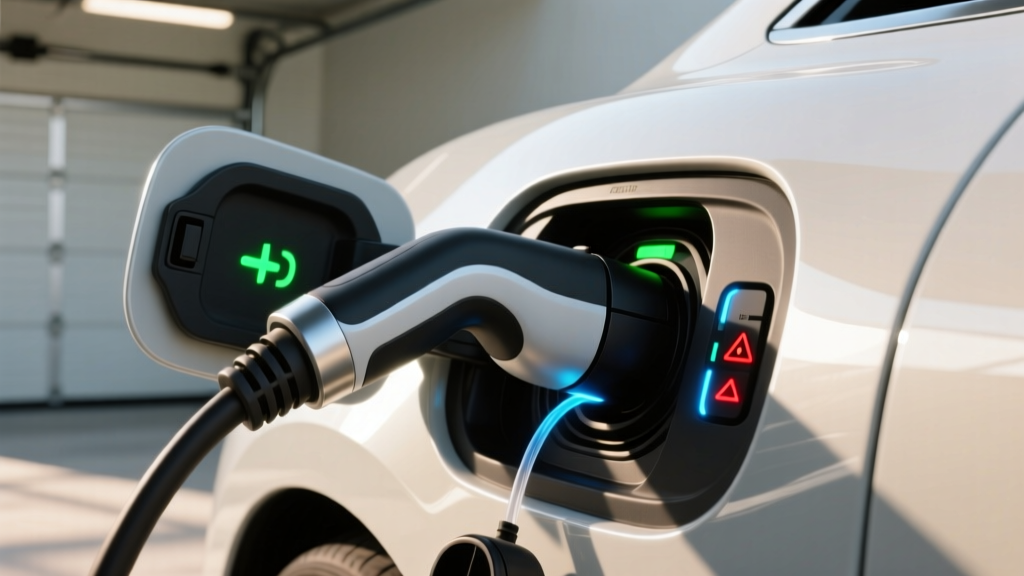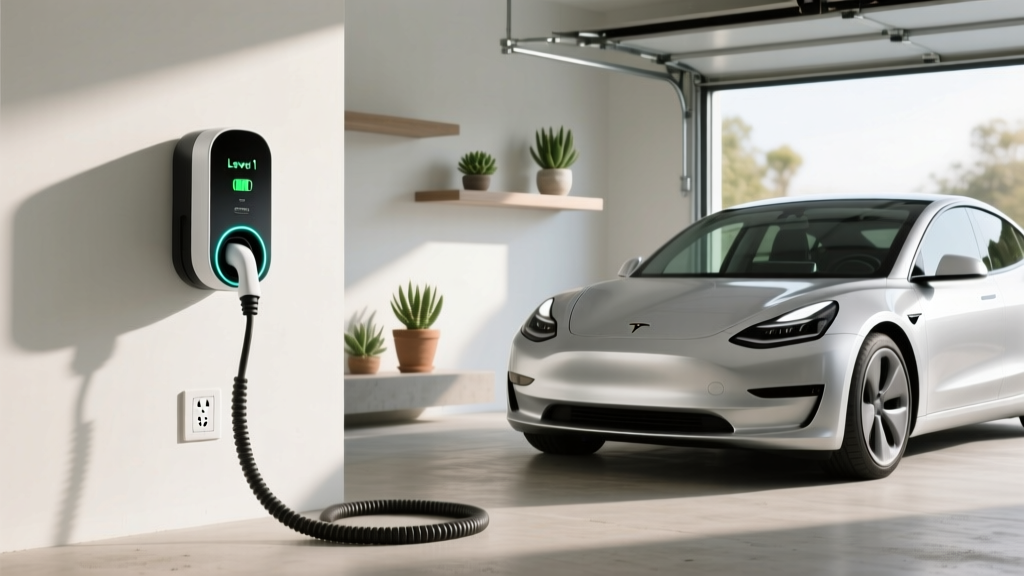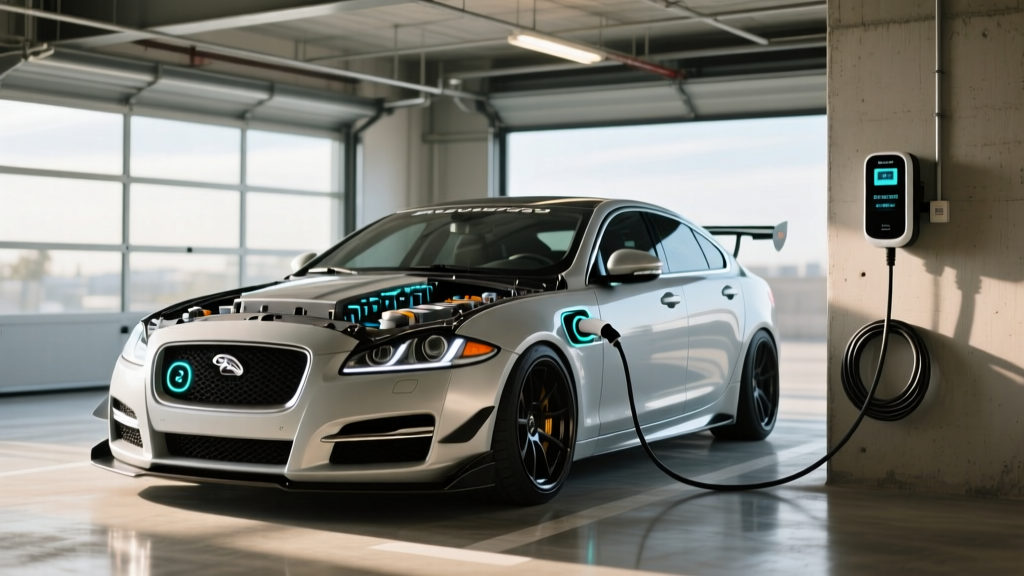
The 2010 Jaguar XF Supercharged left the factory with a 5.0-liter AJ-V8 pushing 470 horsepower and sipping fuel at roughly 15 mpg combined. Today, a growing number of enthusiasts are pulling that blown V8 and dropping in a salvaged Tesla drive unit, a Nissan Leaf stack, or a Cascade Motion conversion kit. The result: a British luxury sedan with instant torque, a frunk where the supercharger used to live, and an entirely new question — how do you actually charge it?
Whether your XF EV swap uses a 40 kWh pack from a wrecked Leaf or a 75 kWh Tesla module, the charging fundamentals are identical to any production EV. This guide walks through the three charging levels, home installation costs, connector choices, and the per-mile economics that make the swap worthwhile.
The Three Charging Levels: Speeds That Matter for Your XF Swap
Before wiring anything, understand what each level delivers. Power is measured in kW (kilowatts) — the rate of energy flow — while your battery capacity is measured in kWh (kilowatt-hours) — the total energy stored. Confusing the two is the most common EV literacy mistake.
| Level | Voltage | Power (kW) | Miles of Range Added per Hour | Typical Use |
|---|---|---|---|---|
| Level 1 | 120V AC | 1.0–1.4 kW | 3–5 mi/hr | Emergency / overnight trickle |
| Level 2 | 240V AC | 3.3–19.2 kW | 12–75 mi/hr | Home daily charging |
| DC Fast | 400–800V DC | 50–350 kW | 150–1,000+ mi/hr | Road trips, rapid top-ups |
For a 2010 XF Supercharged conversion with a ~60 kWh usable battery, Level 2 at 7.2 kW adds roughly 25 miles of range per hour — enough to fully replenish overnight. Level 1 is only practical as a backup. DC fast charging capability depends entirely on whether your swap includes a CCS or CHAdeMO inlet and a compatible BMS; many budget conversions omit DC charging entirely.
Home Level 2 Installation: What Your Electrician Needs to Know
A Level 2 home charger requires a dedicated 240V circuit, typically rated at 40A or 50A to support continuous 32A or 40A charging respectively (the National Electrical Code requires circuits to be rated 125% of the continuous load). Most modern EVSEs (Electric Vehicle Supply Equipment) connect via a NEMA 14-50 outlet or are hardwired directly.
Panel Capacity and Upgrade Reality
Before installation, an electrician will perform a load calculation on your existing panel. A 200A panel with gas appliances usually accommodates a 40A EV circuit without issue. Older homes with 100A service — common in houses built before the 1980s — may require a panel upgrade to 200A, adding $1,500–$3,500 to the project.
| Component | Typical Cost Range |
|---|---|
| Level 2 EVSE equipment (smart charger) | $350–$750 |
| Electrician labor (standard install, <50 ft run) | $500–$1,500 |
| Permit and inspection | $50–$250 |
| Panel upgrade (if needed) | $1,500–$3,500 |
| Total (no panel upgrade) | $900–$2,500 |
| Total (with panel upgrade) | $2,400–$6,000 |
The federal Alternative Fuel Vehicle Refueling Property Credit (IRC §30C) covers 30% of home charging equipment and installation costs, up to $1,000, for qualifying taxpayers in eligible census tracts. Check the IRS eligibility tool before committing.
Connector Compatibility: NACS, CCS1, and CHAdeMO Explained
Your XF conversion's charge port connector determines where you can charge publicly. The North American Charging Standard (NACS), originally developed by Tesla and now adopted by most major manufacturers for 2025+ models, is becoming the dominant connector. Combined Charging System (CCS1) remains widely deployed on existing public infrastructure, while CHAdeMO is legacy and fading.
| Connector | Primary Users | Public Availability (2026) | Adapter Options |
|---|---|---|---|
| NACS (Tesla) | Tesla, Ford, GM, Rivian, Hyundai/Kia (2025+) | Widest network — Tesla Superchargers + growing third-party | CCS-to-NACS adapters ($150–$250) |
| CCS1 | VW, BMW, pre-2025 Hyundai/Kia, most conversions | Electrify America, EVgo, ChargePoint DC stations | NACS-to-CCS adapters available |
| CHAdeMO | Nissan Leaf, Mitsubishi (legacy) | Declining — many stations removing CHAdeMO plugs | Limited adapter options |
For an XF EV swap using a Tesla drive unit, you'll likely have a Tesla/NACS port natively. If your conversion uses a CCS-equipped inverter (common with Cascade Motion or EV West kits), a NACS adapter gives you Supercharger access — critical for road trips. According to the U.S. Department of Energy's AFDC, there are now over 70,000 public charging ports nationwide, with NACS-equipped stations growing rapidly.
Cost to Charge: Per-Mile Economics vs. the Old Supercharged V8
The 2010 XF Supercharged with its 5.0L V8 averaged 15 mpg combined. At $3.50/gallon, that's roughly $0.23 per mile in fuel alone. An electric conversion changes the math dramatically, depending on where you charge.
| Scenario | Cost per kWh | Cost per Mile (at 3 mi/kWh) | Annual Fuel Cost (12,000 mi) |
|---|---|---|---|
| Home Level 2 (off-peak utility rate) | $0.08–$0.14 | $0.03–$0.05 | $360–$600 |
| Home Level 2 (standard rate) | $0.14–$0.20 | $0.05–$0.07 | $600–$840 |
| Public Level 2 (ChargePoint, etc.) | $0.20–$0.35 | $0.07–$0.12 | $840–$1,440 |
| DC Fast Charging (public) | $0.30–$0.55 | $0.10–$0.18 | $1,200–$2,160 |
| Original XF SC (gas, 15 mpg) | $3.50/gal | $0.23 | $2,760 |
Even charging exclusively on expensive DC fast chargers, the converted XF costs less per mile than the original supercharged V8. Home charging at off-peak rates delivers an 80%+ reduction in per-mile energy cost. Over five years and 60,000 miles, that's $10,000–$13,000 in fuel savings — a significant offset against the conversion cost.
Charging Time Examples for Common Conversion Battery Sizes
Charging time depends on both the battery's usable capacity (kWh) and the charger's power output (kW). Here's what to expect for typical XF conversion battery sizes, assuming an 80% depth of discharge (charging from 10% to 80% state of charge — the practical fast-charging window, as charge speed tapers significantly above 80% to protect battery chemistry).
| Battery Size | Level 1 (1.2 kW) | Level 2 (7.2 kW) | Level 2 (11.5 kW) | DC Fast (50 kW) |
|---|---|---|---|---|
| 40 kWh (Nissan Leaf pack) | ~23 hours | ~3.9 hours | ~2.4 hours | ~42 minutes |
| 60 kWh (Tesla module) | ~35 hours | ~5.8 hours | ~3.6 hours | ~63 minutes |
| 75 kWh (Tesla large pack) | ~44 hours | ~7.3 hours | ~4.6 hours | ~79 minutes |
For daily driving, a 7.2 kW Level 2 home charger replenishes a 60 kWh pack overnight in under six hours — more than adequate for a luxury grand tourer that most owners drive 30–50 miles per day.
Recommended Level 2 Chargers for Your XF Conversion
Not all EVSEs are equal. For a custom conversion, you need a unit with adjustable amperage (to match your circuit), a long cable (the XF's charge port location varies by build), and smart scheduling features to exploit off-peak electricity rates.
Emporia Vue Level 2 Smart Charger
Power: Up to 11.5 kW (48A)
Connector: NACS or J1772 (CCS adapter available)
Cable: 24 ft
Smart Features: Wi-Fi, app scheduling, energy monitoring, solar integration
Price: ~$399
Best for: Budget-conscious builds wanting smart features and solar pairing
ChargePoint Home Flex
Power: Up to 12 kW (50A), adjustable down to 16A
Connector: NACS or J1772
Cable: 23 ft
Smart Features: Wi-Fi, Alexa integration, detailed session tracking, flexible amperage
Price: ~$549
Best for: Older panels needing lower-amp flexibility
Tesla Wall Connector
Power: Up to 11.5 kW (48A)
Connector: NACS native (J1772 adapter included)
Cable: 24 ft
Smart Features: Wi-Fi, OTA updates, load sharing with multiple units
Price: ~$475
Best for: Tesla drive-unit swaps with native NACS port
Safety, Code, and Installation Non-Negotiables
The NEC (National Electrical Code, NFPA 70) treats EV charging as a continuous load, meaning the circuit must be rated at 125% of the charger's maximum draw. A 40A charger requires a 50A breaker and appropriately gauged wire (typically 6 AWG copper for runs under 50 feet).
- Dedicated circuit: Your EVSE must have its own breaker — never share with other appliances.
- GFCI protection: NEC 2020+ requires GFCI protection for all outdoor receptacles used for EV charging. Hardwired installations may bypass this requirement depending on local code.
- Outdoor rating: If your XF parks outside, choose a NEMA 4-rated (weatherproof) EVSE enclosure. All recommended units above carry outdoor ratings.
- Permit and inspection: Most jurisdictions require an electrical permit for new 240V circuits. Skipping this risks insurance denial in the event of a fire and code violations at sale time.
- Cable management: For garage installs, a wall-mounted holster keeps the cable off the floor. For outdoor installs, consider a retractable reel to prevent UV degradation and trip hazards.
Frequently Asked Questions
How much does it cost to install a home EV charger for my XF conversion?
A standard Level 2 installation with an existing 200A panel typically runs $900–$2,500 including equipment, labor, and permit. If your home needs a panel upgrade from 100A to 200A, add $1,500–$3,500. The federal §30C credit can offset 30% of equipment and installation costs, up to $1,000, in eligible census tracts.
How fast will each charging level add range to my converted XF?
Level 1 (120V) adds 3–5 miles per hour — usable only for overnight trickle. Level 2 (240V at 7.2 kW) adds roughly 25 miles per hour, fully replenishing a 60 kWh pack overnight. DC fast charging at 50 kW adds approximately 150 miles per hour, but requires compatible hardware in your conversion — not all swap kits include DC fast-charge capability.
Which connector should I use on my 2010 XF Supercharged EV swap?
If you're using a Tesla drive unit, NACS is the natural choice and provides access to the largest fast-charging network. For CCS-based conversions (common with aftermarket kits), a NACS adapter ($150–$250) unlocks Supercharger access. Avoid CHAdeMO for new builds — the network is shrinking. For Level 2 home and public AC charging, all connectors work with appropriate adapters.
How much does charging cost per mile compared to the original supercharged V8?
The stock 2010 XF Supercharged costs approximately $0.23/mile in gasoline at 15 mpg combined and $3.50/gallon. A converted XF charging at home on off-peak rates costs $0.03–$0.05/mile — an 80%+ reduction. Even exclusive public DC fast charging ($0.10–$0.18/mile) undercuts gasoline significantly. Source: fueleconomy.gov for original XF ratings.
What electrical upgrades might my home need before installing a Level 2 charger?
Homes with 200A service and gas appliances usually accommodate a 40–50A EV circuit without modification. Homes with 100A service, electric heat, or electric water heaters may need a panel upgrade ($1,500–$3,500) or a smart load-management device like the Emporia VUE with automatic amperage adjustment. Some utilities now offer managed-charging programs that reduce panel-upgrade requirements — check with your local provider.
Can I use the XF's original fuel filler area as the charge port location?
Yes, and many conversions do exactly this for a clean, OEM-looking result. The fuel filler neck area provides weatherproof access and keeps the charge cable away from the front crash structure. Ensure the port door mechanism is retained or replaced with a weatherproof EV inlet cover rated for the connector type you choose.