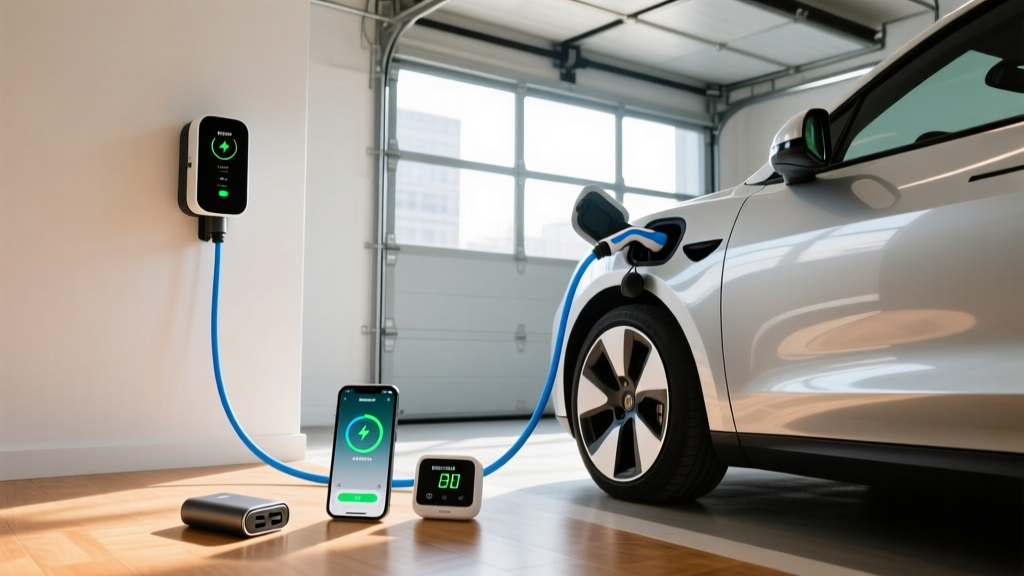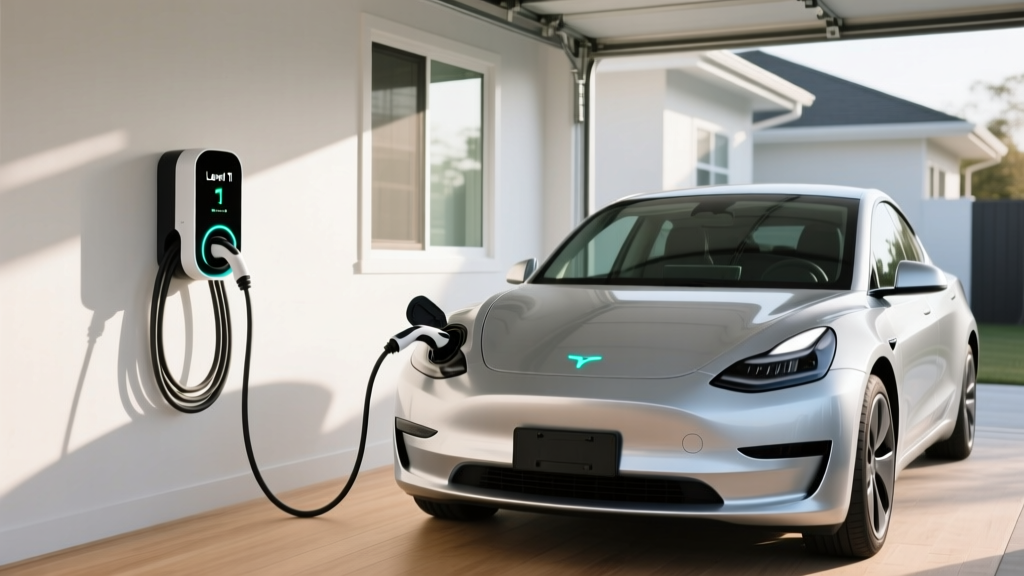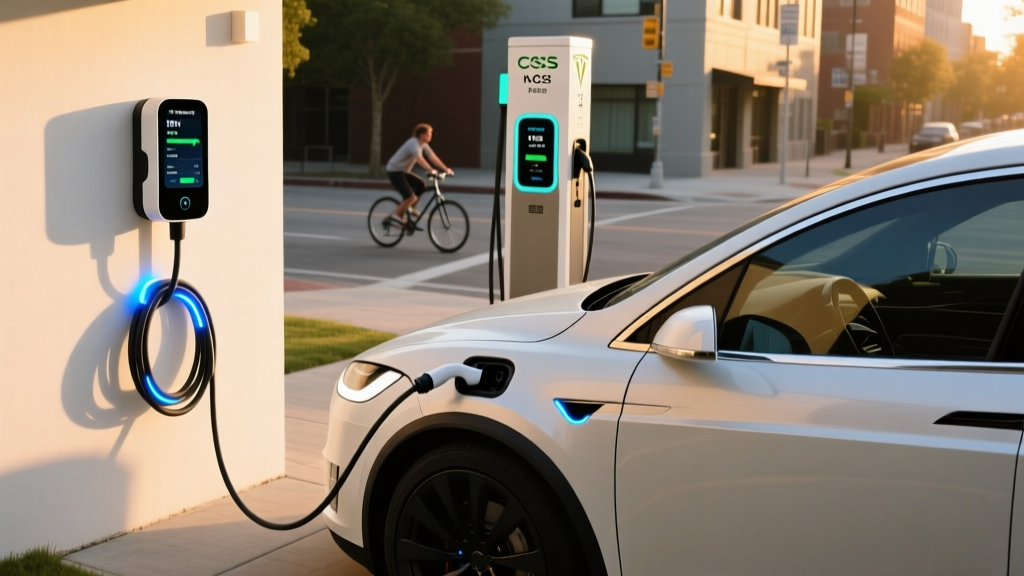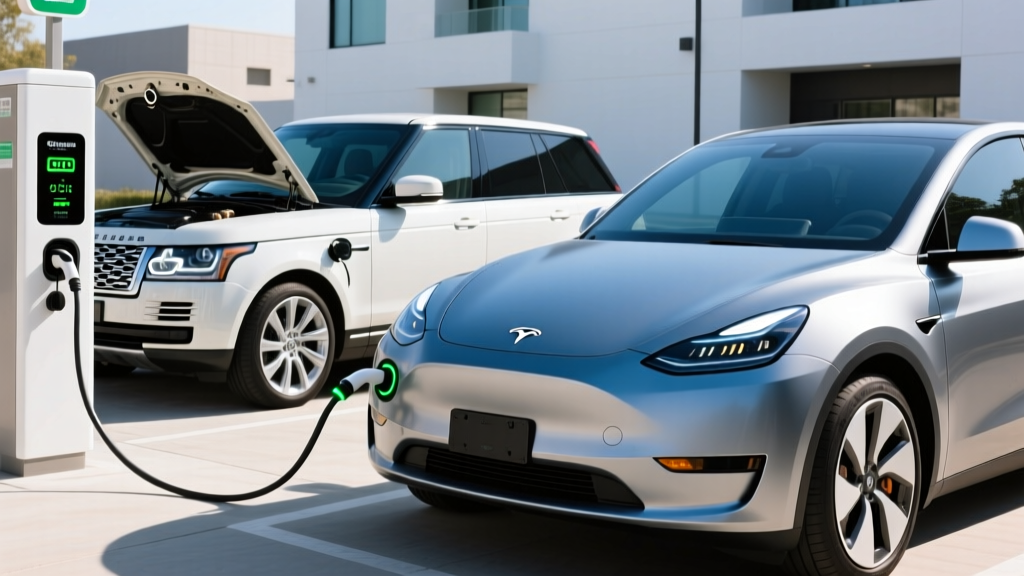
If you've ever filled up a 2009 Range Rover Supercharged and winced at the pump, you're not alone. That 5.0-liter supercharged V8 is rated at just 12 mpg city and 18 mpg highway by the EPA, meaning a 15-gallon fill at $3.50/gallon costs over $52 and delivers roughly 210 miles of real-world range. For owners considering an electric vehicle as a replacement — or a second car — the math around EV charging costs has never been more relevant. This guide breaks down exactly what it costs to charge an EV at home and on the road, how fast each level adds range, and what you'll need to install a home charger in 2026.
The 2009 Range Rover Supercharged Fuel Bill: A Baseline
Before diving into EV charging economics, let's quantify what the 2009 Range Rover Supercharged actually costs to fuel. With its 5.0L AJ-V8 Gen III producing 510 horsepower and 461 lb-ft of torque, this luxury SUV was never designed for efficiency.
- EPA combined fuel economy: 14 mpg
- Fuel tank capacity: 27.6 gallons (premium required)
- Cost per full tank (premium at $4.00/gal): ~$110
- Real-world range per tank: ~350-386 miles
- Cost per mile (at $4.00/gal, 14 mpg combined): $0.286/mile
- Annual fuel cost (12,000 miles): ~$3,429
That annual fuel bill is a stark number — and it's the baseline we'll use when comparing EV charging costs below.
Charging Levels Explained: kW, Speed, and Miles Per Hour
EV charging is categorized into three levels. The critical distinction every owner must understand: kW (kilowatts) measures power — how fast energy flows into the battery. kWh (kilowatt-hours) measures energy — the total capacity of the battery, like gallons in a fuel tank. A 75 kWh battery charged at 7.2 kW takes roughly 10.4 hours from empty to full. Confusing these two units is the single most common EV literacy gap.
| Level | Voltage | Power (kW) | Miles of Range Added/Hour | Best For |
|---|---|---|---|---|
| Level 1 | 120V AC | 1.2-1.8 kW | 3-5 miles | Overnight top-ups, PHEVs, low-mileage drivers |
| Level 2 | 240V AC | 3.3-19.2 kW | 12-75 miles | Daily home charging, workplace, hotels |
| DC Fast Charge | 400-800V DC | 50-350 kW | 150-1,200+ miles (peak rate) | Road trips, highway corridors, quick top-ups |
A few real-world charging time examples for common battery sizes:
- 60 kWh battery (e.g., base Tesla Model Y RWD): 10-80% at a 150 kW DC fast charger in ~22 minutes; at a 7.2 kW Level 2 home charger in ~6.5 hours.
- 82 kWh battery (e.g., Ford Mustang Mach-E Extended Range): 10-80% at 150 kW DC in ~28 minutes; at 11.5 kW Level 2 in ~6 hours.
- 100 kWh battery (e.g., Rivian R1S Dual-Motor Max): 10-80% at 200 kW DC in ~27 minutes; at 11.5 kW Level 2 in ~7.5 hours.
How Much Does It Cost to Install a Home EV Charger?
Home Level 2 charging is where most EV owners do 80-90% of their charging. But the installation cost varies dramatically based on your home's electrical infrastructure. Here's a realistic breakdown for 2026:
| Component | Cost Range | Notes |
|---|---|---|
| Level 2 EVSE Equipment (smart charger) | $350 - $750 | Brands like ChargePoint Home Flex, Emporia, Wallbox Pulsar Plus |
| Electrician labor (new 240V/50A circuit) | $600 - $2,000 | Depends on run length from panel to garage/driveway |
| Permit and inspection | $50 - $250 | Required by most jurisdictions; varies by municipality |
| Electrical panel upgrade (if needed) | $1,500 - $4,000+ | Older homes with 100A service often need a 200A upgrade |
| Total (no panel upgrade) | $1,000 - $3,000 | Most homes with 200A service and nearby panel |
| Total (with panel upgrade) | $2,500 - $7,000+ | Common in pre-1990 homes or those with high existing loads |
Electrical Requirements for a Typical Level 2 Installation
- Circuit: Dedicated 240V circuit, typically 40A or 50A (supports 32A or 40A continuous charging, per NEC 80% rule)
- Wire gauge: 6 AWG copper for 50A circuits; 8 AWG for 40A
- Outlet type: NEMA 14-50 (most common) or hardwired connection (required for circuits above 50A and recommended by many electricians for reliability)
- GFCI protection: NEC 2020 and later require GFCI breakers for receptacle-based EVSE installations; hardwired units have GFCI built in
- Outdoor rating: If mounted outside, the EVSE must carry a NEMA 4 or NEMA 4X weather-resistance rating
Which Connector Is Compatible With Your EV?
The North American charging connector landscape has shifted significantly. In 2026, the North American Charging Standard (NACS) — originally Tesla's proprietary connector — has been adopted by nearly every major automaker. Here's where each brand stands:
| Connector | Brands Using It (New Vehicles) | Adapter Needed? |
|---|---|---|
| NACS (native) | Tesla (all), Ford (2025+), GM (2025+), Rivian, Volvo, Polestar, Mercedes-Benz (2026+), Hyundai/Kia (2026+) | None for Tesla Superchargers or NACS stations |
| CCS1 | Remaining 2024-2025 models from VW, BMW, some Hyundai/Kia; older Ford/GM EVs | CCS-to-NACS adapter (~$200-$250) needed for Tesla Superchargers |
| CHAdeMO | Nissan Leaf (legacy only — discontinued for new sales) | Limited public infrastructure; CHAdeMO stations declining |
Key advice for home charger buyers in 2026: If you're purchasing a new EV with a native NACS port, buy a NACS-terminated home charger. If you own a CCS1 vehicle, buy a CCS1 charger or use a high-quality adapter. Universal chargers with swappable connector heads (like the ChargePoint Home Flex with optional NACS pigtail) offer future flexibility.
Cost to Charge Per Mile: EV vs. the 2009 Range Rover Supercharged
This is where the comparison gets compelling. Let's model three common charging scenarios against the Range Rover's fuel cost:
| Scenario | Rate | EV Efficiency (3.0 mi/kWh) | Cost Per Mile | Annual Cost (12,000 mi) |
|---|---|---|---|---|
| Home charging (off-peak utility rate) | $0.12/kWh | 3.0 mi/kWh | $0.040/mi | $480 |
| Home charging (average US rate) | $0.17/kWh | 3.0 mi/kWh | $0.057/mi | $680 |
| Public Level 2 (network pricing) | $0.35/kWh | 3.0 mi/kWh | $0.117/mi | $1,400 |
| DC Fast Charging (public) | $0.48/kWh | 3.0 mi/kWh | $0.160/mi | $1,920 |
| 2009 Range Rover Supercharged | $4.00/gal premium | 14 mpg combined | $0.286/mi | $3,429 |
Even in the worst-case scenario — relying entirely on DC fast charging at $0.48/kWh — an efficient EV still costs 44% less per mile than the 2009 Range Rover Supercharged. For home-charging owners on off-peak rates, the savings are dramatic: $2,949 per year, or roughly $14,745 over five years.
Recommended Home EV Chargers for 2026
Based on reliability, smart features, cable management, and value, here are top picks across common power outputs:
ChargePoint Home Flex
- Power output: Up to 12 kW (50A circuit, 40A continuous)
- Connector: Available in NACS or J1772/CCS1
- Cable length: 23 feet
- Smart features: Wi-Fi, app scheduling, Alexa integration, energy tracking
- Price: ~$550-$650
- Best for: Most homeowners wanting a reliable, app-connected charger
Emporia Level 2 EV Charger
- Power output: Up to 11.5 kW (48A continuous on 60A circuit)
- Connector: NACS or J1772
- Cable length: 24 feet
- Smart features: Wi-Fi, real-time energy monitoring, solar integration, load management
- Price: ~$400-$500
- Best for: Budget-conscious buyers who want energy monitoring
Tesla Wall Connector
- Power output: Up to 11.5 kW (48A continuous on 60A circuit)
- Connector: NACS native
- Cable length: 24 feet
- Smart features: Wi-Fi, OTA updates, power sharing between multiple units, access control
- Price: ~$475
- Best for: Tesla owners and NACS-native EV drivers
Wallbox Pulsar Plus
- Power output: Up to 11.5 kW (48A on 60A circuit)
- Connector: J1772 (NACS adapter available)
- Cable length: 25 feet
- Smart features: Wi-Fi + Bluetooth, Eco-Smart mode (solar), compact form factor
- Price: ~$550-$650
- Best for: Tight garage spaces and solar-panel households
Safety, Code, and Installation Best Practices
EV charger installation isn't a DIY project. Per the National Electrical Code (NEC), a Level 2 home charger requires:
- Dedicated circuit: The EVSE must have its own breaker — no sharing with dryer, oven, or HVAC circuits
- Proper wire sizing: Undersized wire creates fire risk; your electrician will calculate based on circuit amperage and run length
- GFCI protection: Required for all receptacle-based installations per NEC 2020+; hardwired EVSE units include internal ground-fault protection
- Permit and inspection: Most municipalities require an electrical permit for new 240V circuits. Skipping this can void homeowner's insurance claims and complicate home sales
- Outdoor installations: Use NEMA 4-rated equipment, weatherproof conduit, and ensure the mounting surface can support the unit's weight in wind and ice conditions
Always hire a licensed electrician familiar with EVSE installations. The National Fire Protection Association (NFPA) maintains the NEC standards that govern these installations, and many states have adopted NEC 2023 or later, which includes specific EV charging provisions.
Frequently Asked Questions
How much does it cost to install a home EV charger?
For most homes with an existing 200-amp electrical panel and a short wire run to the garage, expect $1,000-$3,000 all-in (equipment, electrician labor, and permit). Older homes needing a panel upgrade to 200A should budget $2,500-$7,000+. Always get 2-3 quotes from licensed electricians.
How fast will each charging level add range?
Level 1 (120V) adds roughly 3-5 miles of range per hour — sufficient only for PHEVs or very low daily mileage. Level 2 (240V) at 7.2 kW adds about 25 miles per hour; at 11.5 kW it adds roughly 40 miles per hour. DC fast charging at 150 kW can add 150-250 miles in 15-20 minutes, depending on battery size and charge curve.
Which connector/charger is compatible with my EV?
Check your vehicle's charge port. New Teslas, Fords (2025+), GMs (2025+), Rivians, and an expanding list of 2026 models use NACS natively. Most 2022-2024 non-Tesla EVs use CCS1. The Nissan Leaf uses CHAdeMO but is no longer sold new. For home charger purchases, match the charger's connector to your vehicle's port — or buy a unit with a swappable connector head.
How much does charging cost per mile vs. gas?
At the US average residential electricity rate of ~$0.17/kWh and an EV efficiency of 3.0 miles/kWh, home charging costs roughly $0.057 per mile. The 2009 Range Rover Supercharged at 14 mpg combined on $4.00/gallon premium costs $0.286 per mile — nearly five times more. Even public DC fast charging at $0.48/kWh comes in at $0.16/mile, still 44% cheaper than the Range Rover.
What electrical upgrades might I need?
The most common upgrade is a panel replacement from 100A to 200A service ($1,500-$4,000), which affects homes built before 1990 or those with significant existing loads (electric heat, hot tub, workshop). A less expensive alternative is a smart load-management system ($200-$500 hardware) that dynamically reduces charger amperage when other large appliances are running, avoiding the need for a full panel upgrade. Your electrician's load calculation will determine which path is required.