The 2009 Jaguar XF Supercharger Is Not an Electric Vehicle — Here's What That Means for Charging
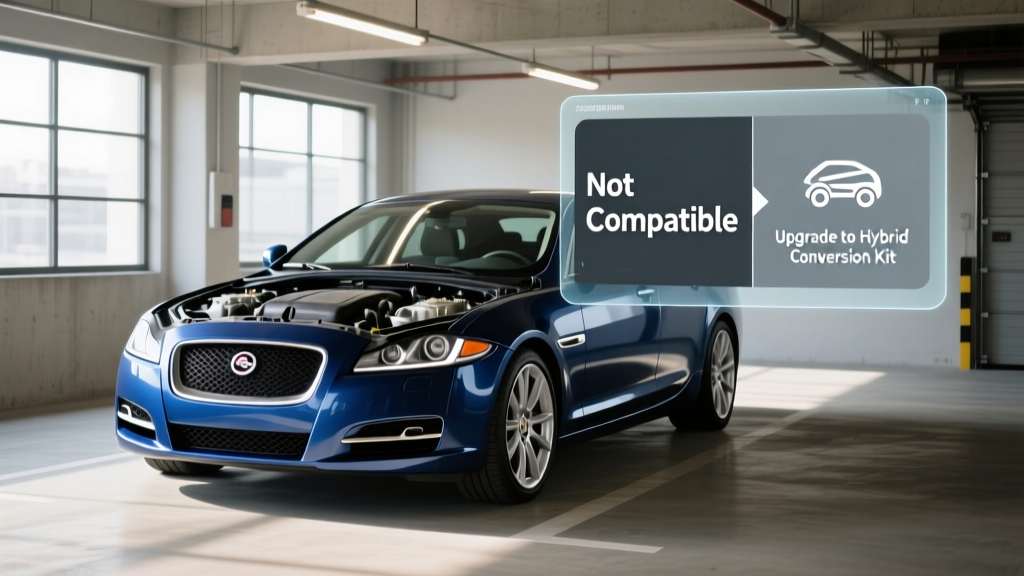
If you've landed here searching for a 2009 Jaguar XF Supercharger charging setup, let's clear up a common keyword confusion right away: the "Supercharger" in the 2009 Jaguar XF Supercharged (the correct trim name) refers to its Eaton M112 roots-type mechanical supercharger — a belt-driven air compressor bolted to the 4.2-liter V8 engine. It has nothing to do with Tesla Superchargers, DC fast charging, or any electric-vehicle infrastructure.
The 2009 Jaguar XF Supercharged produces 420 horsepower and 413 lb-ft of torque, sends power through a 6-speed ZF automatic to the rear wheels, and achieves an EPA-rated 15 mpg city / 23 mpg highway / 18 mpg combined (source: fueleconomy.gov). It carries no high-voltage battery, no charge port, and no regenerative braking system. You fuel it at a gas station with premium unleaded — no plug, no kW, no kWh.
That said, many XF owners researching this car are simultaneously exploring their next vehicle — often a modern EV or PHEV. If that's you, or if you're simply curious how EV charging works compared to your supercharged Jag, this guide covers the complete home and public charging landscape for 2026 electric vehicles: levels, costs, connectors, installation, and equipment.
EV Charging Levels Explained: kW, Miles Per Hour, and Real Charge Times
Electric vehicles charge at three standardized levels. The critical distinction to internalize: kW (kilowatts) measures power — the rate of energy flow, like water pressure in a hose. kWh (kilowatt-hours) measures energy — the battery's total capacity, like the size of the tank. A 75 kWh battery charged at 7.5 kW takes roughly 10 hours from 0–100% (minus losses).
| Level | Voltage | Power (kW) | Miles of Range Added Per Hour | Typical Use Case |
|---|---|---|---|---|
| Level 1 | 120V AC | 1.2–1.9 kW | 3–5 miles | Overnight trickle, PHEV top-ups |
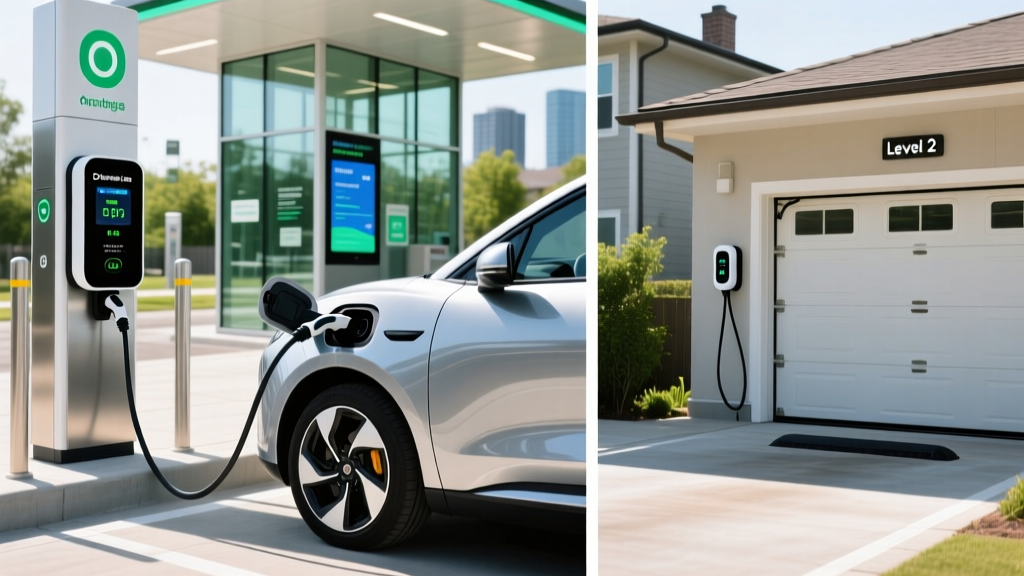
| Level 2 | 240V AC | 3.3–19.2 kW | 12–75 miles | Home daily charging, workplace, hotels |
| DC Fast Charge | 400–800V DC | 50–350+ kW | 150–1,000+ miles (equivalent) | Road trips, highway corridors, fleet depots |
Real-world charge time examples (10–80% SoC, typical highway-speed taper considered):
- 75 kWh battery (Tesla Model 3 LR-class) at 250 kW DC fast charger: ~22–26 minutes
- 84 kWh battery (Hyundai Ioniq 5-class, 800V architecture) at 350 kW charger: ~18–20 minutes
- 100 kWh battery (Ford F-150 Lightning Extended Range) at 150 kW charger: ~40–45 minutes
- 75 kWh battery on a 11.5 kW Level 2 home charger: ~6.5 hours (0–100%)
- 75 kWh battery on a 1.4 kW Level 1 outlet: ~54 hours (0–100%) — impractical for BEVs, fine for PHEVs
A critical nuance often buried in marketing: DC fast charging does not sustain peak kW for the full session. A charger rated for 250 kW might deliver that rate only between 10–40% SoC, then taper to 120 kW, then 50 kW above 80%. This charge curve is why 10–80% times matter more than peak kW figures. Preconditioning the battery (heating it to optimal temperature before arrival via the car's navigation routing) can cut real-world charging time by 15–30% in cold weather.
How Much Does It Cost to Install a Home Level 2 EV Charger?
Home Level 2 installation costs vary dramatically based on your electrical panel's capacity, the distance from panel to charger location, and local permitting. Below is a realistic 2026 breakdown based on national electrician rate averages and common equipment pricing.
| Component | Low-End Scenario | Typical Scenario | High-End / Complex Scenario |
|---|---|---|---|
| Level 2 Charger Hardware (40A–48A) | $350 | $550 | $750 |
| Electrician Labor (2–8 hours @ $85–$150/hr) | $170 | $600 | $1,200 |
| Materials (conduit, wire, junction box) | $50 | $200 | $500 |
| Permit & Inspection | $50 | $150 | $350 |
| Electrical Panel Upgrade (100A → 200A, if needed) | $0 (not needed) | $0 | $2,000–$4,000 |
| Total | $620 | $1,500 | $6,800 |
When You'll Need a Panel Upgrade
Homes built before 1990 frequently have 100-amp service panels. Adding a 48A continuous-load EV circuit (which requires a 60A breaker per NEC 80% continuous-load rules) may exceed your panel's spare capacity. A licensed electrician will perform a load calculation — summing existing circuits and anticipated demand — to determine if an upgrade to 200A service is required. This is the single largest cost variable and the most common surprise for new EV buyers in older homes.
If a panel upgrade is prohibitively expensive, consider these alternatives:
- Lower-amperage charger: A 24A/32A unit on a 30A/40A breaker draws less panel capacity
- Smart load-management systems: Devices like the Emporia VUE or Sense monitor real-time home load and throttle the charger to stay within panel limits
- 120V Level 1 charging: Sufficient for PHEVs with small batteries (10–20 kWh) and low daily mileage
Connector Compatibility: NACS, CCS1, and CHAdeMO in 2026
The connector landscape has consolidated dramatically since 2023. Here's where things stand for 2026 model-year vehicles:
| Connector | Brands Using It (Native) | Notes |
|---|---|---|
| NACS (J3400) | Tesla, Ford, GM, Rivian, Volvo, Polestar, Mercedes-Benz, Nissan (Ariana+), Fisker, Lucid | Industry standard as of 2025; compact design, access to Tesla Supercharger network |
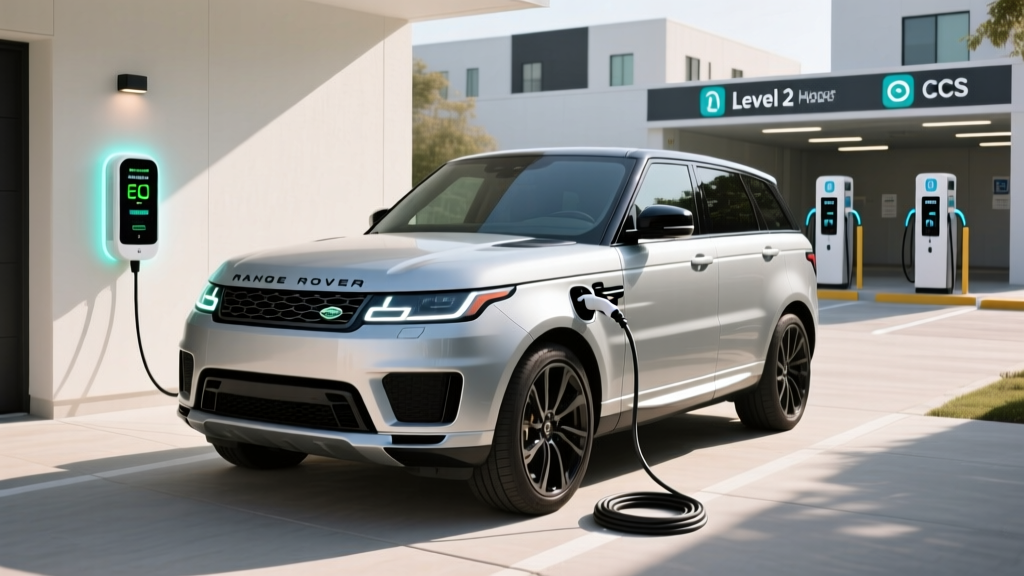
| CCS1 | Hyundai, Kia, BMW, Volkswagen, Stellantis (some), legacy pre-2025 models | Being phased out on new models; adapters to NACS widely available |
| CHAdeMO | Nissan LEAF (legacy), Mitsubishi Outlander PHEV (legacy) | Effectively discontinued on new vehicles; infrastructure declining |
Adapter reality: If you own a CCS1-equipped EV (2022–2024 model year Hyundai Ioniq 5, Kia EV6, Ford Mustang Mach-E pre-NACS), you can purchase a CCS-to-NACS adapter ($150–$300) to access Tesla Superchargers. Ford and GM include these adapters with newer vehicles. Always verify adapter certification with your vehicle manufacturer — third-party adapters not approved by the OEM may void warranty coverage on the charge port.
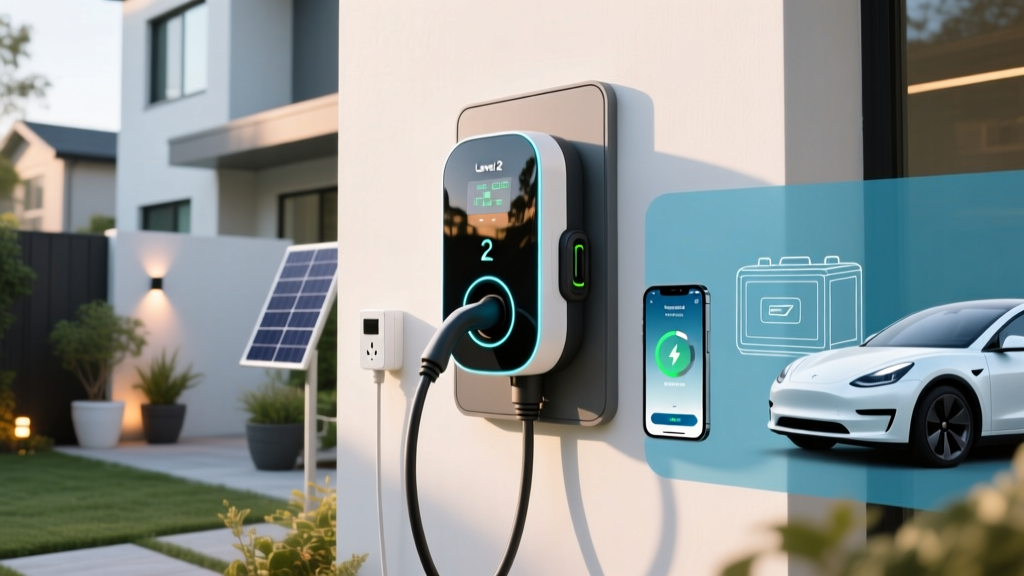
For Level 2 home charging, the J1772 connector remains universal across non-Tesla EVs. Tesla provides a J1772 adapter with every vehicle. Most home chargers ship with J1772; NACS-equipped home chargers are now available from ChargePoint, Emporia, and Wallbox.
Cost to Charge an EV Per Mile vs. Gasoline
The economic case for EVs hinges on per-mile energy cost. Here's how common scenarios compare, using a midsize EV averaging 3.0 miles per kWh (roughly 33 kWh/100 mi, typical for a 2026 crossover) and a gas car averaging 25 mpg combined — similar to the 2009 Jaguar XF's real-world consumption.
| Scenario | Energy Cost | Cost Per Mile (EV @ 3 mi/kWh) | Cost Per Mile (Gas @ 25 mpg) |
|---|---|---|---|
| Home Level 2 — Off-Peak Rate | $0.09/kWh | $0.030 | $0.132 @ $3.30/gal |
| Home Level 2 — Standard Rate | $0.16/kWh | $0.053 | $0.132 @ $3.30/gal |
| Home Level 2 — Peak/TOU Rate | $0.32/kWh | $0.107 | $0.132 @ $3.30/gal |
| Public Level 2 (ChargePoint/EVgo) | $0.30/kWh | $0.100 | $0.132 @ $3.30/gal |
| DC Fast Charge (Electrify America) | $0.48/kWh | $0.160 | $0.132 @ $3.30/gal |
| DC Fast Charge (Tesla Supercharger avg) | $0.35/kWh | $0.117 | $0.132 @ $3.30/gal |
Key takeaway: Home charging at off-peak rates delivers a per-mile cost roughly one-quarter of gasoline. Public DC fast charging — especially non-Tesla networks at peak pricing — can actually exceed gasoline cost per mile. This is why home charging access is the single most important economic factor in EV ownership. If you cannot charge at home (apartment, street parking), the financial advantage narrows significantly, and a PHEV may be the more rational choice.
Recommended Home Level 2 Chargers for 2026
Emporia Vue Level 2 Smart Charger
- Power: 48A (11.5 kW on 240V, requires 60A breaker)
- Connector: J1772 (NACS version available)
- Cable Length: 24 ft
- Smart Features: Real-time energy monitoring, solar integration, load management, scheduling via app
- Price: ~$399
- Best For: Solar-home owners, budget-conscious buyers wanting smart features
ChargePoint Home Flex (2nd Gen)
- Power: Up to 50A (12 kW, adjustable down to 16A for panel-limited homes)
- Connector: J1772 or NACS
- Cable Length: 23 ft
- Smart Features: Alexa/Google Home integration, detailed app scheduling, utility demand-response programs
- Price: ~$549
- Best For: Flexible amperage needs, utility rebate qualification
Wallbox Pulsar Max
- Power: 48A (11.5 kW)
- Connector: J1772 or NACS
- Cable Length: 25 ft
- Smart Features: Power Sharing (daisy-chain two units on one circuit), Eco-Smart solar mode, compact form factor
- Price: ~$599
- Best For: Two-EV households, tight garage spaces
Tesla Wall Connector
- Power: 48A (11.5 kW)
- Connector: NACS native (J1772 adapter included for non-Tesla EVs)
- Cable Length: 24 ft
- Smart Features: Wi-Fi updates, power sharing, Tesla vehicle integration
- Price: ~$450
- Best For: Tesla owners, NACS-native households
Safety, Electrical Code, and Installation Best Practices
EV charging draws sustained high current for hours — unlike a dryer or oven that cycles on and off. This places unique demands on your home's wiring. The National Electrical Code (NEC) and most local jurisdictions require the following:
- Dedicated circuit: Your EV charger must have its own breaker — no sharing with other appliances
- 80% continuous-load rule (NEC 210.20): A 48A charger requires a 60A breaker (48 ÷ 0.80 = 60). Never undersize the breaker
- GFCI protection: Required for outdoor installations and increasingly for garages per 2023 NEC updates (check your local code adoption year)
- Outdoor-rated equipment: If mounted outside, the charger must carry a NEMA 4 (watertight) rating; indoor-only units in outdoor enclosures void the warranty
- Wire gauge: 6 AWG copper for 48A/60A circuits; 8 AWG for 32A/40A circuits. Aluminum wire requires upsizing
- Permit and inspection: Virtually all jurisdictions require a permit for new 240V circuits. Skipping this risks insurance claim denial in the event of a fire
Hire a licensed electrician — not a handyman — for this work. Ask for a load calculation in writing before authorizing the install. If your electrician recommends a panel upgrade, get a second quote; prices for 200A upgrades range from $1,800 to $4,500 depending on your utility's meter-base requirements and trenching needs.
Frequently Asked Questions
Can I charge a 2009 Jaguar XF at an EV charging station?
No. The 2009 Jaguar XF Supercharged is a gasoline-powered vehicle with a supercharged 4.2L V8 engine. It has no battery-electric drivetrain, no charge port, and no compatibility with any EV charging infrastructure. The "supercharger" in its name is a mechanical engine component, not a Tesla Supercharger.
How much does it cost to install a home EV charger?
A typical Level 2 home installation runs $1,200–$2,000 including hardware, electrician labor, materials, and permit — assuming your electrical panel has adequate spare capacity. If a panel upgrade from 100A to 200A is needed, add $2,000–$4,000.
How fast will each charging level add range?
Level 1 (120V) adds 3–5 miles of range per hour. Level 2 (240V, 48A) adds approximately 35–45 miles per hour for a typical midsize EV. DC fast charging can add 150–300+ miles in a 20–30 minute session, depending on vehicle architecture and charger power.
Which connector is compatible with my EV?
For 2025–2026 model-year vehicles, NACS (J3400) is now the dominant standard, adopted by Tesla, Ford, GM, Rivian, Volvo, and others. Hyundai/Kia and some legacy models still use CCS1. CHAdeMO is effectively discontinued. Check your vehicle's charge port or owner's manual for the specific connector.
How much does EV charging cost per mile vs. gas?
Home charging at off-peak rates (~$0.09/kWh) costs approximately $0.03 per mile for a typical EV — about one-quarter the cost of gasoline at $3.30/gallon in a 25 mpg vehicle. Public DC fast charging at $0.48/kWh can cost $0.16/mile, exceeding gasoline cost.
What electrical upgrades might I need for a home charger?
If your home has a 100A electrical panel (common in pre-1990 construction), you may need an upgrade to 200A service to accommodate a 48A EV charger circuit. Alternatives include installing a lower-amperage charger (24A–32A) or using a smart load-management device that throttles charging to stay within panel limits.