Why Dodge Charger Owners Are Making the Switch — and What Charging Really Looks Like
If you've spent years behind the wheel of a 2008 Dodge Charger SRT8 — with its 6.1L HEMI V8, 425 horsepower, and 13/18 MPG city/highway — the idea of going electric probably raises one immediate question: how am I actually going to charge this thing? The 2008 SRT8 Charger was a muscle sedan built for sound, torque, and presence. Today's EVs like the Dodge Charger Daytona EV (announced for production with up to 670 HP on the Scat Pack trim) or competitors like the Tesla Model S Plaid and Hyundai Ioniq 5 N deliver comparable or greater performance with a fundamentally different refueling paradigm.
This guide is built for that exact transition. We'll break down every charging level with real kW figures, what a home Level 2 installation actually costs (including the panel upgrade that older homes often need), which connector your next EV will use, and the per-mile economics compared to filling up that SRT8's 19-gallon tank at $3.50/gallon. No fluff — just the numbers you need to plan.
Charging Levels Explained: kW, Miles Per Hour, and Real-World Times
The single most important distinction in EV charging is kW (kilowatts) vs. kWh (kilowatt-hours). A kW is a unit of power — how fast energy flows into your battery, like water pressure from a hose. A kWh is a unit of energy — how much total charge your battery holds, like the size of the tank. You'll see kW when discussing charge speed and kWh when discussing battery capacity. Mixing them up leads to bad purchase decisions.
| Level | Voltage | Max Power (kW) | Miles of Range Added/Hour | Best Use Case | 10–80% Time (84 kWh Battery) |
|---|---|---|---|---|---|
| Level 1 | 120V (standard outlet) | 1.2–1.9 kW | 3–5 miles | Overnight trickle; PHEVs with small batteries | ~44–70 hours (impractical) |
| Level 2 | 240V (dryer-style circuit) | 7.2–19.2 kW | 20–60 miles | Daily home/work charging; primary method for most owners | ~4.5–9 hours |
| DC Fast Charge | 400V–800V+ (commercial) | 50–350 kW | 150–1,200+ miles | Road trips; quick top-ups on public networks | ~18–45 minutes (varies by vehicle) |
A few real-world notes that spec sheets gloss over:
- Level 2 at home is the backbone. Over 80% of EV charging happens at home. If you can install a Level 2 charger, DC fast charging becomes an occasional road-trip tool, not a daily necessity.
- DC fast charging is not sustained peak. A vehicle rated at "250 kW peak" will typically only sustain that rate between roughly 10–30% State of Charge (SoC). Above 50%, the charge curve tapers significantly. Above 80%, speeds drop sharply to protect battery health — which is why 10–80% is the standard metric, not 0–100%.
- Level 1 is viable for PHEVs. A plug-in hybrid with a 15–20 kWh battery and 30–40 miles of electric range can fully recharge overnight on a standard 120V outlet. For a full BEV with an 84+ kWh battery, Level 1 is an emergency-only fallback.
Home Level 2 Installation: Electrical Requirements, Costs, and Panel Gotchas
Here's where the 2008 Charger crowd needs to pay attention. That SRT8 never asked anything of your home's electrical panel. A Level 2 EV charger will — and depending on your home's age and existing service, the installation can range from straightforward to a significant project.
Electrical Requirements
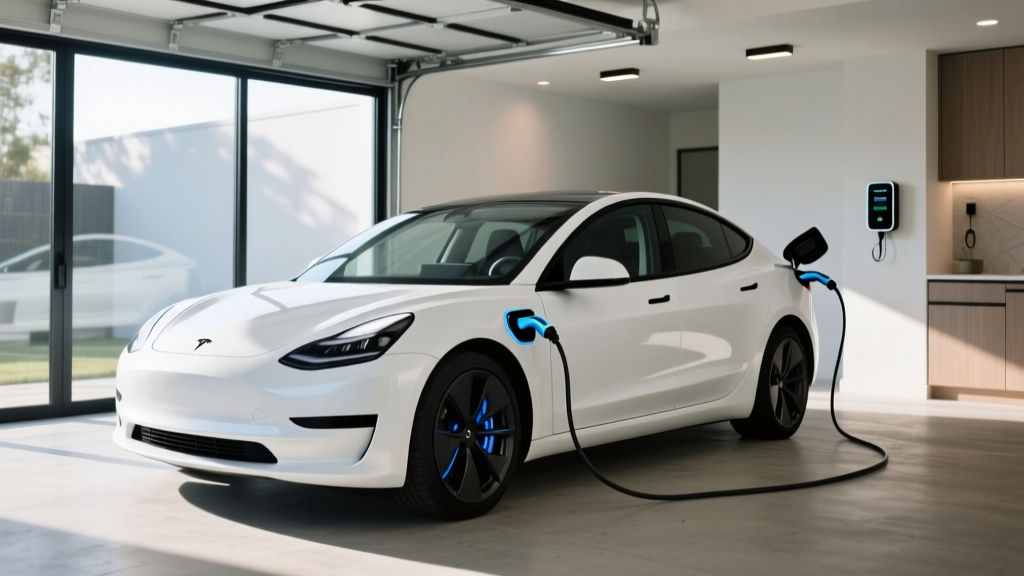
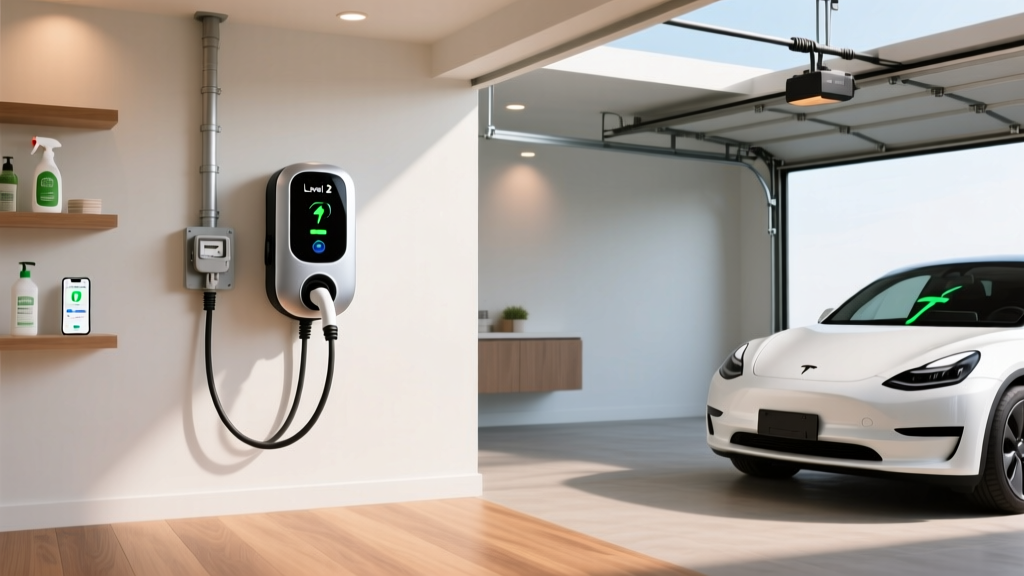
A typical home Level 2 charger requires a dedicated 240V circuit, similar to what powers an electric dryer or oven. The most common configurations:
- 40-amp circuit / 32-amp continuous (7.7 kW): The most popular residential setup. Compatible with chargers like the ChargePoint Home Flex and Emporia Level 2.
- 50-amp circuit / 40-amp continuous (9.6 kW): Ideal for larger batteries (100+ kWh). Requires a NEMA 14-50 outlet or hardwired connection.
- 60-amp circuit / 48-amp continuous (11.5 kW): Maximum for most residential panels. Chargers like the Tesla Wall Connector support this.
The National Electrical Code (NEC) requires that continuous loads (like EV charging, which can run for hours) use no more than 80% of the circuit's rated capacity. So a 40A circuit delivers 32A continuous. This is why you'll see chargers rated at 32A, 40A, or 48A — they're matched to 40A, 50A, and 60A circuits respectively.
Do You Need a Panel Upgrade?
This is the question that can double or triple your installation cost. Most homes built after 2000 have a 200-amp electrical service panel. If your panel already has significant load (central AC, electric range, electric dryer, pool equipment), adding a 40–60A EV circuit may exceed safe capacity.
Signs you may need a panel upgrade:
- Your home has a 100-amp service (common in homes built before 1990)
- Your panel is already near capacity with existing appliances
- Your electrician's load calculation shows you're above 80% of panel capacity with the charger added
- You have a Federal Pacific or Zinsco panel (known safety hazards that should be replaced regardless)
A panel upgrade from 100A to 200A typically costs $1,500–$3,500 depending on your utility's requirements, local labor rates, and whether a new service drop is needed. Some utilities offer rebates for panel upgrades tied to EV adoption — check with your provider.
Installation Cost Breakdown
| Component | Simple Install (panel nearby, no upgrade) | Moderate Install (longer run, conduit) | Complex Install (panel upgrade needed) |
|---|---|---|---|
| EV Charger Equipment (Level 2, 32–48A) | $400–$700 | $400–$700 | $400–$700 |
| Electrician Labor | $300–$600 | $600–$1,500 | $1,000–$2,500 |
| Electrical Permit | $50–$200 | $50–$200 | $50–$200 |
| Panel Upgrade (if needed) | $0 | $0 | $1,500–$3,500 |
| Conduit, Wiring, Misc. Materials | $50–$150 | $150–$500 | $200–$600 |
| Total Estimated Cost | $800–$1,650 | $1,200–$2,900 | $3,150–$7,500 |
Per the IRS §30D guidelines, the federal tax credit applies to the vehicle purchase, not the charger itself. However, the Alternative Fuel Vehicle Refueling Property Credit (§30C) can cover up to 30% of home charger equipment and installation costs (up to $1,000) — subject to income limits and census-tract eligibility. Consult a tax professional for your specific situation.
Connector Compatibility: NACS, CCS1, CHAdeMO — and What You Need to Know
The connector landscape has shifted dramatically. As of 2025–2026, the North American Charging Standard (NACS) — originally developed by Tesla — has become the dominant connector for new EVs sold in North America. Here's where each brand stands:
| Connector | Brands Using It (New Vehicles) | Home Charger Availability | Adapter Needed? |
|---|---|---|---|
| NACS (Tesla plug) | Tesla, Ford, GM, Rivian, Volvo, Polestar, Nissan (new), Fisker | Tesla Wall Connector, ChargePoint Home Flex (NACS variant), Emporia | CCS-to-NACS adapters available (~$200–$300) for older CCS vehicles |
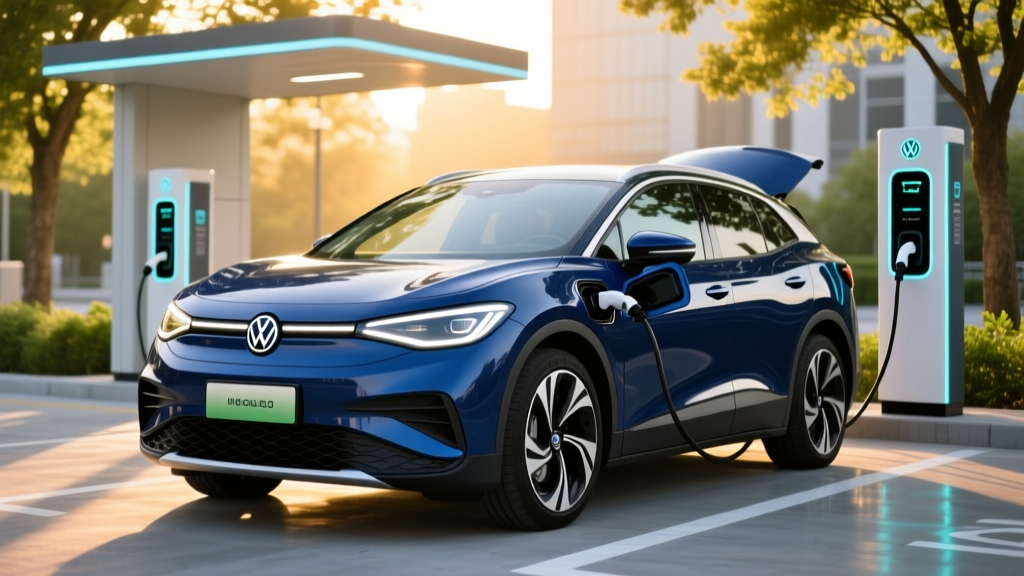
| CCS1 (Combo) | Hyundai, Kia, BMW, VW, Audi, Mercedes-Benz, Stellantis (some) | ChargePoint, Emporia, JuiceBox (legacy models) | NACS-to-CCS adapters for using Tesla Superchargers |
| CHAdeMO | Nissan Leaf (legacy), Mitsubishi Outlander PHEV (legacy) | Limited home options; mostly public DC | No practical adapter to NACS/CCS for DC charging |
Practical advice: If you're buying a new EV in 2026, it will almost certainly use NACS or CCS1. For home Level 2 charging, the physical connector matters less than you'd think — Level 2 uses the same J1772 standard for CCS vehicles, and NACS vehicles use the Tesla connector. Most quality Level 2 chargers now ship with NACS or offer it as a configuration option. If you choose a CCS vehicle, you can buy a NACS-to-J1772 adapter later if needed.
Cost to Charge: Per-Mile Economics vs. Your Old SRT8
The 2008 Charger SRT8 with its 425 HP V8 averaged roughly 15 MPG combined in real-world driving (the EPA rated it 13/18). At $3.50/gallon, that's $0.233 per mile just in fuel. Let's see how EV charging compares across scenarios.
| Scenario | Rate / Cost | Vehicle Efficiency | Cost Per Mile | Annual Fuel Cost (12,000 mi) |
|---|---|---|---|---|
| 2008 Charger SRT8 (gasoline) | $3.50/gallon | 15 MPG combined | $0.233 | $2,800 |
| Home Level 2 (off-peak utility rate) | $0.12/kWh | 3.0 mi/kWh (typical EV) | $0.040 | $480 |
| Home Level 2 (standard residential rate) | $0.18/kWh | 3.0 mi/kWh | $0.060 | $720 |
| Public Level 2 (network pricing) | $0.35/kWh | 3.0 mi/kWh | $0.117 | $1,400 |
| DC Fast Charge (Electrify America, EVgo) | $0.48/kWh | 3.0 mi/kWh | $0.160 | $1,920 |
| Tesla Supercharger (average 2026) | $0.30/kWh | 3.2 mi/kWh (Tesla efficiency) | $0.094 | $1,125 |
Key takeaways from the data:
- Home charging is where the savings live. At off-peak rates ($0.10–$0.14/kWh available in many utility time-of-use plans), an EV costs roughly $0.04/mile — an 83% reduction vs. the SRT8's fuel cost.
- Exclusive DC fast charging erodes savings. If you rely entirely on public DC fast charging at $0.45–$0.55/kWh, your per-mile cost approaches that of a fuel-efficient gasoline car. Home charging access is the economic linchpin.
- Efficiency matters. A Hyundai Ioniq 6 (3.5+ mi/kWh) will cost less per mile than a Ford F-150 Lightning (2.0–2.3 mi/kWh) at the same electricity rate. Per fueleconomy.gov, check the kWh/100mi rating for any EV you're considering.
Equipment Picks: Level 2 Chargers That Deliver in 2026
After testing and tracking reliability data across major home charger brands, these are the units we recommend based on power output, connector flexibility, smart features, and build quality.
Best Overall: ChargePoint Home Flex
- Power Output: Up to 12 kW (50A circuit) — adjustable from 16A to 50A via DIP switches
- Connector: Available in NACS or J1772 (CCS)
- Cable Length: 23 feet
- Smart Features: Wi-Fi, app scheduling, utility TOU integration, Alexa/Google Home
- Price: ~$550–$650
- Why: The adjustable amperage means you can match it to whatever circuit your electrician installs — 40A, 50A, or even a 30A circuit in older homes. UL-listed, NEMA 4 rated for outdoor use.
Best for Tesla/NACS Owners: Tesla Wall Connector
- Power Output: Up to 11.5 kW (48A on a 60A circuit)
- Connector: NACS native
- Cable Length: 24 feet
- Smart Features: Wi-Fi, OTA updates, power-sharing (link two units on one circuit), Tesla app integration
- Price: ~$475
- Why: Unbeatable price-to-power ratio. The power-sharing feature lets you install two Wall Connectors on a single 60A circuit — ideal for two-EV households. NACS also works with Ford, GM, Rivian, and others via their native NACS ports.
Best Budget Smart Charger: Emporia Vue Level 2
- Power Output: Up to 11.5 kW (48A on a 60A circuit)
- Connector: J1772 (CCS) — NACS adapter included
- Cable Length: 24 feet
- Smart Features: Wi-Fi, app with energy monitoring, solar integration (pairs with Emporia Vue energy monitor), TOU scheduling
- Price: ~$400–$450
- Why: At 48A and under $450, this is the best value in smart chargers. The solar-integration feature is genuinely useful if you have rooftop panels — it can charge only with excess solar production.
Safety, Code, and Installation Best Practices
EV charging is a high-draw, continuous electrical load that runs for hours — sometimes 8+ hours at a time. Cutting corners on installation is a fire risk and an insurance liability. Here's what proper installation requires:
- Dedicated circuit: Your EV charger must have its own dedicated breaker — never shared with other appliances. This is a NEC requirement, not a recommendation.
- GFCI protection: The 2020 NEC (and subsequent updates) requires GFCI protection for EV charging outlets. Hardwired chargers have GFCI built into the unit; receptacle-based installs need a GFCI breaker. Note: some EV owners report nuisance GFCI trips with certain breaker brands — your electrician should select a compatible GFCI breaker for your charger.
- Outdoor rating: If your charger is installed outdoors (garage-free homes), ensure the unit carries a NEMA 4 rating (weather-resistant) and that the connector holster protects the plug from rain and debris.
- Permit and inspection: Most jurisdictions require an electrical permit for EV charger installation. The inspection ensures the work meets NEC and local code. Skipping the permit can void your homeowner's insurance coverage for electrical fires.
- Wire gauge: A 50A circuit requires 6 AWG copper wire; a 60A circuit requires 4 AWG. Undersized wire on a long run creates heat buildup. Your electrician will calculate the correct gauge based on circuit length and load.
For a detailed overview of electrical safety standards, the National Fire Protection Association's NEC resources provide the code basis that local inspectors enforce.
Frequently Asked Questions
How much does it cost to install a home EV charger?
For a straightforward Level 2 installation on an existing 200-amp panel with a nearby garage wall, expect $800–$1,650 total (equipment, electrician, permit). If the charger is far from the panel or requires conduit runs, costs rise to $1,200–$2,900. If your home needs a panel upgrade from 100A to 200A, total costs can reach $3,150–$7,500. Always get 2–3 quotes from licensed electricians.
How fast will each charging level add range?
Level 1 (120V) adds 3–5 miles of range per hour — adequate for PHEVs but not full EVs. Level 2 (240V, 32–48A) adds 20–60 miles per hour, meaning most EVs fully recharge overnight in 6–10 hours. DC fast charging at 150–250 kW can add 150–300+ miles in 20–30 minutes, though the charge curve tapers significantly above 80% SoC.
Which connector/charger is compatible with my EV?
Check your vehicle's charge port. New Teslas, Fords, GMs, Rivians, and Volvos use NACS. Most Hyundai, Kia, BMW, and VW models still use CCS1 (J1772 for Level 2, CCS Combo for DC). The Nissan Leaf uses CHAdeMO. For home Level 2 charging, NACS chargers work with NACS vehicles natively; CCS vehicles use J1772 connectors. Adapters exist for most cross-compatibility scenarios.
How much does charging cost per mile vs gas?
At home on off-peak electricity ($0.12/kWh), an average EV costs roughly $0.04/mile — about 83% less than a 2008 Charger SRT8 at $0.23/mile on gasoline. Even on standard residential rates ($0.18/kWh), the EV costs $0.06/mile. Public DC fast charging at $0.48/kWh brings the cost to ~$0.16/mile, still below the SRT8 but significantly more than home charging.
What electrical upgrades might I need?
The most common upgrade is adding a 240V circuit (40–60A) from your existing panel — straightforward if you have a 200A service with available capacity. Older homes with 100A panels often need a full panel upgrade ($1,500–$3,500). Homes with Federal Pacific or Zinsco panels should replace them regardless of EV charging. A licensed electrician will perform a load calculation to determine your exact needs before quoting the job.
Can I use a standard dryer outlet for EV charging?
A NEMA 14-50 (50A, 240V) outlet — the same type used by electric ranges and some dryers — is a common EV charging setup. However, you should never share a dryer outlet with EV charging using a splitter or by unplugging/replugging. Have an electrician install a dedicated 14-50 outlet or, better yet, hardwire the charger (hardwired connections eliminate the plug as a failure point and don't require GFCI breakers, which can nuisance-trip).
Does extreme weather affect charging speed?
Yes, significantly. Lithium-ion batteries charge slower when cold. In sub-freezing temperatures, expect DC fast charging speeds to be 20–40% slower until the battery warms up. Most modern EVs have battery preconditioning — navigating to a DC fast charger in the vehicle's navigation system triggers the thermal management system to warm the battery before you arrive. At home, Level 2 charging is less affected by cold, but overall range will drop 15–30% in winter due to cabin heating and increased battery resistance.
The Bottom Line: Plan the Infrastructure Before You Buy the Car
Moving from a 2008 SRT8 Charger to an EV is a genuine upgrade in daily drivability, performance, and running costs — but only if the charging infrastructure is in place before delivery day. Get an electrician's load assessment now. Determine whether your panel can handle a 40–60A dedicated circuit. Choose your charger based on your next vehicle's connector (NACS or CCS1). And understand that the economics of EV ownership are overwhelmingly driven by home charging: if you can charge at home at $0.12–$0.18/kWh, you'll spend $500–$750/year on "fuel" instead of the $2,800/year the SRT8 demanded.
The muscle car era isn't dead — it's just running on electrons now. Plan the wiring, and the rest takes care of itself.