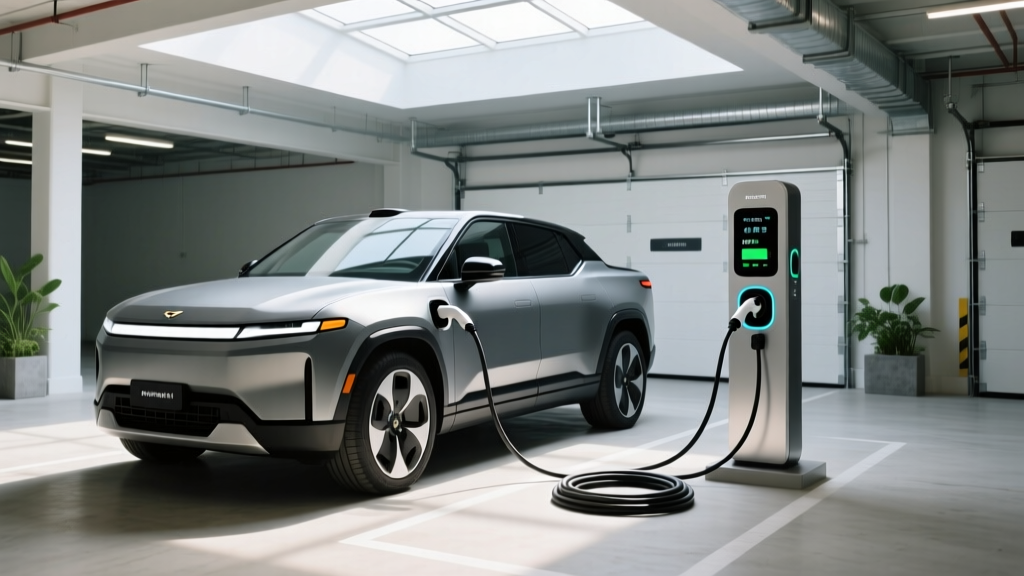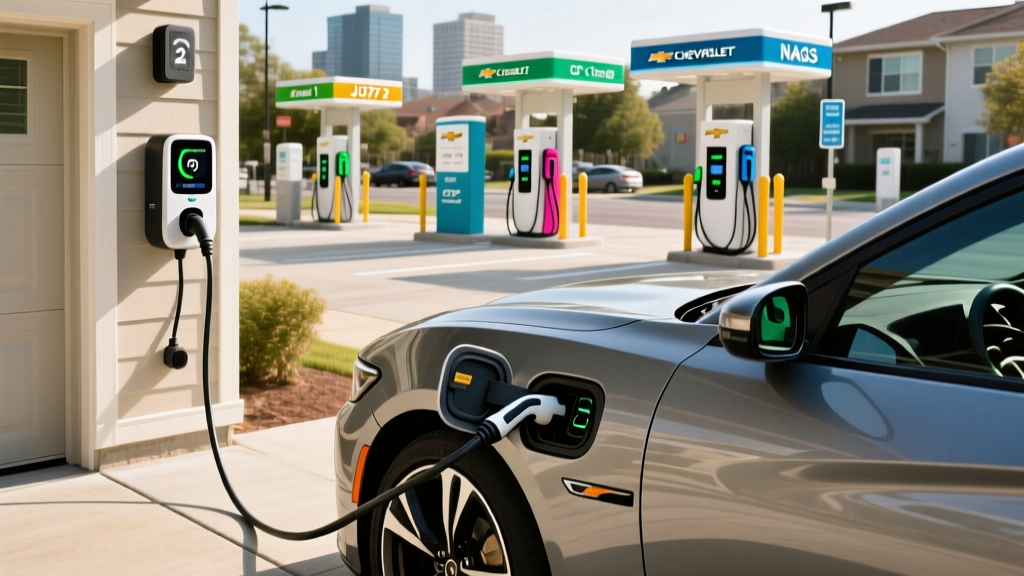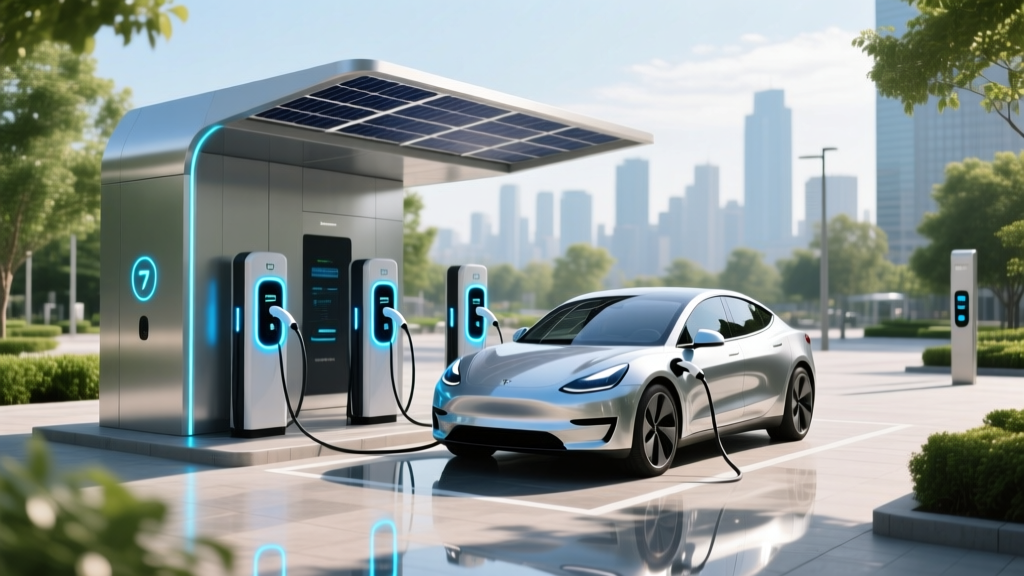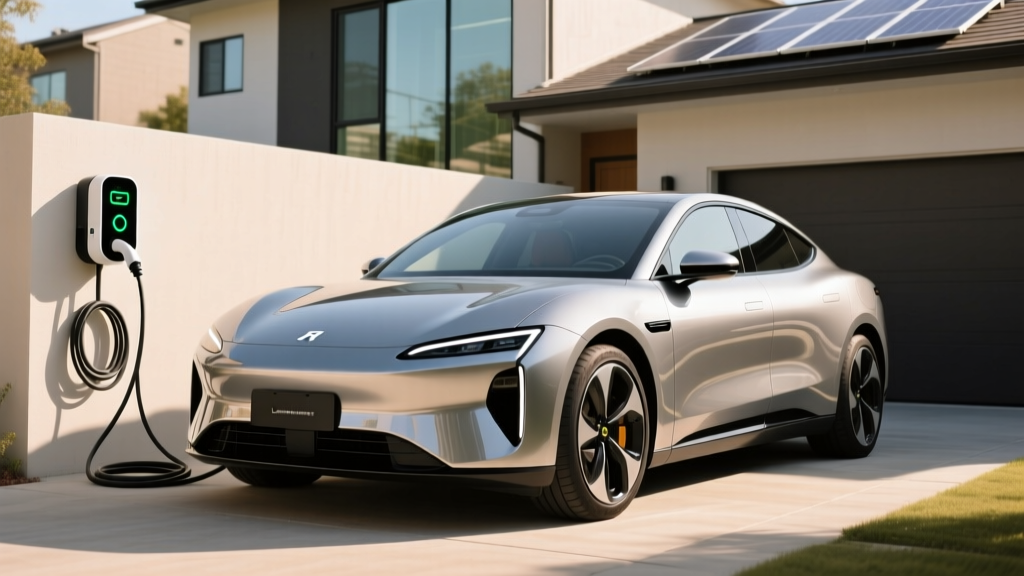
If you’re still driving a 2007 Range Rover Sport Supercharged, you already know the math: a supercharged 4.2L V8 delivering 390 horsepower, 12 MPG combined (EPA), and a fuel bill that can easily exceed $4,000 a year at 15,000 miles. For many owners of this iconic but thirsty SUV, the logical next step is a modern electric SUV — and the first question isn’t about 0-60 times, it’s about charging. How much will a home Level 2 charger cost to install? What’s the real cost per mile compared to premium unleaded? And which connector will you actually need?
This guide breaks down every charging variable — levels, speeds, home electrical requirements, installation costs, connectors, and per-mile economics — so you can plan the transition from a 2007 Range Rover Sport Supercharged to a 2026 EV with confidence and exact numbers.
Charging Levels Explained: Speeds in kW and Miles Per Hour
Before buying any equipment, you need to understand the three charging levels. The single most important distinction in EV literacy is kW (kilowatts) = power, or the rate at which energy flows into the battery, versus kWh (kilowatt-hours) = energy, the total capacity of the battery itself. Think of kW as the width of a hose and kWh as the size of the bucket.
| Level | Voltage | Max Power (kW) | Miles of Range Added/Hour | Typical Use Case |
|---|---|---|---|---|
| Level 1 | 120V AC | 1.2–1.9 kW | 3–5 mi/hr | Overnight trickle; PHEVs or low-mileage days |
| Level 2 | 240V AC | 3.3–19.2 kW | 12–75 mi/hr | Home daily charging; workplace; shopping centers |
| DC Fast Charging | 200–900V DC | 50–350 kW | 150–1,200 mi/hr | Road trips; highway corridors; 10–80% in 18–45 min |
Real-world charging time examples (based on a 100 kWh battery, typical of large EV SUVs like the Rivian R1S or BMW iX):
- Level 1 (1.4 kW): 10–80% takes roughly 50+ hours — impractical for daily use.
- Level 2 at 11.5 kW (48A hardwired): 10–80% in about 6 hours. Overnight ready.
- Level 2 at 7.7 kW (32A): 10–80% in roughly 9 hours.
- DC Fast at 250 kW peak (e.g., Tesla V4 Supercharger or Electrify America 350 kW station): 10–80% in approximately 20–28 minutes, though sustained rates taper significantly above 80% State of Charge (SoC).
For context, the 2007 Range Rover Sport Supercharged has a 26.4-gallon fuel tank and takes about 5 minutes to fill. A modern EV SUV with a 100 kWh pack at a 250 kW DC fast charger takes about 25 minutes for 10–80%. The trade-off is that EV “refueling” mostly happens at home while you sleep — a paradigm shift, not a deficit.
Home Charger Installation: Electrical Requirements and Real Costs
Installing a Level 2 home charger is the single biggest infrastructure decision you’ll make as an EV owner. The 2007 Range Rover Sport Supercharged never required you to think about your home’s electrical panel — but a 240V EV charger demands real planning.
Core Electrical Requirements
- Circuit: A dedicated 240V circuit. For a 48A charger, you need a 60A breaker (NEC requires circuits rated at 125% of continuous load).
- Wire gauge: Typically 6 AWG copper for 48A/60A circuits; 4 AWG for longer runs.
- Panel capacity: Most modern homes with 200A service can accommodate a 60A EV circuit. Older homes (common among Range Rover Sport owners who bought in the 2000s) may have 100A or 150A panels that are already near capacity.
- GFCI protection: NEC 2020+ requires GFCI breakers for EV receptacles in garages. Hardwired units may be exempt depending on jurisdiction.
- Outdoor rating: If your parking spot is outside, the charger must carry a NEMA 4 or NEMA 4X weatherproof rating.
Panel Upgrade: The Hidden Cost
If your home’s main panel lacks capacity — a real possibility in houses built before 2000 — you may need a panel upgrade from 100A to 200A. This is the single largest variable in installation cost and can add $1,500–$4,000 to the project. Some homeowners opt for a load management device (e.g., Emporia VUE with smart panel integration) that dynamically limits charger draw based on real-time household consumption, avoiding a panel upgrade entirely.
| Cost Component | Low End | High End | Notes |
|---|---|---|---|
| Level 2 Charger Equipment | $200 | $700 | Smart WiFi-enabled units with 25ft cable |
| Electrician Labor (standard install) | $300 | $1,200 | Depends on panel-to-charger distance, wall type |
| Permit & Inspection | $50 | $300 | Varies by municipality; some waive for EV |
| Electrical Panel Upgrade (if needed) | $1,500 | $4,000 | 100A→200A upgrade; not always required |
| Total (no panel upgrade) | $550 | $2,200 | Typical scenario for modern homes |
| Total (with panel upgrade) | $2,050 | $6,200 | Older homes or high-load panels |
Federal incentive note: The §30C Alternative Fuel Vehicle Refueling Property Credit (not to be confused with the §30D vehicle purchase credit) offers up to $1,000 for home charging equipment installed in eligible census tracts through 2032. Check IRS §30C guidelines for your zip code eligibility. This is separate from any state or utility rebates, which vary by jurisdiction.
Connector Compatibility: NACS, CCS1, CHAdeMO, and Adapters
The connector landscape has consolidated significantly by 2026. The North American Charging Standard (NACS), originally developed by Tesla, is now the dominant connector for new EVs sold in North America. Here’s what you need to know:
| Connector | Brands Using It (2026 Models) | AC Level 2 | DC Fast | Adapter Availability |
|---|---|---|---|---|
| NACS (Tesla) | Tesla, Ford, GM, Rivian, Volvo, Polestar, Hyundai, Kia (2025+) | Yes | Yes | OEM adapters for CCS→NACS ($100–$200) |
| CCS1 (Combo) | Legacy models: VW ID.4 (pre-2025), older BMW iX, some Stellantis | Yes (J1772) | Yes | CCS→NACS adapters widely available |
| CHAdeMO | Nissan Leaf (discontinued 2025), Mitsubishi Outlander PHEV | Yes (J1772) | Yes | Limited; network support declining |
Practical advice for 2026 buyers: If you’re purchasing a new EV, it almost certainly ships with NACS. Buy a NACS-compatible Level 2 home charger. If you own a CCS-equipped EV from the 2022–2024 era, a CCS-to-NACS adapter (approximately $150–$200) unlocks the entire Tesla Supercharger network — over 25,000 stalls in North America — for road trips.
Cost Per Mile: EV Charging vs. the 2007 Range Rover Sport Supercharged
This is where the math flips dramatically. The 2007 Range Rover Sport Supercharged achieves 12 MPG combined per fueleconomy.gov. At $4.50/gallon for premium unleaded (required for the supercharged V8), that’s $0.375 per mile in fuel alone.
| Scenario | Rate | Efficiency (kWh/100mi) | Cost Per Mile | Annual Cost (15k mi) |
|---|---|---|---|---|
| 2007 Range Rover Sport SC | $4.50/gal premium | 8.33 gal/100mi (12 MPG) | $0.375 | $5,625 |
| Home charging (off-peak utility rate) | $0.12/kWh | 35 kWh/100mi | $0.042 | $630 |
| Home charging (average US rate) | $0.17/kWh | 35 kWh/100mi | $0.060 | $893 |
| Public Level 2 (ChargePoint/EVgo) | $0.30/kWh | 35 kWh/100mi | $0.105 | $1,575 |
| DC Fast Charging (road trip) | $0.48/kWh | 38 kWh/100mi* | $0.182 | $2,736 |
*Highway driving at 75+ mph reduces efficiency by 5–10% compared to combined EPA ratings due to aerodynamic drag.
The verdict: Even in the worst-case scenario of exclusive DC fast charging, an EV SUV costs roughly half per mile compared to the 2007 Range Rover Sport Supercharged. For most owners who charge at home 80% of the time, the annual fuel savings are $4,500–$5,000. Over a typical 5-year ownership period, that’s $22,500–$25,000 in fuel savings alone — enough to offset a significant portion of the EV’s purchase price.
Recommended Home Level 2 Chargers (2026)
Not all Level 2 chargers are equal. Here are three units we recommend based on power output, cable length, smart features, build quality, and price — all NACS-native for 2026 EVs:
ChargePoint Home Flex (NACS)
- Power Output: Up to 11.5 kW (48A) on a 60A circuit; adjustable down to 16A for smaller panels
- Connector: NACS native; J1772 version also available
- Cable Length: 23 feet
- Smart Features: WiFi, app scheduling, utility integration for off-peak rates, Alexa/Google Home
- Rating: NEMA 4 (indoor/outdoor)
- Price: ~$550
Emporia Vue Smart EV Charger
- Power Output: Up to 11.5 kW (48A); pairs with Emporia VUE panel monitor for load management
- Connector: NACS or J1772 (configurable)
- Cable Length: 24 feet
- Smart Features: Real-time energy monitoring, solar integration, panel-avoid overload, app control
- Rating: NEMA 4 (indoor/outdoor)
- Price: ~$400
Tesla Wall Connector (Gen 4)
- Power Output: Up to 11.5 kW (48A); supports power-sharing with a second unit on one circuit
- Connector: NACS native
- Cable Length: 24 feet
- Smart Features: WiFi firmware updates, Tesla app integration, load sharing, access control
- Rating: NEMA 4 (indoor/outdoor)
- Price: ~$475
Selection framework: Choose the ChargePoint Home Flex if you want broad utility integration and a proven track record. Choose the Emporia if you have solar panels or a tight electrical panel and need load management to avoid a costly upgrade. Choose the Tesla Wall Connector if you own a Tesla or plan to, and value the cleanest integration with the Supercharger ecosystem.
Safety, Code, and Installation Best Practices
EV chargers draw sustained high current for hours — this is fundamentally different from a dryer or oven that cycles on and off. Proper installation isn’t optional:
- Dedicated circuit: Never share the EV charger circuit with other appliances. A 60A breaker serves only the charger.
- Hardwired vs. receptacle: Hardwired installations (no plug) eliminate the GFCI breaker requirement in many jurisdictions and provide a cleaner, more reliable connection. NEMA 14-50 receptacles are acceptable but require GFCI protection per NEC 2020+ in garages.
- Conduit and wire routing: Your electrician should use THHN wire in conduit for any run through unfinished spaces. Romex (NM-B) is acceptable inside finished walls but not in exposed garage runs in most jurisdictions.
- Permit and inspection: Always pull a permit. An unpermitted EV charger installation can void homeowner’s insurance claims related to electrical fires and will complicate a future home sale.
- Utility notification: Some utilities require notification before adding a Level 2 charger. They may offer a dedicated EV rate plan (time-of-use pricing) that dramatically reduces your per-kWh cost during off-peak hours.
Frequently Asked Questions
How much does it cost to install a home EV charger?
For a typical Level 2 (240V, 48A) installation in a home with adequate panel capacity, expect $550–$2,200 all-in: charger ($200–$700), electrician labor ($300–$1,200), and permit ($50–$300). If your panel needs upgrading from 100A to 200A, add $1,500–$4,000. The federal §30C credit may offset up to $1,000 of equipment and installation costs depending on your census tract.
How fast will each charging level add range?
Level 1 (120V) adds 3–5 miles of range per hour — suitable only for PHEVs or very low daily mileage. Level 2 (240V) at 11.5 kW adds roughly 35–45 miles per hour for a typical EV SUV, easily replenishing a day’s driving overnight. DC Fast Charging at 250 kW can add 200+ miles in 15–20 minutes, though charging speed tapers significantly above 80% SoC due to battery management protocols that protect cell longevity.
Which connector/charger is compatible with my EV?
For 2026 model-year EVs, the answer is almost certainly NACS. Ford, GM, Rivian, Hyundai, Kia, Volvo, and Polestar have all adopted NACS alongside Tesla. If you own a 2022–2024 EV with CCS1, a CCS-to-NACS adapter ($150–$200) grants access to Tesla Superchargers. CHAdeMO is effectively legacy — the Nissan Leaf ended production in 2025, and new CHAdeMO infrastructure is rare.
How much does charging cost per mile vs gas?
A 2007 Range Rover Sport Supercharged at 12 MPG combined on $4.50 premium costs $0.375/mile. An EV SUV averaging 35 kWh/100mi charged at home at $0.12/kWh (off-peak) costs $0.042/mile — an 89% reduction. Even at the national average of $0.17/kWh, the EV costs $0.060/mile. Over 15,000 miles annually, that’s $4,700–$5,000 in fuel savings.
What electrical upgrades might I need?
The most common upgrade is a panel replacement from 100A to 200A service, costing $1,500–$4,000. However, many homes can avoid this with a load management device (e.g., Emporia VUE) that dynamically caps charger amperage based on real-time household draw. If your garage is far from the panel (50+ feet), expect higher wire costs. Some older homes may also need a new meter base or utility service drop upgrade — your electrician will assess this during the initial consultation.
Can I charge a 2026 EV SUV as fast as I could refuel my Range Rover?
Not quite — but you rarely need to. A 5-minute gas stop is faster than any DC fast charge. The difference is that 80%+ of EV charging happens at home while you sleep, so you start every morning with a “full tank.” For road trips, a 20–25 minute DC fast charge session (10–80%) at a 250 kW station is a reasonable rest stop. The total trip time increase on a 500-mile journey is typically 30–45 minutes — offset by lower fuel costs, less fatigue, and no premium-gas station hunting.
The Bottom Line for Range Rover Sport Owners Going Electric
The 2007 Range Rover Sport Supercharged was a remarkable vehicle for its era — but at 12 MPG with $4.50+ premium fuel, it costs roughly $5,625 per year to fuel at 15,000 miles. A modern EV SUV charged primarily at home cuts that to under $900 annually, with a one-time home charger installation of $550–$2,200 (or up to $6,200 if your panel needs upgrading). The math is unambiguous: the charger pays for itself in fuel savings within the first year.
Your next steps: (1) Have a licensed electrician assess your panel capacity and quote a Level 2 installation. (2) Check your utility for an EV-specific time-of-use rate plan. (3) Verify your census tract eligibility for the §30C home charging credit at irs.gov. (4) Choose a NACS-native smart charger rated for at least 11.5 kW. The transition from supercharged V8 to silent electric torque is less about sacrifice and more about an upgrade you feel in your wallet every single day.