If you're still driving a 2006 Chevrolet Cobalt Supercharged — that punchy 2.0L LSJ engine making 205 hp and sipping premium at roughly 24 MPG combined — you've probably started eyeing the EV aisle. The jump from a 15-gallon gas tank and a supercharger whine to a battery-electric vehicle is massive, and the single biggest ownership shift isn't the powertrain. It's how you "refuel." This guide walks you through everything a former Cobalt SS owner needs to know about EV charging in 2026: the levels, the real costs, the electrical work, and the exact equipment to buy.
Why Your Gas-Station Habit Doesn't Translate to EVs
With the 2006 Cobalt Supercharged, you pulled up to a pump, filled 13.2 gallons in four minutes, and drove roughly 320 miles. An EV flips that model entirely. Instead of energy density in liquid form, you're managing electrons stored in a lithium-ion pack measured in kilowatt-hours (kWh) — the total energy capacity. Charging speed is measured in kilowatts (kW) — the rate at which energy flows into the battery. Confusing these two is the most common new-EV-owner mistake. Think of it this way: kWh is the size of your gas tank; kW is how fast the pump flows.
A typical 2026 EV like the Hyundai Ioniq 5 carries a 77.4 kWh usable battery (EPA range 305 miles). A Ford F-150 Lightning Extended Range packs 131 kWh (EPA 320 miles). Your charging setup determines whether you wake up every morning with a "full tank" or whether you're planning your week around public fast-charging stops.
The Three Charging Levels: Speeds, Costs, and Real-World Expectations
Every EV sold in the U.S. supports three tiers of charging. Here's how they break down in actual numbers — not marketing claims.
| Level | Voltage / Current | Power (kW) | Miles of Range Added per Hour | Typical Use Case |
|---|---|---|---|---|
| Level 1 (120V) | 120V / 12A | ~1.4 kW | 3–5 mi/hr | Overnight trickle; PHEVs; emergency |
| Level 2 (240V) | 240V / 32–48A | 7.7–11.5 kW | 25–44 mi/hr | Daily home charging; workplace |
| DC Fast Charging | 400–800V DC | 50–350 kW | 150–1,200+ mi/hr (peak) | Road trips; corridor travel |
How Much Does It Cost to Install a Home EV Charger?
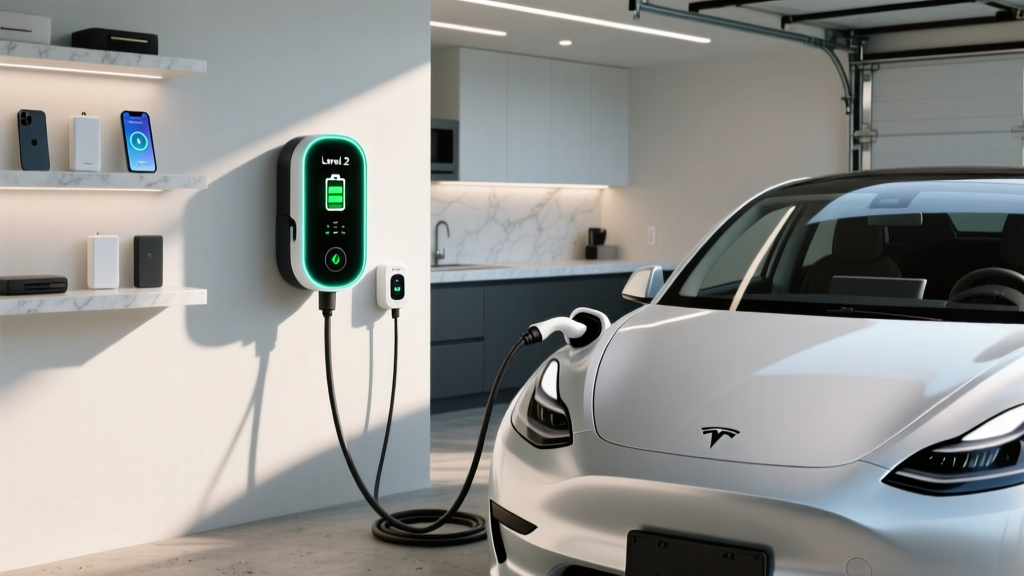
This is where your Cobalt's simplicity ends. A Level 2 home charger requires a dedicated 240-volt circuit — the same voltage your electric dryer or oven uses. The total cost depends heavily on your home's electrical panel, the distance from panel to charger location, and local permit fees. Here's a realistic 2026 breakdown:
| Component | Low-End Estimate | High-End Estimate | Notes |
|---|---|---|---|
| Level 2 Charger (hardware) | $350 | $750 | 32A–48A smart charger, 25-ft cable |
| Electrician labor (standard install) | $600 | $1,500 | Panel to garage, <30 ft run, conduit |
| Electrical permit | $50 | $200 | Varies by municipality |
| Panel upgrade (if needed) | $1,500 | $3,500+ | 100A → 200A service; older homes |
| Total (no panel upgrade) | $1,000 | $2,450 | Most homes with 200A service |
| Total (with panel upgrade) | $2,500 | $5,950+ | Homes built before 1990 likely need this |
If you're coming from a 2006 Cobalt Supercharged, your home was likely built in an era with 100-amp or 150-amp electrical service. Adding a 40-amp continuous EV circuit (which requires a 50-amp breaker, per NEC 80% rule) may push your panel to its limit. A licensed electrician will perform a load calculation before installing. Don't skip this — it's a code requirement and a safety necessity.
Electrical Requirements for a 48-Amp Level 2 Charger
- Circuit: Dedicated 60-amp breaker (240V)
- Wire gauge: 6 AWG copper (THHN in conduit) or 4 AWG aluminum
- Outlet option: NEMA 14-50 receptacle (allows charger portability) or hardwired (required for some 48A+ units)
- GFCI protection: Required for outdoor receptacles per 2023 NEC; some jurisdictions extend to indoor garage outlets
- Outdoor rating: If mounting outside, charger must carry a NEMA 4 (weatherproof) rating
Which Connector Does Your EV Need? NACS, CCS, and CHAdeMO Explained
The connector landscape has consolidated significantly by 2026. Tesla's North American Charging Standard (NACS) has become the dominant plug, with nearly every major automaker adopting it for 2025+ model-year vehicles. Here's what fits what:
| Connector | Brands Using It (2026) | Public Network Access | Adapter Needed? |
|---|---|---|---|
| NACS (Tesla standard) | Tesla, Ford, GM, Rivian, Volvo, Polestar, Hyundai/Kia (2025+), BMW, Mercedes | Tesla Supercharger, Electrify America, EVgo, ChargePoint | CCS-to-NACS adapter for older CCS vehicles |
| CCS1 (Combined Charging System) | Most 2024 and older non-Tesla EVs; some 2025 carryover models | Electrify America, EVgo, ChargePoint | NACS-to-CCS adapter for Tesla Superchargers |
| CHAdeMO | Nissan Leaf (legacy only); discontinued for new models | Limited and shrinking network | No practical adapter path |
Bottom line for a new EV buyer in 2026: Buy an EV with a NACS port if possible. It gives you native access to the Tesla Supercharger network — the most reliable and widespread DC fast-charging infrastructure in North America — without needing adapters. If you buy a slightly used 2024 model with CCS, budget $200–$400 for a quality NACS adapter.
Charging Cost Per Mile: EV vs. Your Old Cobalt Supercharged
The 2006 Cobalt SS Supercharged averaged roughly 24 MPG combined on premium fuel. At $3.80/gallon (2026 national average for premium), that's about $0.158 per mile in fuel alone. Here's how common EV charging scenarios compare, using a 2026 Hyundai Ioniq 5 (3.6 miles/kWh efficiency, per fueleconomy.gov):
| Charging Scenario | Rate ($/kWh) | Cost per Mile | Annual Cost (12,000 mi) |
|---|---|---|---|
| Home Level 2 — off-peak utility rate | $0.09/kWh | $0.025 | $300 |
| Home Level 2 — standard residential rate | $0.15/kWh | $0.042 | $500 |
| Public Level 2 (workplace, shopping) | $0.25/kWh | $0.069 | $833 |
| DC Fast Charging (road trips, Electrify America) | $0.48/kWh | $0.133 | $1,600 (if 100% DCFC) |
| 2006 Cobalt SS (premium gas) | $3.80/gal @ 24 MPG | $0.158 | $1,900 |
Even at standard residential rates, an EV cuts fuel cost per mile by roughly 73% compared to the Cobalt Supercharged. The savings compound: over five years at 12,000 miles/year, home-charged EV driving saves approximately $7,500–$8,000 in fuel alone. If your utility offers time-of-use (TOU) rates and you schedule charging for overnight off-peak hours, the savings widen further.
Charging Time Examples: What to Expect with Common Battery Sizes
Here's how long common 2026 EV batteries take to charge at each level. These assume starting at 10% state of charge and charging to 80% (the practical daily maximum — charging above 80% slows dramatically and stresses NMC chemistry cells).
- Hyundai Ioniq 5 (77.4 kWh, NMC): Level 2 at 11.5 kW = ~6 hours (10–80%). DCFC at 240 kW peak = ~18 minutes (10–80%).
- Tesla Model Y Long Range (75 kWh, NMC): Level 2 at 11.5 kW = ~5.5 hours. DCFC at 250 kW peak = ~20 minutes (10–80%).
- Ford F-150 Lightning Extended Range (131 kWh, NMC): Level 2 at 11.5 kW = ~10 hours. DCFC at 230 kW peak = ~41 minutes (10–80%).
- Chevrolet Equinox EV (85 kWh, NMC): Level 2 at 11.5 kW = ~6.5 hours. DCFC at 150 kW peak = ~35 minutes (10–80%).
- Tesla Model 3 RWD (57.5 kWh, LFP): Level 2 at 11.5 kW = ~4.5 hours. DCFC at 170 kW peak = ~22 minutes (10–80%). LFP chemistry tolerates regular 100% charging, so daily full charges are acceptable.
Equipment Recommendations: Best Level 2 Chargers for 2026
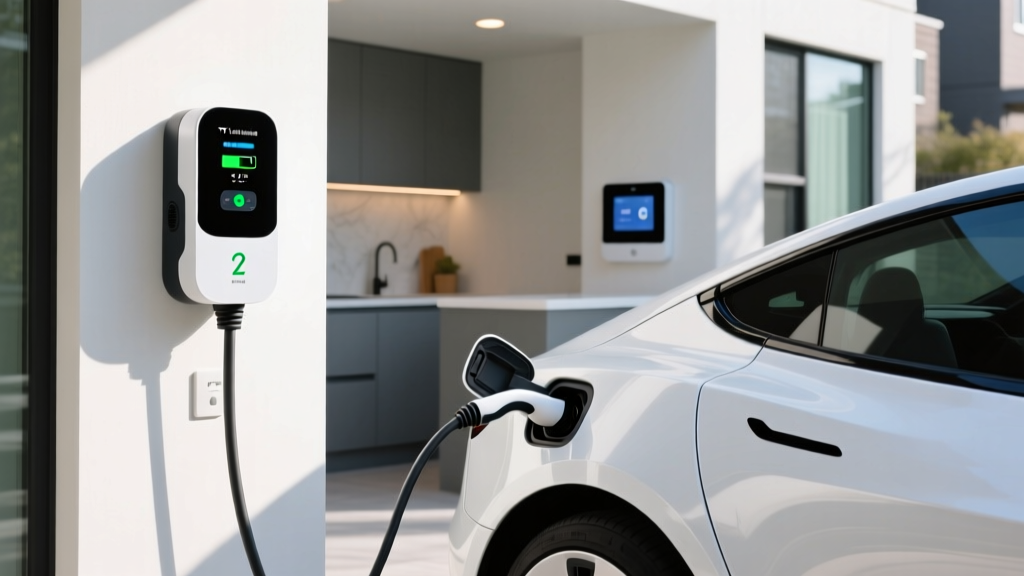
Not all Level 2 chargers are equal. Here are three proven units across different budgets, all with NACS connectors (or available with NACS), UL-listed, and compatible with any 2026 EV sold in North America.
Emporia Level 2 EV Charger
- Power output: 48A / 11.5 kW (240V hardwired) or 40A / 9.6 kW (NEMA 14-50 plug)
- Cable length: 24 feet
- Connector: NACS (native); J1772 adapter included
- Smart features: Wi-Fi, app-based scheduling, energy monitoring, solar integration, TOU rate optimization
- Outdoor rating: NEMA 4
- Price: ~$399
Best for: Budget-conscious buyers who want full smart features and energy tracking. The app reliably schedules off-peak charging to minimize cost.
ChargePoint Home Flex (2nd Gen)
- Power output: Up to 50A / 12 kW (240V, hardwired); configurable 16A–50A
- Cable length: 23 feet
- Connector: NACS (2025+ models); J1772 (older stock)
- Smart features: Wi-Fi, Alexa/Google integration, flexible amperage dial, detailed session history
- Outdoor rating: NEMA 4
- Price: ~$649
Best for: Homes with variable panel capacity — the adjustable amperage lets you match the charger to your available circuit without swapping hardware.
Tesla Wall Connector
- Power output: 48A / 11.5 kW (240V hardwired)
- Cable length: 24 feet
- Connector: NACS native; J1772 adapter included
- Smart features: Wi-Fi, over-the-air updates, power sharing (link up to 6 units on one circuit), access control
- Outdoor rating: NEMA 3R (suitable for covered outdoor; not full NEMA 4 waterproof)
- Price: ~$475
Best for: Tesla owners and multi-EV households. Power sharing is ideal if you're adding a second charger in a garage with limited panel capacity.
Safety, Electrical Code, and the Panel-Upgrade Gotcha
Coming from a 2006 Cobalt Supercharged, your home's electrical infrastructure may be just as old as the car. Here are the code and safety realities your electrician will address — and the one that catches most new EV owners off guard:
- Dedicated circuit: NEC requires a dedicated circuit for EV charging. You cannot share the circuit with a dryer, welder, or other appliance.
- 80% continuous-load rule: A 48A charger requires a 60A breaker. A 40A charger requires a 50A breaker. Never undersize the breaker.
- GFCI protection: The 2023 NEC (adopted by most states by 2026) requires GFCI protection on 240V EV receptacles. Hardwired chargers may be exempt in some jurisdictions — confirm with your AHJ (Authority Having Jurisdiction).
- The panel-upgrade trap: If your home has a 100A main panel — common in homes built between 1960–1990 — adding a 60A EV circuit will almost certainly exceed your panel's capacity once a load calculation is performed. Budget $1,500–$3,500 for a 200A service upgrade. Some utilities offer rebates for panel upgrades when paired with EV adoption; check with your local provider.
- Permit and inspection: Every jurisdiction requires an electrical permit for EV charger installation. The inspection ensures code compliance and protects your homeowner's insurance coverage. Unpermitted work can void claims in the event of an electrical fire.
The National Electrical Code is updated every three years, and EV-specific provisions have expanded with each cycle since 2017. Always hire a licensed electrician familiar with current NEC Article 625 (Electric Vehicle Charging System Equipment).
Federal Tax Credits and Utility Rebates for Home Charging
The IRS Alternative Fuel Vehicle Refueling Property Credit (§30C) covers 30% of the cost of home EV charging equipment and installation, up to $1,000 per tax year, for equipment placed in service in your primary residence. This is separate from the §30D new-EV purchase credit. Key caveats for 2026:
- The charger must be installed at your principal residence in the United States.
- The credit applies to both the hardware and the electrical labor — not the panel upgrade itself.
- Eligibility may be subject to census-tract requirements (equipment installed in qualifying low-income or non-urban census tracts receives priority under current IRS guidance).
- The credit is non-refundable — it reduces your tax liability to zero but does not generate a refund beyond that.
- Consult a tax professional to confirm your eligibility, as IRS guidance on census-tract and income requirements continues to evolve.
Many utilities also offer direct rebates for Level 2 charger hardware ($200–$500) or installation ($300–$1,000). Check your utility's EV program page before purchasing equipment — some require pre-approval or specific charger models to qualify.
Frequently Asked Questions
How fast will each charging level add range to my EV?
Level 1 (120V standard outlet) adds 3–5 miles of range per hour — enough for a PHEV with a 30-mile electric range, but impractical for a full BEV. Level 2 (240V, home-installed) adds 25–44 miles per hour depending on amperage, fully replenishing most EVs overnight. DC Fast Charging adds 150–1,200+ miles per hour at peak rates, but sustained rates taper significantly above 80% state of charge.
How much does it cost to install a home EV charger?
Expect $1,000–$2,450 for a standard Level 2 installation (charger hardware, electrician labor, and permit) in a home with an existing 200A electrical panel. If your home requires a panel upgrade from 100A to 200A service, add $1,500–$3,500, bringing the total to $2,500–$5,950 or more. Always get a load calculation from a licensed electrician before committing to a charger amperage.
Which connector and charger is compatible with my EV?
For 2025–2026 model-year vehicles from Tesla, Ford, GM, Hyundai, Kia, Rivian, Volvo, BMW, and Mercedes, the NACS connector is native. Older (2024 and earlier) non-Tesla EVs use CCS1 and require a NACS-to-CCS adapter for Tesla Supercharger access. CHAdeMO is limited to the legacy Nissan Leaf and is effectively discontinued. For home Level 2 charging, all EVs use the same J1772 or NACS connector — any quality Level 2 charger will work with any EV, with the appropriate adapter if needed.
How much does charging cost per mile compared to gas?
At a typical residential electricity rate of $0.15/kWh and an EV efficiency of 3.5 miles/kWh, home charging costs approximately $0.04 per mile. A 2006 Cobalt Supercharged getting 24 MPG on $3.80 premium gas costs about $0.16 per mile in fuel. Even exclusive DC fast charging at $0.48/kWh ($0.13/mile) undercuts gasoline. The annual fuel savings for 12,000 miles of driving ranges from $1,100 (all DCFC) to $1,600 (all home off-peak).
What electrical upgrades might I need for a home charger?
The most common upgrade is a panel capacity increase from 100A to 200A service, required in many homes built before 1990. You may also need a new dedicated circuit run (conduit, wire, and breaker), a NEMA 14-50 receptacle or hardwired connection, and GFCI breaker protection per current NEC code. In rare cases, the utility may need to upgrade the service drop to your home. A licensed electrician's load calculation will determine exactly what's required before any work begins.
Moving from a 2006 Cobalt Supercharged to a modern EV is one of the most dramatic daily-driving upgrades available — and the charging setup is the foundation that makes it work. Invest in a proper Level 2 home installation, choose a NACS-compatible charger, and you'll never think about a gas station again. The supercharger whine might be gone, but waking up every morning to 300 miles of range, at a third of the per-mile cost, is a trade worth making.