The 2005 Pontiac Grand Prix GTP Supercharged and EV Charging: Clearing Up the Confusion
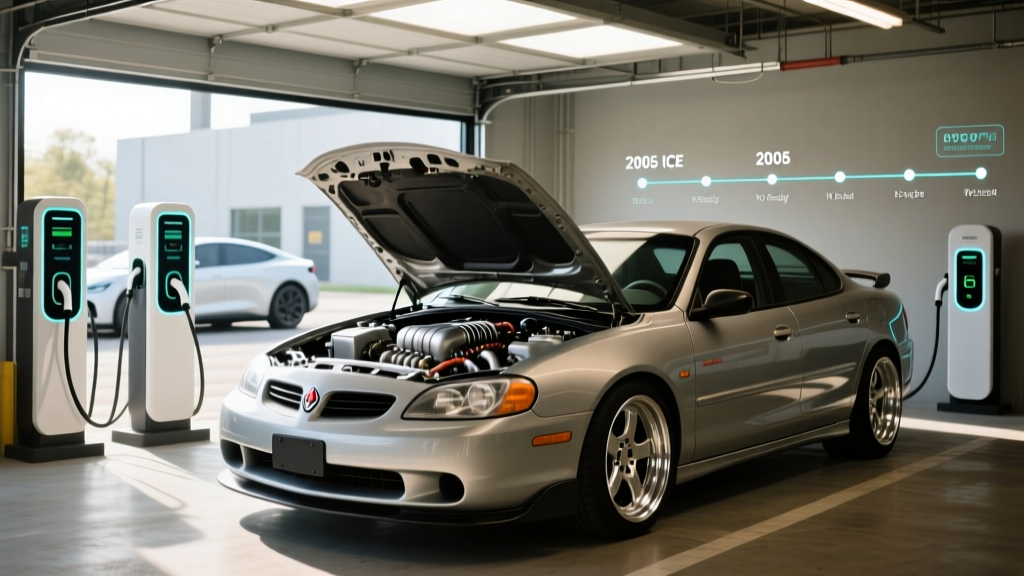
Search engines sometimes serve surprising queries, and "2005 Pontiac Grand Prix GTP Supercharged" paired with EV charging is one of them. Let's be direct: the 2005 Pontiac Grand Prix GTP Supercharged is a gasoline-powered sedan equipped with a 3.8L supercharged V6 producing 260 horsepower. It has no traction battery, no charge port, and no compatibility with any EV charging infrastructure — Level 1, Level 2, or DC fast charging.
However, if you landed here researching EV charging and also happen to own or are replacing a Grand Prix GTP, this guide covers everything you need to set up EV charging at home and on the road for an actual electric vehicle. Whether you're transitioning from a supercharged V6 to a modern EV or PHEV, the charging fundamentals below apply universally.
Throughout this guide: kW (kilowatts) measures charging power — how fast energy flows into the battery. kWh (kilowatt-hours) measures battery capacity — how much energy the battery stores. Think of kW as the flow rate of a hose and kWh as the size of the bucket. Never use them interchangeably.
Charging Levels Explained: Speeds, Power, and Range Added
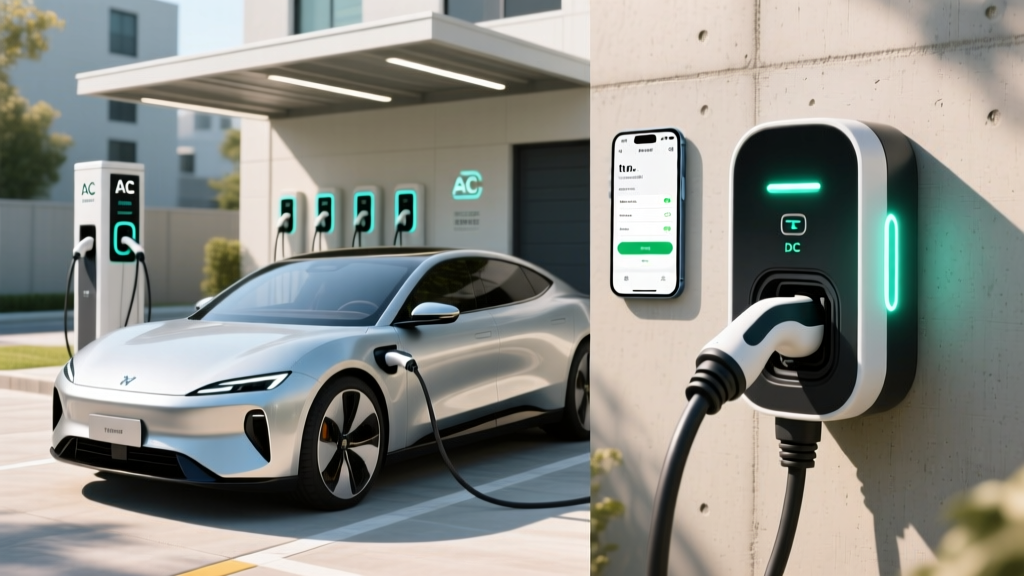
Every EV owner needs to understand the three charging tiers. Charge speed depends on both the station's output (kW) and the vehicle's onboard acceptance rate.
| Level | Voltage | Power (kW) | Miles of Range Per Hour | Typical Use Case |
|---|---|---|---|---|
| Level 1 | 120V AC | 1.0–1.4 kW | 3–5 mi/hr | Overnight top-up, PHEVs, emergencies |
| Level 2 | 240V AC | 3.3–19.2 kW | 12–75 mi/hr | Home daily charging, workplace, shopping centers |
| DC Fast Charging | 200–800V DC | 50–350 kW | 150–1,200+ mi/hr | Road trips, highway corridors, quick top-ups |
Real-world charging time examples:
- 75 kWh battery (e.g., Tesla Model Y, Hyundai Ioniq 5): Level 2 at 11.5 kW — roughly 6.5 hours from 10–80%. DC fast at 250 kW peak — 10–80% in approximately 18–22 minutes (tapering above 80%).
- 100 kWh battery (e.g., Ford F-150 Lightning Extended Range): Level 2 at 11.5 kW — about 8.5 hours 10–80%. DC fast at 150 kW — 10–80% in roughly 40–45 minutes.
- 18 kWh PHEV battery (e.g., Toyota RAV4 Prime): Level 2 at 3.3 kW — approximately 4.5 hours 0–100%. DC fast charging is typically unavailable on PHEVs.
The charge curve matters: DC fast charging peaks only at low state of charge (SoC). A charger rated at 250 kW may sustain that rate only between 10–40% SoC, then taper progressively. Expect the 80–100% top-off to take nearly as long as the 10–80% portion. This is why most road-trippers charge to 80% and move on.
Home EV Charger Installation: Electrical Requirements and Costs
Installing a Level 2 home charger is the single most impactful upgrade for EV ownership. Here's what's involved electrically and financially.
Electrical Requirements
Most Level 2 home chargers require a 240V dedicated circuit — the same voltage as an electric dryer or oven. Common configurations:
- 40-amp circuit (delivers 32A continuous / 7.7 kW) — sufficient for most EVs overnight
- 50-amp circuit (delivers 40A continuous / 9.6 kW) — faster, recommended for larger batteries
- 60-amp circuit (delivers 48A continuous / 11.5 kW) — maximizes charge speed for vehicles that accept it
The National Electrical Code (NEC) requires that continuous loads not exceed 80% of a circuit's rated capacity. A 50-amp breaker therefore delivers a maximum continuous 40 amps. Always consult a licensed electrician for final specifications — panel capacity, wire gauge, and conduit routing are site-specific.
Panel Upgrade Considerations
Homes built before 2000 — including homes that might have originally housed a 2005 Pontiac Grand Prix GTP in the garage — often have 100-amp or 150-amp electrical panels. Adding a 50-amp EV circuit to an already-loaded panel may require a panel upgrade to 200 amps, which adds significant cost. Signs you may need an upgrade:
- Fewer than 4 open breaker slots
- Existing 100A or 150A main service
- Frequent breaker trips with current loads
- Aluminum wiring (pre-1970s homes)
| Component | Typical Cost Range | Notes |
|---|---|---|
| Level 2 Charger (Equipment) | $300–$750 | Smart Wi-Fi-enabled units; basic models from $200 |
| Electrician Labor (standard install) | $500–$1,500 | Short run from panel to garage; longer runs cost more |
| Electrical Permit | $50–$250 | Varies by municipality; required in most jurisdictions |
| Panel Upgrade (if needed) | $1,500–$4,000 | 200A service upgrade; not always required |
| Conduit/Wire (long runs >50 ft) | $300–$1,200 | Detached garages, underground runs |
| Total (no panel upgrade) | $850–$2,500 | Most common scenario |
| Total (with panel upgrade) | $2,350–$6,500 | Older homes, high-load panels |
Some utilities offer rebates of $250–$500 for Level 2 charger installation, and certain states provide additional incentives. Check your local utility and state energy office for current programs.
Connector Compatibility: NACS, CCS, and CHAdeMO
As of 2025–2026, the North American charging connector landscape has consolidated significantly around the North American Charging Standard (NACS), originally developed by Tesla. Here's what fits what:
| Connector | Vehicles Using It | Notes |
|---|---|---|
| NACS (Tesla) | All Tesla vehicles; Ford, GM, Rivian, Volvo, Polestar (2025+ models) | Now the dominant standard; access to Tesla Supercharger network |
| CCS1 | Hyundai, Kia, BMW, VW, Mercedes, Stellantis (most current models) | Legacy standard; still widely available at Electrify America, EVgo |
| CHAdeMO | Nissan Leaf (legacy) | Effectively discontinued; dwindling station availability |
Adapter needs: If you own a CCS-equipped vehicle and want access to Tesla Superchargers, Tesla sells a CCS-to-NACS adapter (~$250). Ford and GM owners with NACS ports can use CCS stations with a NACS-to-CCS adapter. CHAdeMO adapters are not commercially available — Leaf owners should plan around the CHAdeMO network's decline.
For home Level 2 charging, all vehicles use the J1772 connector (or NACS, which integrates J1772 signaling). Every Level 2 home charger ships with a J1772 plug or a NACS plug; adapters are inexpensive ($30–$60) if needed.
Cost to Charge: Per-Mile Economics vs. Gasoline
One reason EV owners leave vehicles like the 2005 Grand Prix GTP (EPA-rated 18 city / 28 highway MPG on premium fuel) behind is fuel cost. Here's how EV charging compares:
| Scenario | Cost per kWh | Vehicle Efficiency | Cost per Mile |
|---|---|---|---|
| Home charging (off-peak utility rate) | $0.08–$0.14 | 3.0 mi/kWh (average EV) | $0.03–$0.05 |
| Home charging (standard rate) | $0.14–$0.20 | 3.0 mi/kWh | $0.05–$0.07 |
| Public Level 2 (ChargePoint, etc.) | $0.25–$0.49 | 3.0 mi/kWh | $0.08–$0.16 |
| DC Fast Charging (Electrify America, EVgo) | $0.35–$0.65 | 3.0 mi/kWh | $0.12–$0.22 |
| Gasoline (2005 Grand Prix GTP, premium) | $4.20/gallon | 22 MPG combined | $0.19 |
| Gasoline (2026 avg sedan, regular) | $3.40/gallon | 30 MPG combined | $0.11 |
The takeaway: Home charging is dramatically cheaper than gasoline — typically 3 to 6 cents per mile vs. 11 to 19 cents. Even public DC fast charging often costs less per mile than premium gasoline. However, exclusive reliance on public DC fast charging can approach or exceed gas costs in high-price markets. Home access is the economic linchpin of EV ownership.
According to fueleconomy.gov, a 2026 Hyundai Ioniq 6 SE achieves 140 MPGe combined (approximately 3.6–4.0 mi/kWh), making it one of the most efficient EVs available and pushing per-mile costs even lower.
Recommended Home EV Chargers for 2026
Below are three widely recommended Level 2 chargers with verified specifications:
ChargePoint Home Flex
- Power Output: Up to 12 kW (50A circuit) — configurable from 16A to 50A
- Connector: J1772 (NACS adapter available)
- Cable Length: 23 feet
- Smart Features: Wi-Fi, Alexa integration, scheduling, energy tracking via app
- Price: ~$550–$650
- UL Listed: Yes, indoor/outdoor rated (NEMA 4)
Tesla Wall Connector
- Power Output: Up to 11.5 kW (48A on 60A circuit)
- Connector: NACS native (J1772 adapter included for non-Tesla EVs)
- Cable Length: 24 feet
- Smart Features: Wi-Fi, over-the-air updates, power sharing between units, Tesla app
- Price: ~$475
- UL Listed: Yes, indoor/outdoor rated
Emporia Vue Home EV Charger
- Power Output: Up to 11.5 kW (48A on 60A circuit)
- Connector: J1772
- Cable Length: 24 feet
- Smart Features: Wi-Fi, energy monitoring, solar integration, time-of-use scheduling
- Price: ~$400–$500
- UL Listed: Yes, NEMA 4 outdoor rated
All three support hardwired installation (recommended for maximum amperage) or NEMA 14-50 plug configuration. Hardwired installations avoid the GFCI breaker requirement that NEC 2023+ mandates for receptacle-based EV chargers — a $50–$150 savings on the breaker alone.
Safety, Code, and Installation Best Practices
EV charging draws sustained high current for hours — unlike a dryer that cycles on and off. This makes proper installation non-negotiable:
- Dedicated circuit: Your EV charger must have its own breaker — never shared with other appliances.
- GFCI protection: NEC 2023 and later require ground-fault protection for receptacle-installed chargers. Hardwired units are typically exempt.
- Outdoor rating: If installed outdoors or in an open carport, the unit must carry a NEMA 4 (or higher) weather-resistance rating.
- Permit and inspection: Most jurisdictions require an electrical permit and post-installation inspection. Skipping this risks insurance claim denials and code violations.
- Wire gauge: 6 AWG copper for 50A circuits; 4 AWG for 60A. Aluminum wire requires larger gauge. Your electrician will size accordingly.
- Cable management: Wall-mount a holster or use the integrated cable wrap to prevent tripping hazards and connector damage.
For authoritative electrical safety guidance, refer to the National Fire Protection Association's NEC resources.
Frequently Asked Questions
How much does it cost to install a home EV charger?
Expect $850–$2,500 for a standard installation (equipment + electrician + permit) if your electrical panel has sufficient capacity. If a panel upgrade to 200A is needed, total costs range from $2,350–$6,500. Get at least two quotes from licensed electricians.
How fast will each charging level add range?
Level 1 (120V): 3–5 miles per hour. Level 2 (240V): 12–75 miles per hour depending on amperage and vehicle acceptance rate. DC Fast Charging: 150–1,200+ miles per hour equivalent, but practically measured as 10–80% in 18–45 minutes depending on battery size and charger power.
Which connector/charger is compatible with my EV?
Check your vehicle's charge port. As of 2026, most new EVs use either NACS (Tesla, Ford, GM, Rivian, Volvo) or CCS1 (Hyundai, Kia, BMW, VW). The Nissan Leaf uses CHAdeMO (legacy). For home Level 2 charging, all vehicles accept J1772 or NACS — adapters bridge any gap for under $60.
How much does charging cost per mile vs gas?
Home charging typically costs $0.03–$0.07 per mile, compared to $0.11–$0.19 per mile for gasoline vehicles. Even premium-fuel vehicles like the 2005 Pontiac Grand Prix GTP Supercharged (requiring 91+ octane, averaging ~22 MPG combined) cost approximately $0.19/mile — 3 to 6x more than home EV charging.
What electrical upgrades might I need?
If your home has a 100A or 150A panel, limited breaker slots, or aluminum wiring, you may need a panel upgrade ($1,500–$4,000). Homes with 200A service and open slots typically need no upgrade. An electrician's load calculation will determine this definitively — request one before purchasing equipment.
Can I convert a 2005 Pontiac Grand Prix GTP to electric?
Technically, aftermarket EV conversion kits exist, but they cost $15,000–$40,000+, void all safety certifications, lack modern battery management, and result in a vehicle that cannot be legally registered in many states without extensive re-certification. The practical answer is no — invest that budget toward a purpose-built EV or PHEV instead.
Sources: EPA Fuel Economy, IRS Clean Vehicle Credits, NFPA National Electrical Code.