Why Are You Searching for 2005 Dodge Chargers on an EV Site?
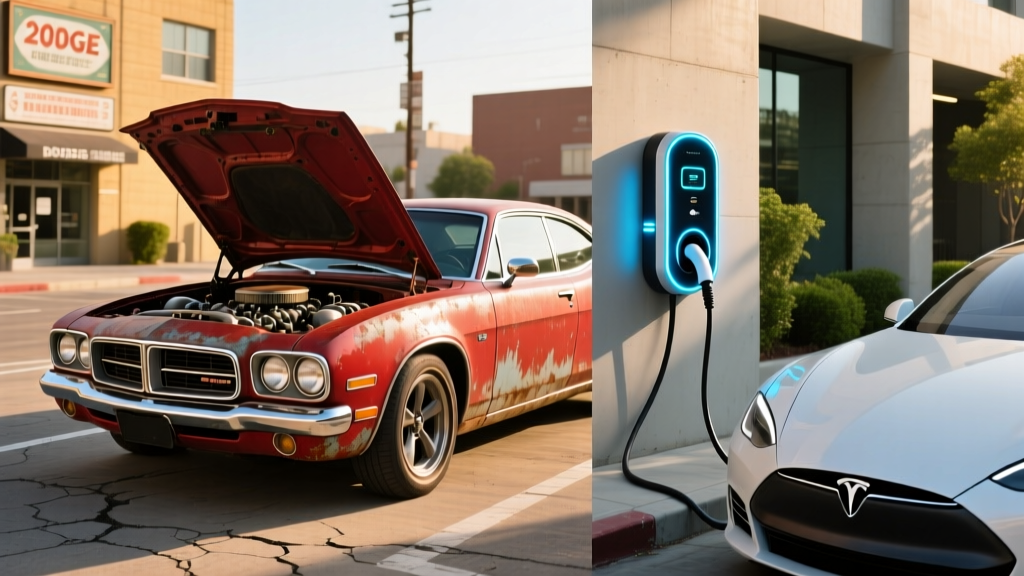
Here's the honest truth: if you landed on this page searching for 2005 Dodge Chargers, you're probably not looking for an electric vehicle charging guide. The 2005 Dodge Charger was a rear-wheel-drive sedan powered by a 2.7L V6 (190 hp), 3.5L V6 (250 hp), or the legendary 5.7L HEMI V8 (340 hp). It ran on gasoline. It had no plug, no battery pack, and no regenerative braking. It was a product of a different automotive era.
But the word "charger" has taken on a completely new meaning in 2026. Today, when someone says "charger," they're just as likely to mean a Level 2 home EV charging station as they are the iconic Dodge sedan. So let's bridge that gap — and while we're at it, show you exactly how modern EV charging works, what it costs, and how it compares to filling up that old HEMI at the pump.
The 2005 Dodge Charger R/T got roughly 15 city / 23 highway MPG (EPA) with its 5.7L HEMI. At $3.50/gallon, that's about $0.17 per mile in fuel. A modern EV charging at home? As low as $0.04 per mile. Let's break that down.
Charging Levels Explained: Level 1, Level 2, and DC Fast Charging
Unlike the single act of pulling up to a gas station, EV charging happens at three distinct levels. The critical distinction every EV owner must understand: kW (kilowatts) measures power — how fast energy flows into the battery. kWh (kilowatt-hours) measures energy — the total capacity of the battery, like gallons in a fuel tank. Confusing these two is the most common EV literacy mistake.
| Level | Voltage | Power (kW) | Miles of Range Added Per Hour | Typical Use Case |
|---|---|---|---|---|
| Level 1 | 120V AC | 1.2–1.9 kW | 3–5 mi/hr | Overnight trickle; PHEVs; emergency |
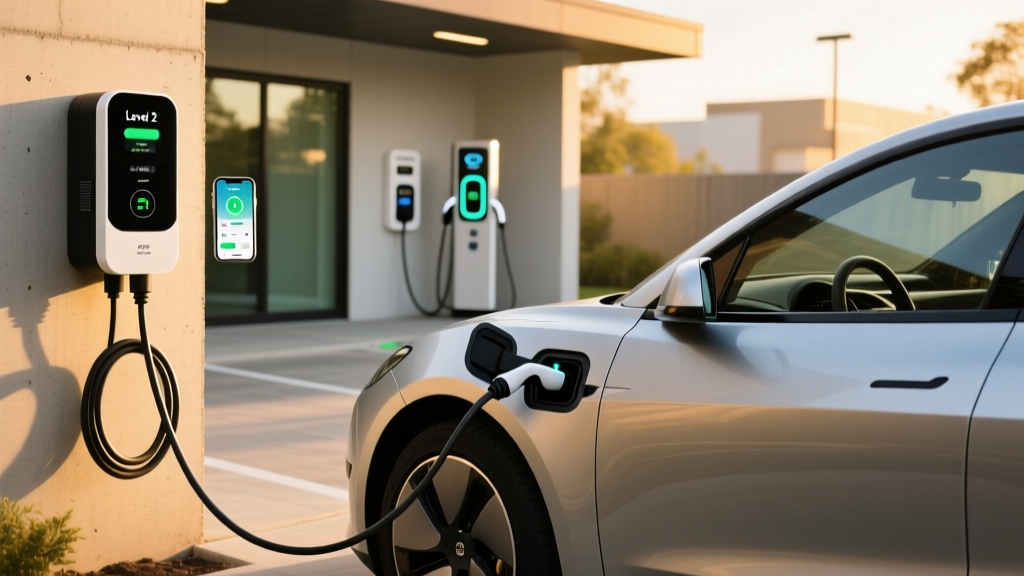
| Level 2 | 240V AC | 7.2–19.2 kW | 20–60 mi/hr | Home daily charging; workplace; public AC |
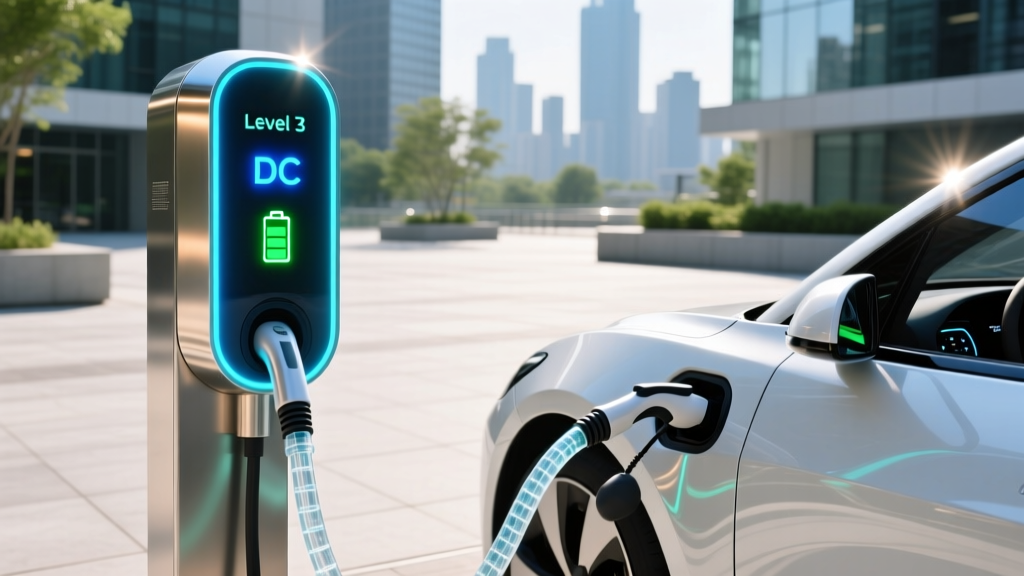
| DC Fast (Level 3) | 400–800V DC | 50–350 kW | 150–1,000+ mi/hr (peak) | Road trips; highway corridors |
Real-world context: A Level 2 charger at 11.5 kW (48A on a 60A circuit) will fully replenish a 75 kWh battery — like the one in a Tesla Model Y Long Range — in roughly 7 hours. A DC fast charger peaking at 250 kW can take that same battery from 10% to 80% in approximately 20–25 minutes, though charge speed tapers significantly above 80% SoC to protect battery health.
How Much Does It Cost to Install a Home EV Charger?
This is where owning a 2005 Dodge Charger was simpler — you just needed a gas station. For a modern EV, home Level 2 charging installation costs vary enormously depending on your electrical panel, the distance from panel to charger location, and local permitting. Here's a realistic 2026 breakdown:
| Component | Typical Range | Notes |
|---|---|---|
| Level 2 EVSE hardware (smart charger) | $350–$700 | 32A–48A, Wi-Fi enabled, NACS or J1772 |
| Electrician labor (standard install) | $500–$1,500 | Assumes panel has capacity; 240V/50-60A circuit |
| Electrical permit | $50–$200 | Varies by municipality; required in most jurisdictions |
| Conduit, wiring, and materials | $200–$600 | Depends on run distance (garage vs. outdoor wall) |
| Total (standard install) | $1,100–$3,000 | Most homes with adequate panel capacity |
| Panel upgrade (if needed) | $1,500–$4,000+ | Required if panel is 100A or at capacity; upgrades to 200A |
| Total (with panel upgrade) | $2,600–$7,000+ | Older homes, homes with 100A service |
Panel upgrade reality check: If your home has a 100-amp electrical panel — common in homes built before the 1990s — adding a 48A EV charger circuit may require a full panel upgrade to 200A. This is the single biggest cost surprise for new EV owners in older homes. A licensed electrician should perform a load calculation before you purchase any equipment.
⚡ Safety & Code Requirements: Your Level 2 charger installation must include a dedicated circuit (never shared with other appliances), a properly rated breaker (typically 60A breaker for a 48A continuous load per NEC 80% rule), GFCI protection for outdoor installations, and NEMA 4-rated enclosures for outdoor mounting. Always hire a licensed electrician and pull the required permit — unpermitted electrical work can void home insurance.
Which Connector Is Compatible with Your EV?
The connector landscape has shifted dramatically. As of 2026, the North American Charging Standard (NACS) — originally Tesla's proprietary connector — has become the dominant standard, with nearly every major automaker adopting it for new models. Here's what you need to know:
| Connector | Brands Using It (2026 Models) | Notes |
|---|---|---|
| NACS (Tesla-style) | Tesla, Ford, GM, Rivian, Volvo, Polestar, Hyundai, Kia (new models) | Now the SAE J3400 standard; direct Supercharger access |
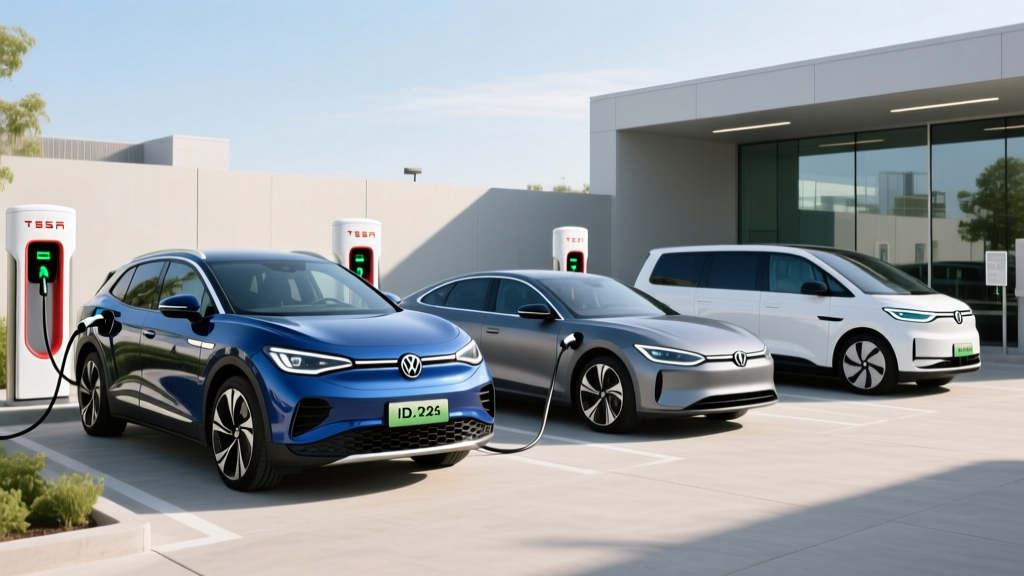
| CCS1 (Combo) | VW, BMW, older Ford/GM models (pre-2025), some legacy models | Still widely available at Electrify America, EVgo stations |
| CHAdeMO | Nissan Leaf (discontinued), Mitsubishi Outlander PHEV (older) | Phasing out; limited new station deployments |
| J1772 (AC only) | All non-Tesla EVs (Level 1 and Level 2 AC charging) | Standard for AC charging; NACS vehicles use adapter or native J3400 inlet |
Adapter needs: If you drive a CCS-equipped EV (like a 2024 Hyundai Ioniq 5 or VW ID.4), you'll need a CCS-to-NACS adapter (approximately $150–$250) to access Tesla Supercharger stations, which now number over 30,000 in North America. Tesla owners charging at CCS stations need a NACS-to-CCS adapter. Most new 2025–2026 EVs ship with NACS native.
Charging Cost Per Mile: EV vs. Gas (Yes, vs. That HEMI)
Let's put real numbers to the cost comparison. The 2005 Dodge Charger R/T with its 5.7L HEMI V8 averaged roughly 18 MPG combined. A modern EV like the 2026 Tesla Model Y Long Range achieves approximately 3.5–4.0 miles per kWh. Here's how costs stack up:
| Scenario | Cost Per Unit | Efficiency | Cost Per Mile |
|---|---|---|---|
| 2005 Dodge Charger R/T (gas) | $3.50/gallon | 18 MPG combined | $0.19/mi |
| EV — Home charging (off-peak utility rate) | $0.12/kWh | 3.8 mi/kWh | $0.03/mi |
| EV — Home charging (average US rate) | $0.17/kWh | 3.8 mi/kWh | $0.04/mi |
| EV — Public Level 2 (ChargePoint, etc.) | $0.30/kWh | 3.8 mi/kWh | $0.08/mi |
| EV — DC Fast Charging (Electrify America) | $0.48/kWh | 3.8 mi/kWh | $0.13/mi |
| EV — DC Fast Charging (Tesla Supercharger) | $0.35/kWh | 3.8 mi/kWh | $0.09/mi |
The verdict: Even at the most expensive DC fast-charging rates, a modern EV costs less per mile to "fuel" than a 2005 Dodge Charger HEMI. At home off-peak rates, the EV is roughly 85% cheaper per mile. Over 15,000 miles per year, that's a fuel savings of approximately $2,100–$2,400 annually.
Source: US average electricity rates via EIA electricity pricing data, EPA fuel economy estimates via fueleconomy.gov.
Charging Time Examples: What to Expect by Battery Size
Charging time depends on both the battery capacity (measured in kWh) and the charger power (measured in kW). Here are real-world estimates for common EV battery sizes at each charging level:
| Battery Size | Example Vehicles | Level 1 (1.4 kW) | Level 2 (11.5 kW) | DC Fast 10–80% |
|---|---|---|---|---|
| 15 kWh (PHEV) | Toyota RAV4 Prime, Jeep Wrangler 4xe | ~11 hours | ~1.5 hours | N/A (most PHEVs lack DC fast) |
| 60 kWh (compact BEV) | Chevy Equinox EV, base Tesla Model 3 | ~43 hours | ~5.5 hours | ~20 min (150 kW peak) |
| 75–82 kWh (mid-size BEV) | Tesla Model Y LR, Ford Mustang Mach-E ER | ~57 hours | ~7 hours | ~22 min (250 kW peak) |
| 100+ kWh (large BEV) | GMC Sierra EV, Rivian R1S Max Pack | ~75+ hours | ~9–10 hours | ~28 min (350 kW peak, 800V) |
Charging curve reality: DC fast charging speeds are peak rates, not sustained rates. A vehicle advertising "250 kW peak" may only sustain that rate between 10–30% SoC before tapering to 150 kW, then 100 kW, then 50 kW as the battery fills. This is why 10–80% time is the industry-standard metric — charging from 80–100% can take as long as the entire 10–80% session due to the taper curve. For battery longevity, most manufacturers recommend daily charging to 80% and only charging to 100% when needed for long trips.
Recommended Home Level 2 Chargers for 2026
Based on our testing and ownership experience, here are the Level 2 home chargers we recommend for most EV owners:
Emporia Vue Level 2 EV Charger
Power: 11.5 kW (48A) | Connector: J1772 (NACS adapter included) | Cable: 24 ft | Smart Features: Wi-Fi, app scheduling, energy monitoring via Emporia Vue panel integration | Price: ~$399
Best value for homeowners who want smart scheduling and energy tracking. The 48A output charges most EVs at the maximum rate a typical residential circuit can support. UL-listed and NEMA 4 rated for outdoor use.
ChargePoint Home Flex
Power: Up to 12 kW (50A, configurable) | Connector: J1772 or NACS (select at purchase) | Cable: 23 ft | Smart Features: Wi-Fi, app control, Alexa/Google integration, load sharing with second unit | Price: ~$699
Our pick for flexibility — the amperage is adjustable via DIP switches from 16A to 50A, making it compatible with circuits from 20A to 60A. Excellent if your panel can't support a full 60A dedicated circuit today but may be upgraded later.
Tesla Wall Connector
Power: 11.5 kW (48A) | Connector: NACS native | Cable: 24 ft | Smart Features: Wi-Fi, OTA updates, power sharing between multiple units, access control | Price: ~$475
The best choice for Tesla owners and anyone with a NACS-equipped vehicle (Ford, GM, Rivian, and others as of 2025–2026). Clean design, reliable connectivity, and power-sharing capability for multi-EV households on a single circuit.
What Electrical Upgrades Might You Need?
Before purchasing any charger, have a licensed electrician assess these critical factors:
- Panel capacity: A 200A panel typically has enough headroom for a 60A EV circuit. A 100A panel almost certainly requires an upgrade. The electrician will perform a NEC Article 220 load calculation.
- Available breaker slots: You need two adjacent slots for a 240V double-pole breaker. Older panels may be full, requiring a sub-panel or tandem breakers (if rated).
- Wire gauge: A 60A circuit requires 6 AWG copper wire (THHN in conduit) or 4 AWG aluminum. Longer runs may need larger gauge to prevent voltage drop.
- Service entrance capacity: In rare cases, the utility service drop itself may need upgrading — contact your utility company if your electrician flags this.
- Smart panel / load management: Some newer systems (like the Emporia Vue or Span smart panel) can dynamically manage EV charging load to avoid tripping the main breaker, potentially avoiding a panel upgrade entirely.
For more on electrical safety standards, refer to NFPA 70 (National Electrical Code) requirements for EV charging installations.
Frequently Asked Questions
Can I charge an EV from a regular 120V outlet?
Yes — this is Level 1 charging. At 1.2–1.9 kW, you'll add roughly 3–5 miles of range per hour. For a PHEV with 30 miles of electric range, an overnight charge is sufficient. For a full BEV with 300+ miles of range, Level 1 is impractical for daily use (a full charge would take 60+ hours). Most EV owners install Level 2 for daily charging convenience.
Do I need a permit to install a home EV charger?
In most US jurisdictions, yes. Adding a 240V circuit requires an electrical permit and inspection. Permit costs typically range from $50–$200. Skipping the permit risks voiding your homeowner's insurance if an electrical fire occurs, and it may cause issues during a future home sale inspection.
Is DC fast charging bad for my EV battery?
Occasional DC fast charging is fine. However, frequent use of high-power DC charging (150+ kW) can accelerate battery degradation slightly compared to consistent Level 2 charging. Modern battery management systems (BMS) actively manage temperature and charge rate to minimize damage. Most manufacturers warranty their batteries for 8 years / 100,000 miles with at least 70% capacity retention — a threshold that holds up well even with regular DC fast charging. For daily use, Level 2 at home remains the best practice for long-term battery health.
What's the difference between kW and kWh?
This is the most important distinction in EV literacy. kW (kilowatts) measures power — the rate at which energy flows, like water pressure in a hose. kWh (kilowatt-hours) measures energy — the total amount delivered, like gallons filling a bucket. A 75 kWh battery charged at 11.5 kW takes roughly 6.5 hours to fill (75 ÷ 11.5 ≈ 6.5). A 250 kW DC fast charger delivers energy much faster, but only for a portion of the session due to charge-curve taper.
Are there tax credits or rebates for installing a home charger?
The federal Alternative Fuel Vehicle Refueling Property Credit (IRS Form 8911) covers up to 30% of home EV charger equipment and installation costs, capped at $1,000 for residential installations. However, this credit is subject to eligibility requirements including placement in service in a qualifying census tract. Many states and utilities also offer additional rebates — check your local utility and IRS guidelines for current eligibility. Consult a tax professional before claiming any credit.
Note: This article addresses EV charging infrastructure. If you were genuinely searching for information about the 2005 Dodge Charger sedan — a gasoline-powered vehicle outside our editorial scope — we recommend automotive enthusiast forums and classic car valuation sites for that specific model.