If you still drive—or fondly remember—the 2004 Chevrolet Monte Carlo SS Supercharged, you know its 3.8L supercharged V6 (240 hp, 280 lb-ft) was a muscle-sedan bargain. But in 2026, the real question isn't whether that L36 engine can still hit 0-60 in ~6.5 seconds—it's what it costs to keep fueled versus owning a modern electric vehicle. This guide uses the Monte Carlo SS as a gas-car baseline to explain exactly how EV charging works at home and in public, what installation really costs, and whether switching makes financial sense.
Why Compare a 2004 Monte Carlo SS Supercharged to EV Charging?
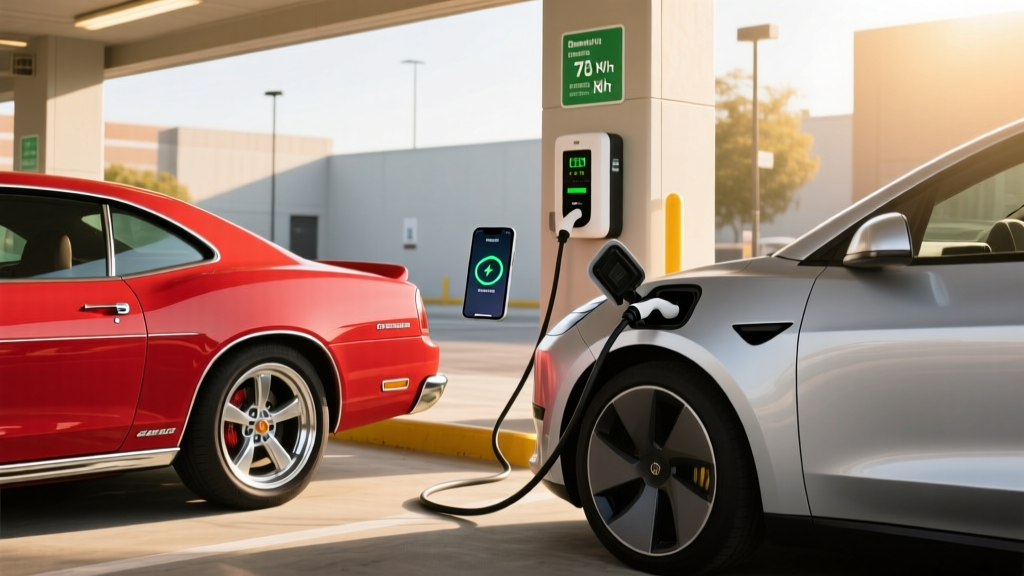
The 2004 Monte Carlo SS Supercharged gets roughly 18 city / 28 highway / 22 combined MPG on premium fuel (it requires 91+ octane for the supercharger to avoid knock). With premium gas averaging around $4.10/gallon in early 2026, that's approximately $0.186 per mile in fuel alone. Modern EVs, by contrast, achieve 3-4 miles per kWh, and at the US average residential electricity rate of ~$0.17/kWh, that's roughly $0.043-$0.057 per mile. The gap is substantial—but only if you can charge efficiently at home. That's where understanding charging levels, connectors, and installation costs becomes essential.
Charging Levels Explained: Speeds, Power, and Range Added
EV charging comes in three tiers. The critical distinction: kW (kilowatts) measures power—how fast energy flows into the battery—while kWh (kilowatt-hours) measures energy—the total capacity of the battery itself. Think of kW as the width of the pipe and kWh as the size of the tank.
| Level | Voltage | Max Power (kW) | Miles of Range Added/Hour | Best Use Case |
|---|---|---|---|---|
| Level 1 (120V) | 120V AC | 1.4 kW | 3-5 mi/hr | Overnight top-ups, PHEVs |
| Level 2 (240V) | 240V AC | 7.2-19.2 kW | 20-60 mi/hr | Daily home charging |
| DC Fast Charging | 400-900V DC | 50-350+ kW | 150-1,000+ mi/hr (peak) | Road trips, quick stops |
For context, a modern EV with an 80 kWh battery charging at 11.5 kW (a common Level 2 home setup) will add roughly 44 miles of range per hour. A full 10-80% charge on that same Level 2 unit takes about 5-6 hours—perfect for overnight. On a 150 kW DC fast charger, that same 10-80% session takes roughly 25-35 minutes, though charging speed tapers significantly above 80% State of Charge (SoC) to protect battery health.
Home EV Charger Installation: Electrical Requirements and Costs
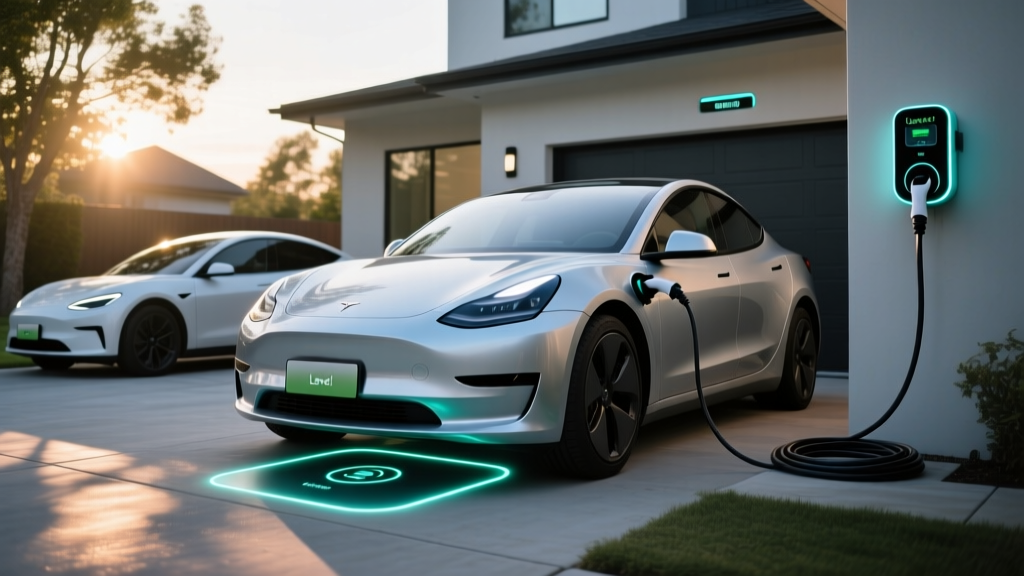
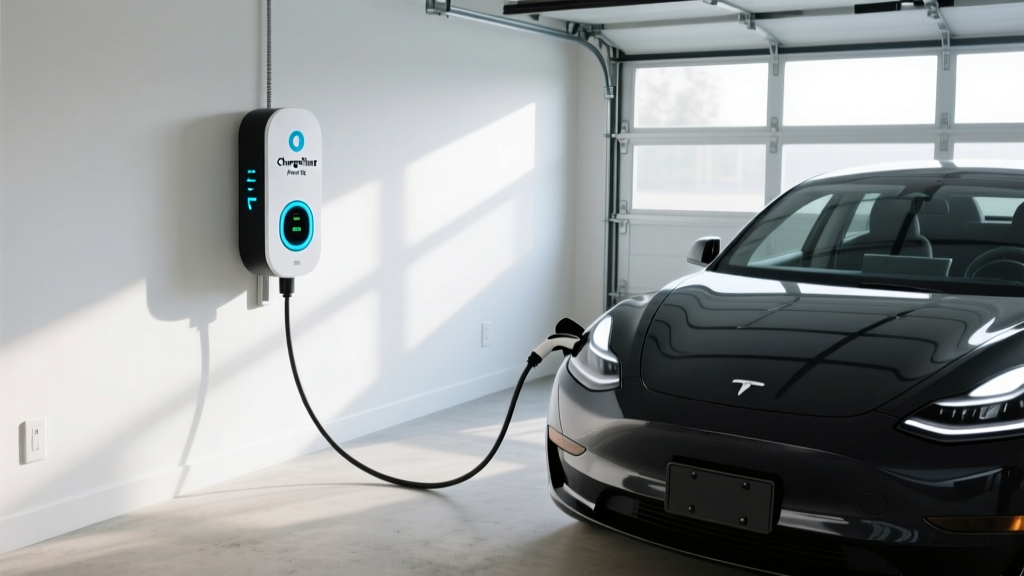
This is where most new EV owners face surprises. A Level 2 home charger requires a dedicated 240V circuit—the same voltage your electric dryer or oven uses. Most homes need a 40-amp or 50-amp circuit, which requires 6-gauge or 8-gauge copper wire respectively.
Electrical Panel Considerations
Homes built before 2010 often have 100-amp or 150-amp main panels. Adding a 40-50 amp EV circuit may push total load beyond 80% of panel capacity—the threshold where the National Electrical Code (NEC) requires an upgrade. A panel upgrade from 100A to 200A typically costs $1,500-$3,500 before the charger circuit is even added. Homes with modern 200A panels usually have enough headroom for a Level 2 charger without upgrades.
Installation Cost Breakdown
| Component | Cost Range | Notes |
|---|---|---|
| Level 2 Charger (Equipment) | $350-$750 | Smart Wi-Fi-enabled, 32-48A |
| Electrician Labor (standard run) | $500-$1,500 | Panel to garage, <50 ft run |
| Electrician Labor (long/complex) | $1,500-$3,000 | Conduit, trenching, attic runs |
| Permit & Inspection | $50-$300 | Varies by municipality |
| Panel Upgrade (if needed) | $1,500-$3,500 | 100A to 200A service |
| Total (no panel upgrade) | $900-$2,550 | Most common scenario |
| Total (with panel upgrade) | $2,400-$6,050 | Older homes |
Some utilities offer rebates of $250-$500 for Level 2 charger installation, and certain states provide additional incentives. Always check with your local utility and refer to the IRS residential clean energy credit for potential federal tax benefits on charger equipment (30% of cost, up to $1,000 under current §25E rules).
Connector Compatibility: NACS, CCS1, and CHAdeMO
The connector landscape has consolidated dramatically since 2024. Here's where things stand in 2026:
| Connector | Brands Using It | Max DC Speed | Notes |
|---|---|---|---|
| NACS (Tesla) | Tesla, Ford, GM, Rivian, Volvo, Polestar, Hyundai/Kia (2025+) | Up to 350 kW | Now the dominant North American standard |
| CCS1 | VW, BMW, Stellantis, legacy models | Up to 350 kW | Being phased out by most automakers |
| CHAdeMO | Nissan Leaf (legacy only) | Up to 100 kW | Effectively discontinued |
If you own a CCS1-equipped EV (most non-Tesla models from 2020-2024), you'll need a CCS-to-NACS adapter ($150-$250) to access Tesla Superchargers, which now welcome non-Tesla vehicles at many locations. Ford, GM, and Rivian owners with NACS ports can access Superchargers natively. Always verify your vehicle's port type before purchasing a home charger—most Level 2 chargers are available with either NACS or J1772 (the legacy Level 2 connector, now superseded by NACS for AC charging as well).
Cost Per Mile: Monte Carlo SS Supercharged vs. Modern EV
Let's put real numbers against that 2004 Monte Carlo SS Supercharged:
| Vehicle / Scenario | Energy Cost | Efficiency | Cost Per Mile |
|---|---|---|---|
| 2004 Monte Carlo SS (premium gas) | $4.10/gal | 22 MPG combined | $0.186 |
| EV — Home charging (off-peak) | $0.12/kWh | 3.5 mi/kWh | $0.034 |
| EV — Home charging (standard rate) | $0.17/kWh | 3.5 mi/kWh | $0.049 |
| EV — Public Level 2 | $0.30/kWh | 3.5 mi/kWh | $0.086 |
| EV — DC Fast Charging | $0.48/kWh | 3.5 mi/kWh | $0.137 |
Even at the most expensive DC fast-charging rates, a modern EV costs 26% less per mile than fueling the Monte Carlo SS. At home off-peak rates, the EV is 82% cheaper per mile. Over 15,000 annual miles, that's a fuel savings of $1,980-$2,280 per year—and that's before accounting for the Monte Carlo's higher maintenance costs (supercharger belt, premium oil, aging cooling system) versus an EV's minimal drivetrain maintenance.
Charging Time Examples for Common Battery Sizes
Here's what 10-80% charging looks like across typical EV battery capacities:
- 60 kWh battery (e.g., base Tesla Model 3 RWD): ~5 hours on 11.5 kW Level 2; ~22 minutes on 170 kW DCFC
- 80 kWh battery (e.g., Hyundai Ioniq 5, Ford Mustang Mach-E Extended Range): ~6.5 hours on 11.5 kW Level 2; ~28 minutes on 240 kW DCFC
- 100 kWh battery (e.g., GMC Sierra EV, Rivian R1T Max Pack): ~8.5 hours on 11.5 kW Level 2; ~35 minutes on 350 kW DCFC
Recommended Home EV Chargers for 2026
After testing dozens of units, these are our top picks based on reliability, smart features, and value:
Best Overall: ChargePoint Home Flex (NACS)
- Power: Up to 12 kW (50A) / 11.5 kW (48A) adjustable
- Connector: NACS native, J1772 adapter available
- Cable Length: 23 ft
- Smart Features: Wi-Fi, app scheduling, utility demand-response, energy tracking
- Price: ~$599
- Why: Adjustable amperage lets you match your circuit; excellent app; UL-listed
Best Value: Emporia Level 2 EV Charger
- Power: Up to 11.5 kW (48A)
- Connector: J1772 (NACS adapter included)
- Cable Length: 24 ft
- Smart Features: Wi-Fi, solar integration, real-time energy monitoring
- Price: ~$399
- Why: Best price-to-feature ratio; pairs with Emporia Vue home energy monitor
Premium Pick: Tesla Wall Connector (NACS)
- Power: Up to 11.5 kW (48A)
- Connector: NACS native
- Cable Length: 24 ft
- Smart Features: Wi-Fi, power-sharing (up to 6 units on one circuit), OTA updates
- Price: ~$475
- Why: Sleek design; power-sharing ideal for multi-EV households; seamless Tesla integration
Safety and Electrical Code Considerations
EV charger installation is not a DIY project. The NEC and local building codes require specific protections:
- Dedicated Circuit: Your EV charger must have its own breaker—no sharing with other appliances. A 48A charger requires a 60A breaker (NEC requires circuits to be rated at 125% of continuous load).
- GFCI Protection: All 240V EV charging circuits require Ground Fault Circuit Interrupter protection. Most modern EVSEs (Electric Vehicle Supply Equipment) have built-in GFCI, but your electrician must verify code compliance.
- Outdoor Rating: If your charger is mounted outside, it must carry a NEMA 4 or NEMA 4X rating for weather resistance. All chargers recommended above meet this standard.
- Wire Gauge: 6 AWG copper for 50A circuits; 8 AWG for 40A. Aluminum wire requires larger gauge and is generally not recommended for EV circuits due to thermal expansion concerns at terminals.
- Permit & Inspection: Virtually all jurisdictions require an electrical permit and final inspection. Skipping this voids homeowner's insurance coverage for any related electrical fire.
According to NHTSA and fire safety data, properly installed Level 2 home chargers have an exceptionally low incident rate—far lower than gasoline fueling systems. The key phrase is "properly installed." Always hire a licensed electrician and pull the permit.
Frequently Asked Questions
How much does it cost to install a home EV charger?
A standard Level 2 home charger installation costs $900-$2,550 total (equipment + electrician + permit) for homes with adequate electrical panels. If your home needs a panel upgrade from 100A to 200A service, expect $2,400-$6,050 total. Get at least three quotes from licensed electricians, and ask whether the quote includes permit and inspection fees.
How fast will each charging level add range?
Level 1 (120V) adds roughly 3-5 miles per hour—adequate only for plug-in hybrids or very low daily mileage. Level 2 (240V) adds 20-60 miles per hour depending on amperage, fully replenishing most EVs overnight. DC fast charging adds 150-1,000+ miles per hour at peak rates, delivering a 10-80% charge in 18-40 minutes depending on the vehicle and charger.
Which connector/charger is compatible with my EV?
In 2026, most new EVs use the NACS connector (Tesla's design, now the North American standard). Vehicles from 2020-2024 with CCS1 ports can use a CCS-to-NACS adapter (~$200) to access Tesla Superchargers. Check your vehicle's charge port or owner's manual before purchasing a home charger. For Level 2 home charging, NACS and J1772 are the two options—match the charger's plug to your car's port.
How much does charging cost per mile vs gas?
Home EV charging costs $0.03-$0.05 per mile at typical residential electricity rates. Public DC fast charging costs $0.10-$0.14 per mile. Compare that to the 2004 Monte Carlo SS Supercharged at ~$0.186/mile on premium gas, or even a modern 30 MPG compact car at ~$0.12/mile on regular fuel. EVs win on fuel cost in every scenario except exclusive reliance on the most expensive public fast chargers.
What electrical upgrades might I need?
The most common upgrade is a panel capacity increase from 100A or 150A to 200A service, required when your existing panel lacks headroom for a 40-50A dedicated EV circuit. Homes with 200A panels usually need no upgrade. Your electrician will perform a load calculation per NEC Article 220 to determine if your panel can handle the additional circuit. Other potential upgrades include running new conduit from the panel to the garage, upgrading the meter base, or adding a sub-panel if your garage is far from the main service.
Is it worth switching from a 2004 Monte Carlo SS Supercharged to an EV?
Financially, the fuel and maintenance savings are significant—roughly $2,000-$2,500/year in fuel alone at 15,000 miles driven. Over five years, that's $10,000-$12,500 in fuel savings. Factor in eliminated oil changes, no supercharger belt replacements, no transmission fluid, and regenerative braking that extends brake pad life, and the total savings grow further. However, if the Monte Carlo is a weekend car or collector piece, the math changes—it's about enjoyment, not efficiency. For a daily driver, though, a modern EV like the EPA-rated Hyundai Ioniq 6 (360 miles EPA, ~$0.04/mile at home) makes a compelling case.