If you've been holding onto a beloved 2004 Mini Cooper Supercharged — that R53 with its whining Eaton M45 blower and 168-horsepower punch — you already know the realities of aging performance cars: rising maintenance bills, 24 MPG combined fuel economy, and increasingly scarce parts. As you consider trading that supercharged charm for a modern electric vehicle, the biggest unknown isn't the car itself. It's the charging infrastructure. How do you fuel an EV at home? What does installation actually cost? And will you really save money versus feeding premium gas to that old Mini?
This guide walks through every charging essential a first-time EV buyer needs, using the 2004 Mini Cooper Supercharged as a cost-comparison baseline so you can see the math in real terms.
Charging Levels Explained: What Speeds Are We Talking?
EV charging is categorized into three levels. Understanding the difference between kW (kilowatts — the rate of power flow, like water pressure) and kWh (kilowatt-hours — the total energy delivered, like gallons in a tank) is critical. Your EV's battery is measured in kWh; your charger's speed is measured in kW.
| Level | Voltage | Power (kW) | Miles of Range Added per Hour | Best For |
|---|---|---|---|---|
| Level 1 | 120V AC | 1.0–1.4 kW | 3–5 miles | Overnight top-ups, PHEVs, low-mileage drivers |
| Level 2 | 240V AC | 7.2–19.2 kW | 25–70 miles | Primary home charging, daily use |
| DC Fast Charging | 400–800V DC | 50–350 kW | 150–1,000+ miles (equivalent) | Road trips, quick top-ups away from home |
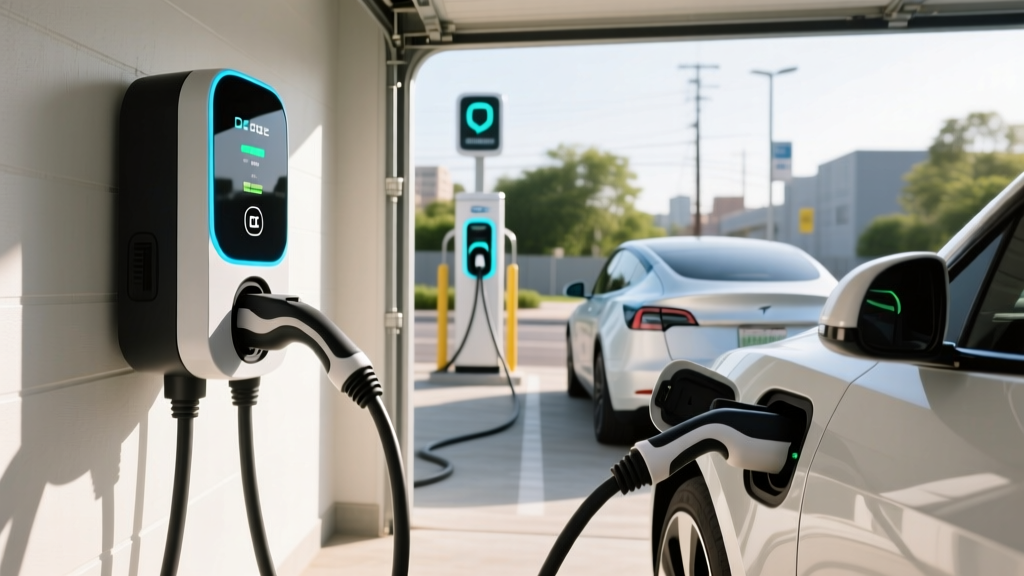
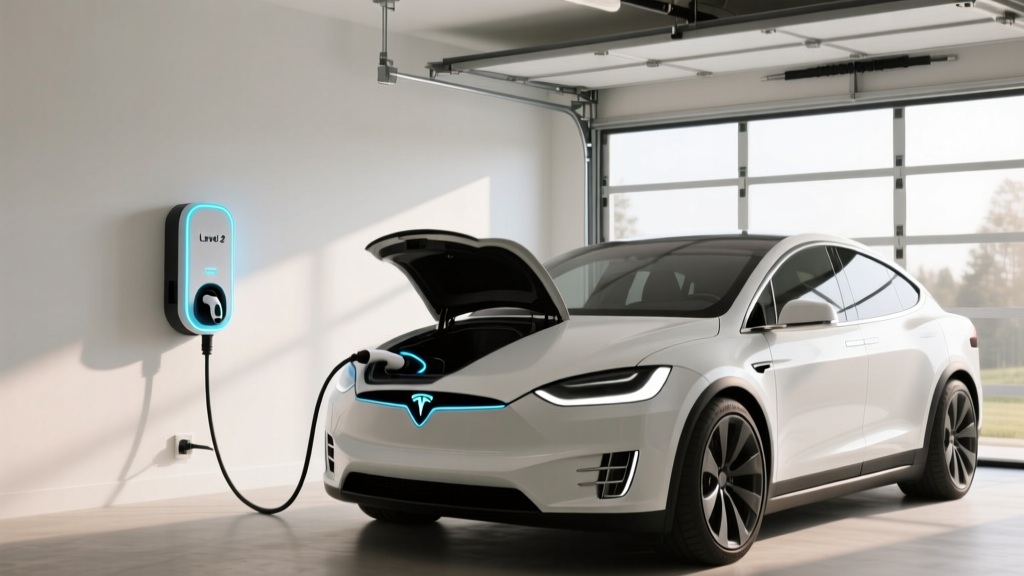
For context, a modern EV with a 75 kWh battery (such as a Tesla Model Y Long Range) charging on a 48-amp Level 2 home station at 11.5 kW will add roughly 40 miles of range per hour, going from 10% to 80% State of Charge (SoC) in about 5 hours. On a 250 kW DC fast charger, that same 10–80% session takes approximately 20–25 minutes, though the charge curve tapers significantly above 80% to protect battery health.
How Much Does It Cost to Install a Home EV Charger?
Home Level 2 installation is the single biggest infrastructure question new EV buyers face. Costs vary widely depending on your electrical panel's capacity, the distance from panel to charger location, and local permit fees.
| Component | Low End | High End | Notes |
|---|---|---|---|
| Level 2 Charging Equipment (hardwired or NEMA 14-50 plug) | $350 | $750 | 40A–48A smart chargers; Wi-Fi enabled |
| Electrician Labor | $500 | $2,000 | Depends on run distance, conduit, wall material |
| Electrical Permit | $50 | $300 | Varies by municipality |
| Panel Upgrade (if needed — 200A service) | $1,500 | $4,500 | Older homes with 100A panels often require this |
| Total (no panel upgrade) | $900 | $3,050 | Most homes with 200A service |
| Total (with panel upgrade) | $2,400 | $7,550 | Common for pre-1990 homes |
Homes built before the 1990s — around the era your 2004 Mini Cooper was designed — often have 100-amp electrical panels that simply cannot support a 40-amp continuous EV charging circuit alongside existing loads like an electric dryer, oven, and HVAC. A licensed electrician will perform a load calculation per NEC Article 220 to determine whether your panel can handle the draw. If you're coming from a home that's been fine running a garage full of power tools, a 48-amp dedicated EV circuit may still trip the breaker during peak usage without an upgrade.
The IRS Residential Clean Energy Credit (§25D) covers 30% of home charging equipment and installation costs, up to $1,000, through 2032. This credit applies to the charger unit and the electrician's work, but not to a full panel upgrade. Consult a tax professional for eligibility specifics.
Which Connector Is Compatible with Your EV?
The connector landscape in North America has consolidated significantly. As of 2026, nearly every major automaker — Ford, GM, Rivian, Volvo, Hyundai, Kia, BMW, and others — has adopted the North American Charging Standard (NACS), the connector originally developed by Tesla. The legacy CCS1 (Combined Charging System) connector remains on vehicles produced through 2024–2025, and CHAdeMO has been effectively phased out outside of older Nissan Leaf models.
| Connector | Brands Using It (2026) | Adapter Needed? |
|---|---|---|
| NACS (native) | Tesla, Ford, GM, Rivian, Volvo, Polestar, Hyundai, Kia, BMW, Mercedes-Benz (newer) | None for Tesla Superchargers and NACS public stations |
| CCS1 (legacy) | Older VW ID.4, Audi e-tron (pre-2025), Porsche Taycan (pre-2025), some Stellantis EVs | CCS-to-NACS adapter (~$150–$200) for Supercharger access |
| CHAdeMO | Nissan Leaf (2011–2025 models only) | Limited public availability; no adapter to NACS |
If you're buying a 2026 model-year EV, it will almost certainly have a native NACS port. If you're considering a slightly used 2023–2025 EV with CCS1, budget for a CCS-to-NACS adapter to access Tesla's Supercharger network, which remains the most reliable public DC fast-charging network in the U.S. according to fueleconomy.gov and independent reliability surveys.
Cost Per Mile: EV Charging vs. Your Old Mini Cooper Supercharged
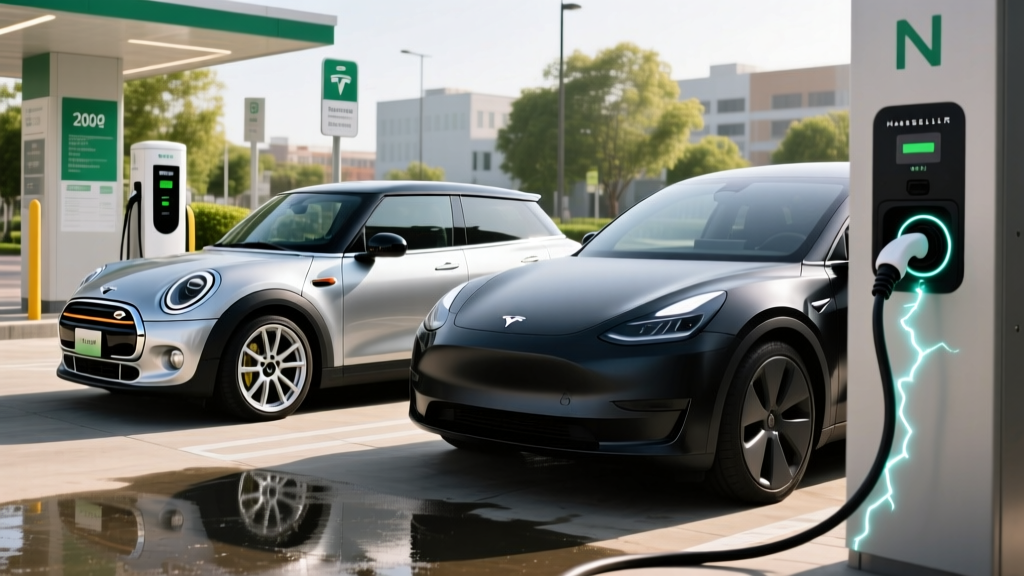
The 2004 Mini Cooper S (R53, supercharged) is EPA-rated at roughly 24 MPG combined and requires premium 91-octane fuel. At $4.20/gallon for premium (a reasonable 2026 national average), that's approximately $0.175 per mile just in fuel.
Here's how EV charging compares across different scenarios, using a typical 2026 mid-size EV averaging 3.5 miles per kWh (roughly 110 MPGe):
| Scenario | Rate ($/kWh) | Cost per Mile | Annual Cost (12,000 mi) |
|---|---|---|---|
| Home Level 2 — Off-Peak Utility Rate | $0.08–$0.12 | $0.023–$0.034 | $276–$408 |
| Home Level 2 — Standard Rate | $0.14–$0.18 | $0.040–$0.051 | $480–$612 |
| Public Level 2 (workplace, shopping) | $0.20–$0.30 | $0.057–$0.086 | $684–$1,032 |
| DC Fast Charging (road trips) | $0.35–$0.55 | $0.100–$0.157 | $1,200–$1,884 |
| 2004 Mini Cooper S (premium gas) | $4.20/gal | $0.175 | $2,100 |
Even if you rely heavily on public DC fast charging — the most expensive way to fuel an EV — you're still spending less per mile than the supercharged Mini sips in premium gasoline. For the majority of owners who charge at home overnight on off-peak rates, the annual fuel savings versus the R53 Mini can exceed $1,500–$1,800.
Recommended Home Level 2 Chargers for 2026
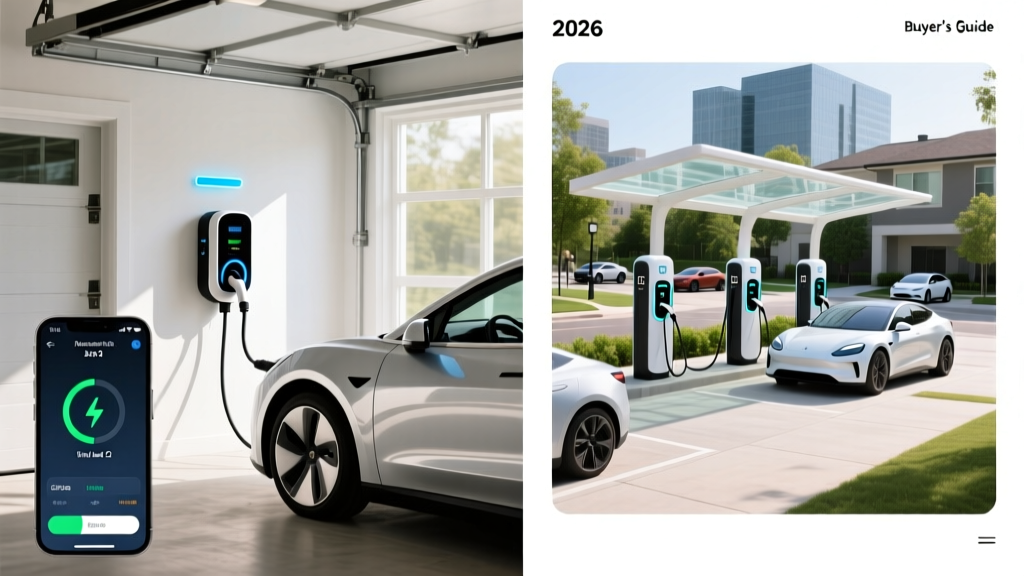
Not all Level 2 chargers are equal. Here are three proven units suited for different needs and budgets, all NACS-compatible for 2026 EVs:
Emporia Level 2 Smart Charger (48A)
- Power Output: 11.5 kW (48A on 60A circuit)
- Connector: NACS (native), J1772 adapter included
- Cable Length: 24 feet
- Smart Features: Wi-Fi, energy monitoring, solar integration, scheduled charging, utility demand-response compatible
- Price: ~$399
- Best For: Budget-conscious buyers who want full smart features and energy tracking
ChargePoint Home Flex (50A)
- Power Output: 12 kW (50A on 60A circuit); configurable down to 16A
- Connector: NACS (2025+ models), J1772 (older stock)
- Cable Length: 23 feet
- Smart Features: Wi-Fi, Alexa integration, ChargePoint app scheduling, flexible amperage for older panels
- Price: ~$549
- Best For: Homes with limited panel capacity — the adjustable amperage avoids a panel upgrade
Tesla Wall Connector (48A)
- Power Output: 11.5 kW (48A on 60A circuit)
- Connector: NACS (native Tesla); J1772 adapter version available
- Cable Length: 24 feet
- Smart Features: Wi-Fi, over-the-air updates, power sharing between two units on one circuit, Tesla app integration
- Price: ~$475
- Best For: Tesla owners or households with two EVs (power sharing is a unique feature)
All three units require a dedicated 240V circuit — either hardwired (preferred for 48A+ units per NEC code) or plugged into a NEMA 14-50 receptacle. Hardwiring eliminates the GFCI breaker requirement that a receptacle installation demands, saving roughly $80–$150 on the breaker itself.
Safety, Electrical Code, and Installation Gotchas
A few critical points your electrician should address — and that you should verify:
- Dedicated Circuit: NEC 625 requires EV chargers to be on a dedicated circuit not shared with any other load. A 48A charger needs a 60A breaker (the 80% continuous-load rule).
- GFCI Protection: If you install a NEMA 14-50 receptacle rather than hardwiring, NEC 2023/2026 requires a GFCI breaker. Hardwired installations do not require GFCI, which is one reason hardwiring is preferred for reliability.
- Outdoor Rating: If your charger is mounted outside or in an unsealed garage, ensure the unit carries a NEMA 4 or IP65 rating. All three chargers above meet this standard.
- Wire Gauge: A 60A circuit requires 4 AWG copper wire (or 2 AWG aluminum) for runs up to ~100 feet. Longer runs may need upsized wire to prevent voltage drop.
- Permit and Inspection: Skipping the permit risks insurance claim denial if an electrical fire occurs. Most jurisdictions require inspection within 30 days of installation.
Charging Time Examples: What to Expect with Common Battery Sizes
Charging times depend on both the charger's kW output and the vehicle's onboard acceptance rate. Here are real-world 10–80% estimates for popular 2026 EV battery sizes:
| Battery Size (kWh Usable) | Example Vehicle | Level 2 at 11.5 kW | DC Fast at Peak kW | Peak DC Rate |
|---|---|---|---|---|
| 58 kWh | VW ID.4 Standard | ~3.5 hours | ~22 min | 170 kW (CCS/NACS) |
| 75 kWh | Tesla Model Y LR | ~4.5 hours | ~20 min | 250 kW (NACS) |
| 84 kWh | Hyundai Ioniq 5 (Long Range) | ~5 hours | ~18 min | 240 kW (NACS, 800V) |
| 100 kWh | Ford F-150 Lightning Ext. | ~6 hours | ~30 min | 210 kW (NACS) |
| 131 kWh | GMC Hummer EV | ~8+ hours | ~45 min | 300 kW (NACS, 800V) |
A critical reality check: peak DC fast-charging rates are not sustained. A vehicle advertising "250 kW peak" typically holds that rate only between roughly 10–40% SoC, then tapers progressively. The 10–80% time is the practical metric that matters for road-trip planning, not the headline peak number. Additionally, cold battery temperatures (below 50°F) can add 30–50% to charging times unless the vehicle's thermal management system preconditioning is activated — always use navigation to a charger to trigger preconditioning.
Frequently Asked Questions
How much does it cost to install a home EV charger?
Between $900 and $3,050 for most homes with a 200-amp panel, including the charger ($350–$750), electrician labor ($500–$2,000), and permits ($50–$300). If your home needs a panel upgrade from 100A to 200A service, add $1,500–$4,500. The federal §25D tax credit covers 30% of equipment and installation up to $1,000.
How fast will each charging level add range?
Level 1 (120V) adds 3–5 miles per hour — adequate for plug-in hybrids with small batteries. Level 2 (240V, 48A) adds 35–45 miles per hour, fully replenishing most EVs overnight. DC fast charging adds 150–300+ miles in a 20–30 minute session, depending on the vehicle's peak acceptance rate and battery size.
Which connector is compatible with my EV?
For 2026 model-year EVs, NACS is now the standard across nearly all brands. Older CCS1-equipped vehicles (2023–2025 models from VW, Audi, and some others) can access Tesla Superchargers and NACS stations with a CCS-to-NACS adapter ($150–$200). CHAdeMO is effectively obsolete for new vehicles.
How much does charging cost per mile vs gas?
Home charging on off-peak utility rates costs $0.02–$0.03 per mile — roughly one-seventh the cost of fueling a 2004 Mini Cooper Supercharged at $0.175 per mile on premium gas. Even public DC fast charging at $0.10–$0.16 per mile undercuts the Mini's fuel costs.
What electrical upgrades might I need?
The most common upgrade is a panel service increase from 100A to 200A, required when your existing panel cannot accommodate a new 60A dedicated circuit alongside existing loads. Your electrician will perform a NEC Article 220 load calculation. Homes with 200A or larger panels rarely need an upgrade. An alternative is a smart load-management device (such as the Emporia Smart Panel or Span Drive) that dynamically throttles charger amperage when other loads spike, avoiding a panel upgrade entirely.
Trading your 2004 Mini Cooper Supercharged for an EV means losing that distinctive supercharger whine — but gaining a fuel cost of roughly $0.03 per mile, near-zero drivetrain maintenance, and the convenience of a full "tank" every morning. The charging infrastructure investment is real ($1,000–$3,000 in most homes), but it pays for itself within 12–24 months through fuel savings alone. Start with a load calculation from a licensed electrician, pick a smart 48A charger, and make sure your utility offers a time-of-use rate plan to maximize off-peak savings.