The 2003 Mini Cooper S (R53): Supercharged Specs at a Glance
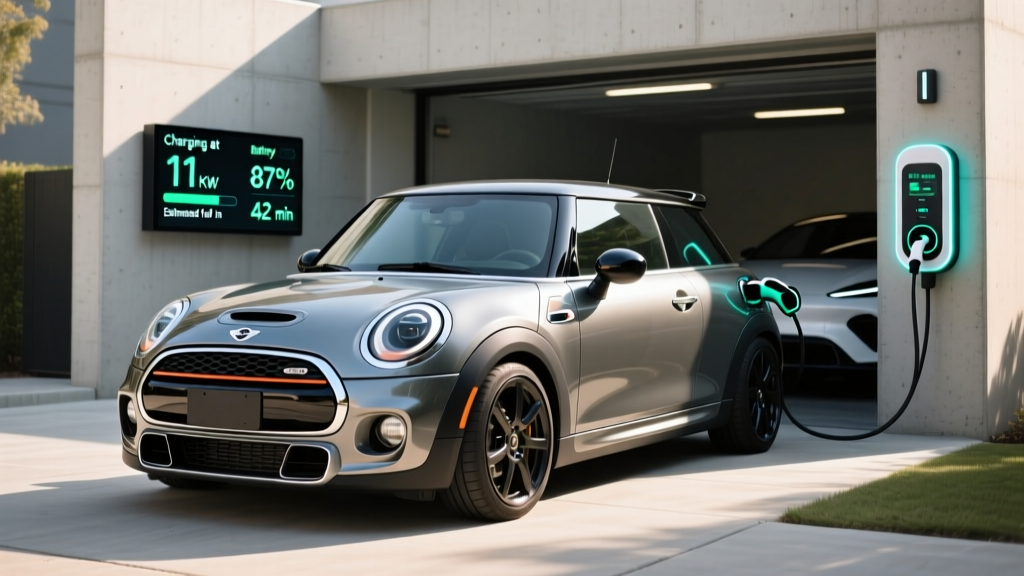
Before we plug into the EV charging world, let's revisit what made the 2003 Mini Cooper S — internally known as the R53 — such an icon. Its Eaton M45 roots-type supercharger gave this pocket rocket a character that turbocharged successors never quite replicated. Here are the key 2003 Mini Cooper supercharged specs:
| Specification | Value |
|---|---|
| Engine | 1.6L supercharged inline-4 (Eaton M45) |
| Horsepower | 168 HP @ 6,000 RPM |
| Torque | 162 lb-ft @ 4,000 RPM |
| 0–60 mph | ~6.9 seconds |
| Top Speed | 140 mph |
| EPA Fuel Economy | 24 city / 32 highway / 27 combined MPG |
| Fuel Tank | 13.2 gallons |
| Curb Weight | ~2,590 lbs |
| Transmission | 6-speed manual |
At 27 MPG combined, that 13.2-gallon tank delivered roughly 356 miles of range. At today's national gas average of ~$3.30/gallon, a fill-up costs about $43.56 — or roughly $0.123 per mile in fuel alone. That's the baseline modern EVs are measured against.
Now let's see how electrified driving — and home charging — stacks up against the R53's supercharged charm.
EV Charging Levels Explained: Level 1, Level 2, and DC Fast Charging
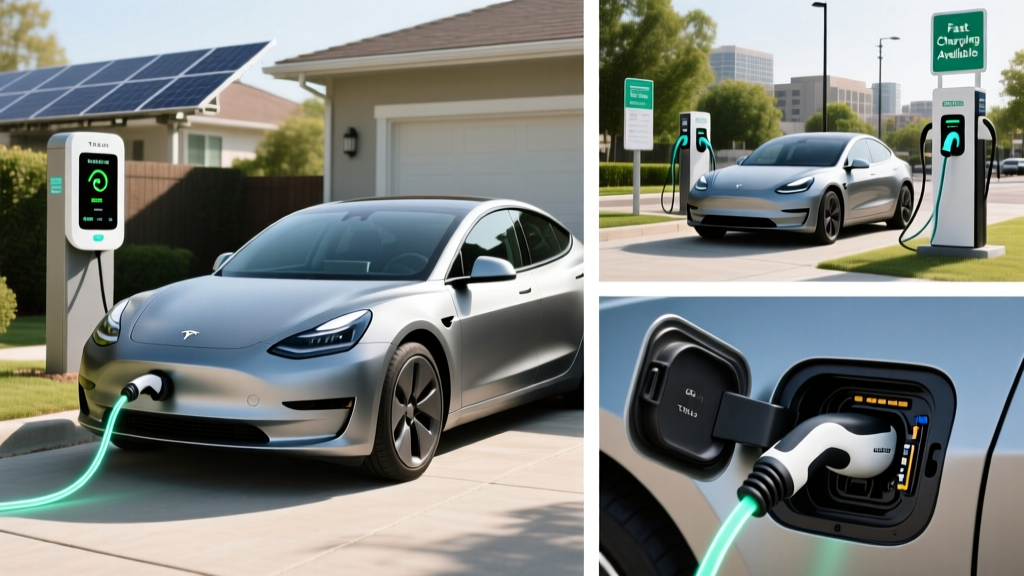
Understanding EV charging starts with a critical distinction: kW (kilowatts) measures power — the rate at which energy flows. kWh (kilowatt-hours) measures energy — the total amount stored in a battery. Think of kW as how wide the faucet is open, and kWh as how big the bucket is. A 75 kWh battery charged at 7.2 kW takes roughly 10 hours from empty; at 150 kW, it takes under 30 minutes to 80%.
| Level | Voltage | Power (kW) | Miles of Range per Hour | Typical Use Case |
|---|---|---|---|---|
| Level 1 | 120V AC | 1.2–1.9 kW | 3–5 mi/hr | Overnight trickle; PHEVs; emergency |
| Level 2 | 240V AC | 3.3–19.2 kW | 12–75 mi/hr | Home daily charging; workplace; public L2 |
| DC Fast (Level 3) | 400–800V DC | 50–350 kW | 150–1,200+ mi/hr | Road trips; highway corridors; 10–80% top-ups |
A few real-world nuances:
- Level 1 is fine for PHEVs with 20–40 miles of electric range but painfully slow for a full BEV like the Hyundai Ioniq 5 (84 kWh usable battery).
- Level 2 at home (typically 48A / 11.5 kW on a 60A circuit) adds ~35–45 miles per hour — enough to fully replenish most EVs overnight.
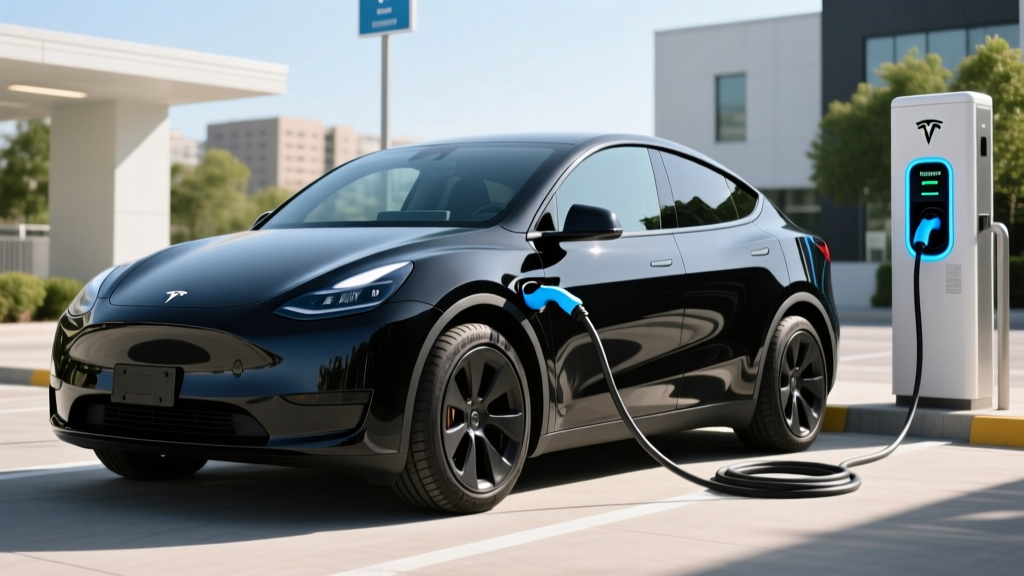
- DC fast charging doesn't sustain peak rates. A vehicle rated for 240 kW peak may only sustain that for 10–15% of the session before tapering. Real-world 10–80% times are typically 18–30 minutes on modern 800V architectures (Hyundai/Kia/Porsche) and 25–45 minutes on 400V platforms.
How Much Does It Cost to Install a Home EV Charger?
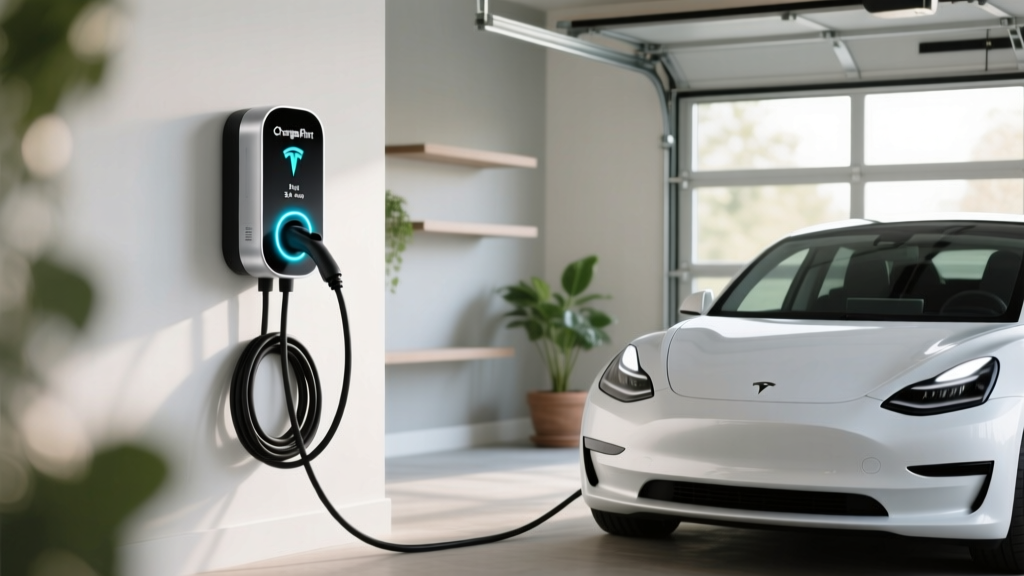
Home Level 2 charging is where EV ownership economics really shine — but installation costs vary wildly depending on your electrical panel's age and capacity. Here's a realistic breakdown for a 240V / 48A (11.5 kW) hardwired Level 2 charger installation in 2026:
| Component | Low Estimate | High Estimate | Notes |
|---|---|---|---|
| Level 2 Charger (Equipment) | $400 | $750 | 48A smart charger, NACS or J1772 |
| Electrician Labor | $500 | $1,500 | Depends on run length, conduit, drywall work |
| Permit & Inspection | $50 | $300 | Varies by municipality |
| Electrical Panel Upgrade (if needed) | $1,500 | $4,000 | 100A → 200A service upgrade for older homes |
| Total (no panel upgrade) | $950 | $2,550 | Most newer homes with 200A panels |
| Total (with panel upgrade) | $2,450 | $6,550 | Homes built before ~2000 or with 100A service |
Panel upgrade reality check: If your home has a 100-amp panel — common in houses built before the 1990s — adding a 60A dedicated circuit for a 48A charger may exceed your panel's safe load capacity. A licensed electrician will run a load calculation per NEC Article 220. Don't skip this step. Some utilities offer rebates of $200–$500 for panel upgrades tied to EV adoption.
Safety and code essentials:
- Dedicated circuit required — never share with other appliances
- GFCI breaker for outdoor installations (NEC 2023/2026 code)
- NEMA 14-50 receptacle or hardwired connection (hardwired avoids the GFCI nuisance-trip issue common with 14-50 outlets)
- Outdoor-rated (NEMA 4) enclosure if mounted outside
- Wi-Fi-enabled chargers allow utility demand-response programs that can lower your $/kWh rate
Which Connector Is Compatible with My EV?
The connector landscape shifted dramatically in 2024–2026 when nearly every major automaker adopted the North American Charging Standard (NACS) — originally Tesla's proprietary connector. Here's where things stand for 2026 model-year vehicles:
| Connector | Brands (2026 Models) | Adapter Needed? |
|---|---|---|
| NACS (Tesla/J3400) | Tesla, Ford, GM, Rivian, Volvo, Polestar, Mercedes, Nissan (Ariana), Honda, Fisker, Lucid (2025+) | CCS→NACS adapter for older CCS vehicles at NACS stations; NACS→CCS adapter for NACS vehicles at legacy CCS stations |
| CCS1 (Combo) | Hyundai/Kia (2024 and earlier models), VW ID.4 (pre-2026), BMW i4/iX, Stellantis, some remaining inventory | NACS→CCS adapter increasingly needed as networks convert |
| CHAdeMO | Nissan Leaf (legacy — discontinued), Mitsubishi Outlander PHEV (legacy) | Limited adapter options; network support declining |
Practical advice for 2026 buyers: If you're purchasing a new EV, NACS is the future-proof choice. If you own a CCS-equipped vehicle from 2022–2024, invest in a NACS-to-CCS adapter (~$200–$300) to access Tesla Superchargers, which now welcome non-Tesla vehicles with adapters on most stalls.
Cost to Charge: EV vs. the 2003 Mini Cooper S Supercharged
Let's put real numbers to the question that R53 owners considering an EV switch ask most: how much does charging actually cost per mile compared to gassing up a supercharged Mini?
| Scenario | Rate | Cost per Mile | Annual Cost (12,000 mi) |
|---|---|---|---|
| 2003 Mini Cooper S (27 MPG, $3.30/gal) | $3.30/gallon | $0.122 | $1,464 |
| Home Level 2 — off-peak utility rate | $0.09/kWh | $0.027 | $324 |
| Home Level 2 — standard rate | $0.16/kWh | $0.048 | $576 |
| Public Level 2 (ChargePoint, etc.) | $0.30/kWh | $0.090 | $1,080 |
| DC Fast Charging (Electrify America, etc.) | $0.48/kWh | $0.144 | $1,728 |
Assumptions: EV efficiency of 3.0 miles/kWh (roughly equivalent to a Hyundai Ioniq 5 or Tesla Model Y at ~114 MPGe combined, per EPA fueleconomy.gov data).
The takeaway: Home charging at off-peak rates saves roughly $1,140/year versus the R53's fuel costs. Even at standard residential rates, you save ~$888/year. However, if you rely exclusively on DC fast charging, you'll actually spend more than the supercharged Mini — a critical point many EV marketing materials gloss over.
Charging Time Examples: What to Expect with Common Battery Sizes
Charging time depends on both the charger's power output (kW) and the vehicle's battery capacity (kWh). Here are realistic 10–80% charge times for popular 2026 EVs — noting that charging slows significantly above 80% to protect battery health (the "charge curve taper"):
| Vehicle | Battery (kWh usable) | Peak DC kW | 10–80% DC Time | Level 2 (11.5 kW) Full Charge |
|---|---|---|---|---|
| Tesla Model Y Long Range | 75 kWh | 250 kW | ~25 min | ~7.5 hours |
| Hyundai Ioniq 5 | 84 kWh | 240 kW (800V) | ~18 min | ~8.5 hours |
| Ford F-150 Lightning Ext. Range | 131 kWh | 150 kW | ~42 min | ~13 hours |
| Chevrolet Equinox EV | 85 kWh | 150 kW | ~32 min | ~8.5 hours |
| BMW iX xDrive50 | 111.5 kWh | 200 kW | ~34 min | ~11 hours |
Cold-weather caveat: Lithium-ion batteries charge significantly slower when cold. In sub-freezing temperatures, expect 10–80% times to increase 30–50% unless your vehicle has active battery preconditioning (most modern EVs do — always enable it before arriving at a DC fast charger via the navigation system).
Home Charger Equipment Recommendations for 2026
Emporia Vue Level 2 Charger
- Power Output: 48A / 11.5 kW (240V, hardwired) or 40A / 9.6 kW (NEMA 14-50)
- Connector: J1772 (includes NACS adapter in box for 2026 models)
- Cable Length: 24 feet
- Smart Features: Wi-Fi, energy monitoring via Emporia app, utility demand-response compatible, scheduled charging
- Price: ~$400
- Best for: Budget-conscious buyers wanting full smart features and energy tracking
ChargePoint Home Flex
- Power Output: Up to 50A / 12 kW (adjustable 16A–50A)
- Connector: J1772 or NACS (selectable at purchase)
- Cable Length: 23 feet
- Smart Features: Wi-Fi, Alexa/Google integration, ChargePoint network account, flexible amperage for older panels
- Price: ~$550–$650
- Best for: Homes with limited panel capacity (adjustable amperage avoids panel upgrade)
Tesla Wall Connector
- Power Output: 48A / 11.5 kW (240V, hardwired)
- Connector: NACS native (includes J1772 adapter for 2026 models)
- Cable Length: 24 feet
- Smart Features: Wi-Fi, over-the-air updates, power sharing (link multiple units on one circuit), Tesla app integration
- Price: ~$475
- Best for: Tesla owners or households with multiple NACS-equipped EVs
Grizzl-E Smart
- Power Output: 40A / 9.6 kW (NEMA 14-50) or 48A / 11.5 kW (hardwired)
- Connector: J1772 (NACS adapter available)
- Cable Length: 24 feet
- Smart Features: OCPP protocol, works with multiple apps, adjustable amperage
- Price: ~$450
- Best for: Canadian/extreme-cold climates — built and tested in -40°C conditions
All four chargers are UL-listed, outdoor-rated (NEMA 4), and compatible with the federal §30C alternative fuel vehicle refueling property credit, which covers up to 30% of equipment and installation costs (max $1,000) for qualifying installations in eligible census tracts. Check irs.gov for current eligibility rules.
What Electrical Upgrades Might I Need?
Before purchasing any Level 2 charger, assess your home's electrical readiness:
- Panel capacity: A 200-amp panel typically supports a 60A dedicated circuit for a 48A charger. A 100-amp panel may need upgrading — or you can opt for a lower-amperage charger (32A / 7.7 kW) that uses a 40A circuit, still adding ~25 miles per hour.
- Available breaker spaces: You need two adjacent slots for a 240V double-pole breaker. Full panels may require a sub-panel or tandem breakers (if code-compliant in your jurisdiction).
- Wire run distance: Long runs from the panel to the garage (100+ feet) require thicker-gauge wire (e.g., #4 AWG copper instead of #6), adding $200–$600 in material costs.
- Load calculation: Per NEC Article 220, an electrician must calculate your home's total expected load. If you already run electric heat, an electric dryer, and an electric oven, a 48A EV circuit may push you over the safe 80% continuous-load threshold.
- Smart load management: Devices like the Emporia Smart Load Center or ChargePoint's load-sharing feature can dynamically reduce charger amperage when other high-draw appliances are running — potentially avoiding a costly panel upgrade entirely.
Frequently Asked Questions
How much does it cost to install a home EV charger?
For most homes with a modern 200A panel, expect $950–$2,550 total (equipment + electrician + permit). Older homes needing a panel upgrade should budget $2,450–$6,550. The federal §30C credit can offset up to $1,000 of this cost if you're in an eligible census tract.
How fast will each charging level add range?
Level 1 (120V): 3–5 miles per hour. Level 2 (240V, 48A): 35–45 miles per hour. DC fast charging: 150–1,200+ miles per hour at peak, but sessions are typically 18–45 minutes for a 10–80% charge depending on battery size and architecture.
Which connector/charger is compatible with my EV?
For 2026 models, NACS is now the dominant standard (Tesla, Ford, GM, Rivian, Volvo, Honda, and more). CCS1 remains on Hyundai/Kia and some VW models from 2022–2025. CHAdeMO is effectively discontinued for new vehicles. If your EV has CCS, a NACS-to-CCS adapter (~$200–$300) unlocks Tesla Supercharger access.
How much does charging cost per mile vs gas?
Home charging at off-peak rates averages $0.027/mile — about 78% cheaper than the 2003 Mini Cooper S at $0.122/mile. Standard residential rates yield ~$0.048/mile. However, exclusive DC fast charging at $0.48/kWh pushes costs to ~$0.144/mile, actually exceeding the R53's fuel cost.
What electrical upgrades might I need?
The most common upgrade is a 100A-to-200A panel replacement ($1,500–$4,000). You may also need additional breaker spaces, a sub-panel, thicker wire for long runs, or a smart load-management system. A licensed electrician's load calculation is the essential first step — never guess at your panel's capacity.
Can I charge a 2003 Mini Cooper S as an EV?
The R53 is a pure internal-combustion vehicle — no plug, no battery pack. However, several aftermarket EV conversion shops offer swaps for the R53 platform, typically yielding 80–120 miles of range with a 20–30 kWh battery. These conversions cost $15,000–$30,000 and are not eligible for federal tax credits. For most buyers, a modern production EV delivers far better range, charging speed, and warranty coverage.
The Verdict: Supercharged Fun vs. Electrified Efficiency
The 2003 Mini Cooper S with its Eaton supercharger remains one of the most engaging small cars ever built — 168 HP from 1.6 liters, a 6-speed manual, and go-kart handling that defined an era. But the economics have shifted decisively. At $0.027–$0.048 per mile on home charging, a modern EV costs a fraction of what it takes to keep the R53 fed with premium fuel (and yes, the supercharged Mini really wants 91+ octane).
The key to making EV ownership work financially is home Level 2 charging. Budget $1,000–$2,500 for installation in a modern home, choose a quality smart charger with the right connector for your vehicle, and take advantage of off-peak utility rates. If your home needs a panel upgrade, factor in the additional $1,500–$4,000 — and investigate whether your utility offers rebates to offset it.
The R53's supercharger whine is irreplaceable. But for daily commuting economics, electrons beat Eaton blowers — by a factor of four.