From 15 MPG to MPGe: Why Xterra Owners Are Looking at EVs
If you've owned or driven a 2002 Nissan Xterra supercharged, you know the deal: a supercharged 3.3L V6 producing 210 horsepower, a curb weight around 4,200 lbs, and EPA fuel economy hovering near 15 city / 18 highway MPG. At $3.50/gallon, you're spending roughly $0.23 per mile on fuel alone. That truck was built for a different era — rugged, body-on-frame, and thirsty.
The good news? The EV landscape in 2026 has matured to the point where even truck and SUV loyalists have compelling electric alternatives — the Ford F-150 Lightning, Rivian R1T, Chevrolet Silverado EV, and Hyundai Ioniq 5 (for those willing to trade the body-on-frame for a crossover). But before you make the jump, you need to understand the single biggest ownership shift: fueling happens at home, and the infrastructure is nothing like a gas station.
This guide breaks down everything a former Xterra supercharged owner needs to know about EV charging — levels, costs, home installation, connectors, and equipment picks — so the transition is practical, not painful.
Charging Levels Explained: Level 1, Level 2, and DC Fast Charging
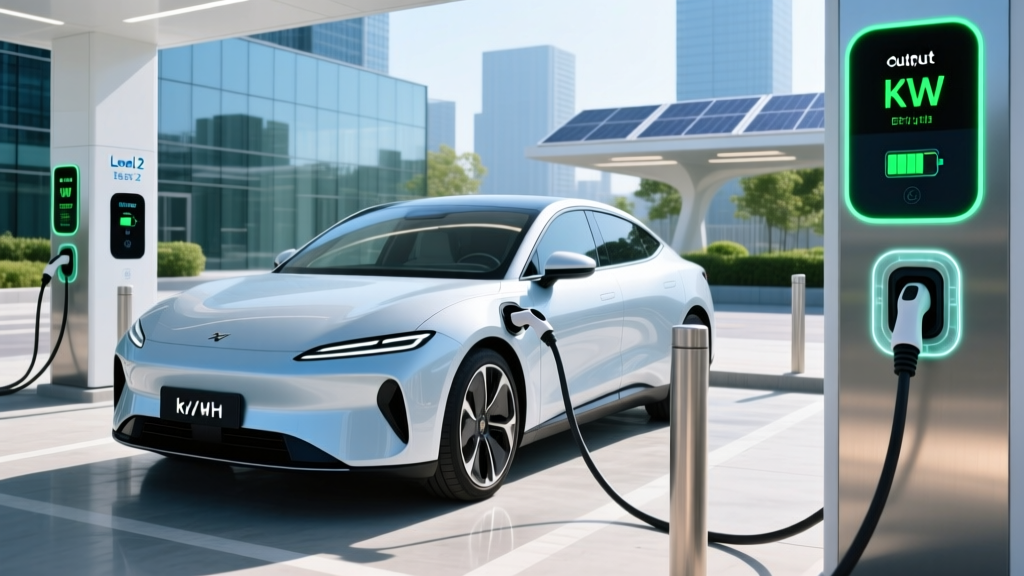
EV charging operates across three tiers. The critical distinction to learn first: kW (kilowatts) measures power — how fast energy flows into the battery. kWh (kilowatt-hours) measures energy — the battery's total capacity, analogous to gallons in a gas tank. A 77 kWh battery charged at 11 kW takes roughly 7 hours from empty; the same battery at 150 kW DC fast charging recovers much faster, but only up to ~80% state of charge before the charge curve tapers.
| Level | Voltage | Power (kW) | Miles of Range Added Per Hour | Best For |
|---|---|---|---|---|
| Level 1 | 120V AC | 1.0–1.4 kW | 3–5 miles | Overnight top-offs, PHEVs, emergency |
| Level 2 | 240V AC | 3.3–19.2 kW | 12–75 miles | Home daily charging, workplace, hotels |
| DC Fast Charging | 400–800V DC | 50–350 kW | 150–1,000+ miles (equivalent rate) | Road trips, rapid top-ups |
Real-world context: A typical 77 kWh battery (like the Hyundai Ioniq 5 Long Range, EPA 310 miles) charged on Level 1 overnight adds ~40 miles in 10 hours — enough for some commutes, but not a primary strategy. Level 2 at 11.5 kW fully replenishes that battery in ~7 hours. A 250 kW DC fast charger can take it from 10% to 80% in approximately 18–20 minutes, though peak rates are only sustained up to ~50% SoC before tapering protects the battery.
Home Charger Installation: Electrical Requirements and Real Costs
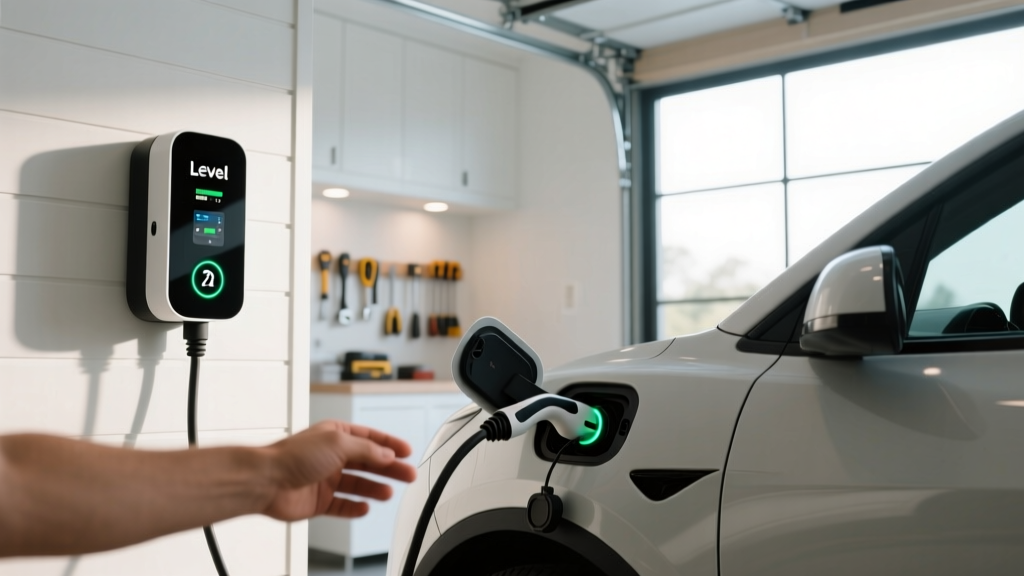
Installing a Level 2 home charger is the single most impactful upgrade an EV owner can make. Here's what's actually involved.
Electrical Requirements
Most home Level 2 chargers run on a 240V dedicated circuit, typically 40A or 50A. The National Electrical Code (NEC) requires that continuous loads (like EV charging) use only 80% of a circuit's rated capacity — so a 40A circuit delivers up to 32A (7.7 kW), and a 50A circuit delivers up to 40A (9.6 kW).
Panel Upgrade: The Hidden Cost
Many homes built before 2000 have 100A or 150A main panels. Adding a 50A EV circuit to an already-loaded panel may require a panel upgrade to 200A, which is the single largest variable in installation cost. A licensed electrician will perform a load calculation per NEC Article 220 to determine if your panel can handle the additional draw.
| Component | Typical Cost Range | Notes |
|---|---|---|
| Level 2 Charger (Equipment) | $300–$700 | Smart Wi-Fi chargers; dumb units from $200 |
| Electrician Labor (standard install) | $500–$1,500 | Short run from panel to garage; longer runs cost more |
| Permit & Inspection | $50–$200 | Varies by municipality; required for code compliance |
| Electrical Panel Upgrade (if needed) | $1,500–$3,500 | 100A→200A upgrade; not always required |
| Conduit, Wiring, Misc. | $100–$400 | Depends on run distance and wall material |
| Total (no panel upgrade) | $850–$2,800 | Most common scenario |
| Total (with panel upgrade) | $2,350–$6,300 | Older homes or high-load panels |
According to the U.S. Department of Energy, most homeowners spend between $1,000 and $2,500 for a standard Level 2 installation without a panel upgrade. Always get at least two quotes from licensed electricians and confirm they pull permits — unpermitted work can void home insurance claims.
Connector Compatibility: NACS, CCS, and CHAdeMO in 2026
The connector landscape has consolidated significantly since Tesla opened its Supercharger network. Here's where things stand for 2026 model-year vehicles:
| Connector | Brands Using It (Native) | Adapter Needed For |
|---|---|---|
| NACS (Tesla / J3400) | Tesla, Ford, GM, Rivian, Volvo, Polestar, Hyundai (new models), Nissan (Ariya refresh) | Legacy CCS vehicles need NACS→CCS adapter (~$200–$250) |
| CCS1 | Most 2021–2024 non-Tesla EVs (VW ID.4, older Hyundai/Kia, BMW iX) | CCS→NACS adapter required for Tesla Superchargers |
| CHAdeMO | Legacy Nissan Leaf (discontinued), Mitsubishi Outlander PHEV (older) | Limited public infrastructure; plan accordingly |
Key takeaway for former Xterra owners: If you're cross-shopping a new EV, prioritize a vehicle with a native NACS port. As of 2026, the vast majority of new EVs sold in the U.S. ship with NACS, granting access to Tesla's Supercharger network — the most reliable DC fast-charging network in North America with over 25,000 stalls. Vehicles still on CCS1 can use adapters, but native NACS eliminates friction.
Charging Cost Per Mile: EV vs. the Xterra's Gas Bill
This is where the math gets compelling. Let's compare the 2002 Xterra supercharged (15 MPG combined, premium recommended) against a representative 2026 EV — the Hyundai Ioniq 5 Long Range AWD (110 MPGe combined, ~3.5 miles/kWh).
| Scenario | Cost Per Mile | Annual Cost (12,000 mi) |
|---|---|---|
| 2002 Xterra SC (15 MPG, $3.50/gal premium) | $0.233 | $2,796 |
| EV — Home charging, off-peak ($0.13/kWh) | $0.037 | $444 |
| EV — Home charging, peak ($0.22/kWh) | $0.063 | $756 |
| EV — Public Level 2 ($0.30/kWh avg) | $0.086 | $1,032 |
| EV — DC Fast Charging ($0.45/kWh avg) | $0.129 | $1,548 |
The bottom line: Even charging exclusively on expensive DC fast chargers, a modern EV costs roughly half per mile to "fuel" compared to the supercharged Xterra. Home charging at off-peak utility rates delivers an 84% reduction in per-mile energy cost. According to fueleconomy.gov, the average EV driver saves $600–$1,200 annually on fuel versus a comparable gasoline vehicle.
Equipment Recommendations: Top Home Level 2 Chargers for 2026
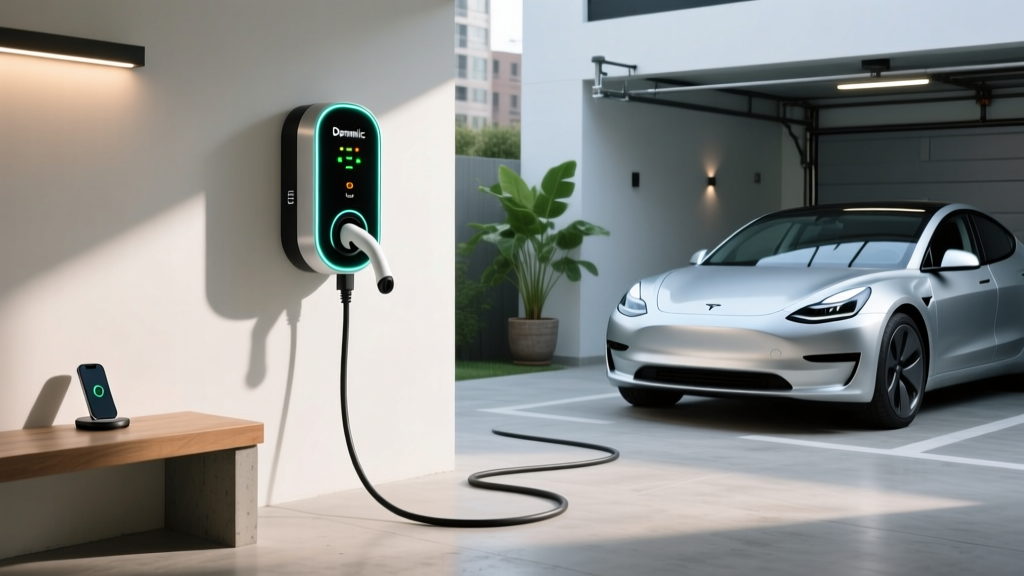
Not all Level 2 chargers are equal. Here are three proven units with specific specs, chosen for reliability, smart features, and value:
ChargePoint Home Flex
Power: Up to 12 kW (50A circuit) | Connector: NACS or CCS (configurable) | Cable: 23 ft | Smart features: Wi-Fi, scheduling, Alexa, energy tracking | Price: ~$550
Best all-around pick. Adjustable amperage (16A–50A) lets you match your circuit without buying a different unit. UL-listed, NEMA 4 outdoor-rated.
Tesla Wall Connector (Gen 4)
Power: Up to 11.5 kW (48A on 60A circuit) | Connector: NACS native | Cable: 24 ft | Smart features: Wi-Fi, OTA updates, Power-Share (load balancing between two units) | Price: ~$450
The default choice for Tesla owners and any NACS-native vehicle. Sleek, reliable, and backed by Tesla's network integration. No CCS option without an adapter on the vehicle side.
Emporia Vue Smart EV Charger
Power: Up to 11.5 kW (48A) | Connector: NACS or CCS | Cable: 24 ft | Smart features: Wi-Fi, solar integration, real-time energy monitoring, load management | Price: ~$400
Budget-friendly smart charger with excellent energy monitoring. Ideal if you have solar panels and want to charge only on excess production. Requires Emporia energy monitor for full feature set.
Safety, Code, and Installation Best Practices
EV charging is a high-draw, continuous electrical load. Cutting corners here is a fire risk and an insurance liability. Follow these non-negotiables:
- Dedicated circuit: Your Level 2 charger must be on its own dedicated breaker — never shared with other appliances.
- GFCI protection: NEC 2023 (and adopted in most jurisdictions by 2026) requires GFCI protection for EV charging outlets. Hardwired units may have GFCI built into the charger itself; plug-in units require a GFCI breaker.
- Outdoor rating: If your charger is mounted outside, it must be rated NEMA 4 (weatherproof) or NEMA 4X (corrosion-resistant). All three chargers recommended above meet this standard.
- Permit and inspection: Every jurisdiction requires a permit for new 240V circuits. The inspection ensures your install meets NEC and local amendments — skipping this can void homeowner's insurance in the event of an electrical fire.
- Cable management: Use a holster or cable reel to keep the connector off the ground, preventing water ingress and physical damage.
Frequently Asked Questions
How much does it cost to install a home EV charger?
A standard Level 2 installation (no panel upgrade) runs $850–$2,800 including equipment, electrician labor, and permit. If your home needs a panel upgrade from 100A to 200A, expect $2,350–$6,300 total. Always get itemized quotes and confirm permits are pulled.
How fast will each charging level add range?
Level 1 (120V) adds 3–5 miles per hour — roughly 30–50 miles overnight. Level 2 (240V, 40A–50A) adds 25–45 miles per hour, fully recharging most EVs in 6–10 hours. DC fast charging at 150–250 kW can add 150–250 miles in 15–20 minutes, though the charge curve tapers significantly above 80% SoC to protect battery health.
Which connector is compatible with my EV?
For 2026 model-year vehicles: most new EVs from Ford, GM, Rivian, Tesla, Hyundai, Kia, and Volvo use the NACS connector. Older (2021–2024) non-Tesla EVs likely have CCS1. The Nissan Leaf (now discontinued) used CHAdeMO. Check your vehicle's charge port or owner's manual. Adapters exist for cross-compatibility but add cost and a point of failure.
How much does EV charging cost per mile vs. gas?
Home charging at off-peak rates ($0.13/kWh) costs approximately $0.037/mile — about 84% cheaper than the 2002 Xterra supercharged at $0.233/mile. Even public DC fast charging at $0.45/kWh comes in at $0.129/mile, still roughly 45% cheaper than gasoline at 15 MPG.
What electrical upgrades might I need?
If your home has a 200A panel with sufficient spare capacity, you likely need only a new 240V circuit and breaker ($500–$1,500 labor). Homes with 100A or 150A panels, or panels already near capacity (electric dryer, range, HVAC, pool equipment), may need a panel upgrade to 200A ($1,500–$3,500). A licensed electrician performs a NEC Article 220 load calculation to determine this. Some utilities offer rebates for panel upgrades that support EV adoption — check with your local provider.