The 1998 Buick Riviera Supercharged remains one of GM's most distinctive grand tourers — a supercharged 3.8L V6 pushing 240 hp through the front wheels, wrapped in a sleek two-door coupe that still turns heads. With values of clean examples climbing past $15,000 and a cult following around the L67 supercharged engine, some owners are asking a radical question: what if you pulled the powertrain and converted it to electric?
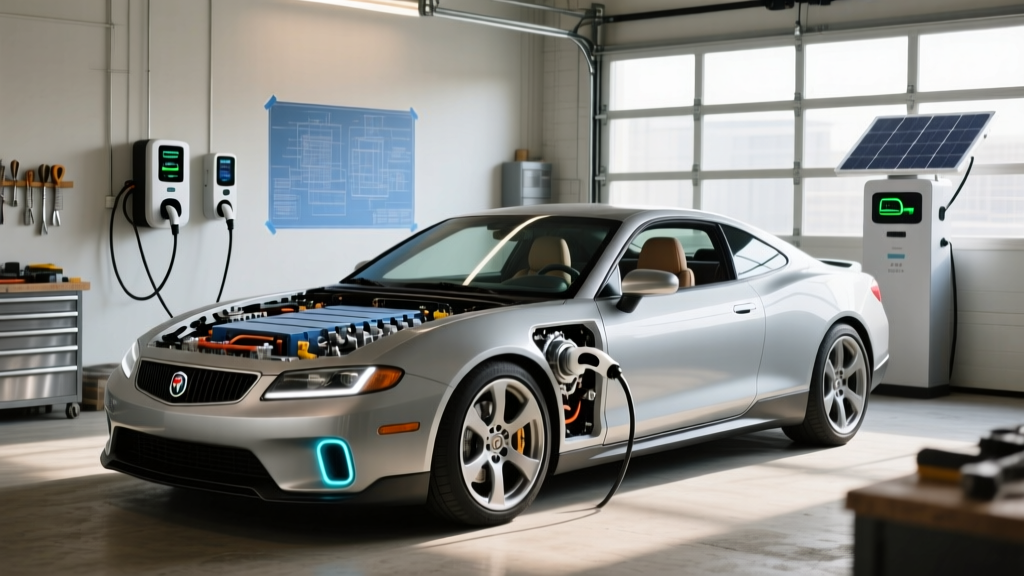
EV-swapping classic and late-90s vehicles has moved from fringe hobby to a growing niche. Companies like EV West, Zero Labs, and dozens of independent shops have proven that vehicles from the 1960s through the early 2000s can become remarkably capable daily drivers on battery power. The Riviera's spacious engine bay, robust 4T65-E transmission tunnel, and generous trunk make it a surprisingly practical conversion candidate.
But the conversion itself is only half the equation. Once your Riviera rolls out of the shop on electrons, you need a charging strategy. This guide covers everything a converted-Riviera owner — or anyone retrofitting a classic — needs to know about charging at home, in public, and on the road.
Understanding EV Charging Levels for a Converted Riviera
Before we get into hardware, let's clear up the most common confusion in EV charging: kW (kilowatts) measures power — how fast energy flows into your battery. kWh (kilowatt-hours) measures energy — the total capacity of your battery pack. Think of kW as the width of a hose and kWh as the size of the bucket. A typical EV conversion for a car the Riviera's size uses a 40–75 kWh battery pack, depending on space and budget.
Here's how each charging level translates to real-world range recovery:
| Level | Voltage | Max Power (kW) | Miles of Range Added per Hour | Best For |
|---|---|---|---|---|
| Level 1 | 120V AC | 1.4–1.9 kW | 3–5 mi/hr | Overnight top-ups, emergency backup |
| Level 2 | 240V AC | 7.2–19.2 kW | 20–60 mi/hr | Daily home charging, destination charging |
| DC Fast Charging | 400–800V DC | 50–350 kW | 150–1,000+ mi/hr | Road trips, rapid replenishment |
For a 1998 Riviera conversion with a ~55 kWh pack (a realistic figure given trunk and engine-bay space constraints), Level 2 charging at 11.5 kW will replenish the pack from 10% to 80% in roughly 3.5 hours. DC fast charging at 50 kW — assuming the conversion uses a CCS-compatible onboard system — can do the same in about 45–55 minutes, though charge speed tapers significantly above 80% state of charge as the battery management system protects cell health.
Home Charger Installation: Electrical Requirements and Costs
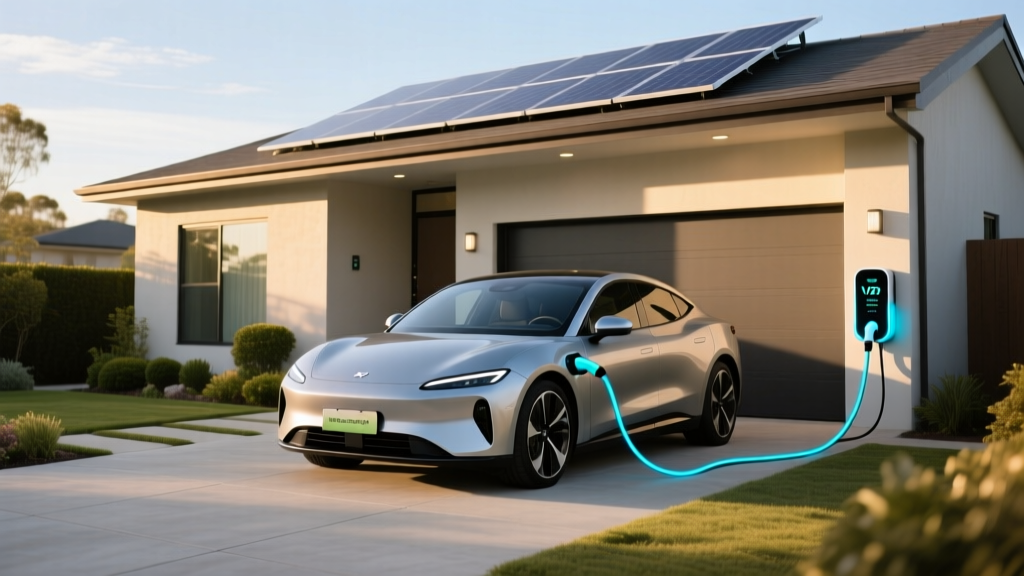
The 1998 Riviera's new life as an EV depends on reliable home charging. Most EV conversions use an onboard charger rated for 6.6 kW or 11.5 kW (single-phase 240V AC). To support this, you'll need a dedicated Level 2 home charging station — and the electrical infrastructure to back it up.
Electrical Panel and Circuit Requirements
A typical Level 2 charger drawing 11.5 kW requires a 240V, 60-amp dedicated circuit (which delivers up to 48 amps continuous to the vehicle, per the National Electrical Code's 80% rule for continuous loads). A 7.2 kW charger needs a 240V, 40-amp circuit (32 amps continuous).
Here's where homes built in the same era as your Riviera can present a problem. Many houses from the 1970s–1990s have 100-amp or 150-amp main service panels that may already be near capacity with modern appliances, HVAC systems, and electronics. Adding a 48-amp continuous EV load could push total demand past the panel's rating.
A licensed electrician will perform a load calculation (per NEC Article 220) to determine whether your existing panel can handle the EV circuit. If not, a panel upgrade to 200 amps — or a service upgrade from 100A to 200A — becomes necessary. This is the single biggest variable in home charger installation cost.
Installation Cost Breakdown
| Component | Basic Install (Panel OK) | Complex Install (Panel Upgrade) |
|---|---|---|
| Level 2 EVSE unit (hardware) | $350 – $700 | $350 – $700 |
| Electrician labor (circuit + wiring) | $500 – $1,500 | $1,500 – $3,000 |
| Electrical panel upgrade (if needed) | $0 | $1,500 – $4,000 |
| Permit and inspection | $50 – $200 | $100 – $350 |
| Conduit, wire, and misc. materials | $100 – $400 | $200 – $800 |
| Total estimated cost | $1,000 – $2,800 | $3,650 – $8,850 |
Some utilities offer rebates of $250–$1,000 for Level 2 charger installation, and a few states provide additional incentives. Check with your local utility and your state energy office — programs vary widely by jurisdiction. The federal Alternative Fuel Vehicle Refueling Property Credit (IRC §30C) may cover up to 30% of home charging equipment and installation costs (capped at $1,000), subject to income and census-tract eligibility. Consult a tax professional for your specific situation.
Connector Compatibility: NACS, CCS1, and CHAdeMO
Your conversion's DC fast-charging capability depends on which inlet and communication protocol the build uses. As of 2025–2026, the North American connector landscape has shifted dramatically:
| Connector | Status (2025–2026) | Availability | Adapter Options |
|---|---|---|---|
| NACS (Tesla/J3400) | Industry standard — adopted by Ford, GM, Rivian, Hyundai, and most major OEMs | Tesla Superchargers (20,000+ stalls), growing third-party networks | CCS-to-NACS adapters available ($200–$350) |
| CCS1 (Combo) | Legacy standard — still supported but declining on new vehicles | Electrify America, EVgo, ChargePoint DC stations | NACS-to-CCS adapters available for NACS-equipped vehicles |
| CHAdeMO | Effectively discontinued for new vehicles in North America | Limited — mostly older Nissan Leaf infrastructure | Adapters scarce and expensive |
Recommendation for a Riviera conversion: Specify a CCS1 inlet for your conversion build. Here's why: CCS1 DC charging hardware is widely available from conversion suppliers like EV West and Cascade EV, and CCS1-to-NACS adapters let you access Tesla Superchargers as the network opens up. Building with NACS natively is possible but requires more specialized components. Avoid CHAdeMO entirely — the standard is dying in North America.
For Level 2 (AC) charging, all modern EVSE units use a J1772 connector or the newer J3400 (NACS) connector. If your conversion uses a J1772 inlet (most common in conversions), any standard Level 2 home charger will plug in directly. Tesla Wall Connectors now ship with a J1772 adapter, or you can purchase a NACS-to-J1772 adapter for ~$150.
Cost to Charge: Per-Mile Comparison With the Original Supercharged V6
The original 1998 Riviera Supercharged returned an EPA-estimated 18 mpg city / 27 mpg highway — roughly 21 mpg combined. With premium fuel recommended and a 17.5-gallon tank, filling up at $3.80/gallon (2025–2026 national premium average) costs about $66.50 for ~367 miles of range. That's roughly $0.18 per mile in fuel.
An electric-converted Riviera with a 55 kWh pack and a real-world efficiency of ~3.0 miles per kWh (a reasonable target for a 3,500-lb coupe with decent aerodynamics) delivers about 165 miles of usable range. Here's what charging costs look like:
| Charging Scenario | Cost per kWh | Cost for Full Charge (55 kWh) | Cost per Mile |
|---|---|---|---|
| Home — off-peak utility rate | $0.08 – $0.14 | $4.40 – $7.70 | $0.027 – $0.047 |
| Home — standard residential rate | $0.14 – $0.20 | $7.70 – $11.00 | $0.047 – $0.067 |
| Public Level 2 (ChargePoint, etc.) | $0.25 – $0.49 | $13.75 – $26.95 | $0.083 – $0.163 |
| DC Fast Charging (Electrify America, EVgo) | $0.35 – $0.65 | $19.25 – $35.75 | $0.117 – $0.217 |
| Original Supercharged 3.8L (gasoline) | — | $66.50 (17.5 gal × $3.80) | $0.181 |
Home charging on an off-peak rate delivers a per-mile cost roughly 75–85% lower than the original gasoline engine. Even DC fast charging on the road is competitive with or cheaper than premium fuel. The economics strongly favor electrification for daily driving — the conversion cost is the real investment.
Recommended Level 2 Chargers for Your Garage
Not all Level 2 EVSE units are created equal. For a garage-kept Riviera conversion, you want reliability, adequate cable length (the Riviera is 205 inches long — plan for reach), and smart scheduling to exploit off-peak utility rates. Here are three proven options:
Emporia Vue Level 2 EV Charger
- Power output: 11.5 kW (48A) on a 60A circuit; adjustable down to 32A/40A circuits
- Connector: J1772 (standard); NACS version also available
- Cable length: 24 ft
- Smart features: Wi-Fi, app-based scheduling, solar integration, energy monitoring
- Price: ~$399 (frequently on sale for $349)
- Best for: Budget-conscious owners who want smart scheduling for off-peak rates
ChargePoint Home Flex
- Power output: Up to 12 kW (50A) on a 60A circuit; configurable via DIP switches for lower-amperage circuits
- Connector: J1772 (standard); NACS adapter included in recent packages
- Cable length: 23 ft
- Smart features: Wi-Fi, app scheduling, Alexa integration, detailed energy reports
- Price: ~$599–$699
- Best for: Owners who want a proven brand with broad utility-rebate compatibility
Tesla Wall Connector (J1772 version)
- Power output: Up to 11.5 kW (48A) on a 60A circuit
- Connector: J1772 (2024+ universal version) — works with any J1772-inlet vehicle
- Cable length: 24 ft
- Smart features: Wi-Fi, power sharing between multiple units, OTA firmware updates
- Price: ~$475
- Best for: Clean aesthetics, reliable hardware, and future-proofing if you also own a Tesla
All three units carry NEMA 4 or NEMA 4X outdoor ratings, meaning they're safe for garage or exterior-wall mounting. For a Riviera you'll likely garage, an indoor mount on a standard wall bracket works perfectly.
Safety, Code Compliance, and Permit Requirements
EV charging circuits carry significant current and must be installed to code. Here's what your electrician must address — and what your local building inspector will check:
- Dedicated circuit: Your Level 2 EVSE must be on its own dedicated breaker — no sharing with other outlets or appliances. This is non-negotiable per NEC 625.40.
- GFCI protection: NEC 2020 and later editions require GFCI (ground-fault circuit interrupter) protection for EV receptacles. Hardwired EVSE units typically have built-in ground-fault protection and may not require an additional GFCI breaker, but plug-in units on a NEMA 14-50 or 6-50 receptacle do. Confirm with your local AHJ (Authority Having Jurisdiction).
- Outdoor rating: If mounting outside, the EVSE must carry a NEMA 4 (weather-resistant) rating. Most quality units do, but verify before purchasing.
- Wire gauge: A 60A circuit typically requires 6 AWG copper wire (THHN in conduit) or 4 AWG aluminum. Longer wire runs may require upsizing to account for voltage drop — your electrician will calculate this per NEC 210.19.
- Permit and inspection: Virtually every jurisdiction requires an electrical permit for a new 240V circuit. The permit fee is typically $50–$200, and the inspection ensures the work meets NEC and local amendments. Do not skip this step. Unpermitted electrical work can void your homeowner's insurance and create fire risk.
Public Charging and Road Trips in a Converted Riviera
With a 55 kWh pack and 3.0 mi/kWh efficiency, your converted Riviera delivers roughly 165 miles of real-world range (expect 140–150 miles at sustained 75 mph highway speeds, and potentially 120–130 miles in cold weather below 30°F). That's enough for most daily driving, but road trips require planning.
Apps like PlugShare, A Better Routeplanner (ABRP), and network-specific apps (Electrify America, EVgo, ChargePoint) let you map DC fast-charger locations along your route. Enter your vehicle's battery capacity and efficiency, and ABRP will calculate charging stops, accounting for elevation, temperature, and charge-curve taper.
For a 500-mile trip, expect two DC fast-charging stops of 40–55 minutes each (10–80% on a 50 kW-capable pack). Total trip time increases by roughly 1.5–2 hours versus a gasoline Riviera, but the fuel cost drops from ~$90 to $30–$50 depending on the charging network's rates.
Charging Time Examples: What to Expect
For a conversion using a 55 kWh usable battery pack:
| Charging Method | Power Delivered | Approximate Time (10–80%) | Notes |
|---|---|---|---|
| 120V Level 1 (standard outlet) | 1.4 kW | ~27 hours | Emergency/top-up only; impractical as primary |
| 240V Level 2 (32A / 7.7 kW) | 7.2 kW | ~5.5 hours | Adequate for overnight; common on 40A circuits |
| 240V Level 2 (48A / 11.5 kW) | 11.0 kW | ~3.5 hours | Optimal home setup on 60A circuit |
| DC Fast Charge (50 kW capable) | ~38 kW average | ~55–65 min | Average accounts for charge-curve taper above 50% |
| DC Fast Charge (100+ kW capable) | ~70 kW average | ~30–40 min | Only if conversion supports high-rate DC — rare in conversions |
Note that DC fast-charging speed is limited by the conversion's onboard charge controller and battery pack C-rate. Most EV conversions using modules from Nissan Leaf, Tesla, or Chevrolet Bolt packs support 40–60 kW DC charging. High-rate 150+ kW charging requires battery packs specifically engineered for it — an important spec to discuss with your conversion shop.
Frequently Asked Questions
How much does it cost to install a home EV charger?
For a basic Level 2 installation on an existing 200A panel with a short wire run, expect $1,000–$2,800 total (equipment, labor, permit). If your home needs a panel upgrade from 100A or 150A to 200A, the total rises to $3,650–$8,850. The EVSE hardware itself costs $350–$700; the rest is electrical labor, materials, and permits. Utility rebates and the federal §30C credit can offset 30% or more of the cost for eligible taxpayers.
How fast will each charging level add range?
Level 1 (120V) adds 3–5 miles of range per hour — enough for overnight top-ups but not primary charging. Level 2 (240V) at 11.5 kW adds roughly 35–40 miles per hour in a vehicle achieving 3.0 mi/kWh. DC fast charging at 50 kW can add 100+ miles in 20–30 minutes, though the rate tapers as the battery fills above 50% state of charge.
Which connector and charger is compatible with my EV conversion?
Most EV conversions use a J1772 inlet for AC (Level 2) charging and a CCS1 inlet for DC fast charging. Any J1772-equipped Level 2 home charger (Emporia, ChargePoint, Tesla Wall Connector with J1772) will work. For DC fast charging, CCS1 gives you access to Electrify America, EVgo, and ChargePoint networks, and a CCS-to-NACS adapter ($200–$350) opens up Tesla Superchargers as they accept third-party vehicles.
How much does charging cost per mile compared to gasoline?
Charging at home on off-peak rates costs roughly $0.03–$0.05 per mile for a converted Riviera achieving 3.0 mi/kWh — about 75–85% less than the original supercharged V6 at $0.18/mile on premium fuel. Public DC fast charging is more expensive at $0.12–$0.22/mile but still competitive with or cheaper than gasoline.
What electrical upgrades might I need for a home charger?
The most common upgrade is a panel replacement from 100A or 150A to 200A service, costing $1,500–$4,000. Other potential needs include: a new dedicated 240V circuit with appropriate wire gauge (6 AWG copper for 60A), conduit routing through walls or attic spaces, GFCI breaker installation for receptacle-based EVSE, and in some jurisdictions, a whole-home surge protector. Your electrician's load calculation will determine what's required.