The 1997 Pontiac Grand Prix GTP Supercharged: An Icon, Not an EV
The 1997 Pontiac Grand Prix GTP Supercharged remains a beloved piece of American automotive history. With its 3.8L supercharged V6 producing 240 horsepower and 280 lb-ft of torque, it was a genuine muscle sedan in an era when electrification meant fuel injection. But here's the blunt truth: this car has zero EV charging capability. It runs on gasoline, and no amount of adapter shopping will change that.
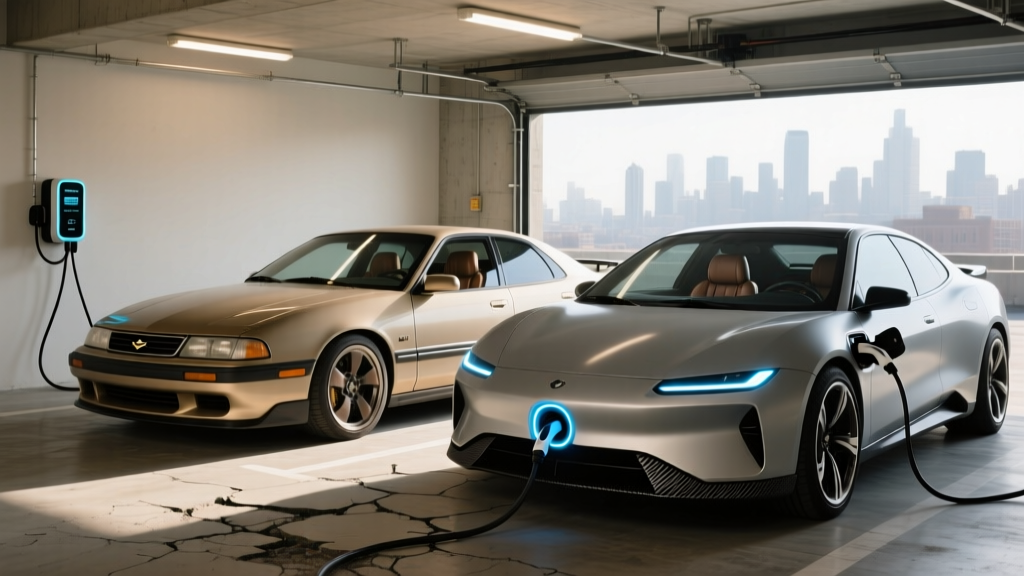
If you've landed here searching for EV charging info related to this classic Pontiac, you're likely either (1) researching what an EV charging setup would look like if you're adding an electric vehicle to your garage alongside your Grand Prix, or (2) curious about how EV charging compares to filling up a supercharged V6. Either way, this guide delivers the exact numbers you need.
Understanding EV Charging Levels: What Speeds Actually Look Like
Before you install anything, you need to understand the three charging levels. The critical distinction: kW (kilowatts) measures power — the rate at which energy flows into the battery. kWh (kilowatt-hours) measures energy — the total capacity of the battery. Think of kW as the width of a hose and kWh as the size of the bucket.
| Charging Level | Voltage | Max Power (kW) | Miles of Range Added Per Hour | Best For |
|---|---|---|---|---|
| Level 1 (Standard Outlet) | 120V | 1.4 kW | 3–5 miles | Overnight top-offs, PHEVs |
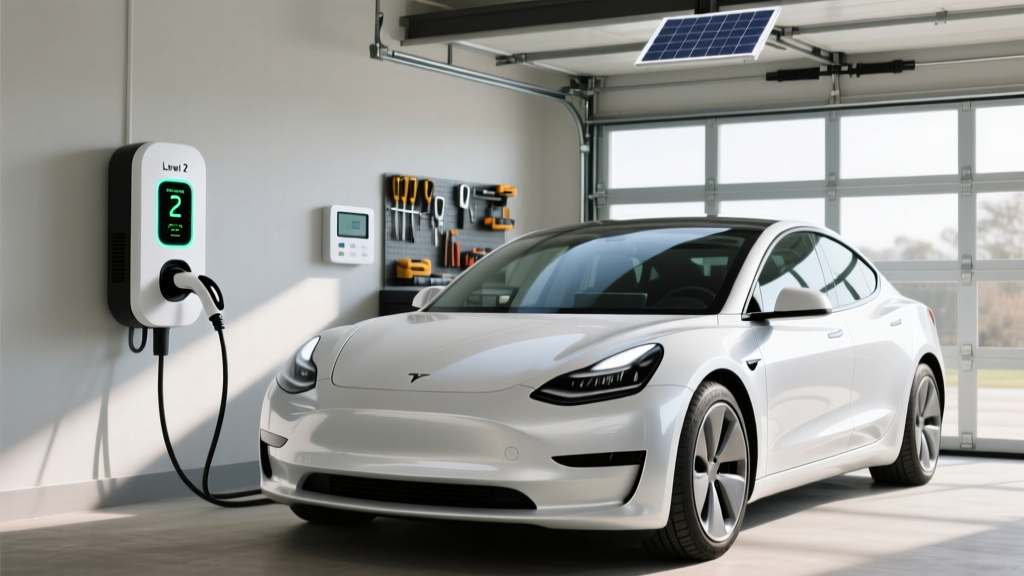
| Level 2 (Home/Public AC) | 240V | 7.2–19.2 kW | 20–60 miles | Daily home charging |
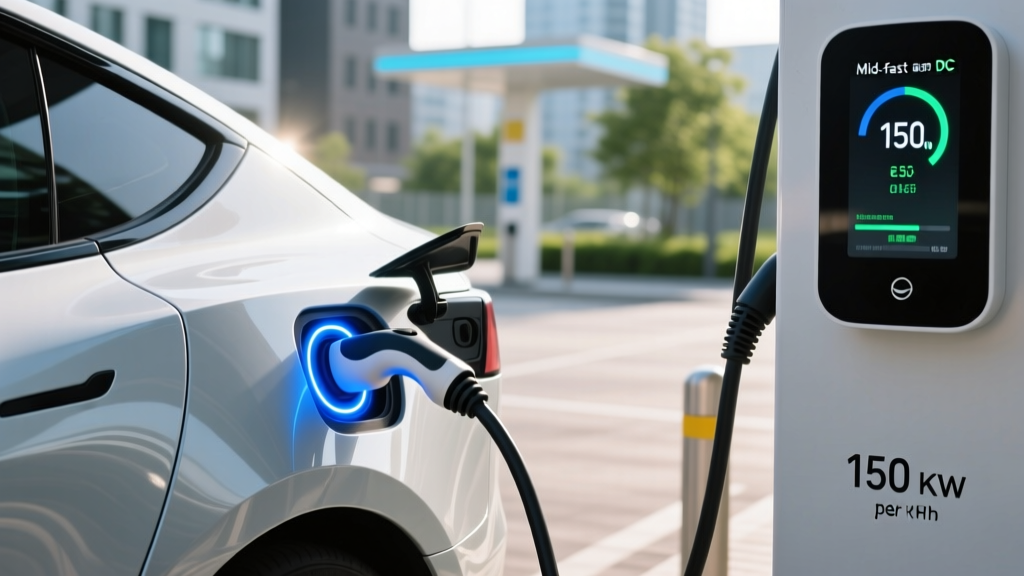
| DC Fast Charging | 400–800V DC | 50–350 kW | 150–1,000+ miles (peak) | Road trips, quick top-ups |
Real-world context: A 2026 Tesla Model Y with a 75 kWh battery takes roughly 10–12 hours on Level 1, 6–8 hours on a 7.2 kW Level 2, and approximately 18–25 minutes from 10–80% on a 250 kW DC fast charger. The 1997 Grand Prix GTP's 17.5-gallon tank fills in about 3 minutes at a gas station — a reality that explains why road-trip charging logistics still matter for EV buyers.
How Much Does It Cost to Install a Home EV Charger?
This is the question that stops most potential EV owners in their tracks. The answer varies wildly based on your home's electrical panel, the distance from panel to charger location, and local permitting requirements. Here's a realistic breakdown based on 2026 market rates:
| Cost Component | Low End | High End | Notes |
|---|---|---|---|
| Level 2 Charger Equipment | $300 | $800 | Smart chargers with WiFi/app control |
| Electrician Labor | $500 | $2,000 | Depends on run length and complexity |
| Permit Fees | $50 | $300 | Varies by municipality |
| Panel Upgrade (if needed) | $1,500 | $4,000 | Common in homes with 100A service |
| Total (no panel upgrade) | $850 | $3,100 | Most common scenario |
| Total (with panel upgrade) | $2,350 | $7,100 | Older homes, high-power setups |
Panel upgrade reality: If you own a home built before 2000 — perhaps the same garage where your 1997 Grand Prix GTP lives — you may have a 100-amp electrical panel. A Level 2 charger drawing 40 amps (9.6 kW) requires a dedicated 50-amp circuit. If your panel is already near capacity with HVAC, electric range, and dryer loads, you'll need a 200-amp upgrade. This is non-negotiable for safety and code compliance.
Electrical requirements for a typical 40A Level 2 setup:
- 240V dedicated circuit
- 50-amp breaker (NEC requires 125% oversizing for continuous loads)
- 6 AWG copper wire (or 4 AWG aluminum)
- NEMA 14-50 outlet or hardwired connection
- GFCI protection (required by NEC 2020 and later)
Which Connector Is Compatible with My EV?
As of 2026, the connector landscape has consolidated significantly. The North American Charging Standard (NACS), originally developed by Tesla, has become the dominant connector for new vehicles. Here's what you need to know:
| Connector Type | Brands Using It (2026) | Adapter Needed? |
|---|---|---|
| NACS (Tesla-style) | Tesla, Ford, GM, Rivian, Volvo, Polestar, Hyundai (new models) | CCS→NACS adapter for older non-Tesla EVs |
| CCS1 | VW, BMW, Mercedes (older models), some Hyundai/Kia | NACS→CCS adapter for Tesla Superchargers |
| CHAdeMO | Nissan Leaf (legacy only) | Limited network; no practical adapter |
Adapter reality: If you're buying a 2026 EV, it almost certainly has NACS. If you have an older CCS-equipped vehicle (2022–2024 model years), you'll need a CCS-to-NACS adapter ($150–$250) to access Tesla Superchargers. CHAdeMO is effectively dead for new vehicles — the Nissan Leaf remains the last holdout, and its charging network continues to shrink.
Charging Time Examples: What to Expect with Common Battery Sizes
Charging time depends on battery capacity (kWh), charger power (kW), and the vehicle's onboard charger limit. Here are real-world examples for popular 2026 EVs:
| Vehicle | Battery (kWh) | Level 2 Time (0–100%) | DC Fast (10–80%) | Peak DC kW |
|---|---|---|---|---|
| Tesla Model Y LR | 75 kWh | ~8 hours @ 9.6 kW | ~22 min | 250 kW |
| Ford Mustang Mach-E ER | 91 kWh | ~10 hours @ 9.6 kW | ~28 min | 150 kW |
| Hyundai Ioniq 5 LR | 77.4 kWh | ~7 hours @ 11.5 kW | ~18 min | 240 kW (800V) |
| Chevy Equinox EV | 85 kWh | ~9 hours @ 9.6 kW | ~25 min | 175 kW |
Charge curve reality: The peak kW number is misleading. No EV sustains peak charging speed for the entire session. Most vehicles charge fastest between 10–50% state of charge, then taper significantly. A 250 kW peak might average 150 kW over a 10–80% session. Above 80%, charging slows dramatically to protect battery health — this is why DC fast charging guides recommend charging only to 80% on road trips.
How Much Does Charging Cost Per Mile vs Gas?
This is where the 1997 Pontiac Grand Prix GTP Supercharged makes for a useful comparison. The GTP's 3.8L supercharged V6 delivers an EPA-estimated 17 city / 27 highway MPG (21 combined). Let's compare fuel costs:
| Scenario | Cost per kWh | Vehicle Efficiency | Cost Per Mile |
|---|---|---|---|
| Home charging (off-peak) | $0.12/kWh | 3.5 mi/kWh (typical EV) | $0.034 |
| Home charging (peak) | $0.22/kWh | 3.5 mi/kWh | $0.063 |
| Public Level 2 (ChargePoint, etc.) | $0.35/kWh | 3.5 mi/kWh | $0.10 |
| DC Fast Charging (Electrify America) | $0.48/kWh | 3.5 mi/kWh | $0.137 |
| 1997 Grand Prix GTP (gasoline @ $3.50/gal) | — | 21 MPG combined | $0.167 |
The verdict: Home charging at off-peak rates costs roughly 80% less per mile than fueling a supercharged V6. Even DC fast charging on a road trip beats gasoline on a per-mile basis. However, if you're exclusively using expensive public DC fast chargers, the savings narrow significantly. The economic case for EVs hinges on home charging access.
For context, the 1997 Grand Prix GTP at 21 MPG combined and $3.50/gallon costs $16.70 to travel 100 miles. A 2026 Tesla Model Y charging at home at $0.12/kWh and 3.5 mi/kWh costs $3.40 for the same distance — a savings of over $13 per 100 miles, or roughly $1,950 annually at 15,000 miles/year.
Equipment Recommendations: Which Home Chargers to Buy in 2026
Not all Level 2 chargers are equal. Here are three proven options with specific specs:
Emporia Level 2 Smart Charger
- Power: 48A / 11.5 kW (hardwired) or 40A / 9.6 kW (NEMA 14-50)
- Connector: NACS (J3400) with CCS adapter available
- Cable length: 24 feet
- Smart features: WiFi, energy monitoring, solar integration, utility demand-response
- Price: $399 (hardwired) / $449 (plug-in)
- Best for: Budget-conscious buyers who want energy tracking
ChargePoint Home Flex
- Power: Up to 50A / 12 kW (adjustable via dip switches)
- Connector: NACS (2026 model) or CCS1 (older stock)
- Cable length: 23 feet
- Smart features: WiFi, app scheduling, Alexa integration, utility rebates
- Price: $649
- Best for: Flexibility across amperage levels and utility rebate compatibility
Tesla Wall Connector (Gen 4)
- Power: 48A / 11.5 kW
- Connector: NACS (native Tesla)
- Cable length: 24 feet
- Smart features: WiFi, OTA updates, Powerwall integration, vehicle-specific access control
- Price: $450
- Best for: Tesla owners or households with NACS-equipped vehicles
Safety and Code Considerations You Cannot Ignore
EV charging involves sustained high-current electrical loads — far more demanding than intermittent appliances like dryers. Here's what code and safety require:
- Dedicated circuit: Your Level 2 charger must have its own dedicated circuit. Sharing with other loads is a code violation and a fire hazard.
- GFCI protection: NEC 2020 and later requires ground-fault circuit interrupter protection for EV charging outlets. Hardwired installations may have different requirements — your electrician will determine this.
- Outdoor rating: If installing outdoors, the charger must carry a NEMA 4 or NEMA 4X rating for weather resistance. All three chargers above meet this standard.
- Permit and inspection: Most jurisdictions require an electrical permit for a new 240V circuit. The inspection ensures proper wire gauge, breaker sizing, and grounding. Skipping this can void your homeowner's insurance in the event of an electrical fire.
- Load management: If your panel is near capacity but you want to avoid a full upgrade, consider a smart charger with load management (like the Emporia) that dynamically reduces charging power when other circuits are in use.
A note for older garages: If you're installing a charger in the same garage that houses a classic like the 1997 Grand Prix GTP, be aware that older structures may lack proper grounding, have degraded wiring, or feature panels that predate modern breaker standards (like Federal Pacific or Zinsco panels, which are known fire hazards and must be replaced regardless of EV charging needs).
Frequently Asked Questions
Can I convert my 1997 Pontiac Grand Prix GTP Supercharged to electric?
Technically, yes — EV conversion shops exist and can swap the supercharged 3.8L V6 for an electric motor and battery pack. Realistically, conversions cost $15,000–$30,000+, require extensive fabrication, and will not result in a vehicle with modern EV range, charging speed, or safety features. It's a passion project, not a practical path to electrification.
How much does it cost to install a home EV charger?
Expect $850–$3,100 for a standard installation (equipment + electrician + permit) if your electrical panel has sufficient capacity. If you need a 200-amp panel upgrade, add $1,500–$4,000. Always get a load calculation from a licensed electrician before purchasing equipment.
How fast will each charging level add range?
Level 1 (120V): 3–5 miles per hour. Level 2 (240V, 40A): 25–35 miles per hour. DC Fast (150+ kW): 150–500+ miles per hour at peak, but sustained rates are lower due to charge curve taper.
Which connector does my EV need?
For 2026 model-year vehicles, most new EVs use NACS (the Tesla connector). Older 2022–2024 EVs may have CCS1. Check your vehicle's charge port or owner's manual. CHAdeMO is limited to the Nissan Leaf and is not recommended for new purchases.
Is home charging really cheaper than gas?
At $0.12/kWh (off-peak home rate) and 3.5 miles per kWh efficiency, you'll pay about $0.034 per mile. Compare that to the Grand Prix GTP's $0.167/mile at 21 MPG and $3.50/gallon — home EV charging is roughly 80% cheaper per mile. Public DC fast charging narrows the gap but still typically beats gasoline.
Sources: fueleconomy.gov for EPA efficiency data, IRS.gov for current federal tax credit rules, and manufacturer specifications for charging rates.