If you've spent years behind the wheel of a 1990 Ford Thunderbird Supercharged — that 3.8L V6 pushing 230 horsepower through a 4-speed automatic — the jump to an electric vehicle is a bigger paradigm shift than just swapping cars. You're replacing gas stations with charging stations, horsepower curves with instant torque, and a $40 fill-up with a $12 overnight charge. But none of those savings materialize unless your home charging setup is dialed in from day one.
This guide walks through every charging level, the real cost to install a Level 2 home charger, connector compatibility across every major EV brand, and the per-mile economics that make leaving your Super Coupe behind financially rational.
Charging Levels Explained: How Fast Each Adds Range
EV charging comes in three tiers. The critical distinction: kW (kilowatts) measures charging power — how fast energy flows into your battery. kWh (kilowatt-hours) measures battery capacity — how much energy the battery holds. A 75 kWh battery charged at 7.2 kW gains roughly 7.2 kWh per hour (about 25–30 miles of range, depending on vehicle efficiency).
| Level | Voltage | Power (kW) | Miles of Range Per Hour | Best For |
|---|---|---|---|---|
| Level 1 | 120V (standard outlet) | 1.2–1.9 kW | 3–5 mi/hr | Overnight top-ups, PHEVs, low daily mileage |
| Level 2 | 240V (dryer-style outlet) | 3.3–19.2 kW | 12–75 mi/hr | Primary home charging, daily full replenishment |
| DC Fast Charging | 400V–800V DC | 50–350 kW | 150–1,200+ mi/hr | Road trips, rapid top-ups on highway corridors |
Real-world charging time examples (10–80% SoC):
- Tesla Model Y (75 kWh usable, NMC): ~25 minutes on a 250 kW V4 Supercharger, tapering significantly above 80%
- Hyundai Ioniq 5 (77.4 kWh, NMC): ~18 minutes on a 350 kW charger thanks to its 800V architecture
- Ford F-150 Lightning (131 kWh extended range, NMC): ~41 minutes on a 150 kW DC fast charger
- Chevrolet Equinox EV (85 kWh, NMC): ~34 minutes on a 150 kW charger
DC fast charging speeds peak early in the session and taper as the battery fills — this is called the charge curve. A charger rated for 250 kW won't deliver 250 kW for the entire session. Expect the advertised 10–80% time, then dramatically slower speeds from 80–100%.
Home Level 2 Installation: Electrical Requirements & Real Costs
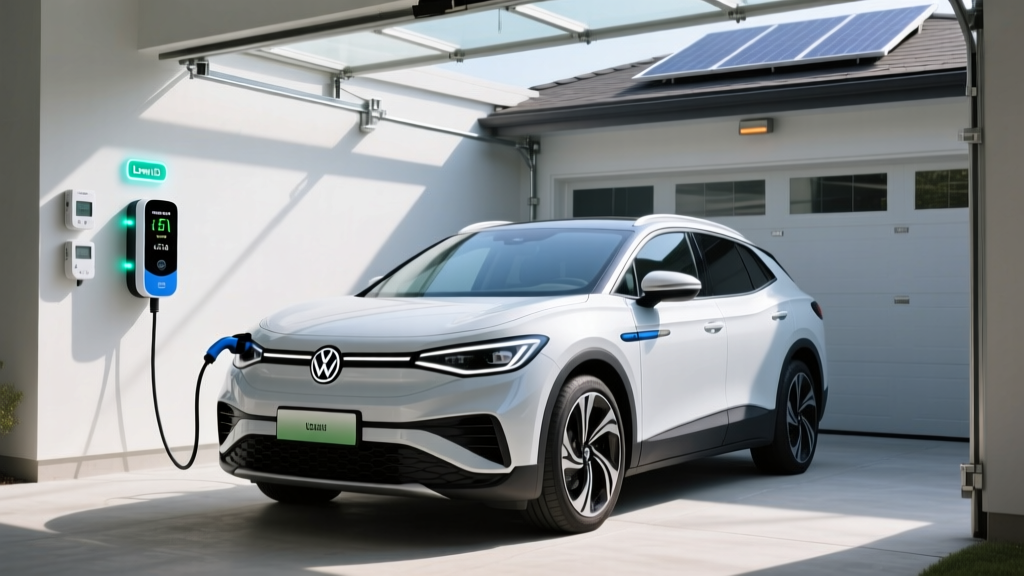
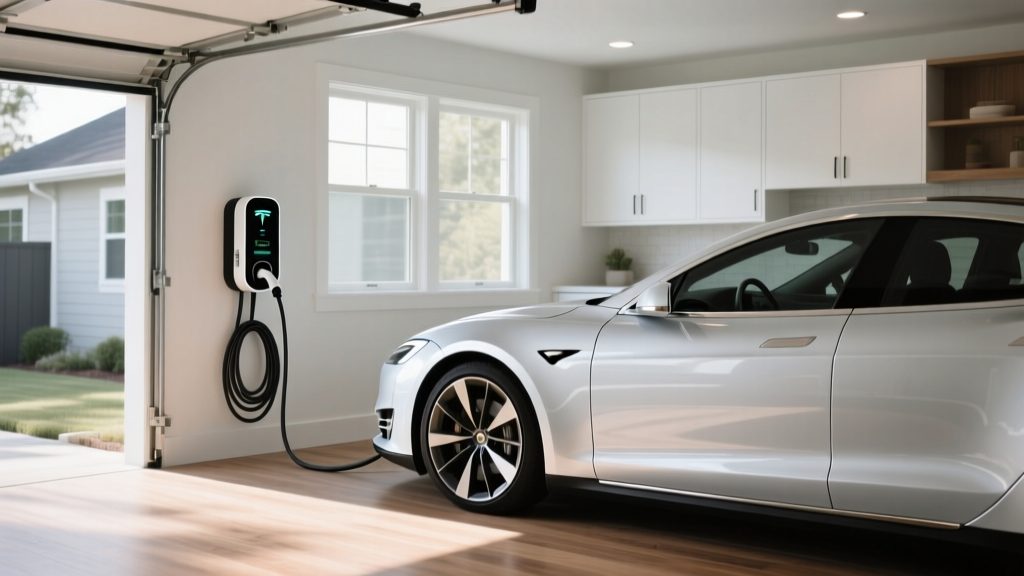
Most EV owners install a 240V Level 2 charger in their garage or driveway. The most common setup is a 40-amp circuit on a 50-amp breaker (the National Electrical Code requires breakers rated 125% above continuous load), delivering up to 9.6 kW to the vehicle. Higher-amperage setups (48A or 64A circuits) are available but require heavier wiring and more panel capacity.
Electrical requirements for a typical 40A Level 2 install:
- 240V dedicated circuit (NEMA 14-50 outlet or hardwired)
- 50-amp double-pole breaker
- 6-gauge copper wire (or 4-gauge aluminum for longer runs)
- Two available slots in your electrical panel
- GFCI protection (required by NEC 2020+ for EV receptacles)
How Much Does It Cost to Install a Home EV Charger?
Installation costs vary enormously based on your home's existing electrical infrastructure. Here's the honest breakdown:
| Component | Simple Install (Panel Adjacent) | Moderate Install (50–100 ft run) | Complex Install (Panel Upgrade Needed) |
|---|---|---|---|
| Level 2 Charger (hardware) | $350–$700 | $350–$700 | $350–$700 |
| Electrician labor | $300–$600 | $600–$1,200 | $800–$1,500 |
| Permit & inspection | $50–$150 | $50–$200 | $100–$300 |
| Electrical panel upgrade (100A→200A) | N/A | N/A | $1,500–$3,500 |
| Wire, conduit, misc. materials | $50–$100 | $150–$400 | $200–$500 |
| Total | $750–$1,550 | $1,150–$2,500 | $2,950–$6,500 |
The panel upgrade gotcha: Homes built before the 1990s — the same era as your Thunderbird Supercharged — often have 100-amp or even 60-amp electrical panels. Adding a 40A continuous EV load may exceed your panel's capacity, requiring an upgrade to 200A service. This alone can add $1,500–$3,500 to your project. Always get a licensed electrician to perform a load calculation before committing to a charger purchase.
Check whether your utility offers rebates or incentives for home charger installation — many utilities in 2026 offer $250–$1,000 toward equipment or panel upgrades.
Connector Compatibility: NACS, CCS1, and CHAdeMO
The connector landscape shifted dramatically between 2023 and 2026. Tesla's North American Charging Standard (NACS) has become the dominant connector, with nearly every major automaker adopting it for new vehicles starting with 2025–2026 model years. Here's what fits what:
| Connector | Brands Using It (Native) | Notes |
|---|---|---|
| NACS (Tesla) | Tesla, Ford, GM, Rivian, Volvo, Polestar, Mercedes-Benz, BMW (2025+), Hyundai/Kia (2026+) | Access to Tesla Supercharger network natively or via adapter |
| CCS1 | Legacy VW/Audi EVs (pre-2026), Stellantis, some Honda | Still widely supported at Electrify America, EVgo stations |
| CHAdeMO | Nissan Leaf (discontinued), Mitsubishi Outlander PHEV | Being phased out; limited new station deployments |
Adapter needs: If you own a CCS1-equipped EV (like a 2024 Hyundai Ioniq 5 or VW ID.4), you'll likely need a CCS-to-NACS adapter (~$150–$250) to access Tesla Superchargers. Ford and GM provide these adapters to existing owners. For home Level 2 charging, most chargers ship with a J1772 connector (universal for Level 2); NACS vehicles use a J1772-to-NACS adapter, which Tesla includes in the box.
Cost to Charge: Per-Mile Economics vs. Your Old Thunderbird
The 1990 Thunderbird Supercharged was rated at roughly 17 MPG city / 24 MPG highway by the EPA. At 20 MPG combined and $3.50/gallon gas, you're spending about $0.175 per mile on fuel. Here's how EVs compare across charging scenarios:
| Scenario | Rate | Cost Per Mile (at 3.5 mi/kWh) | Annual Cost (12,000 mi) |
|---|---|---|---|
| Home Level 2, off-peak utility rate | $0.08–$0.12/kWh | $0.023–$0.034 | $275–$410 |
| Home Level 2, standard residential rate | $0.14–$0.18/kWh | $0.040–$0.051 | $480–$615 |
| Public Level 2 (ChargePoint, workplace) | $0.20–$0.35/kWh | $0.057–$0.100 | $685–$1,200 |
| DC Fast Charging (Electrify America, EVgo) | $0.35–$0.55/kWh | $0.100–$0.157 | $1,200–$1,885 |
| 1990 Thunderbird SC (20 MPG, $3.50/gal) | $3.50/gallon | $0.175 | $2,100 |
The takeaway: Home charging on off-peak rates saves $1,700+ annually versus your Thunderbird's fuel costs. Even relying exclusively on DC fast charging — the most expensive scenario — you'll likely still break even or save modestly. The real savings come from home Level 2 charging. According to fueleconomy.gov, most current EVs achieve 100–130 MPGe combined, translating to 3.0–4.0 miles per kWh.
Best Home EV Chargers for 2026: Equipment Picks
When selecting a Level 2 charger, prioritize: power output (amps/kW), cable length (25 ft recommended minimum), connector type, smart features (Wi-Fi, scheduling, load management), and UL/ETL safety certification. Here are proven options:
Tesla Universal Wall Connector — Best Overall
- Power: 48A / 11.5 kW (on 60A circuit)
- Connector: NACS native + integrated J1772 adapter
- Cable: 24 ft
- Smart features: Wi-Fi, OTA updates, power-sharing between two units, access control
- Price: ~$599
- Best for: NACS vehicles (Tesla, Ford, GM, Rivian); the integrated J1772 tip covers legacy EVs too
ChargePoint Home Flex — Best for Flexibility
- Power: Up to 50A / 12 kW (adjustable 16A–50A via DIP switch)
- Connector: J1772 (NACS adapter required for Tesla-connector vehicles)
- Cable: 23 ft
- Smart features: Wi-Fi, app scheduling, Alexa integration, amperage adjustment
- Price: ~$649
- Best for: Homes with limited panel capacity (set to lower amperage); CCS1/J1772 vehicles
Emporia Level 2 EV Charger — Best Budget Smart Charger
- Power: 48A / 11.5 kW (on 60A circuit)
- Connector: J1772 (NACS version available)
- Cable: 24 ft
- Smart features: Wi-Fi, energy monitoring, solar integration, time-of-use scheduling
- Price: ~$399
- Best for: Budget-conscious buyers who still want full smart features and energy tracking
Grizzl-E Smart — Best for Cold Climates & Durability
- Power: 40A / 9.6 kW (on 50A circuit)
- Connector: J1772 or NACS (select at purchase)
- Cable: 24 ft
- Smart features: Wi-Fi, OCPP support, extreme cold rated (-40°F)
- Price: ~$499
- Best for: Outdoor installs in northern climates; built in Canada, ruggedized enclosure
Safety, Code, and Installation Best Practices
EV charging draws sustained high current for hours — more like running an electric furnace than plugging in a lamp. Cutting corners here risks fire, failed inspections, or voided insurance. Non-negotiable safety requirements:
- Dedicated circuit: Your EV charger must be on its own dedicated breaker — never shared with other appliances. A 40A charger needs a 50A breaker; a 48A charger needs a 60A breaker.
- GFCI protection: NEC 2020 and later requires ground-fault circuit interrupter protection for EV charging receptacles. Hardwired chargers may not require a separate GFCI breaker (the unit typically includes internal ground-fault protection), but check local code.
- Outdoor rating: If installing outside, both the charger and receptacle must be rated for wet locations (NEMA 4 or IP65+). Use an in-use cover for NEMA 14-50 outlets.
- Permit and inspection: Most jurisdictions require an electrical permit for EV charger installation. The inspection ensures code compliance and protects your home insurance coverage. Permit costs are typically $50–$200.
- Wire gauge: Undersized wire causes voltage drop and heat. A 50A circuit requires minimum 6 AWG copper; longer runs (over 75 ft) may need 4 AWG to prevent voltage drop exceeding 3%.
Always hire a licensed electrician familiar with EV charging installations. Get at least three quotes — prices vary significantly even within the same city.
Public Charging Networks: What You Need to Know
Home charging handles 80–90% of most EV owners' needs, but public charging matters for road trips and apartment dwellers. The 2026 public landscape:
- Tesla Supercharger network: 30,000+ stalls in North America, now open to NACS-equipped non-Tesla EVs natively and CCS1 vehicles via adapter. Rated 150–350 kW. Reliability consistently highest among networks.
- Electrify America: 4,000+ DC fast chargers, CCS1 and NACS connectors. Rated 50–350 kW. Improving uptime but still inconsistent at older stations.
- EVgo: 3,500+ public fast chargers, mix of CCS1 and NACS. Subscription plans reduce per-kWh cost.
- ChargePoint: Largest Level 2 network (30,000+ ports), limited DC fast charging. Good for destination and workplace charging.
For road trips, apps like A Better Route Planner and PlugShare show real-time station availability, connector types, and user-reported reliability scores.
Frequently Asked Questions
How much does it cost to install a home EV charger?
A straightforward Level 2 installation with a panel nearby typically costs $750–$1,550 (equipment + electrician + permit). Longer wire runs push costs to $1,150–$2,500. If your home needs a 200A panel upgrade, expect $2,950–$6,500 total. Always get a load calculation from a licensed electrician first.
How fast will each charging level add range?
Level 1 (120V) adds 3–5 miles per hour. Level 2 (240V) adds 12–75 miles per hour depending on amperage. DC fast charging adds 150–1,200+ miles per hour equivalent, but sessions are typically limited to 10–80% in 18–45 minutes before tapering.
Which connector/charger is compatible with my EV?
For 2026 model-year vehicles: Tesla, Ford, GM, Rivian, Volvo, and most new Hyundai/Kia models use NACS. Older CCS1 vehicles (2024 and earlier VW, Hyundai, Kia) can use CCS-to-NACS adapters for Supercharger access. All EVs accept J1772 for Level 2 charging (NACS vehicles via adapter). CHAdeMO is effectively discontinued.
How much does charging cost per mile vs gas?
Home Level 2 charging on off-peak rates costs $0.02–$0.05 per mile. A 1990 Thunderbird Supercharged at 20 MPG with $3.50/gal gas costs $0.175 per mile — roughly 4–6× more. Even DC fast charging at $0.45/kWh costs about $0.13 per mile, still cheaper than the Thunderbird.
What electrical upgrades might I need?
The most common upgrade is a panel replacement from 100A to 200A service ($1,500–$3,500). You may also need additional breaker slots, a new meter socket, or utility service upgrade for older homes. A licensed electrician's load calculation determines whether your existing panel can handle a 40–50A continuous EV load alongside your other household circuits.