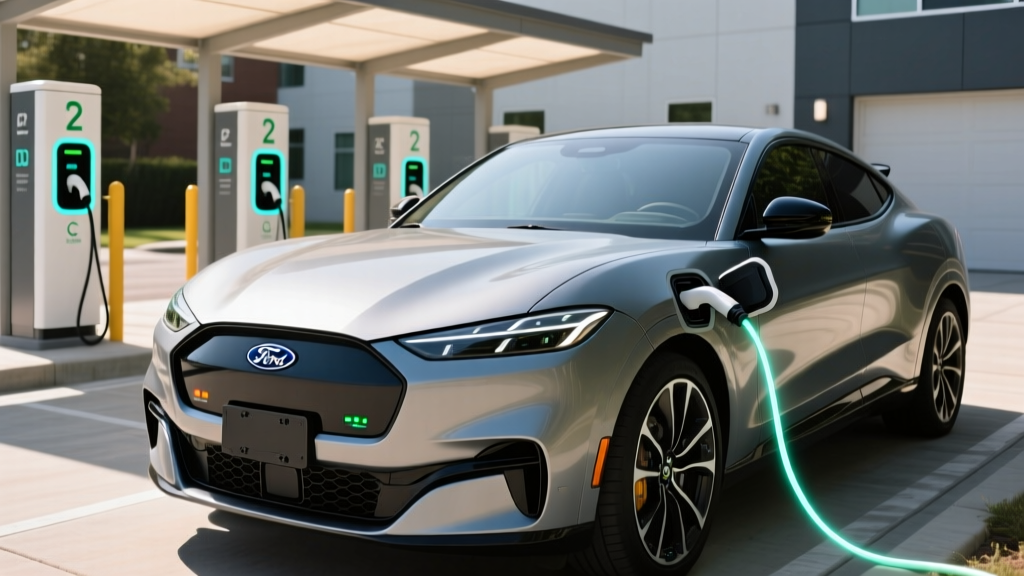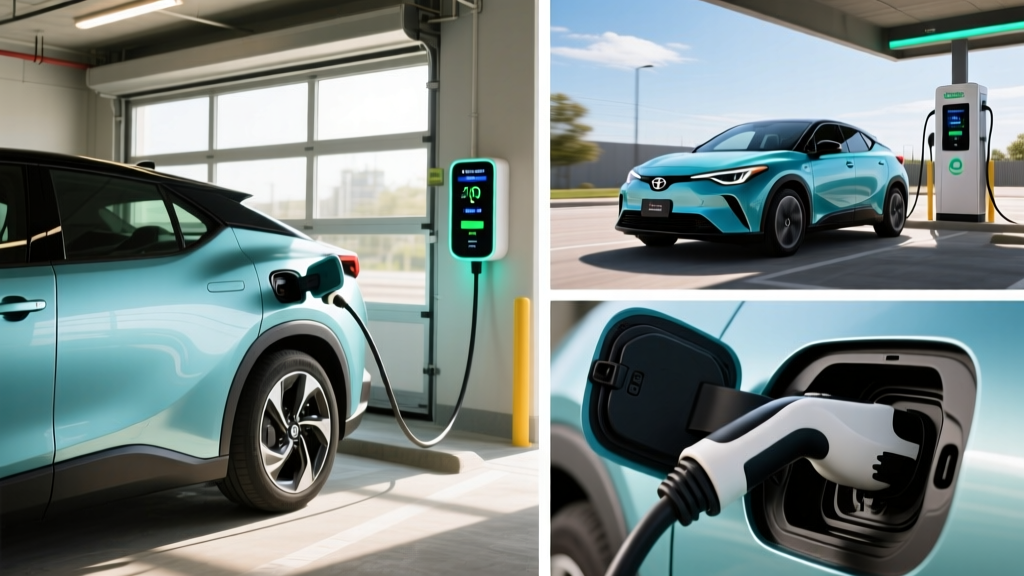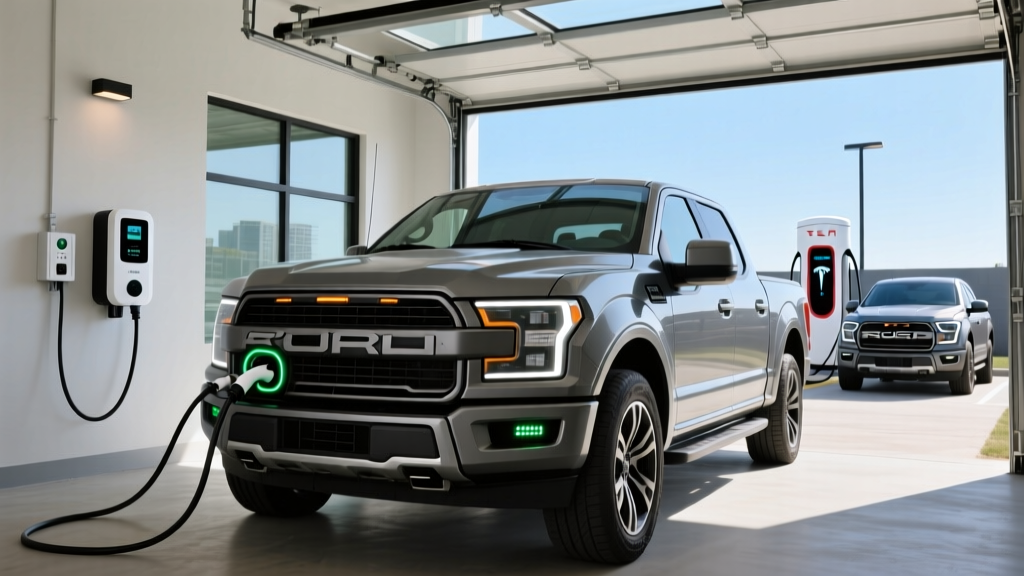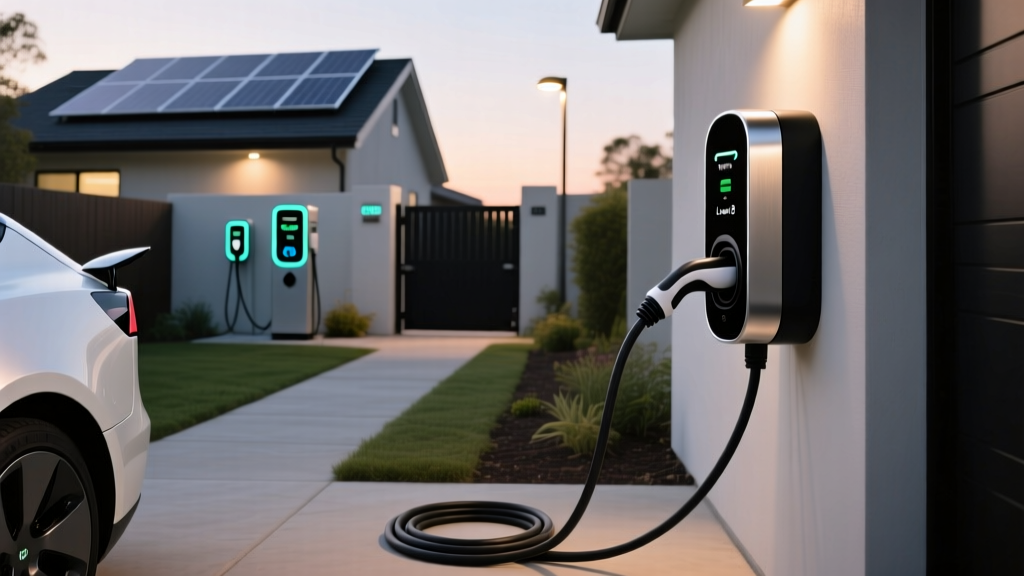
If you're coming from a 2008 Range Rover Supercharged — a vehicle that returns roughly 12 MPG combined and burns through $3,500+ in annual fuel costs — switching to an electric vehicle is a massive economic and experiential shift. But before you hand over the keys on your new EV, you need a charging plan. This guide breaks down every charging level, home installation cost, connector type, and per-mile expense so you can make the transition with complete confidence.
Understanding EV Charging Levels: Speeds That Actually Matter
The single most important distinction in EV charging is between kW (kilowatts) and kWh (kilowatt-hours). Kilowatts measure power — how fast energy flows into your battery, like water pressure from a hose. Kilowatt-hours measure energy — the total amount stored in your battery, like gallons in a tank. A 100 kWh battery charged at 10 kW takes roughly 10 hours. That same battery at 150 kW (DC fast charging) can reach 80% in about 30 minutes.
| Level | Voltage | Max Power (kW) | Miles of Range Added/Hour | Best Use Case |
|---|---|---|---|---|
| Level 1 (120V) | 120V AC | 1.4 – 1.9 kW | 3 – 5 miles | Overnight top-up, PHEVs, emergency |
| Level 2 (240V) | 240V AC | 7.2 – 19.2 kW | 20 – 60 miles | Daily home charging, workplace |
| DC Fast Charging | 400V–800V DC | 50 – 350 kW | 150 – 1,000+ miles/hr (peak) | Road trips, rapid top-ups |
Real-world context: If you're used to stopping at a gas station every 4 days with that 08 Range Rover Supercharged's 22-gallon tank (roughly 264 miles at 12 MPG), a Level 2 home charger refills a typical 80 kWh EV battery overnight — every morning you wake up with a "full tank" of 250–310 EPA-rated miles. Level 1 charging, by contrast, is only practical for plug-in hybrids with smaller batteries or EVs driven less than 30 miles daily.
Home Charger Installation: Electrical Requirements, Costs, and Gotchas
Installing a Level 2 home charger is the single biggest ownership adjustment for former ICE drivers. Here's what's actually involved electrically and financially.
Electrical Requirements
Most Level 2 home chargers require a 240V dedicated circuit — the same voltage as your electric dryer or oven. The amperage determines charging speed:
- 40A circuit → 9.6 kW charging (most common; adds ~32 miles/hour)
- 48A circuit → 11.5 kW charging (adds ~38 miles/hour)
- 60A circuit → 14.4 kW charging (adds ~48 miles/hour; requires heavier wiring)
Per the National Electrical Code (NEC), EV chargers are considered continuous loads, meaning the circuit must be rated for 125% of the charger's draw. A 40A charger requires a 50A breaker. A 48A charger needs a 60A breaker.
Panel Upgrade Reality
Older homes — especially those built before 2000 — often have 100A or 150A main electrical panels that may lack capacity for a dedicated 50A+ circuit. If your panel is near capacity (running electric HVAC, dryer, oven, and water heater), an electrician may recommend a panel upgrade to 200A, which adds significant cost. Some utilities and states offer rebates for panel upgrades tied to EV adoption.
| Component | Cost Range | Notes |
|---|---|---|
| Level 2 Charger (Equipment) | $300 – $700 | Smart Wi-Fi chargers; dumb units from $200 |
| Electrician Labor | $400 – $1,200 | Depends on run length from panel to garage/driveway |
| Electrical Permit | $50 – $200 | Required in most jurisdictions; inspected post-install |
| Wiring & Conduit Materials | $100 – $400 | Longer runs = more copper; 6 AWG wire typical for 50A |
| Panel Upgrade (if needed) | $1,500 – $3,500 | 200A service upgrade; only if existing panel lacks capacity |
| Total (no panel upgrade) | $850 – $2,500 | Most homes with adequate panel capacity |
| Total (with panel upgrade) | $2,350 – $6,000 | Older homes or high-load existing panels |
Always get at least two quotes from licensed electricians and confirm they pull a permit. Unpermitted work can void home insurance claims and complicate future sales. The Alternative Fuels Data Center maintains a state-by-state list of installation rebates and incentives that can offset these costs by $250–$1,000+.
Connector Compatibility: NACS, CCS1, CHAdeMO, and Adapter Needs
The connector landscape has consolidated significantly since the mid-2020s, but your EV's charge port still determines where and how you can plug in.
| Connector | Brands Using It | DC Fast Charge Max | Adapter Needed? |
|---|---|---|---|
| NACS (Tesla standard) | Tesla, Ford, GM, Rivian, Volvo, Polestar, Hyundai/Kia (2025+) | Up to 350 kW | CCS-to-NACS adapter for non-Tesla DC chargers ($150–$250) |
| CCS1 | VW, BMW, Mercedes, Stellantis, legacy Hyundai/Kia | Up to 350 kW | NACS-to-CCS adapter for Tesla Superchargers ($200–$300) |
| CHAdeMO | Nissan Leaf (legacy); discontinued on new US models | Up to 100 kW | Limited adapter options; network declining |
What this means practically: If you buy a 2026 Ford F-150 Lightning or Chevrolet Equinox EV (both NACS-equipped), you get native access to Tesla's Supercharger network — over 25,000 stalls in North America. If your EV still uses CCS1, you'll need a manufacturer-approved adapter to access Superchargers. CHAdeMO is effectively dead for new vehicles; avoid it unless you're buying a used Nissan Leaf.
Charging Time Examples: What to Expect with Common Battery Sizes
Charge times depend on battery capacity (kWh), the charger's power output (kW), and the vehicle's onboard charger limit for AC charging. DC fast charging also follows a charge curve — peak kW is only sustained between roughly 10–50% state of charge (SoC), then tapers significantly above 80% to protect battery longevity.
| Battery Size | Example Vehicles | Level 1 (1.4 kW) | Level 2 (9.6 kW / 40A) | DC Fast 10–80% |
|---|---|---|---|---|
| 60 kWh | Chevy Equinox EV, base Tesla Model 3 RWD | ~43 hours | ~6.5 hours | ~22 min (150 kW peak) |
| 82 kWh | Tesla Model Y LR, Ford Mustang Mach-E ER | ~59 hours | ~8.5 hours | ~25 min (250 kW peak) |
| 100 kWh | Rivian R1S, GMC Sierra EV, Lucid Air | ~71 hours | ~10.5 hours | ~30 min (350 kW peak, 800V) |
| 135 kWh | Rivian R1T Max Pack, Hummer EV | ~96 hours | ~14 hours | ~40 min (350 kW peak) |
Key insight for former Range Rover owners: You're used to a 5-minute fill-up for ~260 miles. A DC fast charger delivering 250 kW adds roughly 200 miles in 15 minutes — not as fast as gas, but sufficient for highway road-trip breaks when paired with rest stops and meal planning. The real advantage is home charging: you'll never visit a "charging station" for daily driving again.
Cost Per Mile: EV Charging vs. Your 08 Range Rover Supercharged
The 2008 Range Rover Supercharged with its 5.0L supercharged V8 averages about 12 MPG combined. At $3.50/gallon, that's $0.292 per mile in fuel alone. Here's how EV charging compares across scenarios:
| Charging Scenario | Rate ($/kWh) | Cost for 80 kWh Fill | Cost Per Mile (3 mi/kWh avg) |
|---|---|---|---|
| Home Off-Peak (utility TOU) | $0.08 – $0.12 | $6.40 – $9.60 | $0.027 – $0.040 |
| Home Standard Rate | $0.14 – $0.18 | $11.20 – $14.40 | $0.047 – $0.060 |
| Public Level 2 (ChargePoint, etc.) | $0.25 – $0.40 | $20.00 – $32.00 | $0.083 – $0.133 |
| DC Fast (Electrify America, EVgo) | $0.35 – $0.55 | $28.00 – $44.00 | $0.117 – $0.183 |
| 2008 Range Rover SC (12 MPG) | $3.50/gal | $77.00 (22-gal tank) | $0.292 |
The bottom line: Home-charging an EV at off-peak rates costs roughly 87% less per mile than fueling a 2008 Range Rover Supercharged. Even exclusive DC fast charging — the most expensive scenario — still saves 37–60% per mile. Over 15,000 annual miles, the savings range from $2,900 (home off-peak) to $1,600 (all DC fast charging) compared to the Range Rover's ~$4,380 annual fuel bill.
Equipment Recommendations: Best Home Chargers for 2026
Not all Level 2 chargers are equal. Here are proven picks based on power output, smart features, build quality, and connector compatibility:
Tesla Wall Connector (Gen 4)
- Power: Up to 11.5 kW (48A)
- Connector: NACS native
- Cable Length: 24 ft
- Smart Features: Wi-Fi, OTA updates, power sharing between units, access control
- Price: ~$475
- Best For: Tesla and NACS-equipped vehicles; cleanest install
ChargePoint Home Flex
- Power: Up to 12 kW (50A, adjustable)
- Connector: NACS or CCS1 (configurable)
- Cable Length: 23 ft
- Smart Features: Wi-Fi, app scheduling, Alexa integration, energy tracking
- Price: ~$550–$650
- Best For: Multi-EV households, CCS1 vehicles
Emporia Vue Level 2 Charger
- Power: Up to 11.5 kW (48A)
- Connector: NACS or J1772 (with adapter)
- Cable Length: 24 ft
- Smart Features: Wi-Fi, solar integration, real-time energy monitoring, TOU scheduling
- Price: ~$400
- Best For: Budget-conscious buyers, solar homes
Grizzl-E Smart
- Power: Up to 10 kW (40A)
- Connector: NACS or J1772
- Cable Length: 24 ft
- Smart Features: Wi-Fi, OCPP compatibility, extreme cold rated (-40°C)
- Price: ~$450
- Best For: Cold climates, outdoor installations, rugged use
Safety, Code, and Installation Best Practices
EV charging is a high-draw, continuous electrical load. Cutting corners here risks fire, code violations, and insurance denial.
- Dedicated circuit: Your charger must be on its own breaker — never shared with other appliances.
- GFCI protection: NEC 2023+ requires ground-fault circuit interrupter protection for outdoor receptacles and many indoor EV installations. Hardwired chargers (no plug) often bypass this requirement and are preferred by many electricians for reliability.
- Outdoor rating: If mounting outside, confirm the charger is NEMA 4 rated (weatherproof). Most quality units are, but cords and connectors should be stored off the ground.
- Hardwired vs. plug-in: Hardwired units eliminate the 14-50 or 6-50 receptacle as a failure point and allow 48A+ circuits. Plug-in units (14-50) offer portability but limit you to 40A continuous (NEC derating on a 50A receptacle).
- Permit and inspection: Required virtually everywhere. An unpermitted install may not be covered by homeowner's insurance in the event of an electrical fire.
The National Fire Protection Association's NEC guidelines govern EV charging installations; your electrician should reference Article 625 specifically.
Frequently Asked Questions
How much does it cost to install a home EV charger?
Most homes with adequate electrical panel capacity will pay $850–$2,500 total (equipment, labor, permit, materials). Homes needing a 200A panel upgrade should budget $2,350–$6,000. Always get itemized quotes and confirm the permit is pulled.
How fast will each charging level add range?
Level 1 (120V) adds 3–5 miles per hour — essentially useless for full EVs but adequate for PHEVs. Level 2 (240V, 40A–48A) adds 20–60 miles per hour and fully recharges most EVs overnight. DC fast charging adds 150–1,000+ miles per hour at peak, with 10–80% fills in 18–40 minutes depending on battery size and charger power.
Which connector/charger is compatible with my EV?
Check your vehicle's charge port. Most 2025+ models from Ford, GM, Rivian, Volvo, and Hyundai/Kia use NACS. VW, BMW, Mercedes, and older Hyundai/Kia models use CCS1. The Nissan Leaf uses CHAdeMO. Adapters exist for cross-compatibility, but native access is always faster and more reliable. See the connector compatibility table above for brand-specific details.
How much does charging cost per mile vs. gas?
Home off-peak charging costs $0.03–$0.04 per mile — roughly 87% less than the 2008 Range Rover Supercharged at $0.29/mile. Even the most expensive DC fast charging ($0.12–$0.18/mile) saves 37–60% over gasoline. Your exact savings depend on local electricity rates, your EV's efficiency (miles per kWh), and driving patterns.
What electrical upgrades might I need?
The most common upgrade is a panel capacity increase from 100A/150A to 200A, needed when your existing panel lacks headroom for a 50A+ dedicated circuit. Signs you may need one: your panel is already near capacity with existing loads, you have a Federal Pacific or Zinsco panel (known fire hazards that insurers may require replaced), or your service drop from the utility is undersized. Budget $1,500–$3,500 for a panel upgrade, and check for local utility rebates that can offset this cost. The IRS §30D tax credit does not cover charger installation directly, but the separate Residential Clean Energy Credit (§25D) has historically offered provisions for energy-storage-related upgrades — consult a tax professional for current-year eligibility.