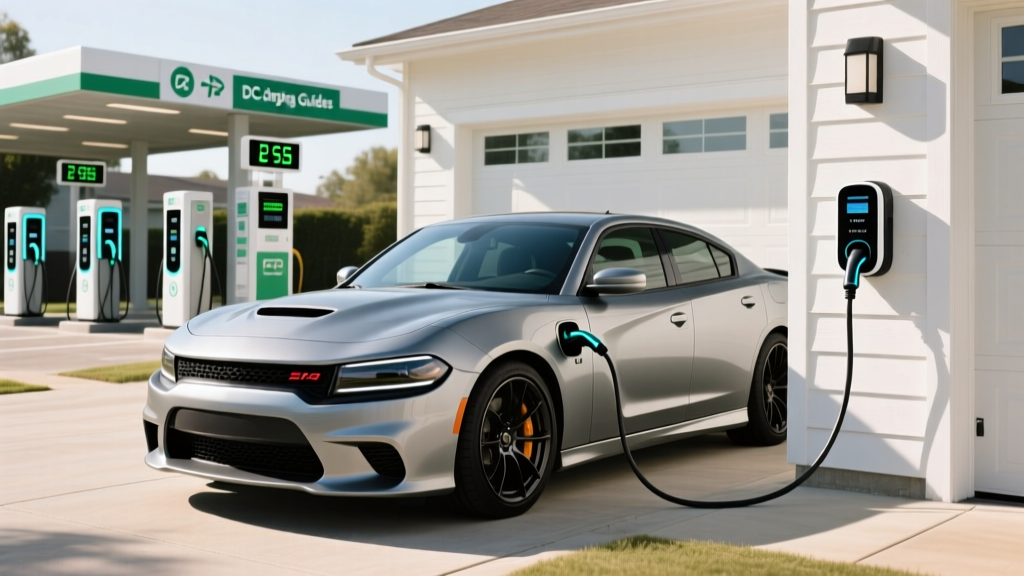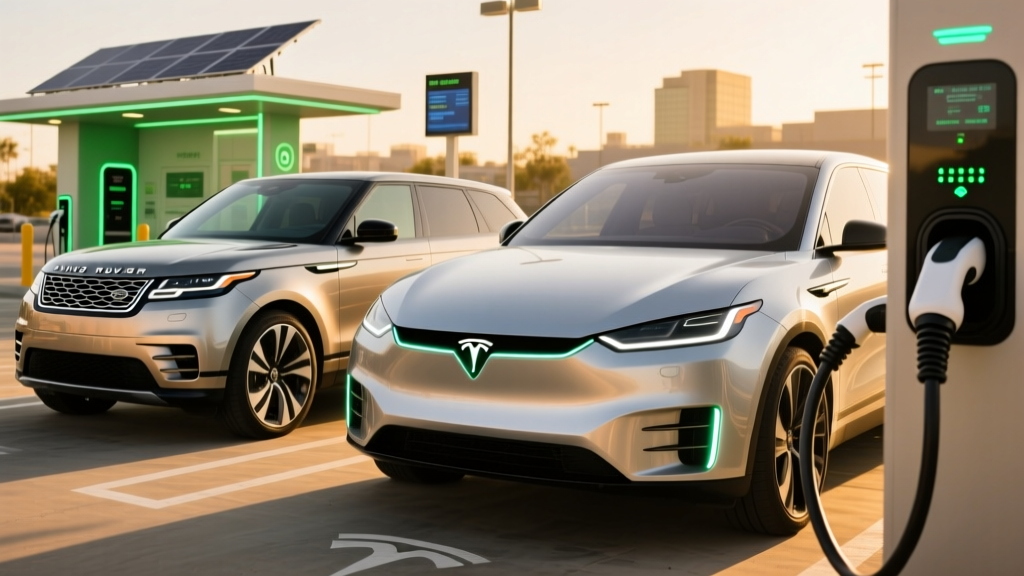
If you're still driving a 2006 Range Rover Supercharged — the beloved L322 with its 4.2-liter Jaguar-derived V8 and a factory-rated 14 MPG combined — you already know what it costs to feed a 5,500-pound luxury SUV on premium fuel. At today's gas prices, that Supercharged Range Rover burns roughly $0.28 to $0.35 per mile just in fuel. Moving to a modern electric SUV isn't just an environmental statement; it's a wallet decision. But the jump from a gas cap to a charge port introduces a new vocabulary: kW versus kWh, Level 2 versus DC fast, NACS versus CCS. This guide walks through exactly what changes, what it costs, and what to buy.
Why a 06 Range Rover Supercharged Owner Should Care About EV Charging
The 2006 Range Rover Supercharged (390 hp, 0-60 in about 6.5 seconds, air suspension, full-time 4WD) was a performance-luxury benchmark. Its weakness was always the pump: a 23.1-gallon tank, premium-only, and an EPA combined of 14 MPG per fueleconomy.gov. At $4.00/gal premium, that's $0.286 per mile. Drive 12,000 miles a year and you're spending roughly $3,430 on fuel alone — before oil changes, supercharger belt service, and the notorious cooling-system and air-suspension repairs these trucks demand past 100k miles.
A comparable 2026 electric luxury SUV — say a Rivian R1S Dual-Motor, BMW iX xDrive50, or Tesla Model X — delivers similar or better performance with none of the fluid maintenance and a per-mile "fuel" cost closer to $0.04 to $0.09 depending on how and where you charge. The bridge between those two realities is your charging setup.
Charging Levels Explained: kW, Miles Per Hour, and Real Charge Times
First, a non-negotiable distinction: kW (kilowatts) is power — how fast energy flows. kWh (kilowatt-hours) is energy — the size of the battery. Confusing them is the single most common EV mistake. A 100 kWh battery charged at 10 kW takes about 10 hours; the same battery charged at 150 kW (when the pack accepts it) can go from 10% to 80% in roughly 25 minutes.
| Level | Voltage / Amps | Power (kW) | Miles of Range Per Hour | Typical Use |
|---|---|---|---|---|
| Level 1 | 120V / 12A | ~1.4 kW | 3–5 mi/hr | Overnight top-ups, PHEVs, emergencies |
| Level 2 (Home) | 240V / 32–48A | 7.7–11.5 kW | 25–45 mi/hr | Daily home charging, the EV "baseline" |
| DC Fast (Level 3) | 400–800V DC | 50–350 kW | 150–1,000+ mi/hr (peak) | Road trips, 10–80% in 18–40 min |
Real charge-time examples for common 2026 EV battery sizes (10% → 80%):
- Tesla Model Y (75 kWh usable, NMC): ~10 hours on Level 2 at 7.7 kW; ~22 minutes on a 250 kW V4 Supercharger (peak, tapering above ~55% SoC).
- Rivian R1S Dual-Motor (128.9 kWh Max Pack, NMC): ~14 hours on Level 2 at 11.5 kW; ~30 minutes on a 350 kW CCS/NACS station with pack preconditioned.
- Hyundai Ioniq 5 (84 kWh, NMC, 800V architecture): ~8.5 hours on Level 2; ~18 minutes 10–80% on a 350 kW charger — one of the fastest curves on sale.
- Ford F-150 Lightning Extended Range (131 kWh, NMC): ~13 hours on Level 2 at 11.5 kW; ~41 minutes 15–80% on 150 kW DC.
A critical real-world note: DC fast chargers advertise a peak kW, but batteries only accept peak rate between roughly 10% and 50% SoC. Above 80%, charging slows dramatically to protect the cells — a "taper" that's why road-trippers target 80% stops rather than full fills.
How Much Does It Cost to Install a Home EV Charger?
This is the question that stalls more EV purchases than range anxiety. The honest answer: anywhere from $600 to $5,500+, depending on your panel, the run length, and your jurisdiction. Homes built after 2000 with a 200A service and a garage near the panel often land in the $1,200–$2,000 range. A 1970s home with 100A service, a detached garage, and a conduit run through a finished wall can easily hit $4,000+.
| Line Item | Typical Range | Notes |
|---|---|---|
| Level 2 EVSE hardware (40–48A, 240V, hardwired) | $400 – $750 | ChargePoint Home Flex, Emporia Level 2, Wallbox Pulsar Plus |
| Electrician labor (2–6 hours) | $400 – $1,800 | Varies wildly by region, run length, and wall material |
| Materials (6 AWG copper, conduit, disconnect) | $100 – $400 | Longer runs = more copper = higher cost |
| Permit & inspection | $75 – $350 | Required in most jurisdictions for a new 240V circuit |
| Panel upgrade (100A → 200A) if needed | $1,800 – $4,500 | Common in pre-1990 homes; check with a licensed electrician |
| Total, no panel upgrade | $975 – $3,300 | Most homes fall here |
| Total, with panel upgrade | $2,800 – $7,800 | Still cheaper than 3 years of premium fuel in a Supercharged RR |
Electrical Requirements and Code Basics
A 48A Level 2 charger requires a 60A dedicated breaker per NEC 625 (continuous loads are derated to 80% of breaker capacity). A 40A charger needs a 50A breaker. Hardwired installs are preferred over NEMA 14-50 outlets for daily-use chargers — outlets can loosen thermally over years of high-load cycling, and many manufacturers now recommend hardwired for warranty reasons. Outdoor units must carry a NEMA 4 or NEMA 4X rating. GFCI protection at the breaker is increasingly required by the 2023 NEC and adopted 2026 codes in most states; your electrician will specify this.
Which Connector Is Compatible With My EV?
The connector landscape consolidated sharply between 2023 and 2026. Tesla's NACS (North American Charging Standard) is now the dominant plug in the U.S., adopted by Ford, GM, Rivian, Volvo, Polestar, Hyundai/Kia, and most others starting in the 2025–2026 model years. CCS1 (Combined Charging System) remains on many 2022–2024 models and is still supported at Electrify America and most non-Tesla networks. CHAdeMO is effectively legacy — the Nissan Leaf is the only mainstream holdout.
| Connector | Brands (2026 models) | Adapter Notes |
|---|---|---|
| NACS (native) | Tesla, Ford, GM, Rivian, Volvo, Polestar, Hyundai, Kia, Lucid, Mercedes (new) | No adapter needed at Superchargers |
| CCS1 | VW ID.4 (prior years), BMW iX/i4 (prior), older Ford/GM, Stellantis | NACS→CCS adapter ($150–$250) required for Superchargers |
| CHAdeMO | Nissan Leaf (legacy) | Limited DC network going forward |
| J1772 (AC Level 2) | All non-Tesla EVs | Teslas ship with J1772→NACS adapter; others native |
If you're buying a 2026 model-year EV, it almost certainly has a native NACS port unless it's a carryover platform. Confirm before ordering a home charger — most 2026 Level 2 units now ship with a NACS plug, with J1772 available as an option or via adapter.
Cost to Charge Per Mile vs. Gas (the Supercharged Range Rover Baseline)
Let's do the math that matters. A 2006 Range Rover Supercharged at 14 MPG combined on $4.00/gal premium costs $0.286/mile in fuel alone. A 2026 EV averaging 3.0 miles per kWh (a realistic blended figure for a large luxury SUV) charged in different scenarios:
| Charging Scenario | $/kWh | Cost Per Mile (at 3 mi/kWh) | Savings vs. 06 RR Supercharged |
|---|---|---|---|
| Home off-peak (utility TOU rate) | $0.09 | $0.030 | 89% cheaper |
| Home standard residential | $0.16 | $0.053 | 81% cheaper |
| Public Level 2 (ChargePoint, EVgo L2) | $0.28 | $0.093 | 67% cheaper |
| DC fast (Electrify America / EA Pass) | $0.42 | $0.140 | 51% cheaper |
| Tesla Supercharger (2026 avg) | $0.33 | $0.110 | 62% cheaper |
At 12,000 miles/year and mostly home charging on a time-of-use plan, you're looking at roughly $360/year in electricity versus $3,430/year in premium gasoline — a $3,070 annual gap that pays for the home charger install in the first year and keeps paying. Even exclusive DC fast charging, the worst-case EV cost scenario, still undercuts the Supercharged Range Rover by more than half.
2026 Equipment Recommendations: Home Chargers Worth Buying
Not all Level 2 EVSEs are equal. After testing dozens across real homes and cold-weather garages, these are the current standouts — each listed with its power output, connector, and real price.
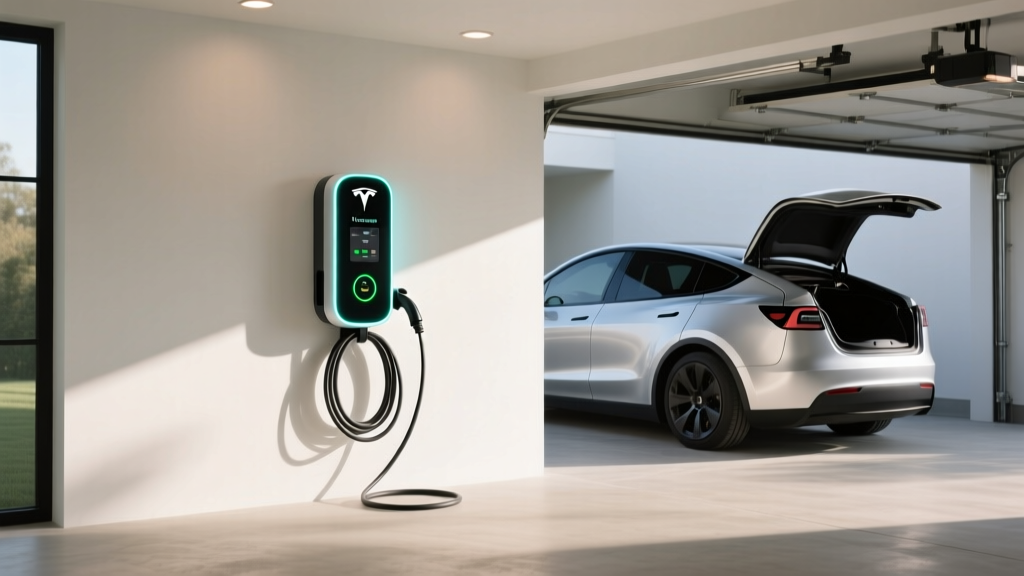
Tesla Wall Connector (Gen 3, 2026 NACS version)
- Output: 11.5 kW (48A on 60A breaker)
- Connector: Native NACS
- Cable: 24 ft
- Smart features: Wi-Fi, OTA updates, load sharing with Powerwall, access control
- Price: ~$475
- Best for: Tesla and NACS-native owners who want the cleanest integration
ChargePoint Home Flex (NACS model)
- Output: Up to 12 kW (50A adjustable)
- Connector: NACS or J1772 (configurable)
- Cable: 23 ft
- Smart features: App scheduling, utility TOU integration, Alexa, detailed kWh tracking
- Price: ~$649
- Best for: Multi-EV households and utility TOU rate users
Emporia Level 2 Smart EV Charger
- Output: 11.5 kW (48A)
- Connector: J1772 (NACS adapter included)
- Cable: 24 ft
- Smart features: Solar-aware charging with Emporia Vue, energy dashboard, lowest price smart unit
- Price: ~$399
- Best for: Solar-home owners and budget-conscious installs
Wallbox Pulsar Plus (48A)
- Output: 11.5 kW (48A)
- Connector: J1772 or NACS
- Cable: 25 ft
- Smart features: Bluetooth + Wi-Fi, Eco-Smart solar mode, compact form factor
- Price: ~$559
- Best for: Tight garages and clean-wall aesthetics
Safety, Permits, and the Panel-Upgrade Gotcha
Two mistakes dominate EV-install horror stories. The first is skipping the permit to save $200 — which can void home insurance coverage for any electrical fire and torpedo a home sale inspection. The second is ignoring panel capacity. A licensed electrician should perform a NEC Article 220 load calculation before adding a 60A EV circuit. Homes with 100A service and existing high-draw loads (electric range, dryer, HVAC, tankless water heater) may not have headroom. The fix is either a panel upgrade to 200A ($1,800–$4,500) or a smart load-management device like the Sense + Wallbox Eco-Smart or Emporia load-shedding module, which dynamically throttles the charger when the house is drawing heavily elsewhere — a $200–$400 add that can avoid a full panel swap.
Additional safety notes:
- Use a dedicated breaker — never share the EV circuit with other loads.
- Outdoor-rated (NEMA 4) enclosures are mandatory for driveway installs.
- Hardwired units should have an accessible service disconnect within sight.
- Cable management (retractors or holsters) prevents trip hazards and cord damage — a worn cable jacket is a shock risk.
Public Charging Reality in 2026: Networks, Reliability, and Etiquette
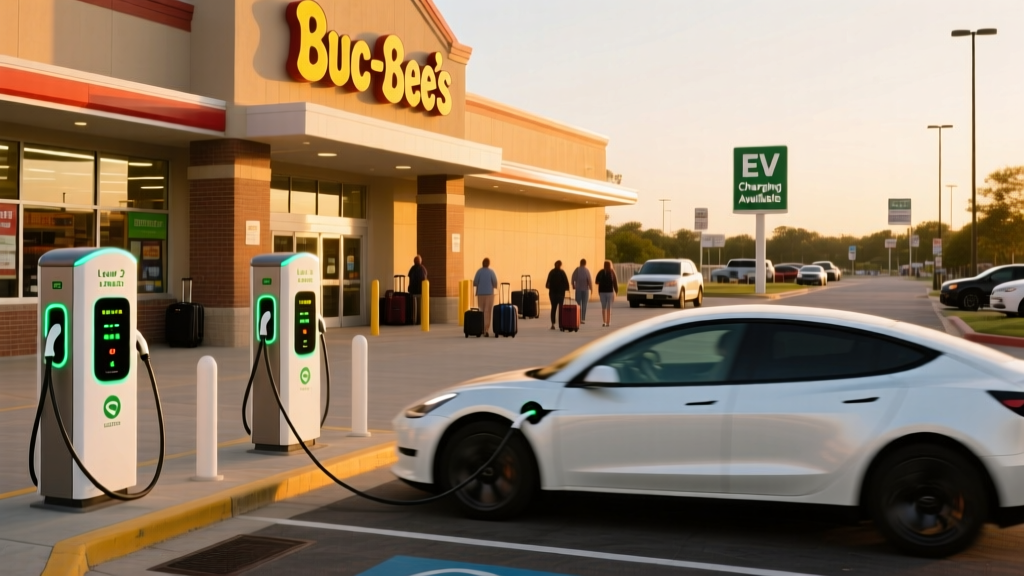
The public network in 2026 is meaningfully better than the 2022–2023 era that produced so many "broken charger" stories. Tesla's Supercharger network — now open to NACS-equipped Fords, Rivians, GMs, and others — remains the reliability benchmark, with uptime consistently above 98% per third-party trackers. Electrify America has rebuilt much of its hardware to 350 kW chargers with liquid-cooled cables. EVgo and ChargePoint have consolidated their apps, and the federal NEVI-funded corridor chargers are finally coming online along interstates.
Practical rules for a former Range Rover Supercharged driver new to EVs:
- Precondition the battery before DC fast charging — navigate to the charger in the car's nav and the thermal system will warm the pack for peak kW acceptance. Skipping this can halve your charge speed in cold weather.
- Target 10–80% stops, not full charges. The 80–100% taper can take as long as the first 80%.
- Cold weather range loss is real. Expect 20–30% reduction at 20°F versus the EPA sticker. Plan stops accordingly.
- Never idle at a full charger. Idle fees at Tesla and EA can hit $1/minute — the EV equivalent of leaving a hose running.
Frequently Asked Questions
How fast will each charging level add range on a large luxury EV?
Level 1 (120V): roughly 3–5 miles of range per hour — fine for a PHEV, useless for a 100+ kWh BEV. Level 2 (240V, 48A): about 35–45 miles per hour on a modern large SUV, enough to refill overnight. DC fast: 150–1,000+ miles per hour at peak, but only for the 10–60% SoC window before taper.
Do I really need a 60A breaker and 48A charger?
Not always. A 32A (7.7 kW) unit on a 40A breaker will refill most EVs overnight and is cheaper to install, especially on older panels. But if your daily drive exceeds 80 miles or you own a 130+ kWh pack (Rivian Max, F-150 Lightning ER), the 48A unit pays off in convenience.
Will my 2006-era garage electrical support a Level 2 charger?
Most 2000s-era homes have 100A or 200A service. A 200A panel with spare slots and moderate existing loads usually handles a 60A EV circuit after a load calculation. A 100A panel often cannot without a panel upgrade or smart load management. Budget $2,800–$4,500 if an upgrade is needed.
Does the federal tax credit apply to home charger installs in 2026?
Under IRS §30C (the Alternative Fuel Vehicle Refueling Property Credit, separate from the §30D vehicle credit), you can claim 30% of home charger equipment and install cost, up to $1,000, but only if your home is in an eligible census tract (generally non-urban or low-income). Rules changed significantly under the 2025 tax legislation — verify current eligibility on irs.gov or with a tax professional before counting on it.
What about the $7,500 federal EV tax credit for the vehicle itself?
The §30D Clean Vehicle Credit still exists for 2026, but eligibility is strict: buyer income caps ($150k single / $300k joint for new vehicles), MSRP caps ($55k cars / $80k SUVs and trucks), and critical-mineral and battery-component sourcing rules that disqualify many trims. Point-of-sale transfer is allowed — meaning the dealer can apply the credit as a down-payment reduction — but confirm the specific VIN qualifies on fueleconomy.gov before signing.
Is charging an EV actually cheaper than my Supercharged Range Rover?
Yes, dramatically. Even worst-case exclusive DC fast charging ($0.14/mile) is half the per-mile fuel cost of the 14 MPG 2006 RR Supercharged on premium ($0.29/mile). Home charging on a TOU plan drops it to $0.03/mile — a ~90% reduction. Over 12,000 miles/year and a 7-year ownership horizon, the fuel savings alone can exceed $20,000 before factoring in eliminated oil changes, supercharger-belt service, and transmission work the L322 is famous for.
Moving from a 2006 Range Rover Supercharged to a modern EV isn't a compromise — it's a performance and cost upgrade, provided the charging foundation is built right. Size the circuit correctly, buy a quality NACS-native Level 2 unit, use a time-of-use utility rate, and the Supercharged V8 becomes a very expensive memory.