If you're still driving a 2006 Range Rover Sport Supercharged — that supercharged 4.2L V8 gulping premium fuel at roughly 13 mpg city / 18 mpg highway — the math for going electric has become hard to ignore. With premium gas hovering around $4.50–$5.00 per gallon in much of the country, that thirsty AJ-V8 costs roughly $0.30–$0.35 per mile just in fuel. A modern EV on home Level 2 power? Closer to $0.04–$0.06 per mile. But before you trade the Sport for a Rivian R1S, BMW iX, or Mercedes EQS SUV, the real question is: can your home actually charge it?
This guide walks through exactly what's required to install a home EV charger in 2026, from electrical panel capacity to connector standards, with honest cost breakdowns for homes that may need upgrades — especially older builds from the same era as your 06 Range Rover.
Charging Levels Explained: kW, Miles Per Hour, and Real-World Speeds
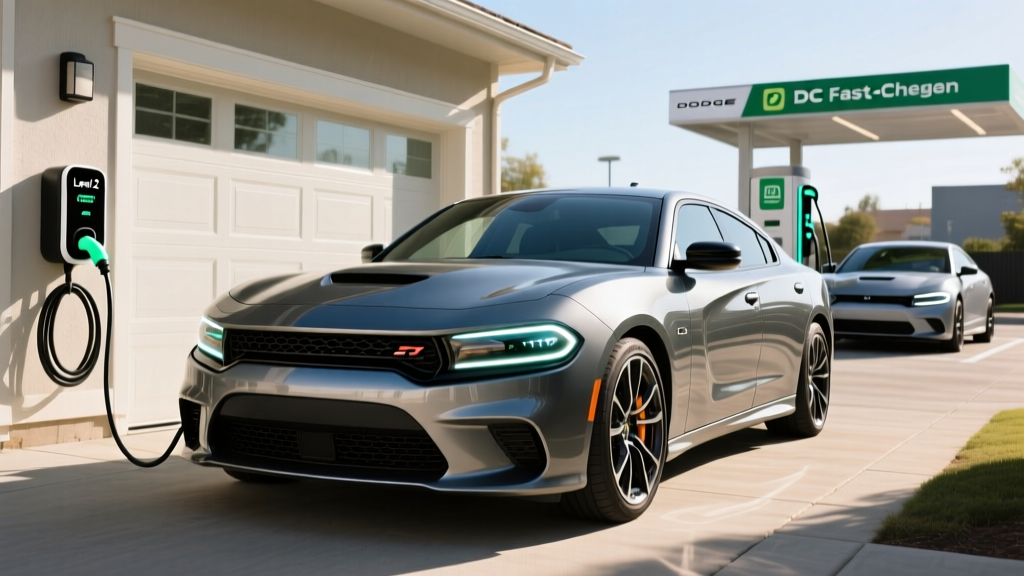
Before buying equipment, you need clarity on the three charging levels. The critical distinction: kW (kilowatts) measures power — how fast energy flows. kWh (kilowatt-hours) measures energy — the size of the battery being filled. A 100 kWh battery charged at 10 kW takes roughly 10 hours. Simple math, but the most common EV confusion point.
| Level | Voltage / Amps | Power (kW) | Miles of Range Per Hour | Typical Use |
|---|---|---|---|---|
| Level 1 | 120V / 12A | ~1.4 kW | 3–5 mi/hr | Overnight top-up, PHEVs, emergencies |
| Level 2 | 240V / 32–48A | 7.7–11.5 kW | 25–44 mi/hr | Primary home charging |
| DC Fast | 400–800V DC | 50–350 kW | 150–1,000+ mi/hr (peak) | Road trips, public stations |
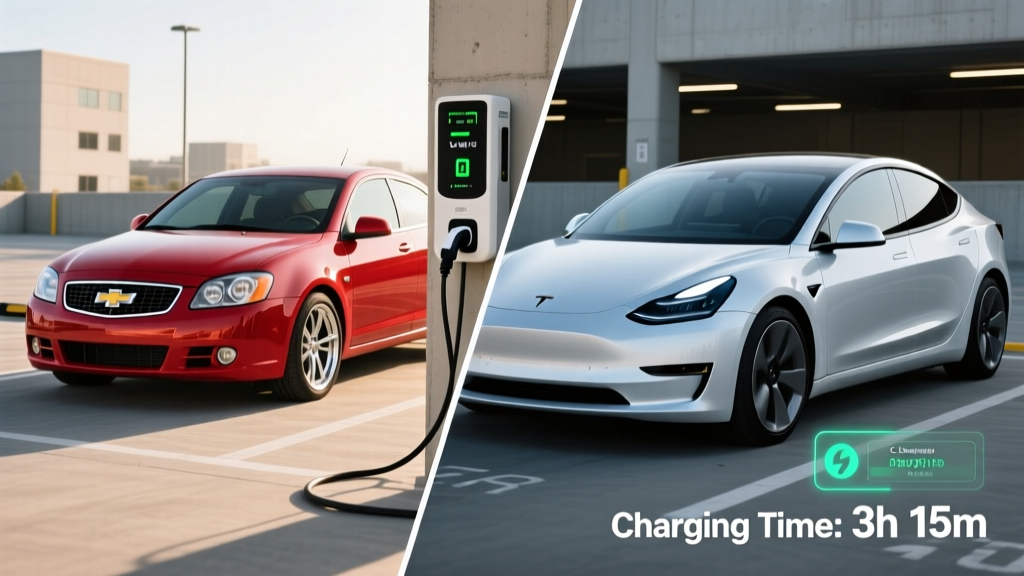
For a large-battery EV like a Rivian R1S Dual-Motor (roughly 128 kWh usable), Level 1 would take days to fill from empty. Level 2 at 11.5 kW refills about 80% overnight in roughly 9 hours. DC fast charging on a 350 kW Electrify America or Tesla Supercharger V4 stall can push 10–80% in 20–25 minutes, though charge curves taper significantly above 80% State of Charge (SoC) to protect battery health.
How Much Does It Cost to Install a Home EV Charger?
The honest answer: anywhere from $500 to $4,500+, depending on your panel, conduit run distance, and local code. Homes built in the mid-2000s — the same vintage as a 2006 Range Rover Sport Supercharged — often have 100A or 150A panels that may already be near capacity. Here's a realistic 2026 breakdown:
| Component | Low End | Typical | High End |
|---|---|---|---|
| Level 2 EVSE hardware (smart charger) | $350 | $550 | $750 |
| Electrician labor (2–6 hours) | $400 | $900 | $1,800 |
| Materials (conduit, wire, NEMA 14-50 or hardwire) | $100 | $250 | $600 |
| Permit and inspection | $50 | $150 | $350 |
| Panel upgrade (100A→200A, if needed) | $1,500 | $2,500 | $4,500 |
| Total (no panel upgrade) | $900 | $1,850 | $3,500 |
| Total (with panel upgrade) | $2,400 | $4,350 | $8,000 |
The IRS Residential Clean Energy Credit (§25D) covers 30% of EVSE equipment and installation costs through 2032, capped at $1,000 annually. That can knock $300–$600 off a standard install. Check with a tax professional for eligibility.
What Electrical Upgrades Might Your Home Need?
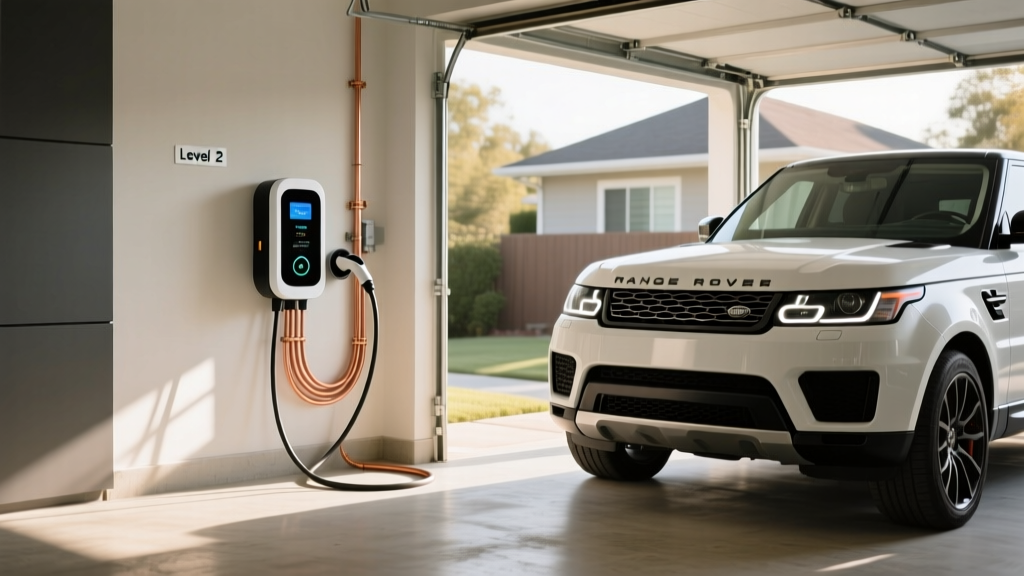
A Level 2 charger on a 48-amp circuit requires a dedicated 60-amp breaker (NEC continuous-load rules require circuits rated 125% of the charger's max draw). Here's the decision tree:
- 200A panel with spare capacity: straightforward install, typically $900–$2,000 total.
- 100A or 150A panel near capacity: you'll need a load calculation. An electrician will tally existing loads (HVAC, dryer, range, water heater). If headroom is tight, you have three options: panel upgrade, a lower-amperage charger (32A on a 40A circuit), or a smart load-management device like the Emporia V2 with automatic panel monitoring.
- Older wiring (aluminum, knob-and-tube): full rewire of the circuit run, potentially $500–$1,500 additional.
- Detached garage or long conduit runs (100+ ft): wire gauge must increase (typically #4 AWG copper for 60A at distance), adding $200–$500 in materials.
Homes from 2006 were often built with 200A service as standard, but luxury loads — dual HVAC, electric range, pool pump, hot tub — can eat that capacity fast. Always get a licensed electrician to perform a load calculation before purchasing equipment.
Connector Compatibility: NACS, CCS1, and CHAdeMO in 2026
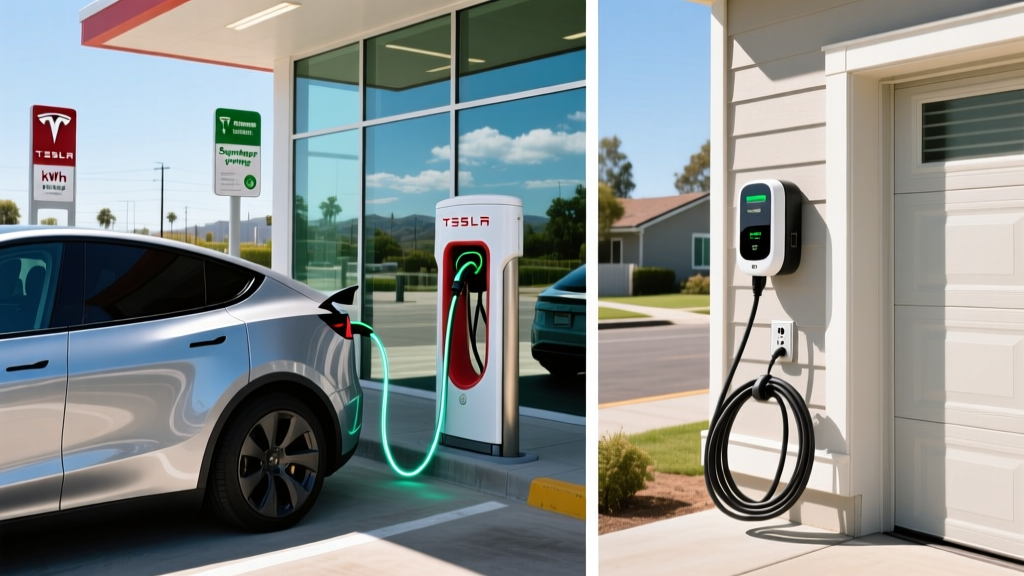
The connector landscape has consolidated dramatically. As of 2026, the North American Charging Standard (NACS), developed by Tesla, is the dominant connector. Nearly every major automaker — Ford, GM, Rivian, Hyundai, Kia, BMW, Mercedes — has adopted NACS for new vehicles. CCS1 remains on older models and some 2024–2025 vehicles. CHAdeMO is effectively legacy (Nissan Leaf only).
| Connector | Brands Using It (2026) | Home Charger Availability |
|---|---|---|
| NACS (Tesla-style) | Tesla, Ford, GM, Rivian, Hyundai, Kia, BMW, Mercedes, Volvo, Polestar | Tesla Wall Connector, ChargePoint Home Flex (NACS), Emporia V2 (NACS) |
| CCS1 | VW ID.4 (older), some 2024–2025 Hyundai/Kia, legacy models | ChargePoint Home Flex (CCS), Emporia V2 (CCS) |
| CHAdeMO | Nissan Leaf (discontinued 2025, used market only) | Limited; most charger makers dropped it |
If you own a CCS1-equipped EV but want future-proofing, several NACS-to-CCS adapters are available (Tesla's official adapter runs ~$200, and third-party options from Lectron and A2Z exist). For home Level 2 charging, the J1772 standard was universal for non-Tesla EVs; NACS-to-J1772 adapters are inexpensive (~$50–$100).
Cost to Charge: Home vs. Public vs. Gas — Real Numbers
Let's compare the per-mile fuel cost of that 06 Range Rover Sport Supercharged against a typical large electric SUV. The Range Rover's combined EPA was roughly 15 mpg on premium fuel. At $4.75/gal premium, that's $0.317 per mile.
| Scenario | Rate | Cost Per Mile (3 mi/kWh EV) | Cost Per Mile (15 mpg Gas SUV) |
|---|---|---|---|
| Home Level 2 (off-peak utility rate) | $0.12/kWh | $0.04 | $0.32 |
| Home Level 2 (national avg residential) | $0.17/kWh | $0.06 | $0.32 |
| Public Level 2 (ChargePoint, EVgo) | $0.30/kWh | $0.10 | $0.32 |
| DC Fast Charging (Electrify America) | $0.48/kWh | $0.16 | $0.32 |
| Tesla Supercharger (avg 2026) | $0.35/kWh | $0.12 | $0.32 |
Even at the most expensive DC fast-charging rates, the EV costs roughly half per mile compared to the supercharged V8. At home off-peak rates, you're spending one-eighth the fuel cost. Over 15,000 miles annually, that's a $4,100+ savings — enough to pay for your home charger install in the first year.
Charging Time Examples: 10–80% for Common Battery Sizes
Charge times depend on battery size (kWh), charger power (kW), and the vehicle's onboard charger limit. Most EVs accept 11.5 kW on Level 2; some (like the Lucid Air) can take 22 kW with dual onboard chargers. DC fast charging is limited by the vehicle's peak acceptance rate and charge curve taper.
| Vehicle Type | Battery (kWh usable) | Level 2 @ 11.5 kW | DC Fast (peak kW) | DC 10–80% Time |
|---|---|---|---|---|
| Compact EV (Chevy Equinox EV) | 85 kWh | ~6 hours | 150 kW | ~32 min |
| Midsize EV (Hyundai Ioniq 5) | 77.4 kWh | ~5.5 hours | 240 kW (800V) | ~18 min |
| Large SUV (Rivian R1S) | 128 kWh | ~9 hours | 220 kW | ~35 min |
| Luxury sedan (BMW i7) | 101.7 kWh | ~7.5 hours | 195 kW | ~34 min |
| PHEV (Toyota RAV4 Prime) | 18.1 kWh | ~2.5 hours (3.3 kW onboard) | N/A (no DC fast) | N/A |
Note the charge curve reality: peak kW is sustained only between roughly 10–50% SoC. Above 80%, speeds drop dramatically — a 240 kW-capable Ioniq 5 might taper to 40 kW by 90%. This is why road-trip strategy targets 10–80% charges rather than full fills.
Recommended Level 2 Home Chargers for 2026
Tesla Wall Connector (NACS)
Power: up to 11.5 kW (48A on 60A circuit)
Connector: NACS native
Cable: 24 ft
Smart features: Wi-Fi, OTA updates, Power Share (load balancing with second unit), Tesla app scheduling
Price: ~$475
Best for: Tesla and NACS-adopted vehicles; cleanest integration
ChargePoint Home Flex (NACS or J1772)
Power: up to 12 kW (50A, configurable down to 16A)
Connector: NACS or J1772 (configurable)
Cable: 23 ft
Smart features: Wi-Fi, Alexa, ChargePoint app, flexible amperage for older panels
Price: ~$599
Best for: Homes needing adjustable amperage; multi-EV households
Emporia V2 (NACS or J1772)
Power: up to 11.5 kW (48A)
Connector: NACS or J1772
Cable: 24 ft
Smart features: Real-time energy monitoring, solar integration, load management with panel sensors
Price: ~$399
Best for: Budget-conscious buyers; solar homes; panel load management
Grizzl-E Smart (J1772 / NACS adapter)
Power: up to 10 kW (40A)
Connector: J1772 (NACS via adapter)
Cable: 24 ft
Smart features: OCPP-compatible, app scheduling, built-in GFCI
Price: ~$449
Best for: Cold-climate durability (rated to -40°F); Canadian-built
Safety, Code, and Installation Best Practices
EV charging is a continuous load — the NEC (National Electrical Code) treats it differently than intermittent appliances. Key requirements:
- Dedicated circuit: Your EVSE must have its own breaker, not shared with other outlets or appliances.
- GFCI protection: Required for outdoor receptacles (NEMA 14-50) in most jurisdictions as of NEC 2020/2023. Hardwired units often bypass this requirement (the EVSE has internal ground-fault protection).
- Outdoor rating: If installing outside, the EVSE must be NEMA 4 rated (weatherproof). All four chargers above meet this standard.
- Permit and inspection: Required in virtually all US jurisdictions. Skipping the permit risks insurance denial if an electrical fire occurs and can flag issues during home resale.
- Wire gauge: #6 AWG copper for 48A chargers on a 60A circuit at short runs; #4 AWG for longer runs (100+ ft) to minimize voltage drop.
- Hardwire vs. plug: Hardwiring is preferred for 48A+ installations — it eliminates the NEMA 14-50 receptacle as a failure point and is often required above 40A continuous draw in some jurisdictions.
Always hire a licensed electrician familiar with EVSE installs. The National Fire Protection Association (NFPA) publishes the NEC, and local amendments vary by city and state.
FAQ: Your Home EV Charging Questions Answered
How fast will each charging level add range?
Level 1 (120V) adds 3–5 miles per hour — fine for a PHEV with a 30-mile battery, impractical for a 100+ kWh EV. Level 2 (240V, 48A) adds 30–44 miles per hour depending on vehicle efficiency, easily refilling most EVs overnight. DC fast charging adds 150–1,000+ miles per hour at peak, but tapers above 80% SoC.
Which connector is compatible with my EV?
Check your vehicle's charge port. 2025–2026 models from Tesla, Ford, GM, Rivian, Hyundai, Kia, and BMW use NACS. Older CCS1 vehicles can use adapters. The Nissan Leaf (now discontinued) used CHAdeMO. For home Level 2, J1772 was universal for non-Tesla EVs; NACS-to-J1772 adapters are widely available.
How much does charging cost per mile vs. my old Range Rover?
An 06 Range Rover Sport Supercharged at 15 mpg on $4.75 premium costs roughly $0.32/mile. A modern EV charged at home at $0.17/kWh costs about $0.06/mile — an 81% reduction. Even public DC fast charging at $0.48/kWh costs ~$0.16/mile, still half the gas cost.
What if my panel can't handle a 60-amp circuit?
Three options: (1) Install a lower-amperage charger (32A on a 40A circuit), which still adds ~25 miles/hour. (2) Use a smart load-management system like Emporia's panel sensors that throttle the charger when other loads spike. (3) Upgrade to a 200A panel — typically $1,500–$4,500 depending on your utility and local code.
Is the federal tax credit available for home charger installation?
The IRS §25D Residential Clean Energy Credit covers 30% of EVSE equipment and installation costs through 2032, with a $1,000 annual cap. This is separate from the §30D vehicle purchase credit. Consult a tax professional for your specific eligibility, as income limits and property-type rules apply.
Making the jump from a supercharged V8 Range Rover to an electric SUV is one of the more dramatic ownership shifts you can make — but the home charging infrastructure is simpler and cheaper than most buyers expect. Get a load calculation done, pick a smart charger that matches your panel capacity, and the daily fueling ritual becomes plugging in when you park and waking up to a full battery every morning.