From Supercharged to Electrified: A Real-World Ownership Pivot
The 2006 Chevrolet Cobalt SS Supercharged holds a cult following. Its 2.0L Ecotec LSJ engine, belting out 205 horsepower and 200 lb-ft of torque through a five-speed manual, delivered 0-60 mph in roughly 6.0 seconds and an EPA-rated 23 city / 32 highway mpg on premium fuel. For enthusiasts on a budget, it was a legitimate pocket rocket. But nearly two decades later, owners face rising maintenance costs, scarce supercharger-specific parts (the Eaton M62 roots-type blower isn't exactly stocking shelves), and fuel prices that make the 23 mpg combined figure sting.
This guide uses the Cobalt SS as a baseline to answer a practical question: what does it actually cost and require to switch to a 2026 EV, and how do charging logistics compare to filling up at the pump? We break down every charging level, home installation reality, connector compatibility, and per-mile cost with exact numbers.
Charging Levels Explained: kW, Speed, and What Each Delivers
Before anything else, a critical distinction: kW (kilowatts) measures power — the rate at which energy flows into the battery. kWh (kilowatt-hours) measures energy — the total capacity of the battery itself. Think of kW as the width of a hose and kWh as the size of the bucket. You'll see both used throughout this guide, and confusing them is the single most common mistake in EV research.
| Level | Voltage | Max Power (kW) | Miles of Range Added Per Hour | Typical Use Case |
|---|---|---|---|---|
| Level 1 | 120V AC | 1.4 – 1.9 kW | 3 – 5 miles | Overnight top-up, PHEVs, emergency |
| Level 2 | 240V AC | 7.2 – 19.2 kW | 20 – 75 miles | Home daily charging, workplace, destinations |
| DC Fast Charge | 400V – 800V DC | 50 – 350 kW | 180 – 1,200+ miles (peak rate) | Road trips, highway corridors, quick stops |
For context, a 2026 Chevrolet Equinox EV with an 85 kWh (usable) battery and 315 miles of EPA range would take roughly 45 hours on Level 1, about 10 hours on a 9.6 kW Level 2 home charger, and approximately 22 minutes (10-80%) on a 150 kW DC fast charger. Real-world DC charging always tapers above 80% state of charge (SoC) — the peak kW rating is never sustained across the full curve.
Home Charger Installation: Electrical Requirements and Real Costs
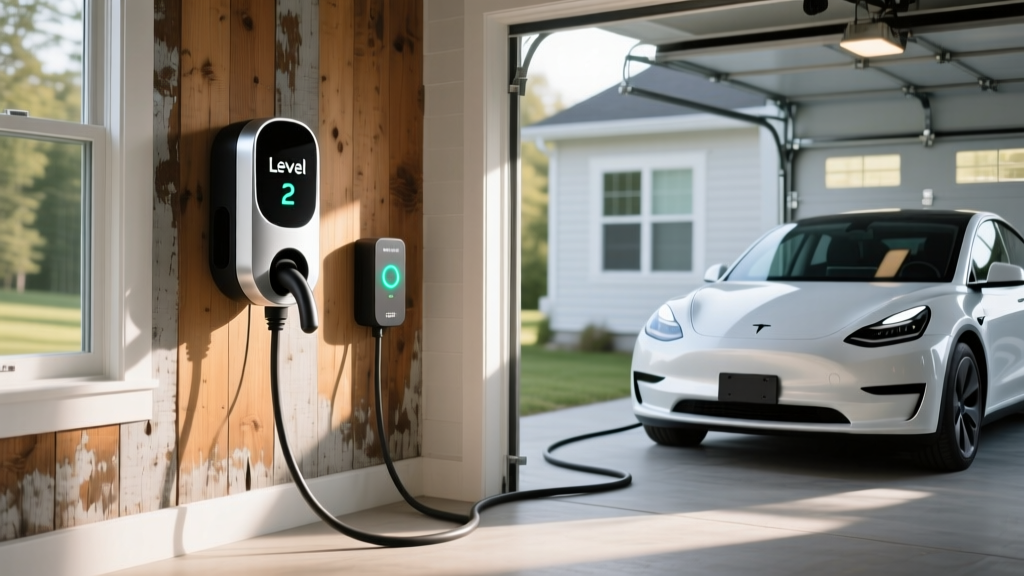
Most EV owners do 80% or more of their charging at home. A Level 2 home charger on a dedicated 240V circuit is the practical standard. Here's what that actually requires and costs.
Electrical requirements: A typical 48-amp Level 2 charger draws 40 amps continuously. Per the National Electrical Code (NEC), continuous loads require a circuit rated at 125% of the draw — meaning you need a 50-amp breaker on a 240V circuit. The charger must be hardwired or connected via a NEMA 14-50 outlet. A dedicated circuit is non-negotiable; sharing with a dryer or oven creates a fire hazard.
Panel capacity: Most modern homes with 200-amp electrical panels can accommodate a 50-amp EV circuit without issue. Homes with 100-amp panels (common in pre-1990 construction) may need a panel upgrade, which typically runs $1,500 – $3,500 depending on local labor rates and utility requirements. Some utilities offer load-management devices that avoid a full upgrade.
Permits and inspection: Nearly all jurisdictions require an electrical permit for a new 240V circuit. Permit fees typically range from $50 – $200, and the work must pass inspection. Skipping the permit risks insurance claim denial if an electrical fire occurs.
| Component | Typical Cost Range | Notes |
|---|---|---|
| Level 2 Charger (hardware) | $250 – $750 | Smart Wi-Fi models at upper end |
| Electrician labor (standard install) | $500 – $1,800 | Varies by run length, conduit, wall material |
| Electrical permit | $50 – $200 | Required in most jurisdictions |
| Panel upgrade (if needed) | $1,500 – $3,500 | Only for 100A panels or maxed-out 200A |
| Total (no panel upgrade) | $800 – $2,750 | Most common scenario |
| Total (with panel upgrade) | $2,300 – $6,250 | Older homes, larger services |
The IRS Residential Clean Energy Credit covers 30% of home EV charger equipment and installation costs (up to $1,000) for equipment placed in service through 2032, subject to income and location requirements. Check irs.gov for current-year eligibility.
Connector Compatibility: NACS, CCS1, CHAdeMO, and Adapters
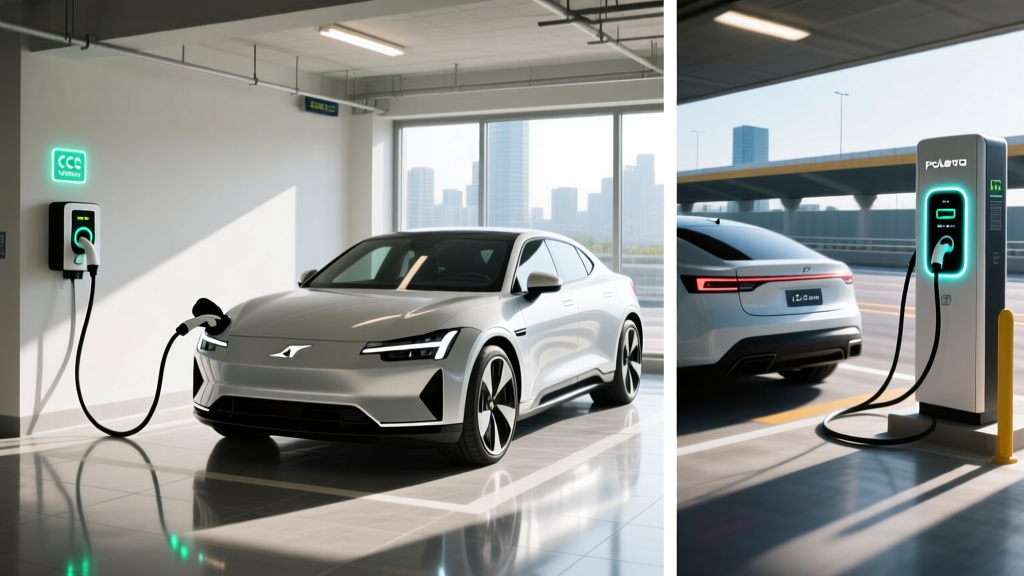
As of 2026, the North American Charging Standard (NACS), developed by Tesla, has become the dominant connector for new EVs. Most legacy CCS1 vehicles now ship with or offer a NACS adapter, and the CCS-to-NACS transition is largely complete at public fast chargers. CHAdeMO remains only on older Nissan Leafs and Mitsubishi Outlander PHEVs, with minimal new infrastructure investment.
| Connector | Brands Using (2026 Models) | DC Fast Charging Availability | Adapter Needed? |
|---|---|---|---|
| NACS (Tesla) | Tesla, Ford, GM, Rivian, Hyundai, Kia, Volvo, Polestar, BMW, Mercedes | Extensive — Tesla Supercharger + open networks | No (native on 2025+ models) |
| CCS1 | Older VW ID.4, legacy BMW iX, some Stellantis models | Electrify America, EVgo, ChargePoint — declining | NACS-to-CCS adapter for Tesla chargers |
| CHAdeMO | Nissan Leaf (discontinued 2025), older Mitsubishi | Limited — few new installations | CHAdeMO-to-NACS adapters rare/expensive |
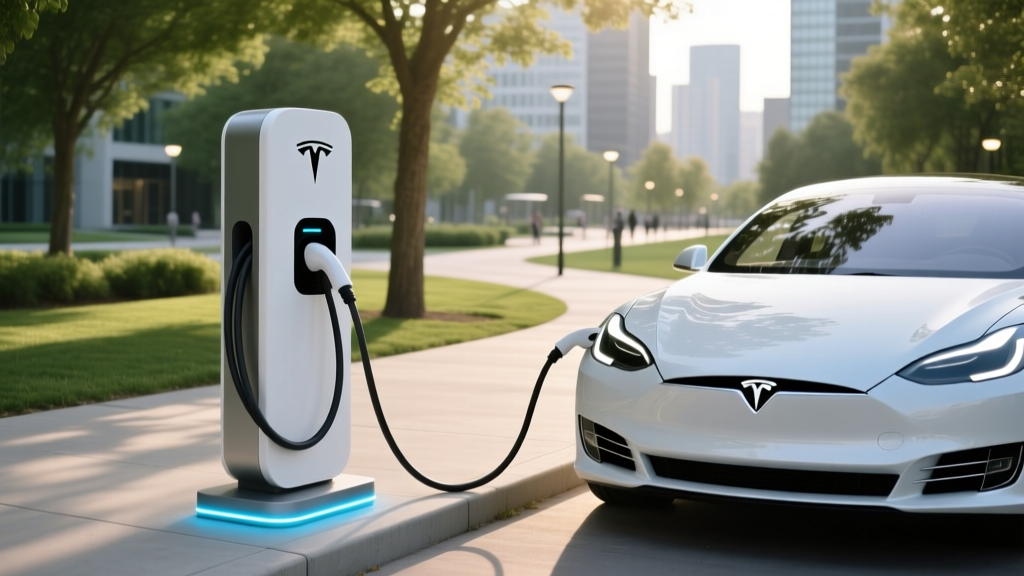
If you're buying a 2026 EV, NACS is the safest long-term bet. Tesla's Supercharger network remains the most reliable DC fast-charging network in the US, with over 25,000 stalls, and now serves non-Tesla EVs with native NACS ports. According to AFDC (Alternative Fuels Data Center), NACS-equipped vehicles have access to roughly 60% more reliable fast-charging stalls than CCS-only vehicles.
Cost Per Mile: EV Charging vs. the Cobalt SS at the Pump
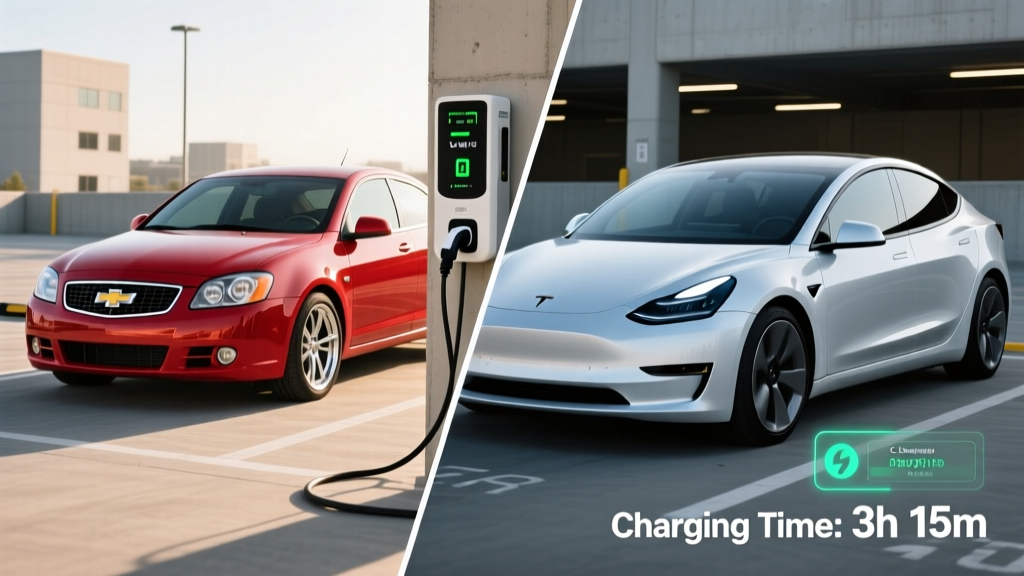
The 2006 Cobalt SS Supercharged requires premium fuel (91+ octane) for its supercharged Ecotec. At a combined EPA rating of 23 mpg and a national premium average of $4.10/gallon (early 2026), fuel cost runs approximately $0.178 per mile. Let's compare that against realistic EV charging scenarios using a 2026 Chevrolet Equinox EV (315 EPA miles, 85 kWh usable battery, ~3.7 miles/kWh efficiency).
| Scenario | Rate | Cost per Mile | vs. Cobalt SS |
|---|---|---|---|
| Home Level 2 (off-peak utility rate) | $0.10/kWh | $0.027 | 85% cheaper |
| Home Level 2 (national avg residential) | $0.16/kWh | $0.043 | 76% cheaper |
| Public Level 2 (ChargePoint, etc.) | $0.30/kWh | $0.081 | 55% cheaper |
| DC Fast Charging (Electrify America) | $0.48/kWh | $0.130 | 27% cheaper |
| Tesla Supercharger (NACS) | $0.35/kWh | $0.095 | 47% cheaper |
| 2006 Cobalt SS (premium, 23 mpg) | $4.10/gal | $0.178 | Baseline |
Even at the most expensive DC fast-charging rates, a modern EV costs less per mile than the supercharged Cobalt on premium. For home-charging-dominant owners (the vast majority), the savings are dramatic: roughly $1,500 – $1,800 per year at 12,000 miles annually. Over a 10-year ownership cycle, that's $15,000+ in fuel savings alone — before factoring in the Cobalt's aging supercharger coupler, intercooler pump, timing chain, and clutch replacement intervals.
Charging Time Examples: 10-80% for Common Battery Sizes
The 10-80% metric matters because DC fast charging slows dramatically above 80% SoC to protect battery health. Most road-trip charging stops target this range. Here are real-world examples for popular 2026 EV battery sizes:
| Vehicle | Battery (usable kWh) | Peak DC kW | 10-80% Time (est.) | Chemistry |
|---|---|---|---|---|
| Chevrolet Equinox EV | 85 kWh | 150 kW | ~34 minutes | NMC |
| Tesla Model Y (Long Range) | 75 kWh | 250 kW | ~22 minutes | NMC |
| Tesla Model Y (RWD) | 60 kWh | 170 kW | ~25 minutes | LFP |
| Hyundai Ioniq 5 | 77.4 kWh | 240 kW (800V) | ~18 minutes | NMC |
| Ford F-150 Lightning (Std) | 98 kWh | 150 kW | ~42 minutes | NMC |
LFP (lithium iron phosphate) batteries, like those in the base Model Y, tolerate frequent 100% charges better than NMC, but their charge curve still tapers above 80%. Cold weather (below 32°F / 0°C) can add 20-40% to these charge times unless the vehicle's thermal management system has preconditioned the battery — a feature that activates automatically when you navigate to a charger in most modern EVs.
Equipment Recommendations: Top Home Chargers for 2026
Not all Level 2 chargers are created equal. Here are three proven options spanning price points, each with NACS connectors and smart features:
Emporia Vue Level 2 Smart Charger
- Power: 48A / 11.5 kW (240V, hardwired)
- Connector: NACS (native)
- Cable length: 24 feet
- Smart features: Wi-Fi, energy monitoring, solar integration, scheduling via app
- Price: ~$399
- Best for: Budget-conscious buyers who want smart load management and energy tracking
ChargePoint Home Flex (2nd Gen)
- Power: Up to 50A / 12 kW (240V, NEMA 14-50 or hardwired)
- Connector: NACS
- Cable length: 23 feet
- Smart features: Wi-Fi, Alexa/Google integration, amperage adjustable (16-50A), detailed session history
- Price: ~$599
- Best for: Flexible install options and reliable app ecosystem
Tesla Wall Connector (Gen 4)
- Power: 48A / 11.5 kW (240V, hardwired)
- Connector: NACS (native, works with all NACS-equipped EVs)
- Cable length: 24 feet
- Smart features: Wi-Fi, over-the-air updates, power sharing between two units, load management
- Price: ~$450
- Best for: Tesla owners and multi-EV households needing power sharing
All three are UL-listed, NEMA 4-rated (suitable for outdoor installation), and include integrated GFCI protection as required by NEC 2023 and later. For outdoor installs, confirm the unit's operating temperature range covers your climate — all three above are rated to -22°F / -30°C.
Safety, Code, and the Panel-Upgrade Gotcha
Electrical safety for EV charging is non-negotiable. Key code requirements and practical considerations:
- Dedicated circuit: The EV charger must be on its own breaker — never shared with appliances or outlets.
- GFCI protection: Required for all EV charging outlets (NEMA 14-50) per NEC 625. Hardwired chargers with built-in GFCI satisfy this requirement.
- Outdoor rating: If the charger is installed outside (garage exterior, carport, driveway post), it must be NEMA 4 or IP65-rated for weather resistance.
- Cable management: A retractable cord reel or wall hook prevents trip hazards and cable damage. Never let the cable rest on the ground in a driveway where it can be run over.
- Panel load calculation: A licensed electrician should perform a load calculation (NEC Article 220) before installation. If your panel is near capacity — common in homes with electric heat, electric oven, and electric dryer — a 50-amp EV circuit may push you over. This is where the panel upgrade cost enters, and it's the most commonly underestimated expense in EV adoption.
For older homes originally built for gas appliances that have since been converted to electric, the panel may already be strained. An electrician can often identify this during a free or low-cost site visit before you commit to a charger purchase.
Frequently Asked Questions
How much does it cost to install a home EV charger?
A standard Level 2 home charger installation with a 50-amp dedicated 240V circuit typically costs $800 – $2,750 total (equipment, electrician labor, and permit combined). If your home needs a panel upgrade from 100A to 200A service, add $1,500 – $3,500. The IRS Residential Clean Energy Credit can offset 30% of the cost (up to $1,000) through 2032.
How fast will each charging level add range?
Level 1 (120V) adds 3-5 miles of range per hour — suitable only for plug-in hybrids or overnight trickle charging. Level 2 (240V, 48A) adds 30-40 miles per hour, fully replenishing most EV batteries overnight. DC fast charging at 150+ kW can add 200+ miles in 20-30 minutes, though the rate tapers significantly above 80% SoC.
Which connector/charger is compatible with my EV?
For any 2026 model-year EV from a major manufacturer, the connector is almost certainly NACS. Older 2022-2024 models may have CCS1, but NACS adapters are widely available. CHAdeMO is limited to discontinued models like the Nissan Leaf. Always confirm the connector on the specific vehicle trim before purchasing a home charger.
How much does charging cost per mile vs gas?
Home charging at the national average residential rate ($0.16/kWh) costs roughly $0.043 per mile for a typical EV — about 76% less than the 2006 Cobalt SS Supercharged on premium fuel at $0.178/mile. Even public DC fast charging at $0.48/kWh ($0.130/mile) remains 27% cheaper than premium gasoline.
What electrical upgrades might I need?
If your home has a 200-amp panel with available capacity, you likely need only a new 50-amp breaker and a wiring run to the charger location. If your panel is 100-amp or already near its load limit, a panel upgrade to 200A or 400A service may be required — this is the single largest variable in installation cost and should be assessed by a licensed electrician before you purchase equipment.