The Great Battery Build-Out: North America's Capacity Surge
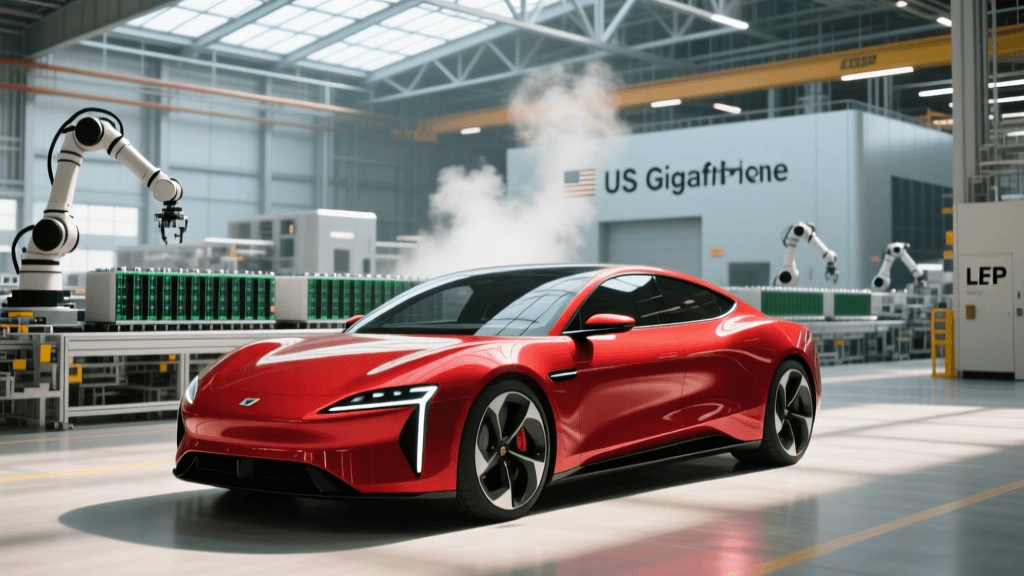
The global transition to electric vehicles is no longer just a story of automotive design and software; it is fundamentally a manufacturing and infrastructure race. At the heart of this race is the battery cell, and the landscape of battery production is undergoing a seismic shift. For the past decade, East Asia has dominated the lithium-ion supply chain. However, as we look toward the future trends and industry outlook for 2025 and beyond, North America is experiencing an unprecedented gigafactory boom. Driven by aggressive policy incentives and the strategic need for supply chain localization, new battery cell factory announcements are reshaping where, how, and what type of EV batteries are produced.
According to the International Energy Agency's Global EV Outlook 2024, planned battery manufacturing capacity in the United States and Europe is scaling rapidly to meet localized demand, fundamentally altering the global trade dynamics of battery cells and critical minerals. This localized build-out is not just about volume; it is about diversifying cell chemistries, securing domestic supply chains, and ultimately driving down the cost per kilowatt-hour (kWh) for consumers.
The IRA Catalyst and Supply Chain Localization
The primary accelerant for this North American capacity expansion is the Inflation Reduction Act (IRA). Through the Advanced Manufacturing Production Credit (Section 45X), the U.S. government incentivizes the domestic production of battery components. Manufacturers receive substantial tax credits for producing battery cells and modules on U.S. soil, which has triggered a wave of joint ventures and solo expansions by major battery titans. The U.S. Department of Energy (DOE) notes that planned U.S. EV battery manufacturing capacity has skyrocketed, with dozens of new facilities announced across the traditional automotive belt and the emerging "Battery Belt" stretching from Michigan down to Georgia.
Major Gigafactory Announcements Shaping the Future
To understand the future trends in EV battery availability, we must look at the specific megaprojects currently under construction or in the final stages of planning. These facilities are not merely duplicating existing Asian supply lines; they are introducing new form factors and chemistries tailored to the North American market.
Panasonic’s Kansas Megafactory and the 4680 Push
Panasonic’s $4 billion gigafactory in De Soto, Kansas, represents a cornerstone of North American battery capacity. Slated to be one of the largest EV battery manufacturing facilities in the world, the Kansas plant is designed to produce high-energy-density cylindrical cells. While initial production will focus on the proven 2170 cell format for current EV models, the facility's long-term outlook is heavily tied to the larger 4680 form factor. The 4680 cell, championed by Tesla and increasingly adopted by legacy automakers, promises significant reductions in manufacturing costs and improvements in structural battery pack integrity. By localizing 4680 production, Panasonic is ensuring that next-generation electric trucks and high-performance SUVs will not be bottlenecked by trans-Pacific shipping constraints.
LG Energy Solution’s Pivot to LFP in Michigan
Perhaps the most critical future trend in battery chemistry is the rise of Lithium Iron Phosphate (LFP). Historically, LFP batteries—which offer lower energy density but vastly superior thermal stability, longer cycle life, and zero reliance on cobalt or nickel—were almost exclusively manufactured in China by companies like CATL and BYD. However, LG Energy Solution has announced a massive strategic pivot, investing billions to retool and expand its Michigan facilities specifically for LFP cell production. This is a game-changer for the entry-level EV market. By producing LFP cells in North America, automakers can build affordable, standard-range EVs that qualify for full federal tax credits, directly addressing the consumer demand for sub-$35,000 electric vehicles.
Upcoming US Battery Gigafactories: Capacity Breakdown
The following table outlines a selection of the most impactful battery cell factory announcements and capacity expansions currently reshaping the North American supply chain.
| Manufacturer | Location | Planned Capacity (GWh) | Primary Chemistry / Format | Target Production Start |
|---|---|---|---|---|
| Panasonic | De Soto, Kansas | 30 GWh | NMC (2170 / 4680 Cylindrical) | 2025 |
| LG Energy Solution | Lansing, Michigan | 16 GWh (Phase 1) | LFP (Prismatic / Pouch) | 2025 |
| BlueOval SK (Ford / SK On) | Glendale, Kentucky | 86 GWh (Total Campus) | NMC / NCMA (Pouch) | 2025 - 2026 |
| Gotion | Big Rapids, Michigan | 20 GWh | LFP (Prismatic) | 2025 |
| Samsung SDI | Kokomo, Indiana | 36 GWh (Joint Venture) | PRiMX (High-Nickel NMC) | 2026 |
Future Trends: The Chemistry Battleground
As these new factories come online, the industry outlook points toward a bifurcated battery market. The gigafactories are strategically dividing their production lines based on use-case:
- High-Performance and Heavy Duty: Facilities producing Nickel Manganese Cobalt (NMC) and advanced NMCA chemistries will supply electric pickup trucks, heavy-duty commercial fleets, and luxury SUVs where maximum energy density and range are paramount.
- Affordable and Standard Range: The rapid expansion of LFP capacity in Michigan and the broader Battery Belt will supply compact cars, urban commuters, and base-model trims. LFP's tolerance for daily 100% charging without severe degradation makes it the ideal chemistry for consumers who lack home charging and rely on public fast-charging networks.
Furthermore, the integration of domestic battery recycling facilities, such as Redwood Materials' expansive campuses in Nevada and South Carolina, is creating a closed-loop ecosystem. These recycling hubs will feed domestically sourced anode and cathode materials directly into the new gigafactories, insulating the U.S. supply chain from raw material volatility.
Actionable Advice for Consumers and Fleet Managers
What does this massive capacity expansion mean for you, the EV buyer or fleet operator, in the near future? Here is how to leverage these industry trends:
1. Time Your Purchase for the LFP Wave
If you are in the market for an affordable, standard-range EV, consider delaying your purchase until late 2025 or the 2026 model year. As the new Michigan LFP gigafactories reach full production capacity, automakers will introduce a new wave of lower-priced EVs utilizing these cells. These vehicles will not only have a lower MSRP but will also feature batteries that last longer and are cheaper to replace out of warranty.
2. Maximize Commercial Fleet Incentives
For fleet managers, the localization of battery cells is a golden opportunity. Under the IRA's Commercial Clean Vehicle Credit (Section 45W), vehicles must meet strict domestic content and battery sourcing requirements to qualify for the maximum $40,000 tax credit. By specifying vehicles equipped with battery packs assembled in the newly announced Kentucky and Indiana gigafactories, fleet operators can guarantee compliance, drastically reducing the total cost of ownership (TCO) for electric delivery vans and trucks.
3. Reassess Residual Value Anxiety
Historically, EV depreciation has been hampered by fears of exorbitant battery replacement costs. However, the sheer volume of incoming North American capacity—projected to exceed domestic demand by the late 2020s—will create a buyer's market for replacement cells and refurbished modules. As gigafactories achieve economies of scale, the cost per kWh will continue its downward trajectory, stabilizing EV residual values and making long-term leasing or ownership much more financially predictable.
Conclusion: A Stabilized EV Horizon
The era of battery scarcity and supply chain fragility is drawing to a close. The aggressive announcements and capacity expansions of gigafactories across North America signal a maturing EV industry. By localizing production, diversifying chemistries like LFP, and embracing advanced form factors like the 4680 cell, the automotive sector is laying the groundwork for cheaper, more reliable, and universally accessible electric vehicles. For consumers and industry stakeholders alike, the future outlook is not just electric—it is abundantly supplied.