The Real Story Behind Toyota's Solid-State Battery Lifespan Claims
Toyota has spent years teasing solid-state battery technology, promising 750 km (466 miles) of range and 10-minute fast charging. But the question buyers actually need answered is simpler: how long will these batteries last compared to today's lithium-ion packs? As of 2026, Toyota's solid-state batteries remain in limited production for the bZ4X successor prototypes and select Japanese-market vehicles — not yet available to US consumers. That makes understanding current battery lifespan data essential for anyone shopping today while weighing tomorrow's tech.
This guide covers the hard numbers on EV battery degradation, chemistry trade-offs, warranty coverage, and replacement economics — with Toyota's solid-state roadmap as a forward-looking reference point, not a current purchase option.
How Long Do EV Batteries Actually Last?
Modern EV traction batteries (the high-voltage pack, not the 12V auxiliary battery) are engineered for 15-20 years of service or 200,000+ miles before reaching end-of-life capacity thresholds. Real-world fleet data supports this:
- Tesla Model 3/Y (NCA/NMC): Average 12% degradation at 150,000 miles per Tesla's 2024 Impact Report
- Nissan Leaf (LMO/NMC, passively cooled): 15-25% loss at 100,000 miles depending on climate — heat accelerates degradation without active thermal management
- Chevrolet Bolt EV (NMC, liquid-cooled): 8-10% loss at 100,000 miles in moderate climates
- Hyundai/Kia E-GMP platform (NMC, liquid-cooled): 10-12% loss at 100,000 miles with preconditioning-enabled DC fast charging
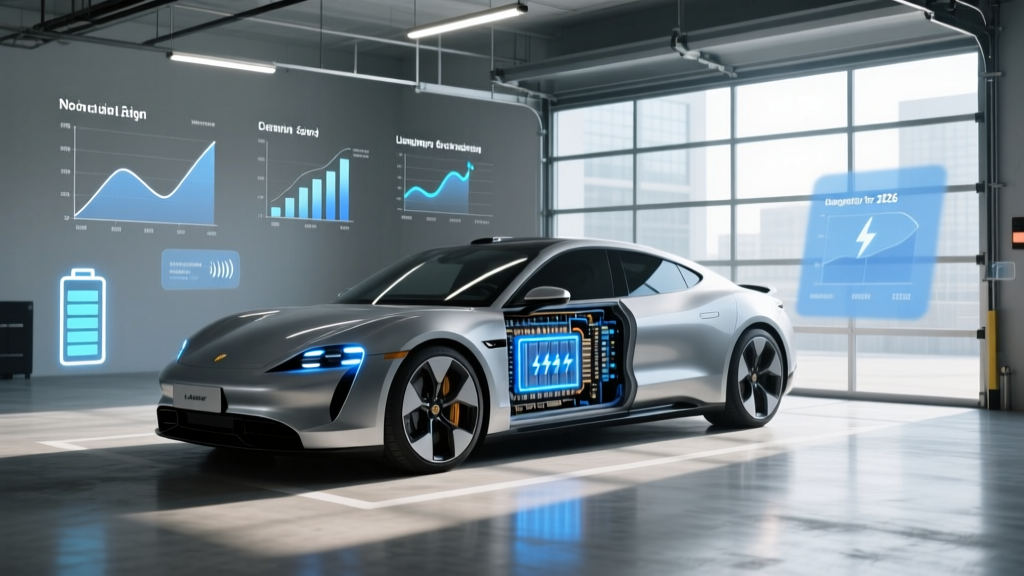
The industry standard end-of-life threshold is 70% State of Health (SoH) — meaning the battery retains 70% of original capacity. Most liquid-cooled packs won't hit this until well beyond typical ownership periods. For Toyota's announced solid-state cells, laboratory testing suggests 90%+ capacity retention after 1,000 full charge cycles (equivalent to ~300,000 miles for a 300-mile-range vehicle), but real-world validation at scale remains pending.
LFP vs NMC vs Solid-State: Chemistry Trade-Offs
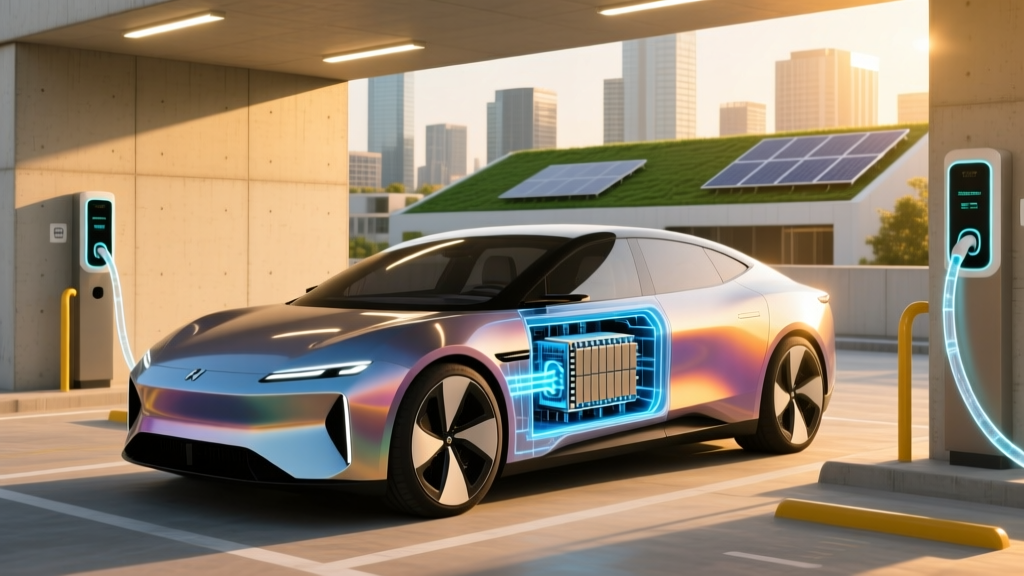
Battery chemistry determines energy density, cycle life, thermal stability, and cost. Here's how the three relevant chemistries compare for 2026 buyers:
| Attribute | LFP (Lithium Iron Phosphate) | NMC/NCA (Nickel Manganese Cobalt / Nickel Cobalt Aluminum) | Solid-State (Announced/Prototype) |
|---|---|---|---|
| Energy Density | 160-180 Wh/kg | 220-260 Wh/kg | 300-400 Wh/kg (projected) |
| Cycle Life | 3,000-5,000 cycles to 80% SoH | 1,500-2,500 cycles to 80% SoH | 1,000+ cycles to 90% SoH (lab data) |
| Cold Performance | Moderate — 15-25% range loss below 32°F | Better — 10-20% range loss below 32°F | Expected improvement (data pending) |
| Thermal Stability | Excellent — higher thermal runaway threshold | Good — requires active cooling | Excellent (solid electrolyte non-flammable) |
| Cost (2026) | $100-120/kWh at pack level | $130-160/kWh at pack level | $200-300/kWh (estimated, low volume) |
| Fast-Charging Tolerance | Good — can sustain 1C rates; 10-80% in 25-30 min | Very good — peak 250+ kW; 10-80% in 18-22 min | Projected excellent — 10-80% in ~10 min |
| Notable Users (2026) | Tesla Model 3 RWD, BYD, Ford F-150 Lightning Standard | Tesla LR/Performance, Hyundai Ioniq 5/6, Kia EV6/EV9, VW ID.4, Toyota bZ4X | Toyota (limited/prototype), QuantumScape partners (VW test fleet) |
The practical takeaway: LFP wins on longevity and cost but sacrifices range per pound. NMC delivers more range in a lighter, smaller package — ideal for long-range trims. Solid-state theoretically combines the best of both but remains years from mass-market US availability. Toyota's current US EV, the bZ4X, uses NMC chemistry with a 71.4 kWh usable battery.
What Toyota's Solid-State Timeline Actually Means
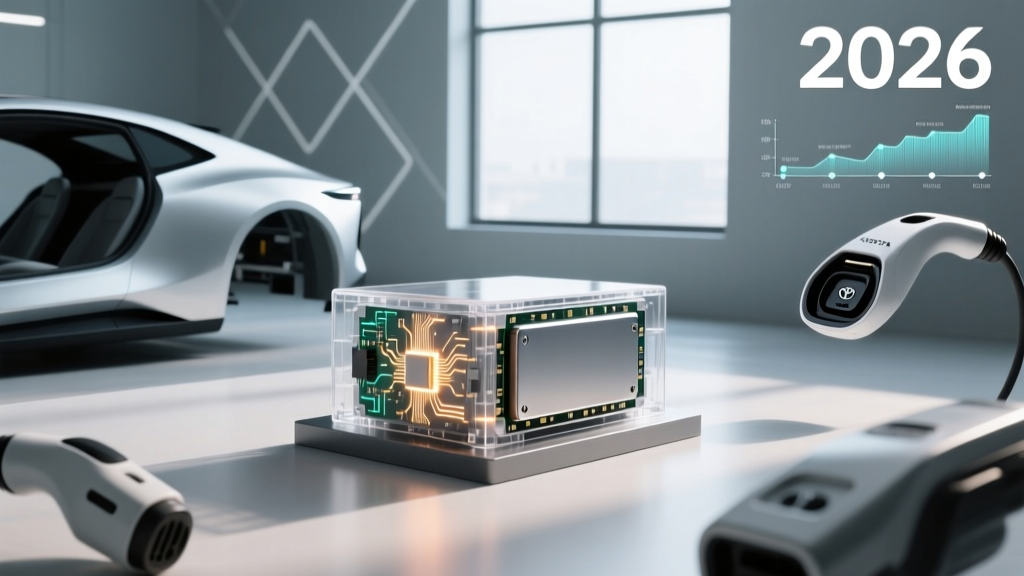
Toyota announced in 2023 that its first-generation solid-state battery would enter production in 2027-2028, targeting 750 km (466 miles) of range with a 10-minute 10-80% DC fast charge. A second-generation version aims for 1,000 km (621 miles) by 2030.
As of early 2026, these remain announced/preliminary targets. Toyota has produced solid-state cells in lab and limited pilot settings, but scaling to automotive volumes with acceptable yields and costs is an unsolved manufacturing challenge. QuantumScape, a separate company backed by Volkswagen, has delivered prototype cells to OEM partners but has not announced a production vehicle for the US market.
For buyers asking "should I wait for solid-state?" — the honest answer is that no US-consumer-available vehicle with a solid-state pack exists or is confirmed for sale before 2028 at the earliest. Today's liquid-electrolyte lithium-ion batteries (both LFP and NMC) already deliver 250-350 miles of EPA range with 15-20 year lifespans under normal use.
Degradation Data: What the Numbers Show
Battery degradation follows a curve, not a straight line. Most capacity loss occurs in the first 1-2 years (the "break-in" period), then slows significantly:
- Year 1: 2-4% loss (initial SEI layer formation on the anode)
- Years 2-5: 1-2% loss per year
- Years 5-10: 0.5-1% loss per year
- Year 10+: Gradual decline; most packs remain above 80% SoH
A 2024 study by Geotab analyzing 10,000+ EVs found an average annual degradation rate of 1.8% across all chemistries and cooling types. Liquid-cooled packs averaged 1.5%/year; passively cooled packs averaged 2.3%/year. LFP packs showed slightly lower degradation (1.3%/year) than NMC (1.7%/year) but with a smaller sample size.
For Toyota's solid-state prototype cells, internal testing data cited by Toyota suggests degradation rates as low as 0.5-1.0%/year equivalent — but these are controlled lab conditions, not fleet-validated. Independent third-party data on solid-state longevity does not yet exist at scale.
Battery Warranty Coverage: What's Protected
Federal law mandates a minimum 8-year/100,000-mile warranty on EV battery packs for emissions-related compliance, and most manufacturers exceed this baseline. Here's how major warranties compare:
| Manufacturer | Warranty Period | Capacity Retention Threshold | Notes |
|---|---|---|---|
| Toyota (bZ4X) | 8 years / 100,000 miles | 70% SoH | 10-year/150,000-mile coverage in California-emissions states |
| Tesla (Model 3/Y) | 8 years / 100,000-120,000 miles | 70% SoH | Varies by trim; LR/Performance get 120k miles |
| Hyundai/Kia | 10 years / 100,000 miles | 70% SoH | Among the longest standard coverage |
| GM (Ultium platform) | 8 years / 100,000 miles | 70% SoH (60% for commercial) | Modular design allows partial pack replacement |
| Ford (F-150 Lightning) | 8 years / 100,000 miles | 70% SoH | LFP and NMC trims covered equally |
Critical detail: Warranty replacement triggers when SoH drops below the stated threshold within the warranty period. If your 71.4 kWh Toyota bZ4X battery falls to 49 kWh (below 70%) at year 7 and 95,000 miles, Toyota replaces or repairs the pack at no cost. If it drops to 69% at year 9, you're outside coverage.
Solid-state batteries, when they arrive, are expected to carry similar warranty structures. Toyota has not published specific solid-state warranty terms, but the longer cycle life of solid-state chemistry could theoretically allow for extended coverage periods (10+ years) if manufacturing costs permit.
EV Battery Replacement Cost: When and How Much
Full battery pack replacement is rare — most EVs are retired or sold before the pack reaches end-of-life. But when replacement is needed (typically at 200,000+ miles or after physical damage), costs vary significantly:
| Vehicle | Battery Size | Chemistry | Replacement Cost (Parts + Labor) |
|---|---|---|---|
| Tesla Model 3 Standard Range | 57.5 kWh | LFP | $12,000 - $16,000 |
| Tesla Model Y Long Range | 75 kWh | NMC | $14,000 - $20,000 |
| Toyota bZ4X | 71.4 kWh | NMC | $15,000 - $22,000 (estimated) |
| Hyundai Ioniq 5 | 77.4 kWh | NMC | $14,000 - $19,000 |
| Ford F-150 Lightning Extended | 131 kWh | NMC | $25,000 - $35,000 |
| Chevrolet Bolt EV | 65 kWh | NMC | $14,000 - $18,000 |
Several factors soften these numbers:
- Warranty coverage handles the vast majority of early-life failures
- Module-level repair is increasingly common — replacing 1-2 degraded modules for $2,000-$5,000 instead of the full pack
- Used/refurbished packs from salvage vehicles cost 40-60% less than new OEM packs
- Battery costs continue declining — pack-level pricing dropped from $180/kWh in 2022 to $110-$140/kWh in 2026, meaning future replacements will cost less
For solid-state batteries, replacement costs are expected to be higher initially ($200-$300/kWh at low production volumes) but should converge with NMC pricing as manufacturing scales post-2030.
Maximizing Battery Health: What Actually Works
How you charge and drive has a measurable impact on long-term SoH. Here's a practical care checklist based on peer-reviewed battery research and OEM guidance:
- Daily charging limit: Set to 80% for NMC batteries (Tesla, Hyundai, Kia, VW). LFP batteries (Tesla Model 3 RWD, BYD) should be charged to 100% at least weekly — LFP chemistry benefits from periodic full charges for cell balancing.
- Avoid sustained 100% SoC: Don't leave an NMC vehicle plugged in at 100% for days. Charge to 100% only before long trips and drive promptly.
- DC fast charging: Occasional use (1-2 times per week) has minimal impact on modern liquid-cooled packs. Daily DCFC without preconditioning accelerates degradation — always use the vehicle's navigation-based battery preconditioning when routing to a charger.
- Temperature management: Park in shade or a garage when possible. Extreme heat (>95°F sustained) causes more degradation than extreme cold. Precondition the battery in cold weather before driving and charging.
- Storage: If leaving the vehicle unused for 2+ weeks, store at 50-60% SoC in a cool environment. Avoid storing at 100% or below 20%.
How to Check Your Battery's State of Health
Most 2026 EVs provide SoH monitoring through the infotainment system or companion app:
- Tesla: No native SoH percentage displayed, but third-party tools like Tessie or TeslaFi estimate SoH from charge/discharge data. Tesla service centers can pull exact SoH on request.
- Hyundai/Kia: SoH percentage visible in the EV settings menu on most 2023+ models via the infotainment system.
- Toyota bZ4X: Battery health information available through the Toyota app and dealer diagnostic tools. No direct SoH percentage in the vehicle display.
- OBD-II scanners: Tools like the OBDeleven or dedicated EV scanners (e.g., ABRP + OBD dongle) can read battery management system (BMS) data including SoH, cell voltages, and temperature on most platforms.
- Dealer diagnostics: Any authorized service center can pull a full battery health report — request this during routine service visits or before purchasing a used EV.
For solid-state batteries when they reach production, SoH monitoring is expected to be more straightforward — the simpler cell architecture and reduced degradation rate should make capacity estimation more accurate via standard BMS telemetry.
Frequently Asked Questions
How long will Toyota's solid-state battery last compared to current lithium-ion?
Toyota's lab data suggests solid-state cells retain 90%+ capacity after 1,000 full cycles (~300,000 miles for a 300-mile-range vehicle). Current NMC lithium-ion packs typically retain 85-88% after the same usage. However, solid-state batteries are not yet available in US-market vehicles, and real-world fleet data does not exist. Expect first production vehicles no earlier than 2028.
Should I wait for solid-state batteries before buying an EV?
For most buyers, no. Today's LFP and NMC batteries already deliver 250-350 miles of range, 15-20 year lifespans, and 18-25 minute fast charging. Solid-state will improve on these metrics, but US availability is 2-4 years away at minimum, with early vehicles likely priced at a premium. If you need an EV now, current technology is mature and reliable.
What voids an EV battery warranty?
Typical exclusions include: physical damage (collision, flood, fire), unauthorized modifications to the battery or BMS, use of non-OEM charging equipment that causes damage, and failure to follow manufacturer maintenance schedules. Normal degradation below the threshold (e.g., dropping below 70% SoH within 8 years) is covered.
Does frequent DC fast charging destroy the battery?
Modern liquid-cooled packs handle DCFC well. Tesla's fleet data shows no statistically significant difference in degradation between vehicles that Supercharge frequently and those that primarily charge at home — provided preconditioning is active. The real risk is daily DCFC without preconditioning in extreme heat, which can accelerate degradation by 1-2% over several years.
LFP or NMC — which should I choose?
Choose LFP if: you prioritize longevity (3,000-5,000 cycle life), lower cost, and don't need maximum range. Choose NMC if: you need 300+ miles of range, live in a cold climate (better cold-weather performance), or want faster peak charging speeds. Both chemistries will outlast typical ownership periods with proper care.