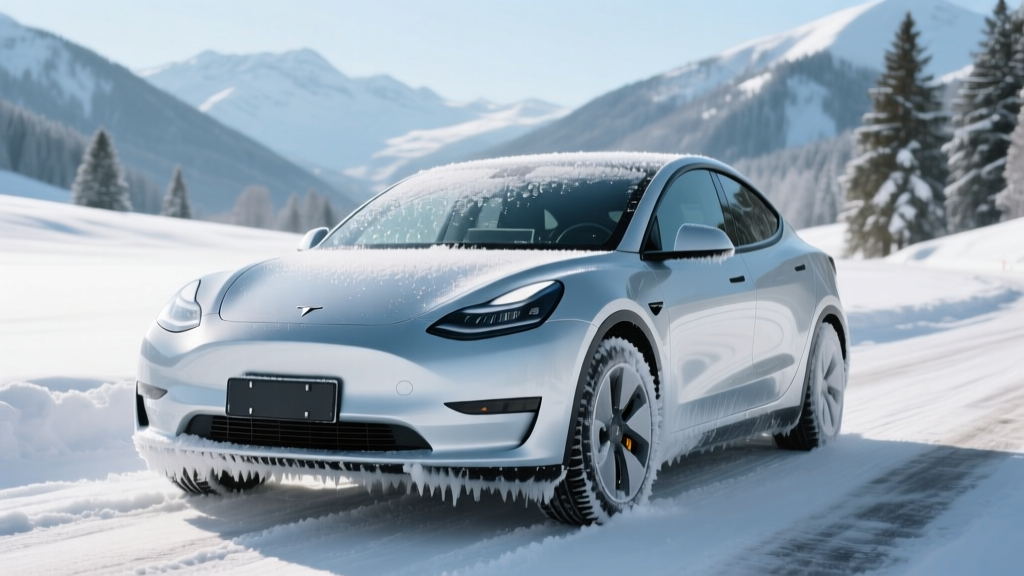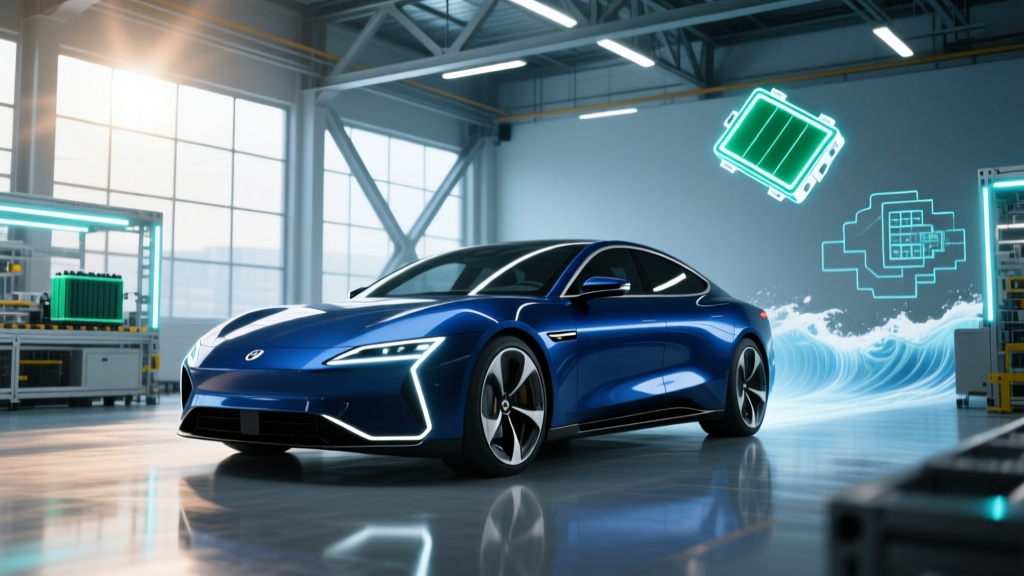
When Toyota battery manufacturing photos surfaced from the company's Himeji and ZEV Factory facilities, they offered something rare in the EV industry: a transparent look at how high-voltage traction battery packs are assembled, tested, and scaled. For buyers and owners, those production-line images are more than industrial eye candy — they illustrate the engineering choices that determine how long your battery will last, how much range you'll retain after 100,000 miles, and what you'll actually pay if a replacement is ever needed.
This guide breaks down the chemistry, degradation science, warranty coverage, and real-world care practices that define modern EV battery ownership — using Toyota's manufacturing approach as a lens, while covering the data every electrified-vehicle buyer needs regardless of brand.
What Toyota Battery Manufacturing Photos Actually Show
Toyota's published factory imagery — from its ZEV Factory announcements and supplier partner Panasonic Energy — reveals several key production stages:
- Electrode coating and stacking: Where cathode chemistry (NMC or LFP) is applied to foil current collectors with micron-level precision.
- Cell winding and electrolyte filling: Cylindrical or prismatic cell assembly in dry-room environments with dew points below -40°C to prevent moisture contamination.
- Module and pack integration: Cells grouped into modules with thermal management plates, bus bars, and battery management system (BMS) wiring harnesses.
- Formation cycling and aging: Each cell undergoes charge-discharge cycles to stabilize the solid-electrolyte interphase (SEI) layer before pack integration — a step that directly affects long-term degradation behavior.
- End-of-line testing: Capacity verification, insulation resistance checks, and leak testing on cooling circuits.
These manufacturing details matter because they explain why batteries from different automakers — even using similar chemistry — can show markedly different degradation curves over time. Quality control during formation cycling and thermal management design are often more predictive of longevity than the chemistry label alone.
LFP vs NMC vs NCA: The Chemistry Trade-Offs Explained
Every EV battery uses a lithium-ion cell, but the cathode material determines energy density, cycle life, thermal stability, and cost. Toyota's bZ4X uses NMC (nickel-manganese-cobalt) chemistry in a 71.4 kWh usable pack, while its upcoming next-generation EVs are expected to adopt LFP (lithium iron phosphate) for standard-range trims. Here's how the major chemistries compare:
| Attribute | LFP (Lithium Iron Phosphate) | NMC (Nickel Manganese Cobalt) | NCA (Nickel Cobalt Aluminum) |
|---|---|---|---|
| Energy Density | ~160-180 Wh/kg (lower) | ~220-260 Wh/kg (higher) | ~250-280 Wh/kg (highest) |
| Cycle Life | 3,000-5,000+ cycles | 1,000-2,000 cycles | 800-1,500 cycles |
| Cold-Weather Performance | Moderate loss (~15-25% range reduction at 20°F) | Better low-temp conductivity (~10-18% loss) | Similar to NMC |
| Thermal Stability | Excellent — less prone to thermal runaway | Good — requires robust BMS management | Good — similar management needs |
| Cost per kWh | ~$80-100/kWh (2026) | ~$110-140/kWh (2026) | ~$120-150/kWh (2026) |
| Recommended SoC Range | Can charge to 100% daily without significant harm | Best kept 20-80% for daily use | |
| Typical Use Case | Standard-range, fleet, budget models | Long-range, premium models | Performance, long-range (Tesla, Rivian) |
Which is better? There is no universal winner. LFP is the better choice if you prioritize longevity, lower cost, and the convenience of charging to 100% daily. NMC/NCA is better if you need maximum range in a lighter pack — critical for larger SUVs and trucks. Toyota's manufacturing photos show parallel production lines for both, reflecting the industry's dual-chemistry strategy.
How Long Do EV Batteries Actually Last? Degradation Data
The most common buyer fear — "Will I need a $20,000 battery replacement in five years?" — is not supported by field data. Modern EV batteries are designed to outlast the vehicles they power. Here's what real-world tracking shows:
| Vehicle / Platform | Chemistry | Avg. Degradation at 100K Miles | Avg. Degradation at 150K Miles | Source |
|---|---|---|---|---|
| Tesla Model 3/Y (NMC/NCA) | NCA/NMC | ~8-12% capacity loss | ~12-16% | Tesla Impact Report 2024 |
| Hyundai Ioniq 5 / Kia EV6 | NMC | ~6-10% | ~10-14% | Recurrent Auto fleet data |
| Nissan Leaf (air-cooled) | NMC/LMO | ~12-18% | ~18-25% | Recurrent Auto |
| Chevrolet Bolt EV/EUV | NMC | ~5-8% | ~8-12% | Owner-reported / Recurrent |
| Toyota bZ4X | NMC (71.4 kWh) | ~6-9% (projected from early data) | ~10-13% (projected) | Toyota engineering targets |
Toyota has publicly stated a target of 90% capacity retention after 10 years for the bZ4X battery pack — an ambitious figure that depends on thermal management quality and owner charging habits. According to fueleconomy.gov, most modern liquid-cooled EV batteries lose between 1-2% capacity per year under normal use, stabilizing after the initial formation-period drop of 2-4% in the first year.
The critical distinction: degradation is not linear. Most batteries experience a steeper initial loss (the "break-in" phase as the SEI layer matures), then settle into a slow, nearly flat decline for the majority of their lifespan. Catastrophic failure — sudden, large capacity drops — is rare and typically covered under warranty.
Battery Warranty Terms: What's Covered and What Isn't
Federal law mandates a minimum 8-year / 100,000-mile warranty on EV battery packs for emissions-related compliance, and most manufacturers exceed this baseline. Here's how major warranties compare:
| Manufacturer | Warranty Period | Capacity Retention Threshold | What Triggers a Claim |
|---|---|---|---|
| Toyota (bZ4X) | 8 years / 100,000 miles | 70% of original capacity | Measured capacity falls below threshold via dealer diagnostic |
| Hyundai / Kia | 10 years / 100,000 miles | 70% | Same — dealer scan tool verification |
| Tesla (Model 3/Y) | 8 years / 120,000 miles (LR) or 100,000 miles (RWD) | 70% | BMS-reported capacity or range measurement |
| General Motors (Ultium) | 8 years / 100,000 miles | 70% (60% for commercial) | Dealer diagnostic confirmation |
| Ford (Mustang Mach-E, F-150 Lightning) | 8 years / 100,000 miles | 70% | Dealer verification |
Important nuance: The warranty covers capacity loss — not cosmetic issues, 12V auxiliary battery failures, or damage from accidents, floods, or unauthorized modifications. The 70% threshold means you must lose more than 30% of original capacity before a claim is valid. In practice, very few modern liquid-cooled packs hit this threshold within the warranty window. Also note that the warranty typically transfers to subsequent owners, which supports EV resale values.
EV Battery Replacement Cost: What You'd Actually Pay
If your battery falls outside warranty coverage — typically after 8-10 years or 100,000+ miles — or suffers physical damage, replacement costs vary significantly by pack size and chemistry:
| Vehicle | Battery Size (kWh) | Chemistry | Estimated Replacement Cost (2026) | When Typically Needed |
|---|---|---|---|---|
| Nissan Leaf (40 kWh) | 40 | NMC/LMO | $6,500 - $9,000 | Rarely — air-cooled packs degrade faster but are simpler to replace |
| Chevrolet Bolt EV | 65 | NMC | $9,000 - $14,000 | Very rare within 150K miles |
| Toyota bZ4X | 71.4 | NMC | $10,000 - $15,000 | Projected: beyond 200K miles for most owners |
| Tesla Model 3 Long Range | 75-82 | NCA/NMC | $12,000 - $16,000 | Rare — most packs exceed 200K mi with >80% SoH |
| Ford F-150 Lightning (Extended) | 131 | NMC | $18,000 - $25,000 | Very rare — large packs degrade more slowly due to lower C-rate stress |
| Lucid Air (Grand Touring) | 112 | NMC | $16,000 - $22,000 | Extremely rare within normal ownership |
Two critical context points: First, most EV owners never need a full battery replacement. Data from Recurrent Auto and fleet operators shows that the majority of packs retain 80-85% capacity at 150,000 miles — still providing practical daily range. Second, costs are declining. Battery pack prices fell below $140/kWh in 2025 according to BloombergNEF, and LFP packs are now approaching $100/kWh at the cell level. By the time a 2026-model EV might need an out-of-warranty replacement (roughly 2036-2038), prices will likely be substantially lower.
Additionally, many repair shops now offer module-level replacements — swapping only the degraded cell modules rather than the entire pack — which can cut costs by 40-60% on packs with modular architectures.
Factors That Accelerate (or Preserve) Battery Life
Your charging habits and operating environment have a measurable impact on long-term battery health. Here's what the data shows:
Practices That Accelerate Degradation
- Frequent DC fast charging above 150 kW: High C-rates generate heat and lithium plating risk. Occasional road-trip fast charging is fine; daily reliance on 250-350 kW chargers can add 1-3% extra annual degradation.
- Sustained high State of Charge: Storing an NMC/NCA battery at 100% for days or weeks accelerates electrolyte decomposition. LFP is more tolerant of 100% SoC.
- Deep discharges below 10%: Repeatedly running the pack to near-empty stresses the anode copper current collector.
- Extreme heat exposure: Prolonged parking in 100°F+ ambient without thermal management active. (Most modern EVs run cooling even when parked, but this draws from the pack.)
- Charging in extreme cold without preconditioning: Lithium plating can occur when charging a sub-freezing battery at high rates.
Practices That Maximize Longevity
- Daily charging to 80% (NMC/NCA) or 100% (LFP): Use your vehicle's charge-limit setting.
- Level 2 home charging as primary method: 7-11 kW charging generates far less thermal stress than DCFC.
- Precondition the battery before fast charging: Most EVs do this automatically when a DCFC is set as your navigation destination.
- Avoid leaving the car at 0% or 100% for extended periods: If storing for a week+, set SoC to 50-60%.
- Use scheduled charging to finish near departure time: Minimizes time spent at high SoC.
How to Check and Monitor Battery Health (SoH)
State of Health (SoH) is the percentage of your battery's original usable capacity that remains available. Here's how to check it:
- In-vehicle displays: Some EVs (notably Tesla, Hyundai/Kia with recent OTA updates, and the Toyota bZ app) show estimated range at 100% SoC, which you can compare to the original EPA figure to estimate SoH. Example: if your bZ4X originally showed 252 miles EPA at 100% and now shows 230, that's roughly 91% SoH.
- OBD-II diagnostic apps: Tools like Car Scanner, LeafSpy (for Nissan), or manufacturer-specific apps can read BMS-reported SoH directly. These pull data from the battery management controller via the OBD-II port.
- Dealer diagnostics: Any authorized dealer can run a battery health report. This is the official method for warranty claims.
- Third-party services: Companies like Recurrent Auto offer battery health reports that compare your pack to a fleet baseline of the same model — useful for resale documentation.
A practical benchmark: if your SoH drops more than 2-3% in a single year after the first-year break-in period, review your charging habits and consider a dealer check for potential cell imbalance issues.
Emerging Battery Technology: Solid-State and Silicon Anodes
Toyota has been among the most vocal automakers about next-generation battery technology, and its manufacturing photos often accompany announcements of future production lines. Here's where the technology stands as of 2026:
- Solid-state batteries: Toyota has announced a target for commercial solid-state EV battery production in the 2027-2028 timeframe, initially in limited-production models. Solid-state cells promise 30-50% higher energy density, faster charging (potentially 10-80% in under 10 minutes), and improved safety due to non-flammable solid electrolytes. However, manufacturing scale-up and cost reduction remain significant challenges. These batteries are not currently available in any production vehicle.
- Silicon-anode cells: Companies like Sila Nanotechnologies and Group14 are supplying silicon-dominant anode materials to EV manufacturers, offering 10-20% energy density improvements over conventional graphite anodes. Some limited deployment has begun in 2025-2026 model-year vehicles, primarily in premium segments.
- Sodium-ion batteries: CATL and BYD have begun production of sodium-ion cells for lower-cost, shorter-range EVs. These offer reduced energy density but eliminate lithium and cobalt entirely, with potential cost advantages below $60/kWh. Not yet deployed in US-market vehicles.
- Bipolar LFP packs: Toyota's announced "Performance" and "Popularisation" battery generations target simplified pack architectures with fewer components and lower manufacturing cost, expected in vehicles from 2027 onward.
Realistic timeline: For buyers shopping today, current-generation NMC and LFP batteries are mature, well-tested, and backed by substantial warranties. Next-generation technologies will appear in limited, typically premium vehicles first, with mainstream adoption likely 3-5 years after initial launch.
Frequently Asked Questions
How long do EV batteries last in years and miles?
Most modern liquid-cooled EV batteries retain 80-90% of their original capacity after 10 years or 150,000 miles. Many packs continue to function well beyond 200,000 miles with 75-85% capacity remaining. Complete failure is rare — gradual capacity loss is the norm, and the vehicle typically remains practical for daily use throughout.
How much does an EV battery cost to replace?
Full pack replacement costs range from approximately $6,500 for smaller packs (40 kWh) to $25,000 for the largest truck packs (130+ kWh), as of 2026. However, the vast majority of EV owners never need a replacement — most packs outlast the vehicle's useful life. Module-level repairs can reduce costs by 40-60% when applicable.
What does the EV battery warranty actually cover?
Standard warranties cover capacity loss below a defined threshold (typically 70% of original capacity) over 8 years / 100,000 miles (Toyota, Tesla, Ford, GM) or 10 years / 100,000 miles (Hyundai/Kia). They do not cover the 12V auxiliary battery, cosmetic damage, accident damage, or unauthorized modifications. The warranty typically transfers to second owners.
How do I check my EV battery's State of Health?
Compare your vehicle's displayed range at 100% charge to the original EPA-rated range. For a more precise reading, use an OBD-II diagnostic app that reads BMS data, or request a battery health report from your dealer. Third-party services like Recurrent Auto also provide fleet-comparison SoH reports.
LFP vs NMC — which battery chemistry is better for me?
Choose LFP if you want maximum cycle life, lower cost, and the convenience of daily 100% charging — ideal for standard-range commuting and warmer climates. Choose NMC/NCA if you need maximum range per charge and better cold-weather performance — ideal for long-range driving and cold climates. Neither is universally superior; the right choice depends on your driving patterns and climate.
Does frequent DC fast charging damage the battery?
Occasional DC fast charging (road trips, weekly top-ups) has minimal impact on modern batteries with active thermal management. However, daily reliance on 150+ kW DC fast charging can add 1-3% extra annual degradation compared to primarily Level 2 charging. The bigger risk is fast-charging in extreme cold without battery preconditioning, which can cause lithium plating.
Will Toyota's solid-state battery be available in current models?
No. Toyota's solid-state battery technology is targeted for limited commercial production in the 2027-2028 timeframe, initially in new dedicated EV platforms. It will not be retrofitted to existing models like the bZ4X. Current buyers should evaluate vehicles based on today's proven NMC and LFP technology.