The Next Frontier: Beyond Chemical Energy Storage
While the automotive industry is currently fixated on the commercialization of solid-state lithium batteries, a far more radical paradigm shift is brewing in advanced physics laboratories worldwide. Quantum batteries represent a fundamental departure from traditional electrochemical energy storage. Instead of relying on the physical movement of ions between an anode and a cathode, quantum batteries store energy in the quantum states of matter—specifically leveraging phenomena like superposition and quantum entanglement. As electric vehicle (EV) charging speeds approach the thermal limits of chemical cells, the theoretical promise of quantum batteries offers a glimpse into a future where charging an EV takes mere seconds, not minutes.
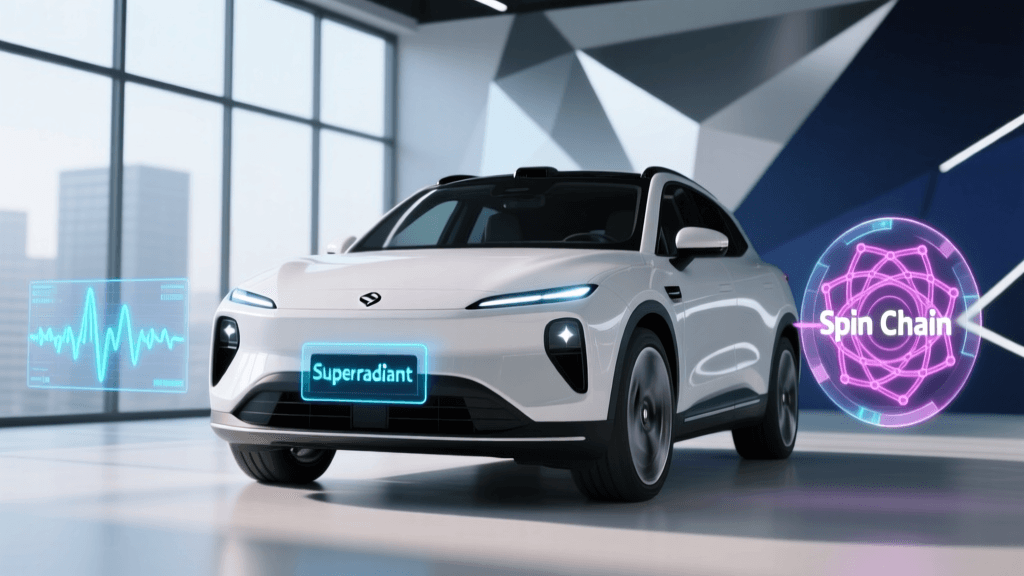
However, quantum batteries are not a monolith. The race to build the first commercially viable quantum cell has fractured into competing architectural philosophies. Today, we are putting the two leading prototype designs head-to-head: the Superradiant (Dicke-State) Quantum Cell and the Spin-Chain Entangled Cell. Which architecture holds the key to revolutionizing EV energy storage, and what does this mean for your next vehicle purchase?
Contender 1: Superradiant (Dicke-State) Quantum Cells
The superradiant approach, heavily researched by teams at the University of Adelaide and the University of Quindío, relies on a concept known as 'superabsorption.' In a traditional battery, charging time is limited by the rate at which individual cells can absorb energy. If you want to charge faster, you must increase the power input, which generates destructive heat.
Superradiant quantum batteries bypass this by placing thousands of light-absorbing molecules inside an optical microcavity. When these molecules are placed in a highly reflective environment, they begin to behave collectively rather than individually. They enter a 'Dicke state,' acting as a single giant quantum dipole. According to research highlighted by ScienceDaily, this collective behavior means that the more molecules you add to the microcavity, the faster the entire structure absorbs light and stores energy. It is a macroscopic quantum effect that turns the traditional rules of battery scaling completely upside down.
Contender 2: Spin-Chain Entangled Cells
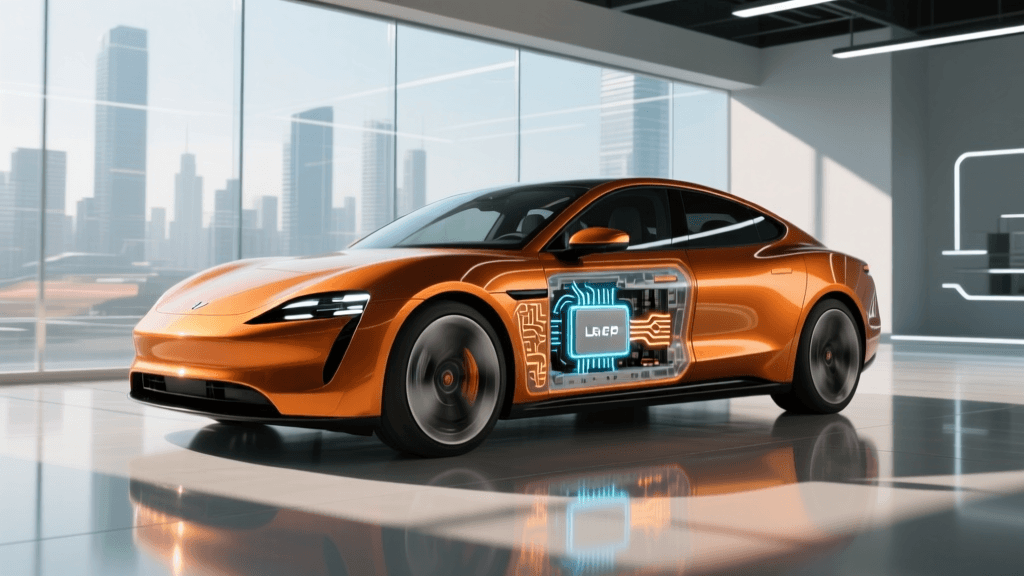
The spin-chain architecture, explored by researchers at Imperial College London and various quantum computing startups, takes a different route. Instead of relying on optical microcavities and light absorption, spin-chain batteries utilize a linear array of quantum bits (qubits), often modeled as interacting spins in a magnetic field.
In this design, energy is injected into one end of the chain. Through quantum entanglement, the energy is not passed sequentially from atom to atom like a bucket brigade. Instead, the entangled state allows the energy to be distributed across the entire chain almost instantaneously. The primary advantage of the spin-chain model is its compatibility with existing solid-state quantum computing hardware, such as superconducting circuits and nitrogen-vacancy (NV) centers in diamonds. However, maintaining the delicate entanglement across a long chain of qubits without environmental interference (decoherence) remains a monumental engineering hurdle.
Head-to-Head Prototype Comparison
| Feature | Superradiant (Dicke-State) | Spin-Chain (Entangled) |
|---|---|---|
| Primary Mechanism | Collective superabsorption of photons | Quantum entanglement of spin states |
| Charging Speed Scaling | Time decreases as 1/N (N = molecules) | Time decreases based on entanglement depth |
| Current Environment | Optical microcavities (organic molecules) | Superconducting circuits / NV-center diamonds |
| Operating Temperature | Room temperature (theoretical), cryogenic (current) | Strictly millikelvin (near absolute zero) |
| Biggest Hurdle for EVs | Extracting stored energy without decoherence | Maintaining entanglement over macroscopic distances |
| Technology Readiness Level (TRL) | TRL 3 (Experimental Proof of Concept) | TRL 2 (Basic Technology Formulation) |
The Physics of the Showdown: Why Bigger Means Faster
To understand why these prototypes are generating such intense interest in the EV sector, we have to look at the thermodynamics of charging. In a conventional lithium-ion battery pack, charging 100 cells takes the exact same amount of time as charging one cell, assuming you have enough power delivery. The bottleneck is the chemical diffusion rate of lithium ions into the graphite anode. Pushing more current simply causes lithium plating and thermal runaway.
Quantum batteries exploit a loophole in quantum thermodynamics. As reported by Physics World, the charging power of a quantum battery scales non-linearly. In the superradiant model, if you double the number of molecules in the microcavity, the charging time is halved. This is known as a quantum advantage. For an EV battery pack containing trillions of quantum cells, the theoretical charging time drops from 30 minutes to a fraction of a second. The energy is stored in the excited quantum states of the molecules, completely bypassing the slow, heat-generating chemical reactions that plague modern fast-charging networks.
The Decoherence Problem: The Elephant in the Laboratory
Before EV enthusiasts get too excited, both contenders in this showdown face a shared, formidable enemy: decoherence. Quantum states are notoriously fragile. Any interaction with the outside environment—heat, electromagnetic fields, or physical vibration—causes the quantum state to collapse, instantly releasing the stored energy as useless heat or stray photons.
Currently, spin-chain prototypes require dilution refrigerators to maintain temperatures near absolute zero (around 15 millikelvin). Superradiant prototypes have shown promise at higher temperatures but struggle with energy extraction. You can charge a superradiant quantum battery incredibly fast, but figuring out how to 'discharge' it slowly and steadily into an electric motor inverter without triggering a catastrophic quantum collapse is an unsolved physics problem. The U.S. Department of Energy notes that mastering quantum information science and coherence times is the primary bottleneck for all quantum technologies, and energy storage is no exception.
Actionable Advice: Should EV Buyers Wait for Quantum Tech?
Given the head-to-head data, how should this influence your current and future automotive purchasing decisions? Here is our practical, actionable guide for navigating the next-generation battery landscape.
1. Do Not Delay Your EV Purchase
Quantum batteries are currently at Technology Readiness Level (TRL) 2 and 3. For context, the aviation industry considers TRL 6 (prototype demonstration in a relevant environment) as the minimum for commercial viability. Automotive integration requires TRL 8 or 9. Realistically, quantum batteries will not appear in consumer vehicles until the 2040s, and even then, likely only in specialized, high-end applications before trickling down to mass-market cars. If you need a vehicle in the next decade, quantum tech is irrelevant to your buying cycle.
2. The Near-Term Strategy: 800V Architectures and LFP
Instead of waiting for quantum superabsorption, optimize for the best chemical tech available today. If fast charging is your priority, purchase an EV built on an 800-volt architecture (such as the Hyundai Ioniq 5, Kia EV6, or Porsche Taycan). These vehicles can accept up to 350 kW of DC fast charging, allowing a 10-80% charge in roughly 18 minutes. For daily driving and longevity, prioritize Lithium Iron Phosphate (LFP) batteries. While they have lower energy density than NMC (Nickel Manganese Cobalt), LFP cells can be safely charged to 100% daily and withstand thousands of more cycles, effectively mimicking the 'infinite lifespan' promise of future quantum cells.
3. The Mid-Term Watch: Solid-State Batteries (2027-2030)
If you are a tech enthusiast willing to wait a few years, keep your eyes on solid-state batteries (SSBs). Companies like Toyota, QuantumScape, and Nissan are targeting commercial SSB rollouts between 2027 and 2030. SSBs replace the liquid electrolyte with a solid material, eliminating fire risks and allowing for lithium-metal anodes. This will double energy density and cut charging times to under 10 minutes. This is the true bridge technology that will dominate the market while quantum batteries remain in the lab.
4. Metrics to Track for Quantum Breakthroughs
For the investors and deep-tech enthusiasts tracking the quantum battery showdown, ignore the hype cycles and focus on three specific metrics in research papers:
- Coherence Time at Room Temperature: Until a prototype can maintain its quantum state for hours at 20°C (68°F), it is useless for automotive applications.
- Energy Extraction Efficiency: Look for breakthroughs in 'quantum work extraction'—the ability to convert the stored quantum excitation into a usable, steady electrical current.
- Microcavity Scalability: For the superradiant model, watch for transitions from microscopic optical cavities to macroscopic, flexible metamaterials that could theoretically be shaped into a battery pack.
Conclusion
The showdown between superradiant and spin-chain quantum battery prototypes is one of the most exciting intellectual battles in modern physics. The superradiant model currently holds the edge in charging speed scaling and room-temperature potential, while the spin-chain model benefits from synergies with the booming quantum computing hardware sector. However, the road from a microscopic optical cavity to a 100 kWh EV battery pack is paved with immense thermodynamic and engineering challenges. For now, the quantum advantage remains locked in the laboratory. EV buyers should continue to embrace the rapid advancements in 800V chemical architectures and solid-state developments, knowing that the ultimate, physics-defying battery is still decades away from the driveway.