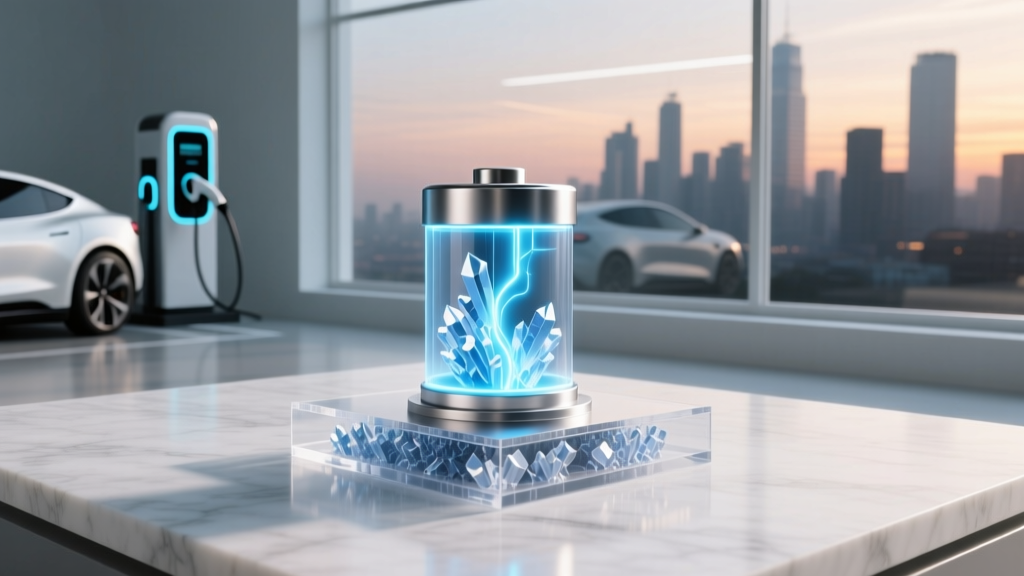
If you follow EV news, you have seen the headline cycle: a lab announces a solid-state battery breakthrough, promises double the range and 10-minute charging, and implies everything on sale today is obsolete. The reality is more nuanced — and more useful for anyone buying or owning an EV right now. Today's lithium-ion packs are lasting longer, degrading less, and costing less to replace than early-generation cells, while solid-state technology remains in limited pilot production with mass-market timelines stretching into the late 2020s and beyond.
This guide breaks down the battery chemistry you can actually buy in 2026, the real degradation data accumulated over billions of fleet miles, what warranties actually cover, and where next-generation technologies like solid-state and silicon-anode cells realistically fit into your next purchase decision.
Today's EV Battery Chemistries: LFP vs NMC vs NCA
Every battery-electric and plug-in hybrid vehicle sold in the U.S. in 2026 uses one of three dominant cathode chemistries: LFP (lithium iron phosphate), NMC (nickel manganese cobalt), or NCA (nickel cobalt aluminum). The chemistry determines energy density, cycle life, thermal stability, cold-weather behavior, and raw-material cost — and it is the single biggest factor in how your pack ages over a decade of ownership.
| Attribute | LFP (LiFePO₄) | NMC (811/622) | NCA |
|---|---|---|---|
| Energy density (cell-level) | 160–180 Wh/kg | 230–260 Wh/kg | 240–270 Wh/kg |
| Typical cycle life to 80% SoH | 3,000–5,000+ cycles | 1,000–2,000 cycles | 1,000–1,500 cycles |
| Cold-weather range loss (20°F) | ~25–30% | ~20–25% | ~20–25% |
| Thermal runaway risk | Very low | Moderate | Moderate |
| Recommended daily SoC | 100% OK | 80% preferred | 80% preferred |
| Cobalt content | None | Low–moderate | Low |
| Typical 2026 applications | Tesla Model 3/Y RWD, Ford Mustang Mach-E Select, BYD, base-trim EVs | Long-range / AWD trims, Hyundai Ioniq 5/6, VW ID.4, Rivian | Tesla Long Range/Performance, some luxury EVs |
The practical takeaway: LFP wins on longevity and daily-charging convenience — you can charge to 100% regularly without accelerating degradation, which is why Tesla recommends it for Model 3/Y RWD owners. NMC and NCA win on energy density, giving you more EPA-rated range in the same physical pack volume. For a buyer prioritizing a 10–15 year ownership horizon with minimal capacity loss, LFP is increasingly the pragmatic choice. For maximum range in a single charge (road trips, cold climates, towing), NMC/NCA still leads.
How Long Do EV Batteries Actually Last?
The short answer: almost certainly longer than you will keep the car. Data from high-mileage fleets, Tesla's annual impact reports, and independent testing by groups like Recurrent Auto consistently show that modern liquid-cooled battery packs lose roughly 10–15% of original capacity over the first 100,000 miles, with degradation curves flattening significantly after the initial break-in period.
Typical Degradation Curve (Liquid-Cooled NMC Pack, Moderate Climate):
- Year 1 / 15,000 mi: ~2–4% loss (initial formation drop)
- Year 3 / 45,000 mi: ~6–8% total loss
- Year 5 / 75,000 mi: ~8–10% total loss
- Year 8 / 120,000 mi: ~10–14% total loss
- Year 10 / 150,000 mi: ~12–17% total loss
LFP packs in similar conditions often show 2–4 percentage points less loss at each interval, owing to superior cycle life. Packs in hot climates (Arizona, Texas) or subject to frequent DC fast charging without preconditioning may degrade 2–5% faster.
For context, a 2026 Tesla Model Y Long Range with an EPA-estimated 320 miles of range and ~12% degradation at 120,000 miles still delivers roughly 282 miles of real-world range — more than adequate for daily driving and most road trips. The notion that EV batteries "need replacing" like smartphone batteries after 2–3 years is not supported by fleet data.
What the Battery Warranty Actually Covers
Federal regulations mandate a minimum 8-year / 100,000-mile battery warranty for EVs sold in the U.S., with California Air Resources Board (CARB) states requiring 10 years / 150,000 miles. Most manufacturers exceed the federal floor. The warranty covers capacity loss below a specified threshold — typically 70% of original capacity — as well as defects in materials and workmanship.
| Manufacturer / Model | Warranty Term | Capacity Retention Threshold | Chemistry |
|---|---|---|---|
| Tesla Model 3/Y (RWD) | 8 yr / 100,000 mi | 70% | LFP |
| Tesla Model 3/Y (Long Range) | 8 yr / 120,000 mi | 70% | NMC/NCA |
| Hyundai Ioniq 5 / Ioniq 6 | 10 yr / 100,000 mi | 70% | NMC |
| Ford Mustang Mach-E | 8 yr / 100,000 mi | 70% | LFP (Select) / NMC (GT) |
| Chevrolet Equinox EV / Blazer EV | 8 yr / 100,000 mi | 70% | NMC (Ultium) |
| Rivian R1T / R1S | 8 yr / 175,000 mi | 70% | NMC |
| BMW iX / i4 | 8 yr / 80,000 mi | 70% | NMC |
What is NOT covered: Gradual capacity loss above the threshold (e.g., your pack is at 75% SoH at year 9 — that is considered normal wear). Damage from accidents, flooding, or unauthorized modifications. Some manufacturers also exclude capacity loss from repeated exclusive use of DC fast charging, though this is rarely enforced in practice. Always read the specific warranty booklet for your model year.
EV Battery Replacement Cost: What You Will Actually Pay
This is the question that generates the most anxiety — and the most misinformation. Here are the numbers based on 2026 replacement pricing from manufacturers and independent EV repair shops:
| Vehicle | Battery Capacity | Replacement Cost (Parts + Labor) | Typical Replacement Trigger |
|---|---|---|---|
| Tesla Model 3 RWD | ~60 kWh (LFP) | $8,000–$12,000 | Rare before 200,000+ mi |
| Tesla Model Y Long Range | ~75 kWh (NMC) | $12,000–$16,000 | Rare before 180,000+ mi |
| Hyundai Ioniq 5 | 77.4 kWh (NMC) | $11,000–$15,000 | Rare before 180,000+ mi |
| Ford Mustang Mach-E Extended Range | 91 kWh (NMC) | $14,000–$18,000 | Rare before 170,000+ mi |
| Chevrolet Bolt EV/EUV (older) | 65 kWh (NMC) | $9,000–$14,000 | Recall-related; otherwise 150,000+ mi |
| Rivian R1T (Large Pack) | ~135 kWh (NMC) | $18,000–$25,000 | Rare before 170,000+ mi |
| Mercedes EQS | 107.8 kWh (NMC) | $20,000–$30,000 | Rare before 150,000+ mi |
Critical context: The vast majority of EV owners will never pay for a traction battery replacement. Most packs outlast the vehicle's economic life, and many are covered under warranty if they degrade prematurely. Out-of-pocket replacement typically only occurs on vehicles that are 10–15+ years old, out of warranty, and have accumulated 180,000+ miles. Even then, refurbished and remanufactured packs are increasingly available at 30–50% below new-pack pricing. Module-level repair (replacing individual failed modules rather than the entire pack) is also becoming standard practice at EV-specialist shops, bringing costs down to $2,000–$6,000 in many cases.
Factors That Accelerate Battery Degradation
Not all miles are equal when it comes to battery wear. The following factors have the most measurable impact on long-term State of Health (SoH):
- Frequent DC fast charging without preconditioning: Repeatedly hitting a pack with 150–350 kW when the cells are cold (below 50°F) causes lithium plating on the anode. Always use your vehicle's navigation-to-charger preconditioning feature. Occasional fast charging is fine; daily fast charging without thermal prep accelerates wear by an estimated 2–5% over 100,000 miles.
- Sustained high State of Charge (NMC/NCA): Storing an NMC or NCA pack at 100% SoC for days or weeks stresses the cathode. Charge to 80% daily; reserve 100% for imminent road trips. LFP packs do not have this limitation and should be charged to 100% at least weekly for BMS calibration.
- Deep discharge cycles: Regularly running the pack below 10% SoC strains the cells. Most EVs have a bottom buffer (typically 2–5% of gross capacity) to protect against this, but habitually arriving at 0% still accelerates degradation.
- Extreme heat exposure: Prolonged parking in 100°F+ ambient temperatures without thermal management active is the single most damaging environmental factor. Garage parking or shade in hot climates measurably extends pack life.
- High-mileage fast-charge patterns: Fleet data from vehicles that DC fast charge 3+ times per week (ride-hail, delivery) shows 3–7% additional capacity loss at 100,000 miles compared to predominantly Level 2 home-charged vehicles.
How to Check and Monitor Your Battery Health
Most 2026 EVs provide some form of battery health data, though the level of transparency varies by manufacturer:
In-vehicle displays: Tesla provides a "Battery Health" percentage under the Service menu in recent software updates. Hyundai/Kia displays a SoH estimate in the EV diagnostics screen. GM's Ultium-based vehicles show battery health in the myChevrolet/myCadillac app.
OBD-II tools and apps: For vehicles that do not surface SoH directly, OBD-II dongles paired with apps like LeafSpy (Nissan Leaf), Scan My Tesla, or ABRP's OBD integrations can read cell-level voltage data, pack impedance, and estimated capacity. This is particularly useful when buying a used EV.
Dealer diagnostics: Any authorized service center can run a full pack health report, typically including individual module voltage variance, which is a more granular indicator of pack condition than overall SoH percentage. Request this report when purchasing a used EV or before a long road trip in an aging pack.
The DIY range test: Charge to 100%, reset the trip meter, drive until 10% remaining under moderate conditions (65 mph, 70°F, no extreme elevation changes), and compare actual miles driven to the EPA sticker. If your 320-mile EPA vehicle consistently delivers only 240 miles in these conditions, your SoH is likely around 75–80%.
The Solid-State Battery Breakthrough: Timeline and Reality
Solid-state batteries replace the liquid electrolyte in conventional lithium-ion cells with a solid material (ceramic, sulfide, or polymer), enabling the use of lithium-metal anodes. The theoretical benefits are substantial: 40–80% higher energy density, faster charging (potentially 10–80% in under 10 minutes), improved safety (no flammable liquid electrolyte), and longer cycle life. Multiple manufacturers and startups — Toyota, Samsung SDI, QuantumScape, Solid Power — have announced solid-state battery breakthroughs in lab settings.
Where the technology stands in 2026:
- Toyota has announced limited production of solid-state-equipped vehicles for 2027–2028, initially in small volumes (low thousands of units) for the Japanese market, with broader availability projected for 2029–2030.
- Samsung SDI is targeting 2027 for initial mass production, with Hyundai Motor Group as a likely early customer.
- QuantumScape continues to ship prototype cells to automotive partners for validation, with commercial production not expected before 2028.
- Nissan has a solid-state pilot line running and targets 2028–2029 for a production vehicle.
What this means for buyers: If you are purchasing an EV in 2026 or 2027, you will be buying a liquid-electrolyte lithium-ion battery — either LFP, NMC, or NCA. Solid-state technology will not appear in affordable, high-volume U.S.-market vehicles until 2029 at the earliest, and likely not in mainstream models until the early 2030s. The "wait for solid-state" argument has been made since 2018 and has consistently been 3–5 years from reality. Today's battery technology is mature, well-warranted, and proven over billions of real-world miles.
Silicon-anode cells are a nearer-term incremental improvement. Companies like Sila Nanotechnologies and Group14 are supplying silicon-dominant anode materials that boost energy density by 15–25% within conventional cell formats. These are already appearing in limited applications (Mercedes G-Class 580e, select premium EVs) and will proliferate through 2027–2028 model years. Silicon anodes are an evolution, not a revolution — they improve existing lithium-ion architecture rather than replacing it.
Decision Framework: Which Battery Should You Buy?
Choose LFP if: You plan to own the vehicle 8+ years, you charge at home daily and want the convenience of 100% charging, you prioritize maximum cycle life and thermal safety, and you do not need the absolute maximum EPA range per charge. LFP is the longevity champion.
Choose NMC/NCA if: You need maximum range for frequent road trips or cold-climate driving, you are buying a long-range or performance trim, and you are comfortable following the 80% daily charge guideline. NMC/NCA delivers the highest energy density available today.
Do NOT wait for solid-state if: You need a vehicle in 2026–2028. The technology will not be available in volume, at accessible prices, in the U.S. market within that window. Today's batteries, properly maintained, will serve you well for 150,000–250,000+ miles with manageable degradation.
Frequently Asked Questions
How long do EV batteries last in years and miles?
Based on fleet data through 2026, most liquid-cooled EV battery packs retain 80–88% of original capacity at 150,000 miles (roughly 10 years of average driving). Many packs reach 200,000+ miles before dropping below the 70% warranty threshold. LFP packs tend to outlast NMC/NCA packs by a measurable margin at equivalent mileage.
How much does it cost to replace an EV battery?
Full pack replacement ranges from approximately $8,000 for a Tesla Model 3 RWD (60 kWh LFP) to $25,000–$30,000 for large luxury packs (Rivian R1T, Mercedes EQS). However, most owners never pay this cost — packs are covered under 8–10 year warranties, and most outlast the vehicle's ownership period. Module-level repair, when needed, typically costs $2,000–$6,000.
What does the EV battery warranty cover?
Federal law mandates 8 years / 100,000 miles minimum coverage (10 years / 150,000 miles in CARB states). Warranties cover capacity loss below ~70% of original capacity, as well as manufacturing defects. They do not cover normal gradual degradation above the threshold, accident damage, or (in some cases) abuse from exclusive DC fast charging.
How do I maximize my EV battery's lifespan?
For NMC/NCA: charge to 80% daily, avoid storing at 100%, use navigation-based preconditioning before DC fast charging, and avoid prolonged exposure to extreme heat. For LFP: charge to 100% at least weekly for BMS calibration, and follow the same thermal management best practices. Level 2 home charging is gentler on the pack than frequent DC fast charging.
Is LFP better than NMC for my next EV?
LFP is better for longevity, daily charging convenience, thermal safety, and cobalt-free sourcing. NMC is better for maximum range per charge, cold-weather efficiency, and performance trims. Neither is universally "better" — the right choice depends on your ownership timeline, driving patterns, and climate.
When will solid-state batteries be available in EVs I can buy?
Limited production begins in 2027–2028 (Toyota, Samsung SDI partners), but U.S. market availability in mainstream, affordable models is not expected until 2029–2031 at the earliest. If you need a vehicle in the 2026–2028 window, today's lithium-ion technology is mature and reliable.
Sources: fueleconomy.gov (EPA range and efficiency data), Recurrent Auto (fleet degradation data), manufacturer warranty documentation (Tesla, Hyundai, Ford, GM, Rivian). Tax credit eligibility under IRS §30D does not directly apply to battery replacements but applies to new EV purchases with current-year MSRP, income, and sourcing requirements.