The Great Nomenclature Clash: Solid-State vs. Quantum Physics
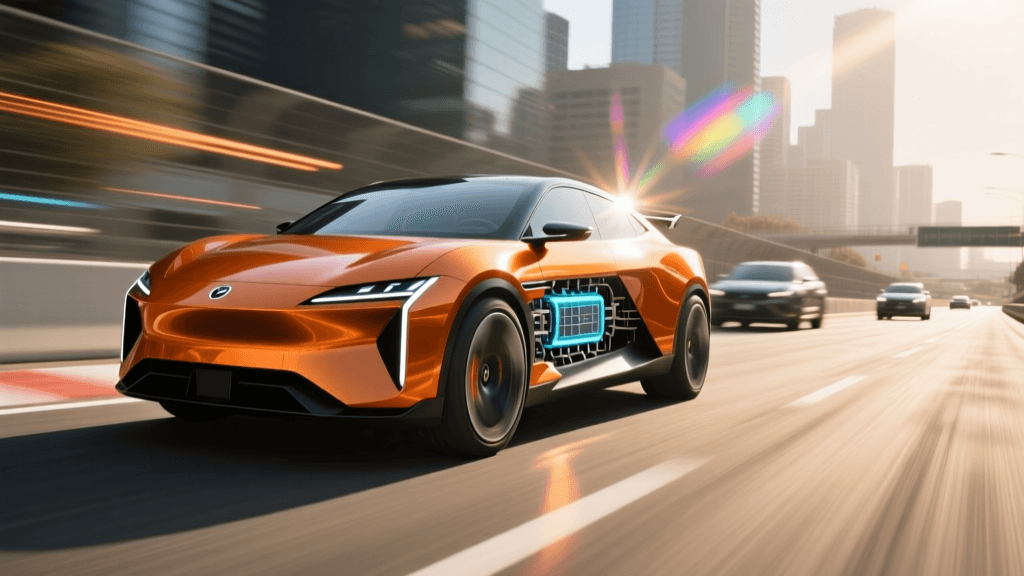
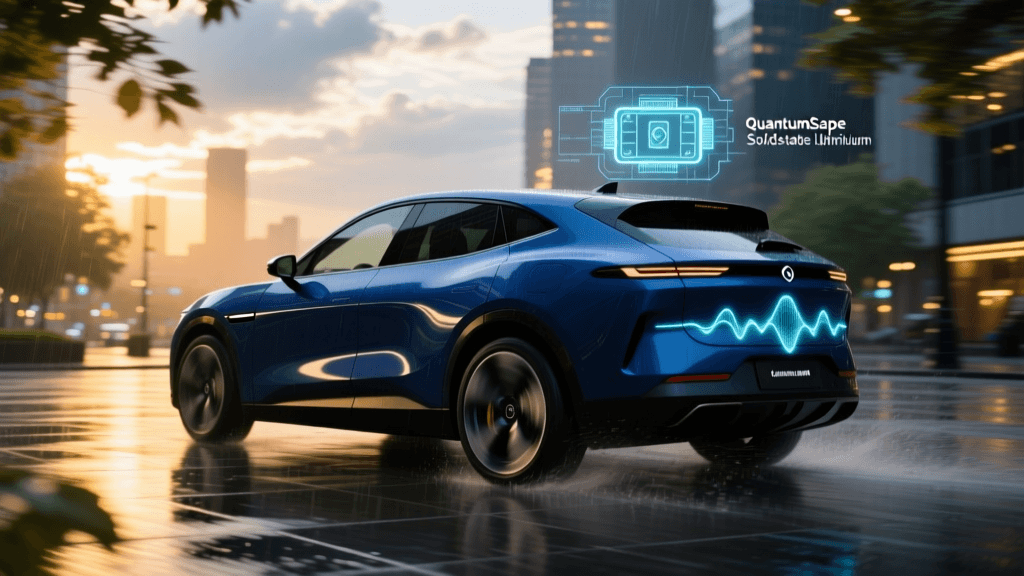
In the rapidly evolving landscape of electric vehicle (EV) technology, few terms generate as much excitement—and confusion—as the word "quantum." For years, the automotive industry and financial markets have closely tracked the progress of QuantumScape, a company backed by Volkswagen that promises to revolutionize EV range and charging speeds. However, a massive nomenclature misconception has taken root in the mainstream automotive press. QuantumScape does not actually utilize quantum mechanics in its battery chemistry. Instead, it is developing advanced solid-state lithium-metal cells. Meanwhile, in the hushed laboratories of leading global universities, physicists are developing true quantum batteries that rely on quantum entanglement and superradiance to achieve theoretically impossible charging speeds.
As we look toward the next decade of EV adoption, smart driving integration, and autonomous fleet management, understanding the difference between these two next-generation energy storage paradigms is critical. In this head-to-head product showdown, we are pitting the near-term commercial reality of QuantumScape’s solid-state architecture against the mind-bending, physics-defying potential of true quantum superradiant batteries. Which technology will ultimately power the next generation of electric mobility? Let us break down the science, the manufacturing realities, and the timelines.
Contender 1: QuantumScape's Solid-State Reality
QuantumScape has positioned itself as the holy grail of near-term EV battery innovation. The company’s core product is a solid-state lithium-metal cell that replaces the flammable liquid electrolyte found in traditional NMC (Nickel Manganese Cobalt) and LFP (Lithium Iron Phosphate) batteries with a proprietary solid ceramic separator. This fundamental shift in chemistry addresses the three biggest pain points of current EV ownership: range anxiety, charging time, and safety.
The Ceramic Separator and Anode-Free Architecture
The crown jewel of QuantumScape’s design is its ceramic separator, which is engineered to be highly conductive to lithium ions while remaining completely impervious to lithium dendrites. Dendrites are microscopic, needle-like structures that form on the anode during fast charging and can pierce traditional polymer separators, causing catastrophic short circuits and thermal runaway. By eliminating this risk, QuantumScape cells can accept much higher charge rates without degrading.
Furthermore, QuantumScape utilizes an "anode-free" manufacturing process. According to QuantumScape's official technology overview, the cell is manufactured without a traditional host anode material like graphite or silicon. Instead, during the first charge, lithium ions move through the ceramic separator and plate directly onto the anode current collector, forming the metallic lithium anode in situ. This eliminates the dead weight and volume of host materials, pushing the volumetric energy density past 800 Wh/L—nearly double that of the best conventional lithium-ion cells on the market today. This translates to EVs that can easily exceed 500 miles of real-world range on a single charge while maintaining a compact battery pack footprint.
Contender 2: True Quantum Batteries and Superradiance
While QuantumScape is refining materials science, true quantum battery research is rooted in quantum thermodynamics and quantum information theory. A true quantum battery does not store energy in chemical bonds; instead, it stores energy in the quantum states of microscopic systems, such as superconducting qubits, nitrogen-vacancy centers in diamonds, or organic molecules. The most promising breakthrough in this field is the concept of "superradiant" charging, which leverages quantum entanglement to drastically reduce charging times.
The Physics of Entangled Charging
In a classical battery pack, charging speed scales linearly. If you want to charge 100 cells, it takes roughly the same amount of time as charging one cell, limited by the thermal and chemical constraints of the materials. True quantum batteries operate under entirely different rules. When the quantum cells (qubits) are entangled, they enter what physicists call a "Dicke state." In this state, the cells interact with the electromagnetic field collectively rather than individually.
Because of this quantum entanglement, the charging power scales with the square of the number of cells ($N^2$). This means that a 100-qubit quantum battery doesn't just charge at the same rate as a single qubit; it can theoretically charge 100 times faster. The larger the battery, the more dramatic the quantum advantage in charging speed. For autonomous EV fleets that require near-instantaneous turnaround times between passenger routes, this non-linear charging capability is the ultimate dream.
The Quantum Advantage: While classical batteries are bound by linear thermodynamic limits, true quantum batteries utilize entanglement to achieve collective charging, meaning the charging time can actually decrease as the battery capacity increases.
However, the hurdles are immense. Quantum states are incredibly fragile. The phenomenon of "decoherence" occurs when the quantum system interacts with its environment (heat, electromagnetic noise), causing the entanglement to collapse and the stored energy to dissipate. Maintaining these states currently requires extreme isolation, often near absolute zero temperatures, making them entirely unsuitable for the harsh, variable thermal environment of an automotive chassis.
Head-to-Head Specification Showdown
To understand how these two next-generation technologies compare, we must look at their theoretical and practical specifications. The following table contrasts QuantumScape’s near-term commercial solid-state cells with the theoretical limits of true quantum superradiant batteries.
| Metric | QuantumScape (Solid-State Li-Metal) | True Quantum Battery (Superradiant) |
|---|---|---|
| Core Mechanism | Electrochemical (Lithium-ion transfer) | Quantum Thermodynamics (Entangled Qubits) |
| Volumetric Energy Density | > 800 Wh/L (Projected) | Currently microscopic (Lab scale) |
| Charging Speed Scaling | Linear (Limited by thermal/chemical limits) | Non-linear ($N^2$ Superradiant advantage) |
| 10% to 80% Charge Time | < 15 Minutes (at high C-rates) | Seconds (Theoretical, at macro scale) |
| Operating Temperature | -30°C to 60°C (Automotive grade) | Near Absolute Zero (Cryogenic required) |
| Commercial Readiness | Limited production (2026-2028) | Decades away for EV application (2040+) |
Supply Chain and Material Dependencies
When evaluating next-generation battery tech, the supply chain is just as critical as the chemistry. As detailed in Argonne National Laboratory's battery research primer, the global transition to EVs is heavily bottlenecked by the mining and refining of critical minerals like lithium, nickel, and cobalt. QuantumScape’s technology, while vastly superior in safety and density, still relies heavily on the lithium supply chain. The company’s anode-free design reduces the total mass of lithium required per cell, but it does not eliminate the geopolitical and environmental vulnerabilities associated with lithium mining.
Conversely, true quantum batteries could theoretically bypass the traditional mining supply chain entirely. Depending on the physical realization—whether it relies on synthetic diamond defects, superconducting circuits, or engineered organic molecules—the raw materials required are abundant and do not require massive open-pit mining operations. However, the manufacturing infrastructure required to build fault-tolerant quantum systems is currently limited to specialized semiconductor and quantum computing foundries, presenting a completely different, albeit equally complex, supply chain challenge.
The Verdict: Timelines and Actionable Buyer Advice
So, which technology wins the showdown? The answer depends entirely on your timeline. If you are an automotive engineer, an EV fleet manager, or an early-adopter consumer looking at the next five to ten years, QuantumScape’s solid-state technology is the undisputed winner. It is a tangible, manufacturable product that solves the immediate bottlenecks of EV adoption. We expect to see the first premium EVs equipped with QuantumScape cells hitting the market between 2026 and 2028, likely starting with high-end Porsche or Audi models under the VW Group umbrella.
True quantum batteries, on the other hand, remain a triumph of theoretical physics rather than applied automotive engineering. As noted in Nature's comprehensive battery research subject page, the leap from microscopic quantum coherence to macroscopic energy storage requires overcoming the decoherence problem at room temperature—a feat that may require entirely new discoveries in materials science. True quantum batteries will likely find their first commercial applications in the 2030s within nanoscale medical devices, IoT sensors, and quantum computing memory, rather than powering a two-ton SUV.
Actionable Advice for EV Buyers and Fleet Operators
- Do not delay your current EV purchase waiting for "Quantum" tech: If you need an EV today or within the next three years, modern LFP and high-nickel NMC batteries are more than capable, offering excellent longevity and fast-charging capabilities via 800V architectures.
- Fleet Managers should monitor Solid-State pilots: If you manage a commercial delivery or autonomous ride-hailing fleet, begin engaging with OEMs now regarding their solid-state battery roadmaps. The 15-minute fast-charging capability of solid-state cells will be the key to maximizing vehicle uptime and eliminating Level 3 charging bottlenecks.
- Investors should separate the hype from the physics: When evaluating next-gen energy storage startups, scrutinize their terminology. If a company claims "quantum charging" but relies on lithium-ion chemistry, they are using marketing buzzwords. True quantum thermodynamics is a long-term play that will not impact automotive balance sheets for at least two decades.
Ultimately, QuantumScape represents the vital next step in the evolution of the automobile, bridging the gap between the limitations of liquid electrolytes and the demands of modern smart driving. True quantum batteries represent the distant, revolutionary future of energy itself. Both are fascinating, but only one is ready to hit the pavement.