Why the Lithium Metal Battery Breakthrough Headlines Keep Coming
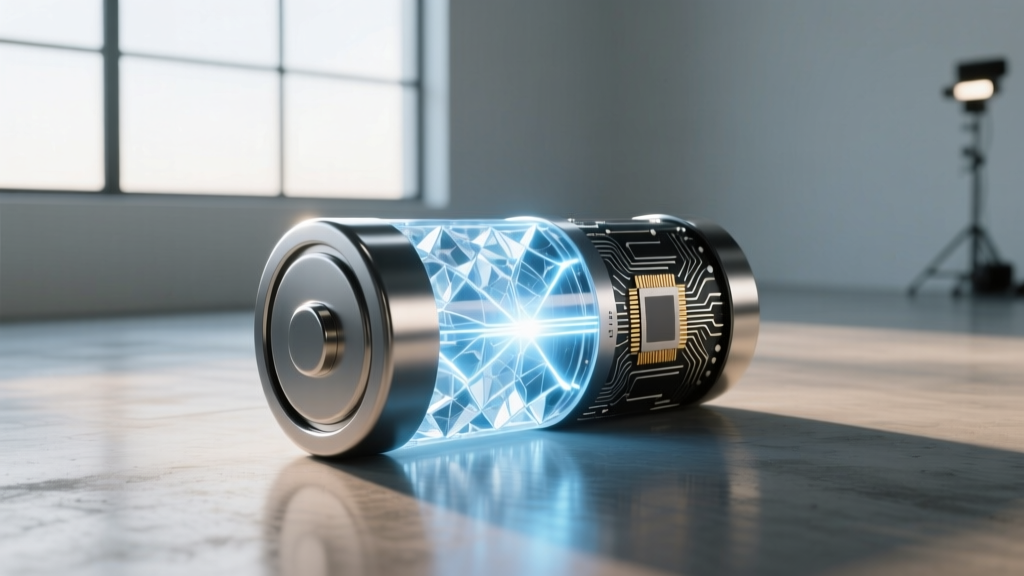
Every few months, a new press release promises that a lithium metal battery breakthrough will double EV range and slash charging times. The reality in 2026 is more nuanced. Lithium metal anodes—replacing the graphite or silicon-carbon anodes in today's cells—do offer a theoretical energy density leap from roughly 250–300 Wh/kg at the cell level to potentially 400–500 Wh/kg. But lab success and automotive-grade mass production are separated by years of engineering around dendrite formation, cycle life, and manufacturing yield.
For buyers shopping today, the battery in your EV is almost certainly one of two proven lithium-ion chemistries: NMC/NCA (nickel manganese cobalt / nickel cobalt aluminum) or LFP (lithium iron phosphate). Understanding what you actually have—and how to care for it—matters far more than chasing headlines about what's coming next.
Today's EV Battery Chemistry: LFP vs NMC/NCA
The chemistry inside your battery pack dictates range, longevity, charging behavior, cold-weather performance, and even how you should set your daily charge limit. Here is how the two dominant chemistries compare in production vehicles as of 2026:
| Attribute | LFP (Lithium Iron Phosphate) | NMC / NCA (Nickel-based) |
|---|---|---|
| Cell energy density | ~160–200 Wh/kg | ~250–300 Wh/kg |
| Typical pack examples (2026) | Tesla Model 3 RWD (60 kWh), BYD Seal, Ford Mustang Mach-E Select LFP variant | Hyundai Ioniq 5 (84 kWh), Tesla Model Y Long Range (75 kWh NMC), Rivian R1S (128 kWh NMC) |
| Cycle life (to 80% SoH) | 3,000–5,000+ cycles | 1,000–2,000 cycles |
| Cold-weather range loss (20°F) | ~30–40% loss | ~20–30% loss |
| Daily charge recommendation | 100% OK (periodic full calibrations recommended) | 80% daily; 100% only for trips |
| DC fast-charge tolerance | Handles frequent DCFC well | More stress at high SoC + high kW; preconditioning critical |
| Cost per kWh (pack level) | ~$90–$110 | ~$120–$150 |
| Cobalt / ethical sourcing | Cobalt-free | Contains cobalt/nickel (varies by supplier) |
Which is better? There is no single winner. LFP is the pragmatic choice for daily commuters who want maximum cycle life and don't need the last 50 miles of range. NMC/NCA is the right pick for road-trippers, cold-climate drivers, and anyone towing—its higher energy density and better cold performance are tangible. According to fueleconomy.gov, a 2026 Tesla Model 3 RWD (LFP, ~60 kWh) carries an EPA range of 272 miles, while the Long Range AWD (NMC, ~75 kWh) achieves 363 miles—illustrating the density gap in a single model line.
How Long Do EV Batteries Actually Last?
The short answer: almost certainly longer than you'll own the car. Modern liquid-cooled packs are engineered for 1,000–5,000 charge cycles depending on chemistry, which translates to hundreds of thousands of miles before meaningful degradation.
Real-world degradation data points (aggregated from fleet reports, Recurrent Auto, and owner tracking):
- Tesla Model 3/Y (NMC, 2020–2023): ~5–7% capacity loss at 100,000 miles; ~10–12% at 200,000 miles. Plateau behavior after initial 2–3% drop in the first year.
- Chevrolet Bolt EV/EUV (NMC, 2017–2023): Early 2017–2019 models saw ~8–10% loss at 80k miles; post-recall replacement packs performing significantly better.
- Nissan Leaf (passive air-cooled NMC): Historically the degradation cautionary tale—2011–2017 models lost 20–30%+ capacity in hot climates. A strong argument for active thermal management.
- LFP packs (Tesla Model 3 RWD, BYD): Early fleet data (Recurrent, 2024–2025 reports) shows <3% loss at 60,000 miles with daily 100% charging—consistent with LFP's cycle-life advantage.
- Hyundai/Kia E-GMP (Ioniq 5, EV6, NMC): ~4–6% loss at 60,000 miles per owner tracking forums; 800V architecture and robust thermal management contribute.
The key takeaway: degradation is not linear. Most packs lose 2–5% in the first year or two, then the curve flattens significantly. A well-maintained 2026 pack should retain 85–92% capacity at 150,000 miles. For context, Recurrent Auto's fleet data consistently shows that the vast majority of EVs retain well above their warranty threshold even at high mileage.
What Does the Battery Warranty Actually Cover?
Federal law mandates a minimum 8-year/100,000-mile warranty on EV battery packs (10 years/150,000 miles in CARB states like California). But the details matter:
| Automaker (2026 MY) | Battery Warranty | Capacity Retention Threshold | Notes |
|---|---|---|---|
| Tesla (Model 3/Y) | 8 yr / 120,000 mi (LR/AWD); 8 yr / 100,000 mi (RWD) | 70% | LFP RWD has lower mile cap |
| Hyundai / Kia | 10 yr / 100,000 mi | 70% | Among the longest coverage |
| Ford (Mustang Mach-E, F-150 Lightning) | 8 yr / 100,000 mi | 70% | Standard across BEV lineup |
| GM (Ultium-based: Equinox EV, Blazer EV, Silverado EV) | 8 yr / 100,000 mi | 70% | Battery and propulsion components |
| Rivian (R1T/R1S) | 8 yr / 175,000 mi | 70% | Highest mileage threshold in segment |
| BMW (i4, iX, i7) | 8 yr / 100,000 mi | 70% | Includes cell-level module replacement |
What triggers a warranty claim? If your pack's usable capacity drops below the stated threshold (typically 70% of original) within the warranty period, the manufacturer will repair, replace modules, or replace the pack—restoring capacity above the threshold. This is not a "new battery" guarantee; it's a minimum-capacity guarantee. In practice, very few packs fall below 70% within the warranty window based on current fleet data.
How Much Does an EV Battery Cost to Replace?
This is the question that generates the most anxiety—and the most misinformation. Yes, a full pack replacement is expensive. But the context most fear-driven headlines omit is that the vast majority of EV batteries outlive the vehicle's economic life.
| Vehicle (Pack Size) | Estimated Replacement Cost (2026) | When Typically Needed |
|---|---|---|
| Tesla Model 3 RWD (~60 kWh LFP) | $10,000–$14,000 | Rarely within 200k+ mi |
| Tesla Model Y LR (~75 kWh NMC) | $13,000–$18,000 | Rarely within 200k+ mi |
| Hyundai Ioniq 5 (~84 kWh NMC) | $14,000–$20,000 | Rarely within 200k+ mi |
| Ford F-150 Lightning Ext Range (~131 kWh NMC) | $22,000–$30,000 | Rarely within 200k+ mi |
| Rivian R1S Max Pack (~149 kWh NMC) | $25,000–$35,000 | Rarely within 200k+ mi |
| Chevrolet Bolt EV (~65 kWh NMC) | $14,000–$16,000 (post-recall pack) | Recall-replaced packs performing well |
These figures include the battery pack and labor at a dealership or authorized service center. Independent EV shops and refurbished packs (from salvaged vehicles) are emerging as lower-cost alternatives, sometimes 30–50% cheaper. Module-level repair—replacing only degraded cell modules rather than the entire pack—is also increasingly available for packs with modular architectures (BMW, some GM Ultium configurations).
The practical reality: If your pack degrades to 70–75% capacity at 180,000 miles, you still have 200+ miles of real-world range in most modern EVs. Many owners simply keep driving. The pack rarely "dies" catastrophically—it slowly reduces range, which is manageable for daily use.
What Affects Battery Life—and How to Maximize It
Battery longevity isn't random. The physics of lithium-ion cells makes certain behaviors more stressful than others. Here's what the data shows:
Habits that extend battery life:
- Charge to 80% daily (NMC/NCA): Storing cells at high SoC accelerates electrolyte decomposition. Set your charge limit to 80% and only go to 100% before road trips. LFP owners: 100% daily is fine—your chemistry tolerates it, and periodic full charges help the BMS calibrate.
- Use DC fast charging sparingly: Occasional DCFC is fine, but daily 150–350 kW sessions generate sustained heat that stresses cells. If you have home Level 2, use it for daily charging and reserve DCFC for road trips.
- Precondition before fast charging: Every modern EV with active thermal management will precondition the battery when a DCFC is set in navigation. This brings cells to the optimal ~30–40°C for fast charging, reducing stress and improving charge speed. Never skip this.
- Avoid prolonged storage at 0% or 100%: If you're leaving your EV for weeks, set it to ~50% SoC. Calendar aging accelerates at the extremes.
- Park in shade/garage when possible in hot climates: Sustained high ambient temperatures (100°F+) accelerate degradation more than cold. Active thermal management mitigates this, but reducing exposure helps.
Habits with less impact than commonly feared:
- Cold weather charging: While cold reduces range and charge speed temporarily, the vehicle's thermal management protects the battery. Regen may be limited when cold, but the cells are not being damaged.
- Occasional 100% charges (NMC): Going to 100% before a trip and driving off promptly is not harmful. It's sitting at 100% for days that causes stress.
How to Check Your Battery's State of Health (SoH)
State of Health (SoH) is the percentage of your battery's original usable capacity that remains. A new pack is 100% SoH; a pack that has degraded to hold only 70 kWh of its original 80 kWh is at ~87.5% SoH.
How to check SoH in 2026:
- In-vehicle displays: Tesla (via the service menu or third-party apps), Hyundai/Kia (in the EV settings menu on newer models), and BMW (iDrive battery health readout) offer onboard SoH estimates.
- OBD-II dongles + apps: Tools like OBDeleven, LeafSpy (Nissan Leaf), or Scan My Tesla can read the BMS-reported SoH directly. Accuracy varies but provides a useful trend line.
- Third-party testing: Companies like Recurrent offer battery health reports that can be useful for used-EV purchases. Some dealerships can run a full capacity test.
- DIY range test: Charge to 100%, reset the trip meter, drive until ~10%, and compare actual miles driven to the original EPA range. Adjust for temperature and driving style. This won't give a precise SoH but flags major issues.
When to be concerned: If your SoH drops more than ~5% in a single year after the initial break-in period, or if you notice sudden range cliffs (indicating a weak cell module), schedule a diagnostic. Module-level issues can sometimes be repaired under warranty without a full pack replacement.
Beyond Today: Solid-State, Silicon Anode, and the Lithium Metal Question
The lithium metal battery breakthrough everyone asks about centers on replacing graphite anodes with pure lithium metal, which can theoretically double energy density. But the engineering challenges—dendrite growth causing short circuits, low cycle life, and manufacturing at scale—have kept it in the lab and pilot-production phase for years.
Where things stand in 2026:
- Silicon-dominant anodes (near-term, 2026–2028): Companies like Sila Nanotechnologies and Group14 are supplying silicon-carbon anode materials that boost energy density 10–20% over graphite. These are entering production cells now and represent the most realistic near-term improvement.
- Semi-solid-state (2027–2030): Toyota, Samsung SDI, and QuantumScape have demonstrated prototype solid-state and semi-solid cells with promising energy density. Toyota has announced limited production intent for ~2027–2028, but volume, cost, and durability validation remain open questions. Treat all announced timelines as preliminary.
- True solid-state / lithium metal (2030+): Full solid-state batteries with lithium metal anodes are widely expected to reach mass automotive production no earlier than the early 2030s. They promise 400+ Wh/kg cell-level density, faster charging, and improved safety—but cost parity with today's lithium-ion is unproven.
For today's buyer: the battery in a 2026 EV is mature, well-understood, and backed by real-world fleet data spanning billions of miles. Waiting for a lithium metal battery breakthrough means waiting at least 4–6 years for a vehicle you can actually buy at scale. The chemistry you can drive today—whether LFP or NMC—is genuinely good enough to last the life of the car.
Frequently Asked Questions
How long do EV batteries last in years and miles?
Modern liquid-cooled EV batteries are designed to last 15–20 years or 200,000–300,000+ miles before reaching 70–80% of original capacity. LFP chemistries typically outlast NMC in cycle count. Fleet data from Tesla, Hyundai, and others consistently shows packs retaining 85%+ capacity at 150,000 miles under normal use.
How much does it cost to replace an EV battery?
Full pack replacement ranges from ~$10,000 for a 60 kWh LFP pack to $30,000+ for a 130+ kWh NMC pack in a large truck or SUV, including labor. However, most packs never need replacement within the vehicle's useful life. Module-level repairs are increasingly available at lower cost.
What does the EV battery warranty cover?
Federal law requires a minimum 8-year/100,000-mile warranty (10 yr/150,000 mi in CARB states). Coverage guarantees the pack will retain at least 70% of original capacity. If it falls below, the manufacturer repairs or replaces it. This covers defects and abnormal degradation, not physical damage from accidents.
How do I check and maximize my EV battery health?
Check SoH via your vehicle's onboard display, an OBD-II app, or a third-party diagnostic. Maximize longevity by charging to 80% daily (NMC), using home Level 2 instead of daily DCFC, preconditioning before fast charges, avoiding prolonged storage at 0% or 100%, and minimizing exposure to extreme heat.
LFP vs NMC — which battery chemistry should I choose?
Choose LFP if you want maximum cycle life, lower cost, cobalt-free sourcing, and you primarily commute with home charging. Choose NMC/NCA if you need maximum range per charge, better cold-weather performance, or you tow frequently. Both chemistries are proven to last the vehicle's lifetime with proper care.
Will solid-state or lithium metal batteries make today's EVs obsolete?
Not for years. Solid-state and lithium metal batteries remain in prototype and limited pilot production as of 2026. Mass-market vehicles with these chemistries are not expected before 2030 at the earliest. Today's lithium-ion packs are mature, well-supported, and sufficient for the vast majority of drivers.