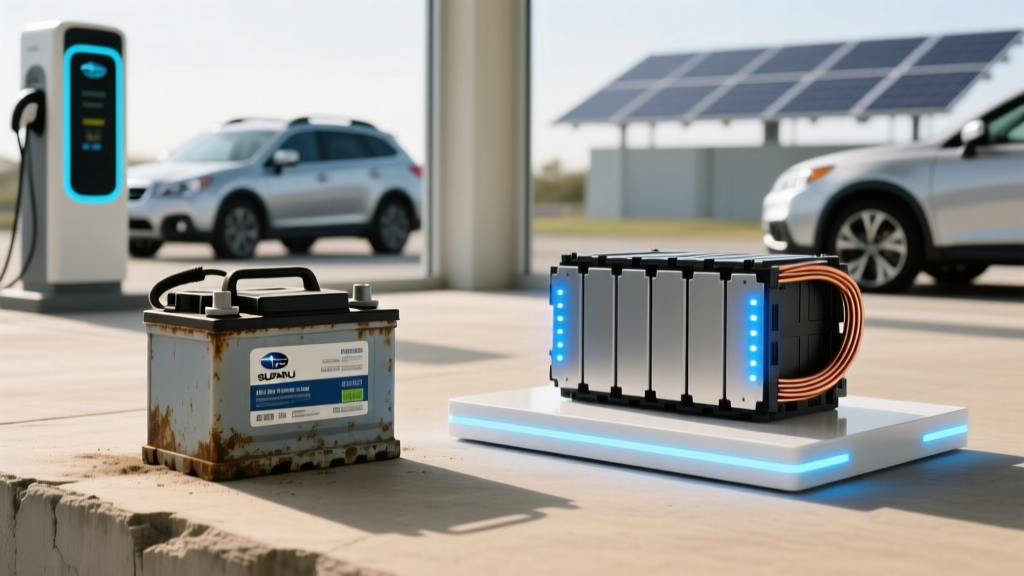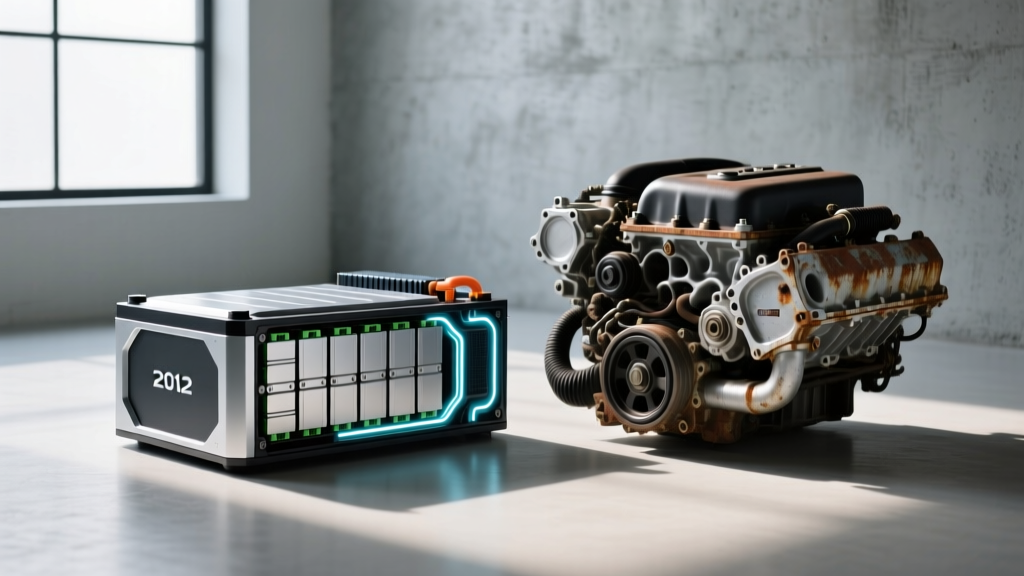
If you owned a 2012 Nissan Rogue, you likely kept it for 8 to 12 years before major powertrain repairs or retirement. The gasoline SUV's CVT transmission, timing chain, and engine mounts were common failure points well before 150,000 miles. Today's EV buyers ask a parallel question: will the high-voltage traction battery outlast the car, or become a five-figure liability?
Fourteen years of real-world EV data — from early Nissan Leafs to modern 800V architectures — now provide a clear answer. This guide breaks down battery chemistry, degradation curves, warranty coverage, replacement costs, and care habits, using the ownership arc of a 2012 Nissan Rogue as a timeline benchmark.
How Long Do EV Batteries Actually Last?
The short answer: most modern EV traction batteries will outlast the vehicle they're installed in. Data aggregated from fleet operators, manufacturer warranty claims, and third-party studies show typical capacity retention of 85–92% after 100,000 miles for liquid-cooled NMC packs and 90–95% for LFP chemistries over the same distance.
To put that in perspective, the average 2012 Nissan Rogue owner drove roughly 12,000–15,000 miles per year, accumulating 120,000–180,000 miles over a decade of ownership. At those same mileage intervals, a 2025-era EV with a 300-mile EPA range would still deliver 255–285 miles per charge — more than adequate for daily use.
- Tesla fleet data (2025 Impact Report): Model 3/Y NMC packs retain ~88% capacity at 150,000 miles.
- Geotab fleet study (2024): Average annual degradation across 10,000+ EVs is 1.8% per year, slowing after year 3.
- Recurrent Auto (2025): Chevrolet Bolt EV (NMC, active thermal management) averages 93% State of Health at 80,000 miles.
- Early passive-cooled packs (2011–2015 Nissan Leaf, 24 kWh): 20–30% loss by year 8 in hot climates — the outlier that shaped modern warranty terms.
The critical distinction: passively cooled batteries (no liquid thermal management) degrade significantly faster than actively managed packs. Every mainstream EV sold since 2020 uses liquid cooling, eliminating the worst-case scenarios seen in early Leafs.
LFP vs. NMC/NCA: Battery Chemistry Trade-Offs
Two dominant lithium-ion chemistries power today's EVs. Understanding the difference matters because it affects range, longevity, charging behavior, and even how you should set your daily charge limit.
| Attribute | LFP (Lithium Iron Phosphate) | NMC / NCA (Nickel-based) |
|---|---|---|
| Energy density | Lower (~160 Wh/kg cell-level) | Higher (~250–300 Wh/kg cell-level) |
| Cycle life | 3,000–5,000+ cycles to 80% SoH | 1,000–2,000 cycles to 80% SoH |
| Cold-weather performance | Weaker; more range loss below 32°F | Better low-temp discharge capability |
| Cost per kWh | ~$80–100 (2025 pack-level) | ~$110–140 (2025 pack-level) |
| Daily charge recommendation | 100% OK; BMS needs full charge for calibration | 80% daily; 100% only for trips |
| Typical applications | Tesla Model 3 RWD, Ford Mustang Mach-E Select (2025+), BYD models | Tesla Model Y LR, Hyundai Ioniq 5, Rivian, most long-range models |
| Cobalt/nickel content | None — lower supply-chain risk | Contains nickel, cobalt (varies by formulation) |
Which is better? Neither is universally superior. LFP wins on cycle life, cost, and simplicity (charge to 100% freely) but sacrifices energy density and cold-weather range. NMC/NCA delivers more miles per kilogram of battery and charges faster in cold weather, but benefits from an 80% daily limit to maximize longevity. If you live in a mild climate and want maximum battery lifespan on a budget, LFP is the pragmatic pick. If you need maximum range or live where winters are harsh, NMC is the stronger choice.
EV Battery Warranty Terms: What's Actually Covered
Federal law mandates a minimum 8-year / 100,000-mile warranty on EV battery packs (emissions-related component rules). California Air Resources Board (CARB) states extend this to 10 years / 150,000 miles. Most manufacturers match or exceed these floors.
| Manufacturer (2025–2026 models) | Coverage | Capacity Threshold |
|---|---|---|
| Tesla (Model 3/Y) | 8 yr / 120,000 mi (LR: 120k; RWD: 100k) | 70% retention |
| Hyundai / Kia (Ioniq 5, EV6) | 10 yr / 100,000 mi | 70% retention |
| Ford (Mach-E, F-150 Lightning) | 8 yr / 100,000 mi | 70% retention |
| GM (Ultium-based: Equinox EV, Blazer EV) | 8 yr / 100,000 mi | 70% retention (60% for some commercial) |
| Rivian (R1T, R1S) | 8 yr / 175,000 mi | 70% retention |
| BMW (i4, iX) | 8 yr / 80,000 mi | 70% retention |
What triggers a warranty claim? If your battery's State of Health (SoH) drops below the stated threshold (typically 70% of original capacity) within the coverage period, the manufacturer must repair or replace the pack at no cost. This covers cell degradation — not damage from collisions, flooding, or unauthorized modifications.
For context, a 2012 Nissan Rogue's powertrain warranty was 5 years / 60,000 miles. Today's EV battery warranties are substantially longer and cover a component that, statistically, rarely fails catastrophically.
How Much Does an EV Battery Replacement Cost?
Out-of-warranty battery replacement is the concern that keeps prospective EV buyers awake. Here's what the data shows for 2025–2026:
| Vehicle / Pack Size | Battery Capacity | Replacement Cost (Parts + Labor) | Typical Need Timeline |
|---|---|---|---|
| Tesla Model 3 RWD (LFP) | ~60 kWh | $12,000–$16,000 | Rarely before 200,000+ mi |
| Tesla Model Y Long Range (NMC) | ~75 kWh | $14,000–$20,000 | Rarely before 200,000+ mi |
| Hyundai Ioniq 5 (NMC) | 77.4 kWh | $15,000–$22,000 | Rarely before 180,000+ mi |
| Ford F-150 Lightning (extended) | 131 kWh | $25,000–$35,000 | Rarely before 150,000+ mi |
| Chevrolet Bolt EV/EUV | 65 kWh | $14,000–$17,000 | Rarely before 180,000+ mi |
| Early Nissan Leaf (24 kWh, passive cooling) | 24 kWh | $6,500–$9,000 (remanufactured) | Often by year 8–10 in hot climates |
Critical context: Pack-level battery prices have fallen from ~$400/kWh in 2012 to roughly $100–140/kWh in 2025, according to BloombergNEF tracking. Costs continue declining. By the time a 2025 EV actually needs an out-of-warranty replacement (likely 2038+), expect pricing to be 30–50% lower than today's figures.
Also worth noting: module-level repair is increasingly available. Rather than replacing an entire pack, specialized shops can identify and swap degraded modules for $2,000–$6,000, depending on the vehicle. This was not an option for most owners a decade ago.
Factors That Accelerate (or Preserve) Battery Life
Battery degradation is not random. It's driven by measurable stressors that you can control:
- Daily charge limit: Set NMC packs to 80% for routine use; charge to 100% only before long trips. LFP packs can (and should) be charged to 100% regularly for BMS calibration.
- DC fast charging: Occasional use is fine; daily DCFC on the same pack adds ~0.5–1% extra annual degradation vs. Level 2-only charging (Geotab 2024 fleet data). Precondition the battery before fast charging to reduce stress.
- Temperature extremes: Avoid leaving the vehicle at 100% SoC in sustained heat above 95°F. In winter, use scheduled departure preconditioning to warm the pack before driving.
- Storage: If parking for weeks, leave NMC at ~50% SoC; LFP at ~60–70%. Avoid storing at 100% or below 10%.
- Regen braking settings: Moderate regen is fine; max-regen one-pedal driving does not measurably harm the battery (charge current during regen is well within safe C-rates).
What hurts batteries most: Sustained high temperatures combined with high State of Charge. A pack sitting at 100% SoC in a Phoenix summer undergoes more chemical stress than one driven hard in moderate temperatures. Liquid thermal management mitigates this substantially, but the physics remain.
How to Check and Monitor Battery Health (SoH)
State of Health (SoH) is the percentage of original capacity your pack can still hold. A new battery is 100% SoH; at 70% SoH, a 300-mile EPA vehicle delivers ~210 miles of original range.
How to check SoH:
- In-vehicle displays: Tesla shows battery health in the Service menu (or via the Tesla app on newer software). Hyundai/Kia provide SoH through the dealer diagnostic tool — request it during service visits. BMW displays it in the iDrive service menu.
- OBD-II dongles + apps: Tools like OBDLink SX paired with apps such as Leaf Spy (Nissan), ABRP OBD, or manufacturer-specific scan tools can read SoH directly from the BMS.
- Third-party reports: Services like Recurrent offer battery health reports based on telematics data, useful for used-EV purchases.
- Manual tracking: Charge to 100% (on an LFP or periodically on NMC), note the displayed range, and compare to the original EPA sticker. This is imprecise (displayed range is affected by recent driving patterns) but provides a trend line.
For used-EV buyers, a pre-purchase SoH check is as important as a compression test was on your 2012 Rogue's 2.5L four-cylinder. Don't skip it.
Emerging Battery Technology: What's Next (and When)
Several next-generation technologies are in development. None are available in production vehicles as of early 2026, but timelines are becoming clearer:
- Solid-state batteries: Promise 40–50% higher energy density, faster charging, and improved safety (no liquid electrolyte to ignite). Toyota has announced a 2027–2028 production target for limited models; Samsung SDI targets 2027. Realistic mass-market availability: 2029–2032. Cost remains the primary barrier.
- Silicon-dominant anodes: Companies like Sila Nanotechnologies and Group14 are replacing graphite anodes with silicon composites, boosting energy density 15–25%. Expected in production EVs by 2026–2028 (Porsche has signaled adoption for next-gen models).
- Sodium-ion batteries: Lower cost than lithium, no critical mineral supply constraints, but ~30% lower energy density. CATL has begun production for Chinese-market EVs; US/European adoption likely 2027+, primarily in budget and urban EVs.
- Lithium manganese iron phosphate (LMFP): An evolution of LFP with ~15–20% higher energy density while retaining cobalt-free chemistry. Expected in Tesla and Ford models by 2026–2027.
These are genuine engineering advances, not vaporware — but none will reach your driveway this year. For buyers shopping now, today's LFP and NMC chemistries are mature, well-understood, and backed by extensive warranty coverage.
EV Battery Ownership vs. the 2012 Rogue Timeline: The Bottom Line
Consider the full ownership arc:
- A 2012 Nissan Rogue owner spent an estimated $3,000–$6,000 on powertrain-related repairs (CVT replacement, engine mounts, exhaust, timing components) over 12 years, according to CarRepairPal averages for the model.
- A 2025 EV owner will likely spend $0 on battery-related costs over the same period — the pack will retain 80–90% of its capacity, the vehicle will still be functional, and the warranty covers the worst-case scenario.
- The EV eliminates transmission fluid, timing belts, spark plugs, oxygen sensors, catalytic converters, and every other failure point that defined the Rogue's maintenance schedule.
The battery isn't the liability most buyers fear. It's the component most likely to outlive everything else on the car.
Frequently Asked Questions
How long do EV batteries last in years and miles?
Modern liquid-cooled EV batteries typically last 15–20 years or 200,000+ miles before degrading below 70% capacity. LFP chemistries often exceed 3,000 charge cycles (equivalent to 500,000+ miles at 300 mi/cycle) before reaching 80% SoH. Most EVs are scrapped for collision or body damage before the battery reaches end-of-life.
How much does an EV battery cost to replace in 2026?
Full pack replacement ranges from $12,000 for a ~60 kWh pack to $35,000 for a 130+ kWh pack (parts and labor). Module-level repair is increasingly available for $2,000–$6,000. Prices are declining ~8–12% annually as manufacturing scales. Most owners will never pay this — the battery either stays within warranty or outlasts the vehicle.
What does the EV battery warranty actually cover?
Federal minimum coverage is 8 years / 100,000 miles (10 yr / 150,000 mi in CARB states). The warranty covers capacity loss below a stated threshold (typically 70% of original capacity) and manufacturing defects. It does not cover collision damage, flood damage, or degradation from unauthorized modifications. Per IRS and manufacturer guidelines, warranty transfers to subsequent owners in most cases.
How do I maximize my EV battery's lifespan?
For NMC packs: charge to 80% daily, precondition before DC fast charging, avoid prolonged storage at 100% SoC in heat. For LFP packs: charge to 100% regularly for BMS accuracy, and follow the same temperature guidelines. Moderate DCFC use is fine; daily exclusive DCFC adds marginal degradation. Use scheduled departure features to warm the battery in winter.
Is LFP or NMC better for my situation?
Choose LFP if you want maximum cycle life, lower cost, cobalt-free chemistry, and don't need the last 10–15% of range. Choose NMC/NCA if you need maximum range per charge, live in a cold climate (better low-temp performance), or prioritize fast-charging speed. Both chemistries will comfortably outlast a typical ownership period.
Should I avoid buying a used EV because of battery risk?
No — but always verify SoH before purchase. A used EV with 60,000 miles and 92% SoH is a strong buy. A used EV with 90,000 miles and 78% SoH in a hot climate warrants caution. Request a dealer diagnostic report or use an OBD-II tool. Remaining warranty coverage often transfers, providing additional protection.