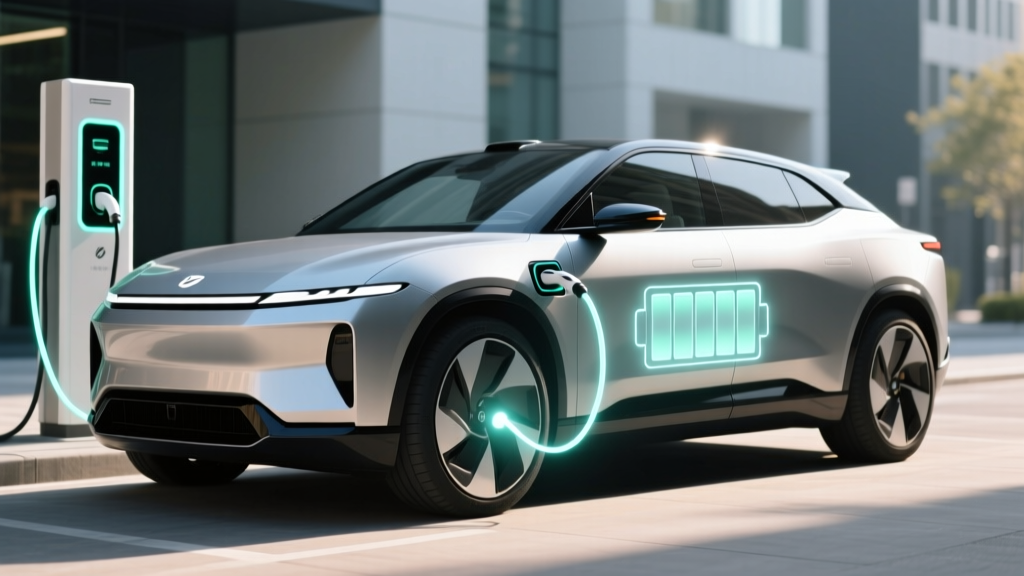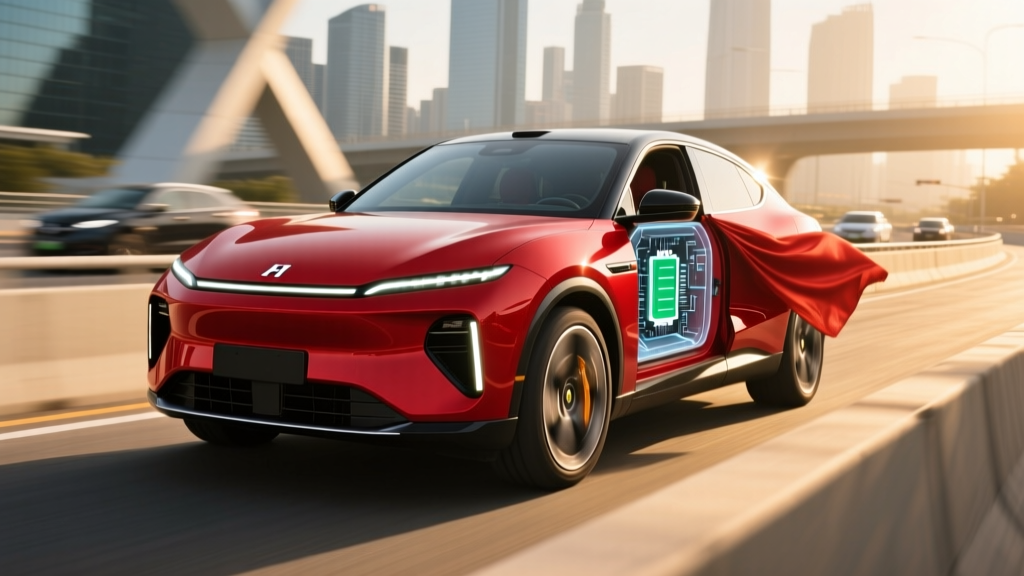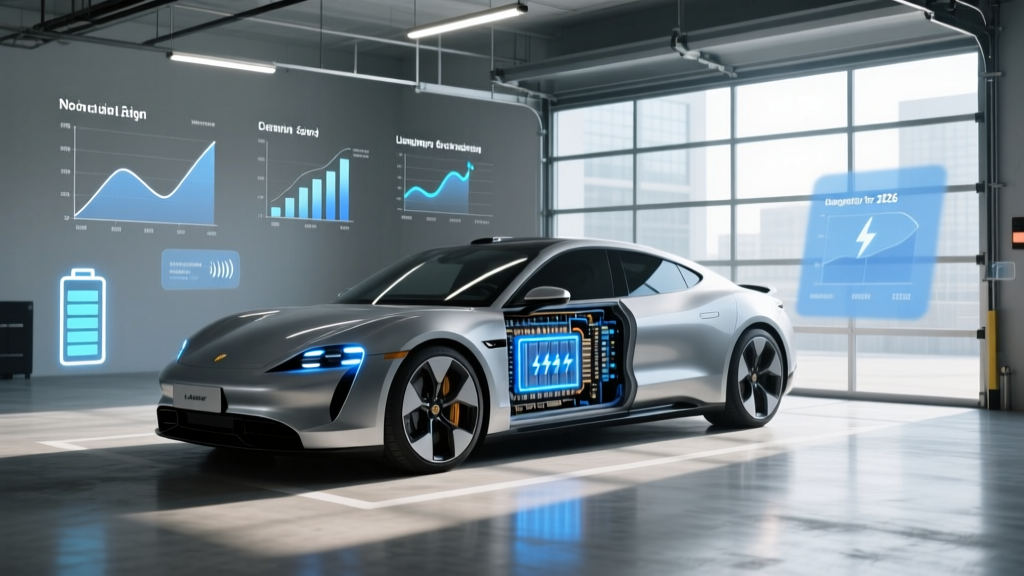
If you've spent any time in EV forums or YouTube comment sections, you've likely encountered the Donut Lab battery damage test — a series of independent stress evaluations that subject high-voltage traction battery modules to physical impact, thermal cycling, and deep-discharge abuse to see how modern EV battery packs hold up under extreme conditions. The results are both reassuring and instructive for anyone shopping for an electric vehicle or trying to maximize the lifespan of the one they already own.
This guide unpacks what those tests actually demonstrate, places the findings in the context of real-world ownership data, and gives you the exact numbers — degradation rates, warranty thresholds, replacement costs, and chemistry trade-offs — you need to make an informed decision about EV battery longevity.
What the Donut Lab Battery Damage Test Actually Measures
The Donut Lab battery damage test methodology focuses on three stress vectors that mirror real-world worst-case scenarios:
- Mechanical impact: Simulating road debris strikes, curb impacts, and minor collisions to the battery enclosure. The test evaluates whether cell-level damage propagates into thermal runaway or whether the pack's structural protection (steel/aluminum shielding, cell-to-pack spacing) contains the damage to a single module.
- Thermal cycling abuse: Repeatedly exposing battery modules to extreme temperature swings (−20°C to 55°C) while cycling between 0% and 100% State of Charge (SoC). This accelerates the degradation mechanisms — electrolyte decomposition, solid-electrolyte interphase (SEI) layer growth, and lithium plating — that occur gradually over years of normal use.
- Deep-discharge stress: Holding cells at very low SoC for extended periods, then subjecting them to high-rate DC fast charging. This tests a scenario that many owners inadvertently create: leaving the car unplugged at low charge for weeks, then hitting a Supercharger immediately.
The key finding across Donut Lab's test iterations: modern EV battery packs with active thermal management systems show remarkable resilience to isolated damage events. A single compromised cell module does not cascade into full-pack failure in packs with proper cell isolation. However, the tests also confirm that cumulative abuse — repeated deep discharge, frequent DC fast charging from cold, and sustained high-SoC storage — measurably accelerates capacity loss.
Battery Chemistry: LFP vs. NMC/NCA Trade-Offs
The single most consequential battery decision you'll make in 2026 is chemistry. Two dominant cell chemistries power nearly every EV on the market, and they behave very differently over time.
| Attribute | LFP (Lithium Iron Phosphate) | NMC / NCA (Nickel Manganese Cobalt / Nickel Cobalt Aluminum) |
|---|---|---|
| Energy density | ~160–180 Wh/kg (lower range per kWh of pack weight) | ~220–270 Wh/kg (higher range from lighter pack) |
| Cycle life | 3,000–5,000+ full cycles to 80% SoH | 1,000–2,500 full cycles to 80% SoH |
| Cold-weather performance | Weaker — greater range loss below freezing (~35–40% loss at −10°C without preconditioning) | Better — ~25–30% range loss at −10°C |
| Optimal daily SoC | Can be charged to 100% daily without significant harm | Best kept at 80% for daily use; 100% only for trips |
| Cost per kWh | ~$90–$110/kWh (2026 cell-level) | ~$120–$145/kWh (2026 cell-level) |
| Thermal stability | Excellent — higher thermal runaway threshold (~270°C) | Good — lower thermal runaway threshold (~210°C) |
| Common 2026 applications | Tesla Model 3/Y RWD, Ford Mustang Mach-E Select (base), BYD models | Tesla Long Range/Performance, Hyundai Ioniq 5/6, Rivian, GM Ultium (large packs) |
Which is better? It depends on your use case. If you prioritize maximum cycle life, lower cost, and can accept somewhat less range per pound, LFP is the superior daily-driver chemistry. If you need maximum range from a lighter pack, drive in cold climates frequently, or tow heavy loads, NMC/NCA remains the better choice — provided you follow the 80% daily charge limit.
How Long Do EV Batteries Last? Real Degradation Data
The most common fear among prospective EV buyers is battery replacement. Let's address it with data, not anecdotes.
Based on aggregated fleet data from fueleconomy.gov, manufacturer warranty filings, and independent tracking by organizations like Recurrent Auto, here is what typical EV battery degradation looks like in 2026:
| Milestone | Typical Capacity Retained (NMC/NCA) | Typical Capacity Retained (LFP) |
|---|---|---|
| Year 1 / ~15,000 miles | 94–97% | 96–98% |
| Year 3 / ~45,000 miles | 89–93% | 93–96% |
| Year 5 / ~75,000 miles | 85–90% | 90–95% |
| Year 8 / ~120,000 miles | 80–87% | 87–93% |
| Year 10 / ~150,000 miles | 76–84% | 84–91% |
Critical context: Degradation is not linear. The steepest capacity loss occurs in the first 12–18 months (initial SEI layer formation), after which the curve flattens considerably. A battery that has lost 5% in year one is not on track to lose 50% in year ten. Most EV batteries in 2026 will outlast the vehicle's body, suspension, and interior before reaching a point where replacement is economically justified.
The Donut Lab battery damage test reinforces this: even under accelerated thermal-cycling abuse designed to simulate 15+ years of wear, test modules retained above 75% capacity — consistent with the upper end of real-world fleet data for well-maintained packs.
What Does the EV Battery Warranty Actually Cover?
Federal law in the United States mandates a minimum battery warranty of 8 years or 100,000 miles (whichever comes first) for all EVs. Many manufacturers exceed this baseline. Here's how major 2026 warranties stack up:
| Manufacturer (2026) | Warranty Term | Capacity Retention Threshold | Notes |
|---|---|---|---|
| Tesla | 8 yr / 120,000 mi (LR/Perf) or 100,000 mi (RWD) | 70% | Covers defects + capacity below threshold |
| Hyundai / Kia | 10 yr / 100,000 mi | 70% | Industry-leading term length |
| GM (Ultium) | 8 yr / 100,000 mi | 70% | Module-level replacement available |
| Ford | 8 yr / 100,000 mi | 70% | Covers battery + EV-specific components |
| Rivian | 8 yr / 175,000 mi | 70% | Highest mileage cap in segment |
What the warranty covers: Manufacturing defects, cell/module failures, and capacity loss below the stated threshold (typically 70% of original usable capacity). If your 75 kWh pack drops below 52.5 kWh usable within the warranty period, the manufacturer must repair or replace it at no cost to you.
What it does not cover: Damage from accidents, flooding, modifications, or abuse (e.g., repeatedly ignoring thermal warnings). Physical damage like the kind simulated in the Donut Lab battery damage test — road debris impacts, underbody strikes — is handled by your collision insurance, not the battery warranty.
EV Battery Replacement Cost: What You'll Actually Pay
This is where fear-mongering runs rampant, so let's ground it in current 2026 pricing and realistic timelines.
| Vehicle / Pack Size | Full Pack Replacement (Parts + Labor) | Module-Level Repair (if available) | Typical Need Timeline |
|---|---|---|---|
| Tesla Model 3 RWD (60 kWh LFP) | $10,000–$13,000 | Not widely modular | 15+ years / 200,000+ mi |
| Tesla Model Y LR (75 kWh NMC) | $12,000–$16,000 | $3,000–$5,000 per module section | 15+ years / 200,000+ mi |
| Hyundai Ioniq 5 (77.4 kWh NMC) | $14,000–$18,000 | $2,500–$4,500 per module | 15+ years / 200,000+ mi |
| GM Equinox EV / Blazer EV (85–102 kWh Ultium) | $14,000–$20,000 | $2,000–$4,000 per module | 15+ years / 200,000+ mi |
| Ford F-150 Lightning Ext. Range (131 kWh NMC) | $20,000–$28,000 | $3,500–$6,000 per module | 15+ years / 200,000+ mi |
The realistic picture: Most EV batteries will never need full replacement during the original owner's tenure. By the time a pack degrades to a level warranting replacement (below ~70% capacity, typically at 150,000–200,000+ miles), the vehicle's resale value may be lower than the replacement cost. At that point, the economic decision is usually to trade in or sell the vehicle rather than invest in a new pack.
Additionally, cell-level costs have continued to decline. The $100–$145/kWh cell pricing in 2026 means replacement costs will be lower in 2035 or 2040 than they are today. Third-party refurbishment services are also expanding, offering remanufactured packs at 40–60% of OEM pricing.
Factors That Accelerate Battery Degradation (and How to Avoid Them)
The Donut Lab battery damage test showed that isolated stress events are survivable. But cumulative daily habits determine your battery's decade-long trajectory. Here's what matters, ranked by impact:
Battery Care Checklist — Maximize Your Pack's Lifespan
- ⚡ Limit DC fast charging to road trips. Frequent use of 150+ kW DC fast chargers (especially without preconditioning) generates heat that accelerates SEI growth. For daily charging, Level 2 at home (7–11 kW) is gentler and cheaper.
- 🌡️ Precondition before fast charging. Every modern EV in 2026 supports battery preconditioning — warming the pack to ~35°C before accepting peak DC charge rates. If you navigate to a charger in the car's built-in nav (or Tesla app), preconditioning activates automatically. Arriving at a fast charger with a cold pack forces slower charging and causes lithium plating risk.
- 🔋 Follow chemistry-specific SoC limits. NMC/NCA: set daily charge limit to 80%, charge to 100% only before trips. LFP: charge to 100% regularly (at least weekly) to allow the BMS to calibrate cell balancing.
- 🅿️ Avoid prolonged storage at extreme SoC. Don't leave the car at 100% SoC for days in hot weather. Don't leave it below 10% for weeks. If storing for extended periods, set to ~50% SoC.
- ❄️ Use scheduled charging in cold weather. Set your charge to complete shortly before departure. A battery that finishes charging is warmer and more efficient for your morning commute.
- 🏠 Install a home Level 2 charger. A 48-amp Level 2 on a 60-amp circuit delivers ~11.5 kW — enough to fully replenish most EVs overnight at ~$0.13/kWh national average, versus $0.30–$0.50/kWh at public DC stations.
How to Monitor Your Battery's State of Health (SoH)
State of Health (SoH) is the percentage of your battery's current usable capacity relative to its original rated capacity. A new EV has 100% SoH; a battery at 85% SoH that originally held 75 kWh now delivers ~63.75 kWh usable.
Here's how to check and track SoH in 2026:
- In-car displays: Tesla shows estimated range at 100% (compare to original EPA rating for a rough SoH proxy). Hyundai/Kia's EV menu includes a dedicated battery health screen. GM's Ultium-based vehicles show battery health percentage in the diagnostic menu.
- OBD-II diagnostics: Apps like Scan My Tesla, ABRP OBD, or LeafSpy (for Nissan) read the BMS directly for precise SoH, cell voltage delta, and pack temperature. A $30–$50 Bluetooth OBD-II dongle plus the app gives dealer-level data.
- Third-party services: Companies like Recurrent and Geotab offer battery health reports based on telematics data — useful when buying a used EV to verify the seller's claims.
- Dealer inspection: Any authorized service center can run a full battery diagnostic. Request this during routine service or before a warranty claim.
When to be concerned: If your SoH drops more than 3% in a single year after the first year (which typically sees a one-time 3–5% loss), or if you notice sudden range drops of 10+ miles not attributable to temperature, schedule a diagnostic. This may indicate a failing module rather than normal degradation — and it's covered under warranty.
Emerging Battery Technology: Solid-State and Silicon Anodes
The EV battery landscape is evolving rapidly, but it's essential to separate lab milestones from production reality.
Solid-state batteries replace the liquid electrolyte with a solid ceramic, sulfide, or polymer separator. The theoretical advantages are significant: higher energy density (~400–500 Wh/kg vs. current ~250–270 Wh/kg for NMC), faster charging (potential 10–80% in under 10 minutes), and improved thermal stability. Toyota has announced solid-state production for select 2027–2028 models, while Samsung SDI targets 2027 for initial commercialization. However, manufacturing yield challenges and cost remain substantial hurdles. Realistic timeline for mainstream availability: 2029–2032.
Silicon-dominant anodes (replacing graphite) are closer to production. Companies like Sila Nanotechnologies and Group14 are already supplying silicon-carbon composite anodes that boost energy density by 15–25% without the cycle-life penalties of pure silicon. These are appearing in premium 2026 model-year packs and will proliferate through 2028.
Sodium-ion batteries are entering the market for lower-cost, shorter-range EVs (particularly in China). CATL and BYD are shipping sodium-ion packs with ~140–160 Wh/kg energy density at significantly lower cost. These won't replace lithium in long-range vehicles but will enable sub-$25,000 EVs with 150–200 miles of range.
Frequently Asked Questions
How long do EV batteries last in years and miles?
Based on 2026 fleet data, most EV batteries retain 80–90% capacity at 8 years / 120,000 miles and 76–91% at 10 years / 150,000 miles, depending on chemistry (LFP degrades slower than NMC) and care habits. Full pack replacement is rarely needed before 200,000+ miles. The federal warranty minimum is 8 years / 100,000 miles with a 70% capacity retention guarantee.
How much does it cost to replace an EV battery in 2026?
Full pack replacement costs range from $10,000–$13,000 for a Tesla Model 3 RWD (60 kWh LFP) to $20,000–$28,000 for a Ford F-150 Lightning Extended Range (131 kWh NMC). Module-level repairs, where available, cost $2,000–$6,000 per module. Most owners will never need a replacement — the battery typically outlasts the car's useful economic life.
What does the EV battery warranty cover?
Manufacturer warranties cover manufacturing defects and capacity loss below a specified threshold (usually 70% of original capacity) for 8–10 years / 100,000–175,000 miles depending on the brand. Warranties do not cover physical damage from accidents or road debris (that's collision insurance), modifications, or abuse such as repeatedly ignoring thermal management warnings. Per IRS guidelines, battery sourcing requirements also affect federal tax credit eligibility — a separate consideration from warranty coverage.
How do I check and maximize my EV battery's health?
Monitor SoH through your car's built-in battery health display, an OBD-II Bluetooth dongle with a diagnostic app, or a third-party telematics service. To maximize longevity: use Level 2 home charging for daily needs, limit DC fast charging to road trips, follow chemistry-appropriate SoC limits (80% daily for NMC, 100% for LFP), precondition before fast charging, and avoid prolonged storage at extreme charge levels.
LFP vs. NMC — which battery chemistry should I choose?
Choose LFP if you want maximum cycle life (3,000–5,000+ cycles), can charge to 100% daily without worry, prioritize lower cost, and don't need the absolute maximum range. Choose NMC/NCA if you need the longest possible range from a lighter pack, drive frequently in cold weather (better low-temp performance), or tow heavy loads. Both chemistries will last the life of the vehicle with proper care — the choice is about optimizing for your driving pattern, not about one being universally "better."
Does the Donut Lab battery damage test mean my EV battery is fragile?
No — the opposite. The Donut Lab battery damage test demonstrates that modern EV battery packs with active thermal management and cell-level isolation can withstand significant mechanical and thermal stress without catastrophic failure. The test's real lesson is that while single events are survivable, cumulative abuse (repeated extreme cycling, chronic fast charging from cold, sustained high-SoC storage) is what gradually erodes capacity. Follow the care checklist above and your pack will likely outlast the rest of the vehicle.