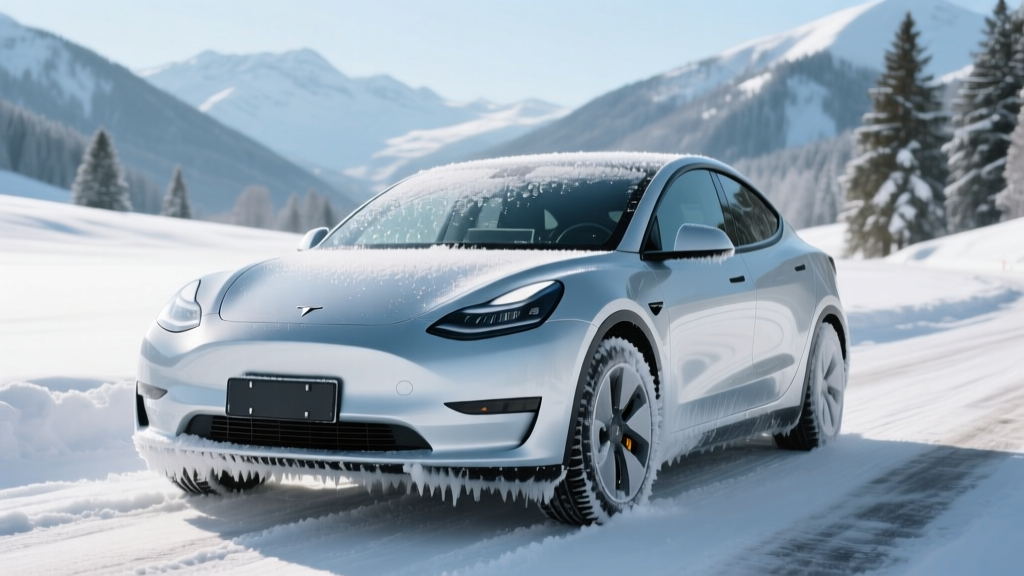
When Dongfeng Motor conducted its battery winter tests in China's Heilongjiang province—where temperatures routinely plunge below -30°C (-22°F)—the results offered a stark, data-rich look at how extreme cold impacts electric vehicle batteries. The Chinese automaker's testing, part of a broader industry push to validate EV viability in harsh climates, revealed range losses of 30-40% for some battery chemistries, while others fared notably better. These findings matter far beyond China's northern borders: any EV owner in Minnesota, Maine, or Montana faces similar physics.
This guide uses the Dongfeng battery winter tests as a springboard to explain what every EV buyer and owner needs to know about battery chemistry, degradation, longevity, replacement costs, and the care habits that maximize battery life—whether you're dealing with Arctic blasts or desert heat.
Why Dongfeng's Winter Tests Matter for Every EV Owner
Dongfeng's cold-weather validation program tested multiple battery packs—spanning LFP (lithium iron phosphate) and NMC (nickel manganese cobalt) chemistries—across its EV lineup, including models like the Dongfeng Aeolus E70 and the Voyah (Dongfeng's premium EV brand) Free SUV. The tests measured not just range retention but also charging speed, cabin heating energy draw, and cold-start performance at temperatures between -25°C and -35°C.
The headline finding: LFP batteries experienced greater range loss (closer to 40%) in extreme cold compared to NMC packs (around 30% loss), primarily because LFP chemistry has higher internal resistance at low temperatures. However, LFP batteries showed superior long-term cycle life and lower degradation rates in the overall test program.
These results align with broader industry data. A U.S. Department of Energy study via fueleconomy.gov found that EVs driven at 20°F with cabin heating on lose roughly 30-40% of their EPA-rated range—a figure consistent with what Dongfeng observed, despite the difference in testing methodology and climate conditions.
Battery Chemistry Explained: LFP vs NMC/NCA Trade-Offs
The Dongfeng winter tests highlight a fundamental choice in EV battery chemistry. Most EVs on the road use one of two lithium-ion cathode types, and each has distinct strengths and weaknesses that affect real-world ownership.
| Attribute | LFP (Lithium Iron Phosphate) | NMC/NCA (Nickel Manganese Cobalt / Nickel Cobalt Aluminum) |
|---|---|---|
| Energy Density | ~160-180 Wh/kg (lower) | ~220-260 Wh/kg (higher) |
| Cold Performance (-20°C) | 35-40% range loss; higher internal resistance | 25-30% range loss; better low-temp conductivity |
| Cycle Life | 3,000-5,000+ cycles to 80% SoH | 1,500-2,500 cycles to 80% SoH |
| Thermal Stability | Excellent; less prone to thermal runaway | Good; requires more active thermal management |
| Cost per kWh | ~$90-$110/kWh (2025-2026 pricing) | ~$120-$150/kWh |
| Typical Use | Standard-range models (Tesla Model 3 RWD, BYD, Dongfeng Aeolus) | Long-range/performance models (Tesla LR, Hyundai Ioniq 5, Ford Mustang Mach-E) |
| Recommended SoC Range | 20-100% (can charge to 100% daily) | 20-80% daily; 100% only for trips |
Which is better? It depends on your priorities. If you live in a cold climate and prioritize maximum range per charge, NMC/NCA is the stronger pick—it retains more range in winter and packs more energy into a lighter package. If you prioritize longevity, safety, lower cost, and don't mind slightly less range, LFP is the winner. Dongfeng's own lineup reflects this split: the cost-focused Aeolus models use LFP, while the premium Voyah models use NMC.
How Long Do EV Batteries Actually Last?
The short answer: most EV batteries outlast the cars they're installed in. Current data from fleets, manufacturer warranty claims, and independent testing shows that modern lithium-ion traction batteries retain 85-92% of their original capacity after 100,000 miles and 8 years of typical use.
Here's what the degradation data actually looks like:
- Year 1 / 15,000 mi: ~2-4% capacity loss (initial settling)
- Year 3 / 45,000 mi: ~5-8% total loss
- Year 5 / 75,000 mi: ~8-12% total loss
- Year 8 / 120,000 mi: ~10-15% total loss
- Year 10 / 150,000 mi: ~12-18% total loss
Source: Data compiled from Recurrent Auto battery health reports and OEM warranty claim rates.
The degradation curve is not linear. Most capacity loss occurs in the first year or two ("early settling"), after which the rate slows considerably. A 2023 study by Geotab, analyzing data from over 10,000 EVs, found an average annual degradation rate of just 1.8% after the initial settling period.
Factors that accelerate degradation include:
- Frequent DC fast charging (especially above 150 kW without adequate thermal management)
- Regularly charging to 100% on NMC/NCA batteries and leaving them sitting at full state of charge
- Deep discharges below 10% SoC repeatedly
- Extreme heat exposure (sustained ambient temps above 100°F / 38°C, common in Arizona, Nevada, and the Middle East)
- Cold-weather fast charging without battery preconditioning—charging a frozen battery forces lithium plating on the anode, causing permanent capacity loss
Battery Warranty Terms: What's Actually Covered
Federal law in the U.S. mandates that EV battery warranties cover a minimum of 8 years / 100,000 miles (10 years / 150,000 miles in California Air Resources Board states). Most manufacturers meet or exceed this baseline. Here's how major warranties compare:
| Manufacturer | Warranty Period | Capacity Retention Threshold | Notes |
|---|---|---|---|
| Tesla (Model 3/Y RWD - LFP) | 8 yr / 120,000 mi | 70% | LFP pack; longer mileage than LR |
| Tesla (Model 3/Y LR/Perf - NMC) | 8 yr / 120,000 mi | 70% | NMC/NCA pack |
| Hyundai / Kia (E-GMP) | 10 yr / 100,000 mi | 70% | Industry-leading duration |
| Ford (Mustang Mach-E, F-150 Lightning) | 8 yr / 100,000 mi | 70% | Components + capacity |
| GM (Ultium platform) | 8 yr / 100,000 mi | 70% | Covers cell modules individually |
| BYD (Blade Battery - LFP) | 8 yr / 150,000 mi (China) | 70% | LFP; U.S. availability limited |
| Dongfeng / Voyah | 8 yr / 150,000 km (China) | 70% | Not sold in U.S.; shown for comparison |
What the warranty covers: If your battery's usable capacity drops below the stated threshold (typically 70% of original capacity) within the warranty period, the manufacturer will repair or replace the battery—usually by swapping defective modules rather than the entire pack. Warranties generally cover defects in materials and workmanship, plus excessive degradation. They do not cover damage from accidents, flooding, or unauthorized modifications.
Key nuance: The 70% threshold means a 300-mile EPA-rated EV could have as little as 210 miles of range at the warranty boundary and still be considered "within spec." In practice, very few batteries degrade this much under normal use—warranty claim rates remain well below 2% across major manufacturers.
EV Battery Replacement Cost: What to Budget For
Battery replacement is the single biggest fear for prospective EV buyers—and the most misunderstood. Here's the reality: the vast majority of EV batteries never need full replacement during the vehicle's useful life. But when they do, here's what it costs.
| Vehicle / Battery Size | Chemistry | Replacement Cost (Parts + Labor) | Typical Replacement Timeline |
|---|---|---|---|
| Tesla Model 3 RWD (~60 kWh) | LFP | $12,000 - $15,000 | 15+ years / 200,000+ mi (if ever) |
| Tesla Model Y LR (~82 kWh) | NMC/NCA | $14,000 - $18,000 | 15+ years / 200,000+ mi |
| Hyundai Ioniq 5 (~77.4 kWh) | NMC | $13,000 - $16,000 | 15+ years |
| Ford F-150 Lightning Ext. Range (~131 kWh) | NMC | $22,000 - $28,000 | 15+ years |
| Chevrolet Bolt EV (~65 kWh) | NMC | $10,000 - $14,000 | 15+ years (post-recall packs) |
| Nissan Leaf (~62 kWh) | NMC (passive air cooling) | $8,000 - $12,000 | 10-15 years (faster degradation due to air cooling) |
When is replacement typically needed? Most full battery replacements occur at 150,000-250,000 miles or 12-20 years of age—well beyond the average vehicle ownership period. More commonly, individual battery modules can be replaced for $1,500-$3,500 per module if a single cell group develops a fault. This modular repair approach is how most warranty claims are actually fulfilled.
Costs are trending downward. Battery pack prices fell from ~$1,200/kWh in 2010 to roughly $100-$140/kWh by 2025, according to BloombergNEF. By the time most current EVs actually need a replacement pack, prices will likely be 30-50% lower than today's figures.
Lessons from the Dongfeng Tests: Maximizing Battery Life
Dongfeng's winter testing protocol revealed several actionable insights for battery care that apply to any EV owner, regardless of brand:
- Precondition before fast charging in cold weather. Dongfeng's tests showed that charging a cold-soaked battery at -25°C without preconditioning caused measurable lithium plating. Use your EV's navigation-to-charger preconditioning feature (Tesla, Hyundai, Ford, and most modern EVs offer this).
- Keep SoC between 20-80% for daily use on NMC/NCA batteries. LFP batteries tolerate 100% daily charging better—check your owner's manual for chemistry-specific guidance.
- Limit DC fast charging to road trips. Daily Level 2 home charging (7-11 kW) is gentler on cells than repeated 150+ kW DC sessions. Dongfeng's fleet data showed 2-3% additional degradation over 100,000 km for vehicles that fast-charged more than 3x per week.
- Park in a garage during extreme heat or cold. Even an unheated garage keeps battery temperatures 10-20°F warmer than ambient in winter and 15-25°F cooler in summer.
- Use scheduled charging to finish charging just before departure rather than sitting at 100% SoC for hours.
- Don't let SoC drop below 10% regularly. Deep discharges stress the anode and accelerate capacity loss.
How to Check Your Battery's State of Health (SoH)
Monitoring battery health isn't as straightforward as checking your oil level, but several methods are available:
1. In-vehicle diagnostics: Many modern EVs display battery health metrics in the settings menu. Tesla shows estimated range at 100% (compare to original EPA rating). Hyundai/Kia's Bluelink app provides SoH percentage. GM's Ultium vehicles include a battery health indicator in the driver information center.
2. OBD-II diagnostic tools: Devices like the OBDLink MX+ paired with apps such as LeafSpy (Nissan Leaf), TeslaFi (Tesla), or Car Scanner ELM (general) can read detailed battery data including individual cell voltages, pack voltage, estimated capacity in kWh, and SoH percentage.
3. Third-party battery health reports: Services like Recurrent provide battery health scoring based on connected-vehicle data. Some dealerships can pull a battery health report during service visits.
4. Manual tracking: Track your miles per kWh over time. If your efficiency drops from 3.5 mi/kWh to 3.0 mi/kWh over a year (controlling for weather and driving style), that suggests roughly 14% degradation. Log your data at consistent ambient temperatures for accuracy.
Emerging Battery Tech: Solid-State and Beyond
The Dongfeng winter tests also evaluated prototype next-generation cells, though these remain in pre-production. Here's where emerging technologies stand as of 2026:
Solid-state batteries: Toyota, Samsung SDI, and QuantumScape have demonstrated solid-state cells with 400+ Wh/kg energy density (roughly 2x current NMC) and faster charging capability. Toyota has announced limited production in select 2027-2028 models, but mass-market availability is not expected before 2030. Solid-state cells also promise better cold-weather performance due to lower internal resistance, though Dongfeng's prototype testing showed the technology still faces manufacturing scalability challenges.
Silicon anode batteries: Companies like Sila Nanotechnologies and Group14 are replacing graphite anodes with silicon-dominant materials, boosting energy density by 20-40%. These cells are entering limited production in 2026-2027 for premium EVs. They don't fundamentally solve cold-weather performance but do increase total range, which partially offsets winter losses.
Sodium-ion batteries: CATL and BYD have begun producing sodium-ion cells for budget EVs in China. These offer lower energy density (~120-140 Wh/kg) but superior cold-weather performance (only ~15-20% range loss at -20°C) and lower cost. They're unlikely to appear in U.S.-market EVs before 2028-2029.
All of these technologies should be considered forward-looking and pre-commercial for U.S. buyers. Current LFP and NMC batteries remain the practical choice for the foreseeable future.
Frequently Asked Questions
How long do EV batteries last in years and miles?
Most modern EV batteries retain 85-92% capacity after 8 years and 100,000 miles. With proper care, they typically last 15-20 years or 200,000-300,000 miles before reaching 70% capacity—the threshold at which replacement becomes worth considering. Many first-generation Tesla Model S packs have exceeded 300,000 miles with ~80% capacity remaining.
How much does an EV battery cost to replace?
Full pack replacement costs range from $8,000 to $28,000 depending on battery size and vehicle model, with most mid-size EVs falling in the $12,000-$16,000 range. However, full replacements are rare—most warranty claims involve individual module swaps at $1,500-$3,500 per module. Prices continue to decline as manufacturing scales.
What does the EV battery warranty actually cover?
Federal law requires a minimum 8-year / 100,000-mile battery warranty (10/150,000 in CARB states). The warranty covers capacity loss below a stated threshold (typically 70% of original capacity) plus defects in materials and workmanship. It does not cover accident damage, flooding, or unauthorized modifications. Always check your specific warranty document for exact terms.
How do I check my EV battery's health?
Use your EV's built-in diagnostics (range-at-full-charge compared to original EPA rating), OBD-II tools like LeafSpy or TeslaFi for detailed cell-level data, or third-party services like Recurrent for automated health scoring. Tracking your miles-per-kWh efficiency over time at consistent temperatures is the simplest DIY approach.
LFP vs NMC — which battery chemistry is better for me?
Choose NMC/NCA if you live in a cold climate, need maximum range per charge, or want the lightest possible battery. Choose LFP if you prioritize long-term durability (3,000-5,000+ cycles), lower cost, better thermal safety, and don't mind ~10-15% less range. LFP also allows daily 100% charging, which simplifies ownership. Dongfeng's winter tests confirmed NMC's cold-weather advantage but LFP's longevity edge.
Does cold weather permanently damage EV batteries?
No. Cold weather causes temporary range loss (30-40% at extreme temperatures) that recovers when the battery warms up. However, charging a cold-soaked battery at high power without preconditioning can cause lithium plating—a permanent form of degradation. Always precondition your battery before DC fast charging in cold weather.