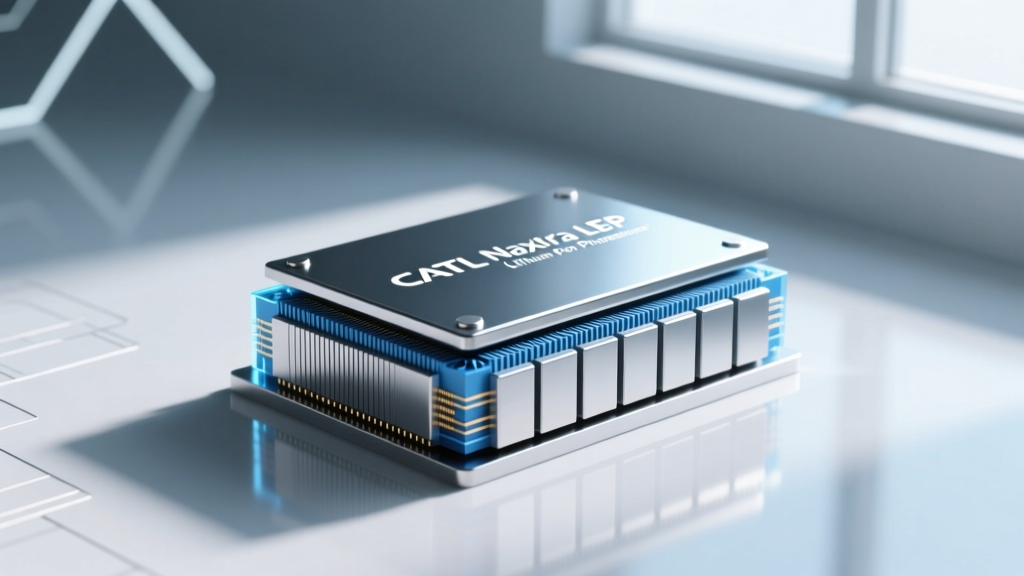
When Contemporary Amperex Technology Co. Limited (CATL) unveiled its Naxtra sodium-ion battery platform alongside its second-generation Shenxing LFP cells, the EV industry took notice. The CATL Naxtra battery represents a meaningful shift in how automakers think about affordable, long-lasting energy storage — particularly for high-volume models where cost and durability matter more than peak performance metrics. But what does this actually mean for buyers shopping for an EV in 2026? This guide breaks down the chemistry, real-world degradation data, warranty coverage, and total cost implications so you can evaluate Naxtra-equipped vehicles with confidence.
What Is the CATL Naxtra Battery?
The CATL Naxtra battery is a sodium-ion (Na-ion) cell platform that CATL has positioned as a complementary technology to its dominant lithium iron phosphate (LFP) lineup. Sodium-ion chemistry uses abundant, inexpensive sodium instead of lithium as the charge carrier, trading a modest amount of energy density for significant cost savings, superior cold-weather performance, and excellent cycle life. CATL has paired Naxtra with its AB battery-pack architecture — a hybrid pack design that combines sodium-ion and LFP cells in a single module to balance cost, range, and low-temperature capability.
For context, CATL also manufactures the Shenxing (LFP, ultra-fast-charging) and Qilin (NMC, high energy density) battery lines. Naxtra sits below Shenxing in energy density but competes aggressively on price per kWh and cold-climate usability. As of early 2026, Naxtra cells are appearing in Chinese-market vehicles from Chery and are expected in globally exported models through 2027.
LFP vs NMC vs Sodium-Ion: Chemistry Trade-Offs
Understanding where Naxtra fits requires comparing the three dominant EV battery chemistries available to consumers today. Each has distinct physics-level trade-offs that affect range, lifespan, charging behavior, and cost.
| Attribute | LFP (LiFePO4) | NMC/NCA (Nickel-based) | Sodium-Ion (Na-ion / Naxtra) |
|---|---|---|---|
| Energy Density (cell-level) | 160–180 Wh/kg | 230–300 Wh/kg | 140–160 Wh/kg |
| Cycle Life (to 80% SoH) | 3,000–6,000 cycles | 1,000–2,500 cycles | 4,000–8,000+ cycles |
| Cold Performance (-20°C capacity retention) | ~60–70% | ~55–65% | ~85–90% |
| Fast-Charging Tolerance | Good (heat-sensitive at high SoC) | Excellent (with thermal mgmt) | Very Good (lower internal resistance) |
| Cost (per kWh, cell-level) | $70–$90 | $100–$140 | $50–$70 (projected at scale) |
| Cobalt/Nickel Content | None | High (NMC) / Moderate (NCA) | None |
| Typical Use Case | Standard-range sedans, SUVs, fleet | Long-range / performance vehicles | Budget EVs, cold-climate, AB hybrid packs |
Key takeaway: If you prioritize maximum range in a single charge and drive a long-range or performance trim, NMC/NCA remains the standard. If you want the best combination of affordability, longevity, and daily usability, LFP is the proven choice. Sodium-ion (Naxtra) is the emerging budget and cold-climate option — expect slightly less range per kWh of battery weight, but substantially longer calendar and cycle life at a lower purchase price.
How Long Do EV Batteries Actually Last?
The single most common question from prospective EV buyers is battery longevity. Real-world data from fleet operators, manufacturer telemetry, and independent testing paints a reassuring picture — most modern EV batteries will outlast the vehicle they're installed in.
Typical Degradation Curve (Real-World Data Points):
- Year 1 / 15,000 miles: ~2–4% capacity loss (initial formation loss)
- Year 3 / 45,000 miles: ~5–8% total loss (LFP); ~6–10% (NMC)
- Year 5 / 75,000 miles: ~7–11% total loss (LFP); ~9–14% (NMC)
- Year 8 / 120,000 miles: ~10–15% total loss (LFP); ~12–18% (NMC)
- Year 10 / 150,000 miles: ~12–18% (LFP); ~15–22% (NMC)
Sources: Geotab fleet data, Recurrent Auto battery health reports, manufacturer warranty disclosures.
LFP batteries, including CATL's Shenxing line, consistently show slower degradation than NMC cells — primarily because LFP chemistry is more thermally stable and less prone to cathode structural breakdown over repeated charge cycles. Sodium-ion cells like Naxtra are projected to match or exceed LFP cycle life based on lab data (CATL claims 8,000+ cycles to 80% State of Health), though large-scale fleet data for Na-ion is still accumulating as of 2026.
For a practical frame of reference: if you drive 12,000 miles per year in an EV with a 250-mile EPA range, you'll cover 120,000 miles in 10 years. Even with 15% degradation (a conservative LFP estimate), you'd retain a real-world range of ~212 miles — still highly usable for daily driving and road trips with DC fast-charging stops.
What Does the EV Battery Warranty Cover?
Federal law in the United States mandates that EV batteries carry a minimum warranty of 8 years or 100,000 miles (whichever comes first) in states that follow California Air Resources Board (CARB) rules — which now includes over a dozen states. Non-CARB states follow the federal minimum of 8 years / 80,000 miles. Most major automakers exceed these minimums.
| Manufacturer | Warranty Period | Mileage Limit | Capacity Retention Threshold |
|---|---|---|---|
| Tesla (Model 3/Y LFP) | 8 years | 120,000 miles | 70% SoH |
| Hyundai / Kia | 10 years | 100,000 miles | 70% SoH |
| Ford (Mach-E, F-150 Lightning) | 8 years | 100,000 miles | 70% SoH |
| GM (Ultium-based) | 8 years | 100,000 miles | 70% SoH |
| BMW | 8 years | 100,000 miles | 70% SoH |
| Volkswagen (ID.4) | 8 years | 100,000 miles | 70% SoH |
What the warranty actually covers: If your battery's usable capacity drops below the stated threshold (typically 70% of original capacity) within the warranty period, the manufacturer must repair or replace the battery at no cost to you. This covers degradation — not just catastrophic failure. Some manufacturers will replace individual modules rather than the entire pack, which is faster and less costly for them.
What it doesn't cover: Damage from accidents, improper charging equipment, modifications, or intentional abuse. Normal wear below the threshold after the warranty expires is the owner's responsibility — though as the degradation data above shows, most batteries won't hit 70% SoH within the warranty window under normal use.
EV Battery Replacement Cost: What to Expect
Battery replacement remains a concern for used-EV buyers and high-mileage drivers. Here's what current pricing looks like across common battery sizes, based on manufacturer parts pricing and independent shop estimates as of 2026.
| Battery Size | Chemistry | Example Models | Replacement Cost Range |
|---|---|---|---|
| 40–55 kWh | LFP | Base Tesla Model 3, BYD Dolphin | $7,000–$10,000 |
| 60–75 kWh | LFP | Tesla Model 3 LR, Chevy Equinox EV | $10,000–$14,000 |
| 75–90 kWh | NMC | Ford F-150 Lightning Ext., Hyundai Ioniq 5 LR | $13,000–$18,000 |
| 90–110 kWh | NMC | Tesla Model S, GMC Hummer EV | $16,000–$25,000 |
| 110+ kWh | NMC | GMC Hummer EV, Lucid Air Grand Touring | $22,000–$35,000 |
When is replacement actually needed? For the vast majority of owners, the answer is never. Battery failure severe enough to require full replacement before 200,000 miles is statistically rare. Most degradation-related "replacements" are actually module-level repairs — a single degraded module swapped out for $1,500–$3,000 rather than a full pack replacement. Full pack replacements typically occur after collisions, water intrusion, or on vehicles exceeding 250,000+ miles.
For sodium-ion packs like Naxtra, replacement costs are expected to be 30–40% lower than equivalent NMC packs once supply chains mature, due to the absence of lithium, cobalt, and nickel in the cell chemistry.
Factors That Affect EV Battery Life
Not all miles and charge cycles are created equal. How you charge, drive, and store your EV has a measurable impact on long-term battery health.
Maximize Battery Longevity — Practical Checklist:
- Daily charging limit: Set charge limit to 80% for LFP and Na-ion batteries during routine daily use. Unlike older guidance, CATL now recommends periodic 100% charges for LFP to recalibrate the BMS — aim for once per week.
- DC fast-charging frequency: Limit DC fast charging (Level 3, 50+ kW) to road trips when possible. Studies from Recurrent Auto show that frequent DCFC (more than 3x/week) accelerates degradation by approximately 1–3% over 4 years versus predominantly Level 2 charging.
- Extreme heat: Avoid leaving your EV at high State of Charge (above 90%) in sustained temperatures above 95°F / 35°C. Heat + high SoC is the most damaging combination for lithium-based cells.
- Extreme cold: Cold temperatures don't cause permanent damage but temporarily reduce available capacity. Use battery preconditioning before DC fast-charging in cold weather — this warms the cells and protects against lithium plating on the anode.
- Long-term storage: If storing for 2+ weeks, leave the battery at 40–60% SoC in a cool, shaded location. Avoid storing at 100% or below 10%.
- Regenerative braking: Standard regen settings do not harm battery health. The BMS manages charge acceptance rates to prevent over-current damage during deceleration.
How to Check and Monitor Battery Health (SoH)
State of Health (SoH) is the percentage of your battery's original usable capacity that remains accessible. A new battery is 100% SoH; a battery that has degraded to hold only 65 kWh out of an original 75 kWh is at ~87% SoH.
How to check SoH in your EV:
- In-vehicle display: Some manufacturers (Tesla, Hyundai, BMW) display SoH or a health indicator in the settings menu under "Battery" or "Energy." Tesla shows this in the Service menu on newer software versions.
- OBD-II diagnostic tools: Devices like the OBDLink MX+ paired with apps such as LeafSpy (Nissan), ABRP, or Scan My Tesla can read the BMS-reported SoH directly.
- Dealer diagnostic check: Any authorized service center can run a battery health report. Request this before purchasing a used EV.
- Third-party services: Companies like Recurrent offer battery health reports based on connected-car telemetry data, often available free to owners who share anonymized data.
What to watch for: A sudden drop in displayed range that doesn't correlate with temperature changes, significantly longer charge times at the same charger, or a dashboard warning light related to the battery system. These warrant an immediate dealer diagnostic visit.
Emerging Battery Technology: What's Next After Naxtra?
Sodium-ion is not the final frontier. Several next-generation technologies are in development, each with realistic but distinct timelines:
- Solid-state batteries: These replace the liquid electrolyte with a solid conductor, promising 2–3x energy density and improved safety. Toyota, Samsung SDI, and QuantumScape have announced production targets for 2027–2029, but these remain announced timelines — not shipping products. Expect initial deployment in limited, premium models only.
- Silicon-dominant anodes: Companies like Sila Nanotechnologies and Group14 are replacing graphite anodes with silicon to boost energy density by 20–40%. These are entering production in 2026–2027 for select models (Mercedes-Benz G-Class EV, confirmed partnerships).
- Lithium-sulfur (Li-S): Offers theoretical energy density above 500 Wh/kg but faces cycle-life challenges. Still in the research phase; commercial availability is unlikely before 2030.
For buyers making a purchase decision today, LFP and NMC remain the proven, data-backed choices. Sodium-ion (Naxtra) is the credible newcomer for budget and cold-climate applications. Solid-state and silicon-anode technologies are worth watching but should not delay a purchase — the EVs available now will serve well for a decade or more.
Frequently Asked Questions
How long do EV batteries last in years and miles?
Most modern LFP batteries retain 85–90% of original capacity after 8 years and 120,000 miles. NMC batteries typically retain 82–88% over the same period. Based on current degradation data, reaching 70% SoH (the typical warranty threshold) generally takes 15–20 years of average use for LFP and 12–16 years for NMC. Sodium-ion cells like CATL's Naxtra are projected to match or exceed LFP longevity.
How much does an EV battery cost to replace?
Full battery pack replacement costs range from approximately $7,000 for a small LFP pack (40–55 kWh) to $25,000+ for large NMC packs (100+ kWh). However, full replacements are rare — most out-of-warranty battery service involves individual module replacement at $1,500–$3,000. Sodium-ion packs are expected to cost 30–40% less than equivalent NMC packs at scale.
What does the EV battery warranty actually cover?
The battery warranty covers capacity loss below a defined threshold (typically 70% of original capacity) within 8 years / 100,000 miles (varies by manufacturer and state). It covers degradation and manufacturing defects but not accident damage, improper charging, or modifications. Federal minimum is 8 years / 80,000 miles; many automakers offer 8–10 years / 100,000+ miles.
LFP vs NMC — which battery chemistry is better for me?
Choose LFP if you want lower cost, longer cycle life, and don't need maximum range per charge. Choose NMC/NCA if you need the longest possible range, tow frequently, or drive a performance-oriented model. Choose sodium-ion (Naxtra) if you live in a cold climate, prioritize lowest purchase price, and can accept slightly lower energy density. For most daily commuters, LFP offers the best balance of cost, durability, and real-world usability.
Does frequent DC fast charging damage the battery?
Frequent DC fast charging causes slightly accelerated degradation — approximately 1–3% additional capacity loss over 4 years compared to predominantly Level 2 home charging, according to Recurrent Auto fleet data. It's not catastrophic, but if you have reliable Level 2 access at home, using it for daily charging and reserving DCFC for road trips is the optimal strategy for maximum battery lifespan.
How do I check my EV's battery State of Health?
Check your vehicle's settings menu for a battery health indicator, use an OBD-II scanner with an EV-compatible app (LeafSpy, Scan My Tesla, ABRP), request a diagnostic report from your dealer, or use a third-party service like Recurrent Auto. A pre-purchase battery health check is strongly recommended for any used EV.
For official warranty details on specific models, consult fueleconomy.gov and individual manufacturer spec pages. Tax credit eligibility for EVs with CATL-sourced batteries may be affected by §30D battery-sourcing requirements — consult IRS guidance on clean vehicle credits before purchasing.


