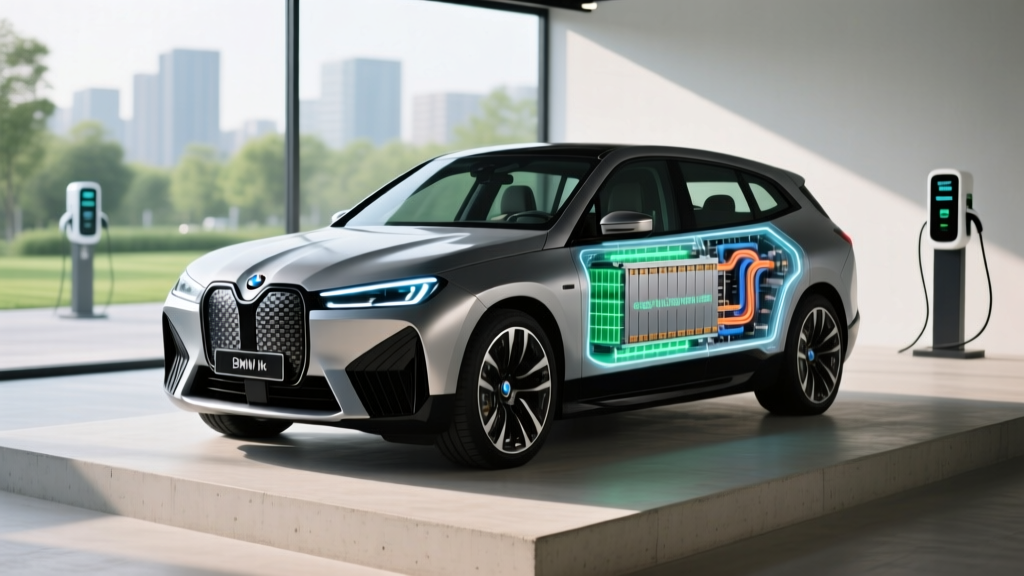
The headline caught every EV enthusiast off guard: BMW iX5 documents reveal a massive 148 kWh battery pack — a capacity that would dwarf nearly every production electric vehicle on the road in 2026. For context, the current BMW iX xDrive50 uses a 111.5 kWh (usable) NMC pack, and Tesla's Model S tops out around 100 kWh. A 148 kWh pack signals BMW's ambition to push electric range well past the 400-mile mark, likely targeting the next-generation iX or a performance variant.
But a bigger battery raises bigger questions. How long does a pack that size actually last? What does degradation look like at 148 kWh? And how do the chemistry choices — NMC versus the increasingly popular LFP — affect real-world ownership over a decade? This guide uses the iX5 leak as a springboard to explain everything EV buyers and owners need to know about battery technology, longevity, and cost.
Why 148 kWh Matters: The Chemistry Behind the Capacity
Energy density is the critical metric here. To fit 148 kWh into a vehicle footprint similar to the current iX, BMW almost certainly relies on an advanced NMC (nickel-manganese-cobalt) or NCA (nickel-cobalt-aluminum) cell chemistry — likely with a silicon-dominant or silicon-carbon composite anode to push volumetric energy density beyond what today's graphite-anode cells achieve.
LFP (lithium iron phosphate) cells, while cheaper and longer-lasting, have roughly 20–30% lower energy density than high-nickel NMC. A 148 kWh LFP pack would be significantly heavier and bulkier, making it impractical for a performance-oriented SUV. Here's how the two dominant chemistries compare:
| Attribute | LFP (Lithium Iron Phosphate) | NMC/NCA (Nickel-based) |
|---|---|---|
| Energy Density | ~160–200 Wh/kg (cell-level) | ~250–300+ Wh/kg (cell-level) |
| Typical Cycle Life | 3,000–5,000+ cycles to 80% SoH | 1,000–2,500 cycles to 80% SoH |
| Cold-Weather Performance | Moderate — slower charging below 32°F; heat pump helps | Better low-temp conductivity; preconditioning still needed |
| Cost per kWh | ~$80–100/kWh (2026 cell pricing) | ~$110–140/kWh (2026 cell pricing) |
| Thermal Stability | Excellent — less prone to thermal runaway | Good — requires robust BMS and cooling |
| SoC Recommendation | Can charge to 100% daily without harm | Best kept 20–80% for daily use; 100% for trips |
| Common Applications | Tesla Model 3/Y RWD, Ford Mustang Mach-E SR, BYD models | BMW iX, Tesla Long Range, Hyundai Ioniq 5/6 LR, Rivian |
Bottom line: If BMW is targeting 400+ EPA miles from the iX5, NMC/NCA is the only chemistry that makes the math work at a reasonable vehicle weight. LFP's advantages — cost, cycle life, safety — come at a packaging penalty that a 148 kWh pack would amplify.
How Long Do EV Batteries Actually Last?
The short answer: most EV traction batteries outlast the vehicle they're installed in. But the data matters more than the reassurance.
Based on aggregated fleet data from sources including Recurrent Auto and manufacturer telemetry, here's what degradation looks like in practice:
Typical EV Battery Degradation Curve (NMC Chemistry, Average Use):
- Year 1 / 15,000 miles: ~2–5% capacity loss (initial break-in drop)
- Year 3 / 45,000 miles: ~6–9% total loss
- Year 5 / 75,000 miles: ~8–12% total loss
- Year 8 / 120,000 miles: ~10–15% total loss
- Year 10 / 150,000 miles: ~12–18% total loss (many packs still above 80% SoH)
LFP packs typically show 2–4% less degradation at equivalent milestones due to their superior cycle life. Tesla's 2025 Impact Report noted that Model 3/Y batteries retained an average of ~85% capacity after 200,000 miles.
For a 148 kWh pack like the rumored iX5 unit, even 15% degradation leaves you with ~125 kWh of usable capacity — still more than most EVs ship with brand new. That's the hidden advantage of oversized batteries: degradation hurts less when you start with a massive reserve.
What the Battery Warranty Actually Covers
Federal law effectively mandates that manufacturers warranty EV batteries for a minimum of 8 years / 100,000 miles (in CARB states like California, it extends to 10 years / 150,000 miles). Here's how major manufacturers structure their coverage:
| Manufacturer | Warranty Period | Capacity Retention Threshold | Notes |
|---|---|---|---|
| BMW (current iX) | 8 yr / 100,000 mi | 70% of original capacity | Expected to carry over to iX5 |
| Tesla (Model S/X) | 8 yr / 150,000 mi | 70% of original capacity | Longer mileage for LR models |
| Tesla (Model 3/Y LFP) | 8 yr / 120,000 mi | 70% of original capacity | Standard Range (LFP) variant |
| Hyundai/Kia | 10 yr / 100,000 mi | 70% of original capacity | Industry-leading term |
| Ford (Mustang Mach-E) | 8 yr / 100,000 mi | 70% of original capacity | Includes battery components |
| Rivian | 8 yr / 175,000 mi | 70% of original capacity | Higher mileage cap for truck use |
Key detail: The 70% threshold is the industry standard trigger for a warranty claim. If your 148 kWh iX5 pack drops below ~103 kWh of usable capacity within the warranty window, BMW would be obligated to repair or replace it. Given typical degradation curves, hitting that threshold within 8 years would require an extreme outlier — repeated DC fast charging in desert heat, for example.
EV Battery Replacement Cost: What Owners Actually Pay
This is the question that dominates EV forums, and the answer requires nuance. Full battery replacement is rare — most out-of-warranty failures involve individual module or cell-group replacements, not the entire pack.
| Vehicle / Pack Size | Full Pack Replacement (Parts + Labor) | Module-Level Repair | Typical Replacement Timeline |
|---|---|---|---|
| Tesla Model 3/Y (~75 kWh LFP) | $12,000–$16,000 | $2,500–$5,000 | Rarely needed before 200k+ mi |
| Hyundai Ioniq 5 (77.4 kWh NMC) | $14,000–$18,000 | $3,000–$6,000 | Rarely needed before 180k+ mi |
| BMW iX (111.5 kWh NMC) | $20,000–$28,000 | $4,000–$8,000 | Rarely needed before 150k+ mi |
| BMW iX5 (148 kWh NMC, projected) | $25,000–$35,000 | $5,000–$10,000 | Projected — pack size increases cost |
| GMC Hummer EV (~212 kWh NMC) | $35,000–$45,000 | $6,000–$12,000 | Largest consumer pack; limited data |
The critical context: Consumer Reports and Recurrent data show that fewer than 2% of EV batteries require replacement outside of warranty coverage. The vast majority of EVs are retired, sold, or totaled before their pack reaches end-of-life. A 148 kWh pack, with its enormous buffer, makes full replacement even less likely within a typical ownership cycle.
What Kills an EV Battery (and What Doesn't)
Not all miles are created equal when it comes to battery wear. The factors that accelerate degradation — and the ones that owners overestimate — deserve a clear breakdown.
Primary Degradation Accelerators
- Sustained high State of Charge: Storing an NMC battery at 100% SoC for days or weeks (especially in heat) accelerates electrolyte decomposition. Daily charging to 80% is optimal.
- Frequent DC fast charging at high power: Daily use of 150+ kW chargers generates thermal stress. Occasional road-trip fast charging is fine; making it your daily routine adds ~1–3% extra annual degradation.
- Extreme heat exposure: Ambient temperatures above 95°F combined with high SoC is the worst-case scenario. Active thermal management (liquid cooling) mitigates this significantly — BMW's system is among the most robust.
- Deep discharge cycles: Regularly running the battery below 10% SoC stresses cells. The BMS buffer (typically 3–5% at the bottom) protects against true zero, but habitually arriving at near-empty isn't ideal.
Common Myths (Less Impact Than You Think)
- Cold weather: Cold reduces available range temporarily (20–30% loss at 20°F) but doesn't cause permanent degradation. Preconditioning restores performance.
- Regenerative braking: Regen puts energy back into the battery but at modest C-rates that don't meaningfully affect longevity.
- Highway driving: High speeds reduce efficiency (more Wh/mile) but don't degrade the battery faster than city driving at equivalent energy throughput.
Battery Care Best Practices (NMC Pack — Applicable to iX5):
- Set daily charge limit to 80% (use 100% only before long trips)
- Enable scheduled departure preconditioning for fast-charging stops
- Avoid leaving the vehicle at 100% SoC for more than 24 hours
- Use Level 2 home charging as your primary routine
- In extreme heat, park in shade or a garage when possible
- Don't stress about occasional DC fast charging — road trips won't kill your pack
- Keep tire pressure optimized to reduce overall energy consumption
How to Check Your Battery's State of Health (SoH)
State of Health (SoH) is the percentage of original capacity your battery retains. A brand-new pack is 100% SoH; at 70% SoH, you've hit the typical warranty threshold. Here's how to monitor it:
Manufacturer Apps and In-Car Displays
Most 2026 EVs, including current BMWs with iDrive 8.5, display estimated range based on recent driving patterns but don't always expose raw SoH directly. BMW's My BMW app provides charging history and range estimates. Some manufacturers (Hyundai, Tesla via service mode) offer more direct SoH readouts.
Third-Party Diagnostics
- OBD-II dongles + apps: Tools like OBDeleven or BimmerCode can read BMW-specific battery management data, including estimated SoH, cell voltage variance, and cooling system status.
- Recurrent Auto: This free service connects to your vehicle's telematics and provides ongoing battery health reports benchmarked against similar vehicles in their fleet.
- Dealer diagnostic report: Requesting a battery health check during service will generate a printout showing pack capacity, individual module balance, and insulation resistance. Worth doing annually after year 5.
DIY Estimation Method
Track your kWh used per full charge versus the original rated capacity. If your 148 kWh pack (assume ~140 kWh usable with buffer) consistently accepts only 120 kWh from a near-empty to 100% charge, your SoH is roughly 120/140 = ~86%. This method isn't perfectly precise — temperature and charging taper affect the number — but it gives a reliable trend line over time.
Looking Ahead: Solid-State, Silicon Anodes, and the Post-NMC Era
The 148 kWh iX5 leak fits into a broader industry trajectory toward larger, denser packs enabled by next-generation cell technology. Here's what's realistic and what's still on the horizon:
Silicon-Dominant Anodes (2025–2027 Production)
Companies like Sila Nanotechnologies, Group14, and Enovix are bringing silicon-anode cells to market that offer 20–40% more energy density than graphite-anode equivalents. These are already appearing in limited production vehicles (Mercedes EQG uses silicon-anode cells from Sila). BMW's 148 kWh pack likely leverages a silicon-composite anode to hit its capacity target without excessive weight.
Semi-Solid-State Batteries (2026–2028)
NIO's 150 kWh semi-solid-state pack (already deployed in China in the ET7) demonstrates the technology's viability, but costs remain 2–3x higher than conventional liquid-electrolyte cells. Expect limited availability in premium models through 2028.
True Solid-State Batteries (2028–2032+)
Toyota, Samsung SDI, and QuantumScape target mass production in the 2028–2030 window, but every major manufacturer has revised timelines at least once. Solid-state promises faster charging (10–80% in under 10 minutes), higher energy density (potentially 400+ Wh/kg at the cell level), and improved safety. Realistic volume production for mainstream vehicles remains a 2030+ proposition based on current trajectories.
For buyers today: NMC and LFP remain the proven, cost-effective chemistries. The iX5's 148 kWh pack, if it reaches production, will likely represent the apex of liquid-electrolyte lithium-ion technology — enormous capacity, advanced thermal management, and a degradation profile that makes replacement a concern for the second or third owner, not the first.
Frequently Asked Questions
How long do EV batteries last in years and miles?
Most modern EV batteries (NMC and LFP) retain 80–85% of their original capacity after 10 years or 150,000–200,000 miles of typical use. LFP chemistries often exceed this, with some Tesla Model 3 Standard Range packs showing 90%+ retention at 100,000 miles. Complete failure before 200,000 miles is statistically rare — under 2% according to fleet data from Recurrent Auto.
How much does an EV battery cost to replace?
Full pack replacement ranges from ~$12,000 for a Tesla Model 3 LFP pack to $35,000+ for large packs like the projected BMW iX5 148 kWh or GMC Hummer EV 212 kWh. Module-level repairs (replacing individual cell groups) cost $2,500–$12,000 depending on the vehicle. Most batteries never need replacement within the first owner's tenure, and the federal warranty covers defects and excessive degradation (below 70% SoH) for at least 8 years / 100,000 miles.
What does the EV battery warranty cover?
Manufacturer battery warranties cover capacity loss below a specified threshold (typically 70% of original capacity) and defects in materials or workmanship. Coverage lasts 8 years/100,000 miles minimum (federally mandated), with some brands like Hyundai offering 10 years/100,000 miles and Rivian covering 8 years/175,000 miles. Warranties do not cover damage from accidents, flooding, or unauthorized modifications. Check fueleconomy.gov for model-specific warranty data.
How do I check and maximize my EV battery health?
Monitor SoH through your manufacturer's app, OBD-II diagnostic tools (like OBDeleven for BMW), or third-party services like Recurrent Auto. To maximize longevity: charge NMC packs to 80% daily (100% only for trips), use Level 2 home charging as your primary method, precondition before DC fast charging, avoid prolonged storage at 100% SoC, and park in shade during extreme heat. LFP packs can be charged to 100% daily without concern.
LFP vs NMC — which battery chemistry is better?
Neither is universally better; it depends on your priorities. Choose LFP if you want lower cost, longer cycle life (3,000–5,000 cycles), the ability to charge to 100% daily, and superior thermal safety — and you can accept somewhat lower range per pound. Choose NMC/NCA if you need maximum range and energy density (essential for large packs like the rumored 148 kWh iX5), better cold-weather charging performance, and faster DC charge rates — and you're willing to follow 20–80% daily charging habits. For a 148 kWh pack targeting 400+ miles, NMC is the only practical choice in 2026.
Will the BMW iX5's 148 kWh battery degrade faster because it's so large?
No — pack size alone doesn't determine degradation rate. In fact, larger packs often degrade more slowly in percentage terms because each individual cell undergoes fewer charge-discharge cycles for the same total miles driven (the energy throughput per cell is lower). A 148 kWh pack driving 15,000 miles per year cycles its cells roughly 30–40% fewer times than a 75 kWh pack covering the same distance. The primary degradation drivers remain temperature, SoC habits, and charging patterns — not capacity.