From Lead-Acid to Lithium: Why the 2011 Subaru Outback Battery Still Matters in the EV Era
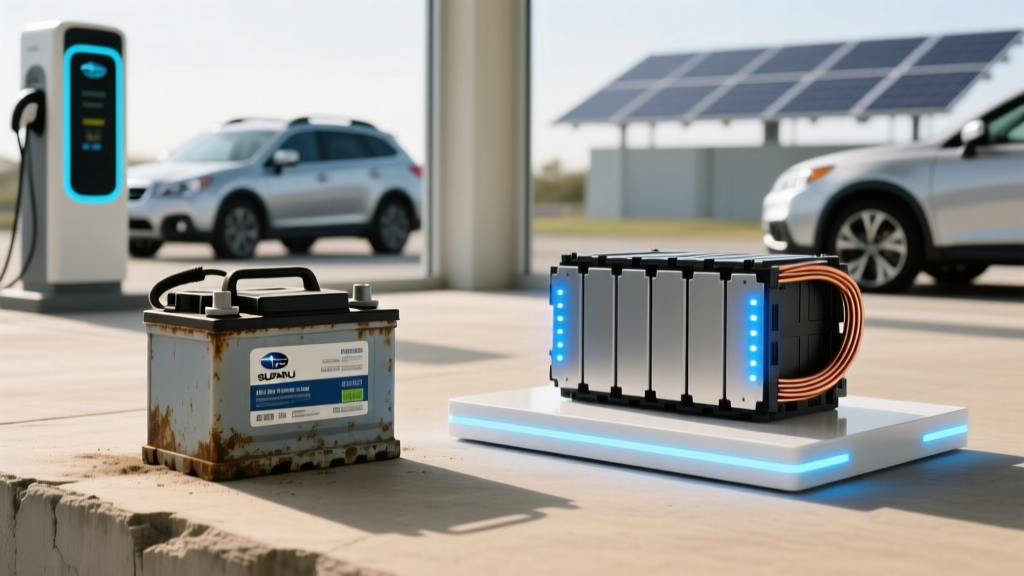
Search forums long enough and you'll find a familiar thread: owners of the 2011 Subaru Outback discussing battery replacements around the 60,000–80,000 mile mark. The original equipment 12V lead-acid battery in that generation Outback (Group 25 or 35, depending on trim) typically lasted 3–5 years before cranking amps degraded below spec. Replacement cost? Roughly $150–$280 for an AGM or flooded-cell unit at any auto parts store.
That conversation seems quaint from a 2026 perspective, where electric vehicle traction batteries routinely exceed 150,000 miles with under 10% capacity loss. Yet the comparison illuminates a critical ownership question: how long do modern EV batteries actually last, what do they cost to replace, and how does chemistry choice affect longevity?
This guide breaks down EV battery technology with the same practical lens you'd apply to maintaining any vehicle — exact numbers, real degradation data, and actionable care strategies.
EV Battery Chemistry: LFP vs NMC vs NCA Trade-Offs
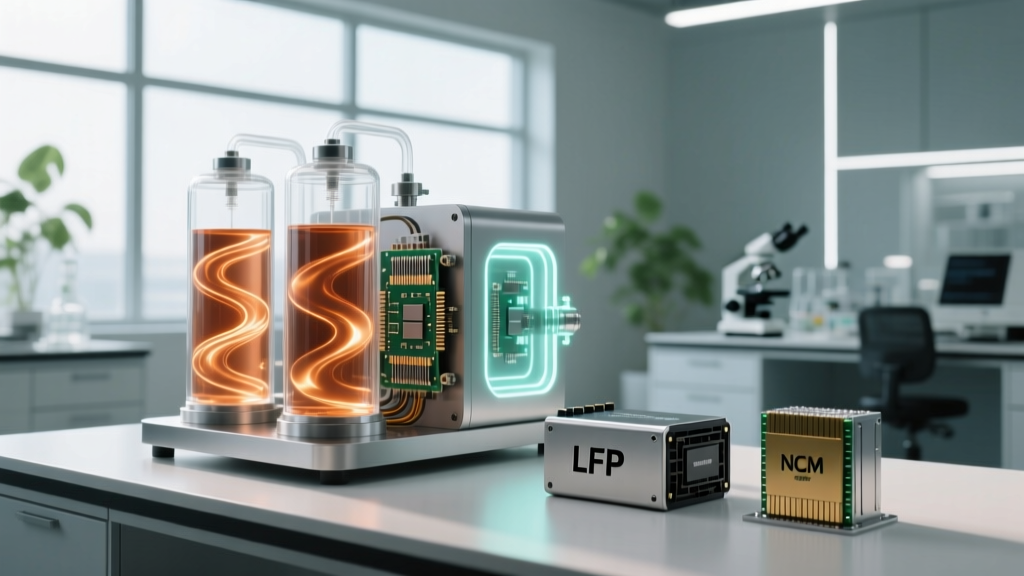
Not all lithium-ion batteries are equal. The two dominant chemistries in 2026 EVs are Lithium Iron Phosphate (LFP) and Nickel Manganese Cobalt (NMC), with Nickel Cobalt Aluminum (NCA) appearing primarily in Tesla's performance-oriented packs.
| Attribute | LFP (LiFePO₄) | NMC / NCA |
|---|---|---|
| Energy Density | 140–180 Wh/kg (lower) | 220–300 Wh/kg (higher) |
| Typical Cycle Life | 3,000–5,000+ cycles | 1,000–2,500 cycles |
| Cold Weather Performance | Moderate loss (~15–25% range at 20°F) | Better retention (~10–18% loss at 20°F) |
| Thermal Stability | Excellent (less thermal runaway risk) | Good (requires robust BMS cooling) |
| Cost per kWh (2026) | ~$85–$100/kWh pack-level | ~$110–$140/kWh pack-level |
| Common Applications | Tesla Model 3/Y RWD, Ford Mustang Mach-E Select, BYD models | Long-range AWD trims, Lucid, Rivian, Hyundai Ioniq 5/6 |
| Recommended SoC for Daily Use | 100% (LFP tolerates full charge well) | 80% (reduces calendar degradation) |
The practical verdict: If you prioritize maximum range per charge and don't mind capping daily charging at 80%, NMC/NCA delivers. If you want a battery that tolerates daily 100% charges, offers longer cycle life, and costs less upfront — accepting slightly lower range — LFP is the stronger long-term ownership play.
How Long Do EV Batteries Actually Last? Degradation Data by the Numbers
The fear that EV batteries need replacement like smartphone batteries is largely outdated. Modern thermal management systems and improved cell chemistry have pushed typical degradation curves well beyond initial owner expectations.
Here's what real-world fleet data and manufacturer reports show for degradation trajectories:
Typical EV Battery Degradation Curve (NMC Chemistry, Liquid-Cooled)
- Year 1 / 15,000 miles: ~2–4% capacity loss (initial formation period)
- Year 3 / 45,000 miles: ~5–8% total loss
- Year 5 / 75,000 miles: ~7–10% total loss
- Year 8 / 120,000 miles: ~10–14% total loss
- Year 10 / 150,000 miles: ~12–18% total loss
Source: Geotab fleet battery health study, aggregated from 10,000+ EVs across multiple manufacturers.
LFP-equipped vehicles show even slower degradation. Tesla's 2025 Impact Report noted that Model 3 RWD vehicles with LFP packs retained approximately 92% capacity at 100,000 miles — a figure consistent with laboratory cycle-life projections exceeding 3,000 cycles before hitting 80% State of Health (SoH).
For context, the 2011 Subaru Outback's original 12V battery would typically be on its second or third replacement by 150,000 miles, representing $450–$840 in cumulative battery costs over the vehicle's life. A modern EV's traction battery, by contrast, is designed as a lifetime component.
EV Battery Warranty Terms: What's Actually Covered in 2026
Federal law mandates a minimum 8-year/100,000-mile warranty on EV battery packs for emissions-related compliance, but most manufacturers exceed this baseline. Here's how major warranties stack up:
| Manufacturer | Warranty Period | Capacity Retention Threshold | Notes |
|---|---|---|---|
| Tesla (Model 3/Y LFP) | 8 years / 120,000 miles | 70% SoH | Longer mileage for LFP trims |
| Tesla (Model 3/Y Long Range NMC) | 8 years / 120,000 miles | 70% SoH | Includes drive unit coverage |
| Hyundai / Kia (E-GMP platform) | 10 years / 100,000 miles | 70% SoH | Industry-leading duration |
| Ford (Mustang Mach-E, F-150 Lightning) | 8 years / 100,000 miles | 70% SoH | Includes electrical components |
| Rivian (R1T, R1S) | 8 years / 175,000 miles | 70% SoH | Highest mileage threshold |
| GM (Ultium platform) | 8 years / 100,000 miles | 70% SoH | Covers module-level replacement |
What triggers a warranty claim? If your battery's usable capacity drops below the stated threshold (typically 70% of original kWh) within the warranty window, the manufacturer must repair or replace it to restore capacity above that line. This doesn't mean you get a brand-new pack — refurbished or remanufactured modules that meet the threshold are standard practice.
Importantly, warranty coverage excludes damage from accidents, flooding, improper modifications, or using the vehicle as a stationary power source beyond V2L/V2H specifications. Always review your specific owner's manual limitations.
EV Battery Replacement Costs: When and How Much
Out-of-warranty battery replacement remains the specter haunting prospective EV buyers. Let's ground this in actual 2026 pricing:
| Vehicle / Battery Size | Chemistry | Estimated Pack Cost (Parts) | Labor (8–15 hrs) | Total Range |
|---|---|---|---|---|
| Tesla Model 3 RWD (~60 kWh) | LFP | $8,000–$11,000 | $1,500–$2,500 | $9,500–$13,500 |
| Tesla Model Y Long Range (~75 kWh) | NMC | $12,000–$16,000 | $1,800–$3,000 | $13,800–$19,000 |
| Hyundai Ioniq 5 (~77 kWh) | NMC | $11,000–$14,000 | $1,500–$2,500 | $12,500–$16,500 |
| Ford F-150 Lightning Extended (~131 kWh) | NMC | $18,000–$25,000 | $2,500–$4,000 | $20,500–$29,000 |
| Rivian R1T Max Pack (~149 kWh) | NMC | $22,000–$30,000 | $3,000–$5,000 | $25,000–$35,000 |
When is replacement actually needed? Data from Recurrent Auto, tracking over 15,000 EVs, shows that fewer than 2% of EVs required battery replacement within the first 10 years of service — and the vast majority of those were due to manufacturing defects covered under warranty, not end-of-life degradation.
The economic framing matters: if you're spending $0.04–$0.06 per mile on electricity versus $0.12–$0.18 per mile on gasoline, the cumulative fuel savings over 150,000 miles typically ranges from $9,000 to $18,000 — effectively pre-funding a potential replacement that statistically won't be needed.
Factors That Accelerate (or Preserve) Battery Health
Battery degradation isn't random — it's physics-driven and largely predictable. Here's what moves the needle on State of Health:
High-Impact Degradation Factors
- Frequent DC fast charging above 150 kW: Occasional road-trip fast charging is fine, but daily use of 250–350 kW chargers without preconditioning accelerates lithium plating and electrolyte breakdown. Expect 1–3% additional annual loss for heavy fast-charge users.
- Sustained high State of Charge (NMC/NCA): Storing an NMC battery at 100% SoC for days or weeks — especially in hot climates — drives calendar degradation. Set charge limits to 80% for daily use.
- Extreme heat exposure: Battery temperatures consistently above 95°F (35°C) without active cooling accelerate capacity fade. Park in shade or garages when possible in desert climates.
- Deep discharge cycles: Regularly running the pack below 10% SoC stresses cell chemistry. Most BMS systems maintain a bottom buffer, but habitually arriving at 0% isn't ideal.
Best Practices for Longevity
- LFP owners: Charge to 100% at least once weekly — this helps the BMS recalibrate cell balancing. Daily 100% is acceptable.
- NMC/NCA owners: Set daily charge limit to 80%. Reserve 100% for road trips, and depart shortly after reaching full charge rather than letting it sit.
- Precondition before fast charging: Use your vehicle's navigation-based preconditioning (Tesla, Hyundai, Ford, Rivian all offer this) to warm the battery to optimal charging temperature before arriving at a DC station.
- Level 2 home charging is ideal: Charging at 7–11 kW overnight generates minimal heat and keeps cells in a low-stress state. This is the equivalent of the 2011 Outback owner who never short-trips their engine — it's simply easier on the system.
How to Check Your EV Battery's State of Health (SoH)
Unlike the 2011 Outback, where you'd need a multimeter to test cold cranking amps, modern EVs provide software-accessible battery health metrics — though access varies by manufacturer.
In-vehicle methods:
- Tesla: Navigate to Service Mode (tap "Software" on the car icon, hold for 3 seconds, enter "service" as the code). The Battery Health screen displays nominal full-pack kWh versus original capacity.
- Hyundai/Kia: The infotainment system's EV menu shows estimated range at 100% SoC — compare this to the original EPA figure adjusted for your typical efficiency. A dedicated SoH percentage requires an OBD-II scan tool.
- Ford: The FordPass app provides a battery health indicator under the vehicle status tab, though it's a simplified good/fair/poor scale rather than a precise percentage.
Third-party tools:
- OBD-II dongles + apps: Devices like the OBDeleven or vLinker BM70, paired with apps such as ABRP (A Better Route Planner) or Car Scanner, can read the BMS-reported SoH directly. This typically shows remaining kWh capacity versus the original design capacity.
- Recurrent Auto: This free service (for participating owners) tracks your battery health over time and provides a comparative report against similar vehicles in their fleet — useful for spotting abnormal degradation early.
When to be concerned: If your SoH drops more than 3% in a single year after the initial formation period (Year 1), or if you notice sudden range cliffs rather than gradual decline, schedule a dealer diagnostic. This could indicate a failing module rather than normal pack-level degradation — and module-level replacement is far cheaper than a full pack swap.
Emerging Battery Tech: Solid-State and Silicon Anodes (Forward-Looking)
The battery landscape isn't static. Two technologies frequently cited as next-generation breakthroughs deserve context:
Solid-state batteries: These replace the liquid electrolyte with a solid ceramic or polymer separator, theoretically enabling higher energy density (400+ Wh/kg), faster charging (10–80% in under 10 minutes), and improved safety. Toyota has announced solid-state prototypes targeting 2027–2028 production, while QuantumScape (backed by Volkswagen) continues pre-commercial validation. However, manufacturing scale-up remains the primary bottleneck — expect limited availability in premium models first, with mainstream adoption likely post-2030.
Silicon anode batteries: Companies like Sila Nanotechnologies and Group14 are integrating silicon into the graphite anode, boosting energy density by 15–25% without requiring entirely new manufacturing infrastructure. The Mercedes G-Class electric SUV (2025 model year) was among the first production vehicles to incorporate silicon-dominant anodes. This technology is nearer-term and more incremental than solid-state, likely proliferating through mainstream EVs by 2027–2028.
What this means for today's buyers: Waiting for solid-state is not a practical strategy — the technology won't be widely available or affordable for 4–5+ years. Current-generation LFP and NMC packs, properly maintained, will outlast most ownership cycles. The 2011 Outback owners who waited for "the next great Subaru" missed a decade of reliable utility; the same logic applies here.
Frequently Asked Questions
How long do EV batteries last in years and miles?
Most modern liquid-cooled EV batteries (NMC or LFP) retain 70–85% of their original capacity at 150,000 miles or 10–12 years. Fleet data from Geotab and Recurrent Auto shows median degradation rates of 1.5–2.5% per year after the first year. Many packs will outlast the vehicle's structural and cosmetic lifespan.
How much does it cost to replace an EV battery?
Out-of-warranty replacement costs range from approximately $9,500 for a Tesla Model 3 RWD LFP pack to $25,000–$35,000 for large packs like the Rivian R1T Max Pack or Ford F-150 Lightning Extended Range. However, fewer than 2% of EVs require battery replacement within 10 years, and the vast majority of those replacements occur under warranty at no cost to the owner.
What does the EV battery warranty cover?
Federal law requires a minimum 8-year/100,000-mile battery warranty. Most manufacturers guarantee that the battery will retain at least 70% of its original usable capacity (kWh) within that window. If capacity drops below the threshold, the manufacturer repairs or replaces modules to restore capacity above the line. Warranties typically exclude accident damage, flooding, and unauthorized modifications.
How do I check my EV battery health?
Methods vary by manufacturer. Tesla owners can access Service Mode for precise kWh readings. Hyundai/Kia and Ford owners may need an OBD-II scan tool (like OBDeleven or vLinker) paired with apps such as Car Scanner to read BMS-reported State of Health. Services like Recurrent Auto offer free comparative tracking for participating vehicles.
LFP vs NMC — which battery chemistry is better?
Neither is universally superior — it depends on your use case. LFP offers longer cycle life (3,000–5,000 cycles), tolerates daily 100% charging, costs less, and has superior thermal stability, but delivers lower energy density and slightly worse cold-weather range. NMC provides higher range per charge and better cold performance but benefits from daily 80% charge limits and has a shorter cycle life. For most daily commuters who charge at home, LFP is the lower-stress, longer-life choice. For frequent road-trippers who need maximum range, NMC is preferable.
Does fast charging damage my EV battery?
Occasional DC fast charging (road trips, 1–2 times per week) has minimal impact on battery health. However, daily use of high-power chargers (150+ kW) without preconditioning can add 1–3% additional annual degradation. Modern BMS systems manage charge curves to protect cells, but sustained high-C-rate charging generates heat that accelerates electrolyte decomposition. For daily charging, Level 2 (7–11 kW) at home remains the optimal approach for longevity.
Is the 2011 Subaru Outback battery the same as an EV battery?
No. The 2011 Outback uses a conventional 12V lead-acid battery (Group 25 or 35) for starting the engine and powering accessories. This is an entirely different technology from the high-voltage lithium-ion traction battery in an EV. EVs also have a 12V auxiliary battery for low-voltage systems, but the main propulsion battery operates at 400V (or 800V in some platforms) and stores 50–150+ kWh of energy. The 12V battery in any vehicle — gas or electric — is a wear item with a 3–6 year lifespan, while the EV traction battery is designed for the vehicle's full service life.
Sources: U.S. Department of Energy / fueleconomy.gov for EPA efficiency data; IRS.gov for current §30D tax credit eligibility rules affecting battery sourcing requirements; manufacturer specification sheets and warranty documentation for 2025–2026 model year vehicles.