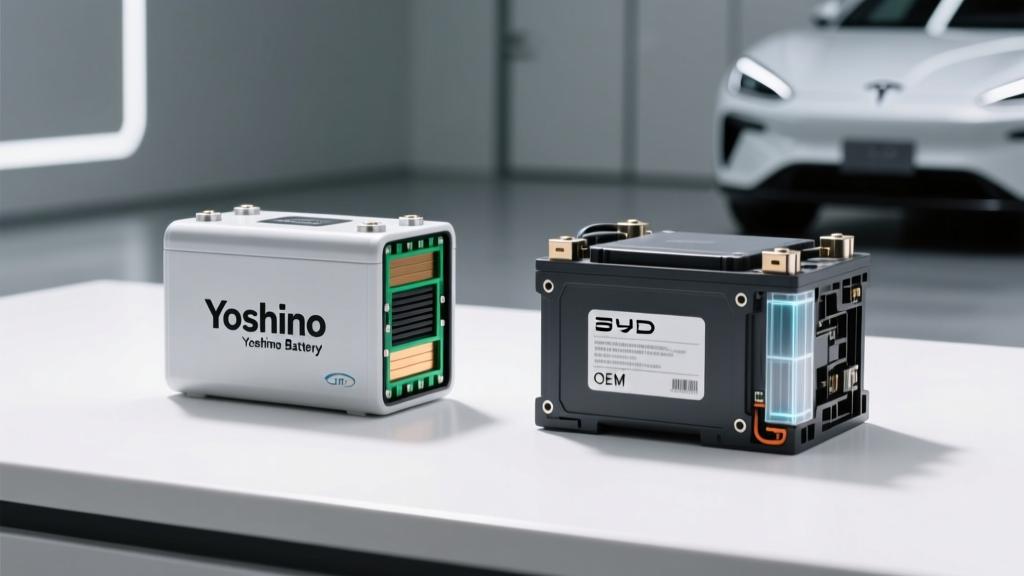
If you've been researching EV battery replacements, aftermarket options, or portable power stations, you've likely encountered the Yoshino battery name. Yoshino (a brand associated with lithium battery packs for portable power, marine, solar storage, and light EV applications) sits in a different product category than the high-voltage traction batteries powering a Tesla Model Y or Hyundai Ioniq 5. But the underlying chemistry questions — LFP vs NMC, cycle life, degradation curves, and replacement economics — are identical across both worlds.
This guide uses Yoshino's product positioning as a lens to explain EV battery technology in 2026: the chemistries in play, how long traction packs actually last, what warranties cover, what replacements cost, and how to monitor and extend State of Health (SoH). Whether you're evaluating a Yoshino pack for an auxiliary system or deciding whether your OEM EV battery needs attention, the fundamentals below apply.
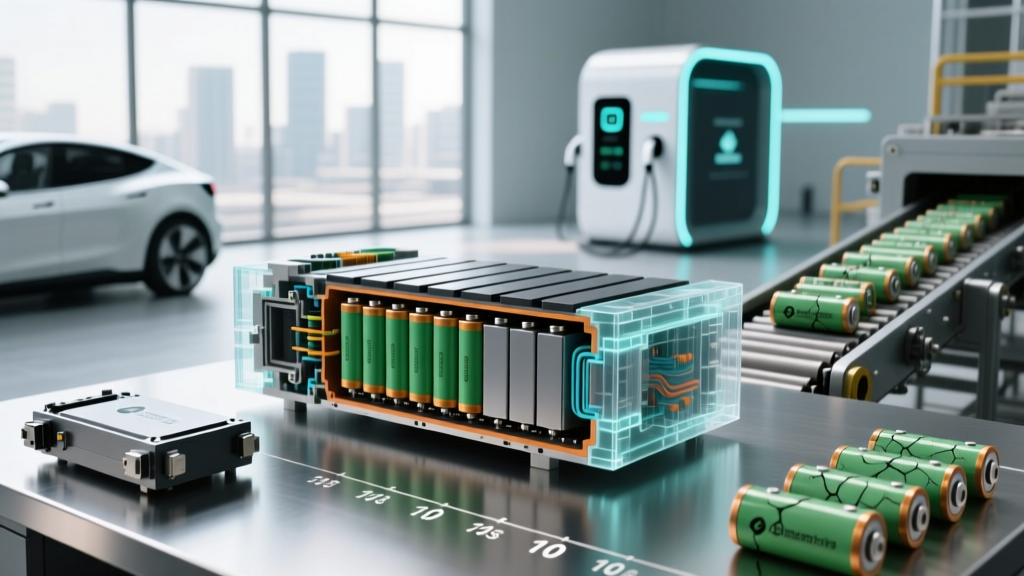
LFP vs NMC/NCA: The Chemistry Trade-Off That Defines Every EV Battery
Every lithium-ion battery in a modern EV — and most Yoshino-branded packs — uses one of two dominant cathode chemistries. The choice drives range, longevity, cold-weather behavior, and cost.
| Attribute | LFP (Lithium Iron Phosphate) | NMC / NCA (Nickel-based) |
|---|---|---|
| Energy density (cell-level) | ~160–180 Wh/kg | ~220–270 Wh/kg |
| Typical cycle life | 3,000–6,000+ cycles to 80% SoH | 1,000–2,000 cycles to 80% SoH |
| Cold-weather performance | Weaker below 32°F; needs preconditioning | Better low-temp discharge; still loses ~20–30% range |
| Thermal stability | Excellent — higher runaway threshold | Good, but more sensitive to abuse |
| Cost per kWh (2026) | ~$90–110/kWh at pack level | ~$120–150/kWh at pack level |
| State-of-charge estimation | Flat voltage curve — harder for BMS to gauge | Sloped curve — easier SoC accuracy |
| Common 2026 vehicles | Tesla Model 3/Y RWD, Ford Mustang Mach-E Select, Rivian Standard | Hyundai Ioniq 5/6 Long Range, Chevy Equinox EV, BMW i4, Lucid Air |
Which is better? For daily commuting and high-mileage owners who charge to 100% often, LFP wins on longevity and cost. For buyers prioritizing maximum range per charge and fast-charging speed, NMC/NCA still leads. Yoshino's portable and marine packs overwhelmingly use LFP because cycle life and safety trump energy density when weight isn't the primary constraint.
How Long Do EV Batteries Last? Real Degradation Data
The fear that EV batteries "die" at 100,000 miles is outdated. Modern thermal management and chemistry improvements have pushed typical degradation into a slow, predictable curve — and most OEM packs outlast the vehicle's useful life.
Typical degradation trajectory (NMC pack, liquid-cooled, moderate climate):
- Year 1 / 15,000 mi: ~2–4% loss (initial "break-in" drop)
- Year 3 / 45,000 mi: ~6–9% total loss
- Year 5 / 75,000 mi: ~9–12% total loss
- Year 8 / 120,000 mi: ~12–18% total loss
- Year 10+ / 150,000+ mi: ~18–25% total loss
LFP packs typically track 3–5 percentage points better over the same interval, according to Recurrent's 2025 fleet dataset of over 15,000 vehicles.
For context, a 2024 Tesla Model 3 Long Range (79 kWh NMC) losing 15% over 8 years would still deliver ~265 miles of its original 341-mile EPA range — entirely usable. A 2026 Model 3 RWD (60 kWh LFP) would degrade less and retain closer to ~230 miles of its 272-mile EPA rating.
What the Battery Warranty Actually Covers (and What It Doesn't)
Federal law mandates a minimum 8-year / 100,000-mile battery warranty on EVs sold in the U.S., and California Air Resources Board (CARB) states extend that to 10 years / 150,000 miles. Most OEMs exceed the floor.
| Manufacturer | Term | Capacity Threshold |
|---|---|---|
| Tesla (Model 3/Y LWD) | 8 yr / 100,000 mi | 70% retention |
| Tesla (Long Range/Performance) | 8 yr / 120,000 mi | 70% retention |
| Hyundai / Kia | 10 yr / 100,000 mi | 70% retention |
| Ford (Mach-E, F-150 Lightning) | 8 yr / 100,000 mi | 70% retention |
| GM (Ultium-based) | 8 yr / 100,000 mi | 70% retention (some models 60%) |
| Rivian | 8 yr / 120,000 mi | 70% retention |
| BMW / Mercedes | 8 yr / 100,000 mi | 70% retention |
What's covered: Capacity loss below the threshold, manufacturing defects, thermal-management failures, and cell-imbalance issues.
What's typically excluded: Damage from accidents, flood, improper aftermarket modifications (including non-OEM auxiliary packs not approved by the manufacturer), and cosmetic issues that don't affect function.
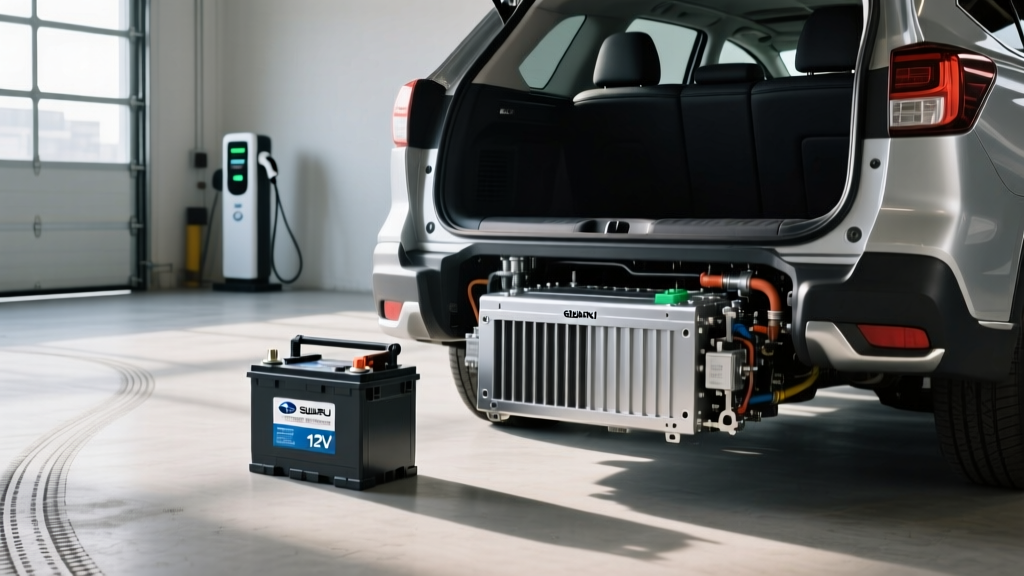
If you install a Yoshino auxiliary battery or portable power system, keep it electrically isolated from the high-voltage traction pack — otherwise you risk voiding the OEM warranty on a $10,000+ component.
EV Battery Replacement Cost: What Owners Actually Pay
Out-of-warranty traction battery replacement is rare but not unheard of — usually triggered by manufacturing defects that surface late, accident damage, or thermal events. Prices vary enormously by pack size and vehicle.
| Vehicle / Pack Size | Parts Cost | Labor | Total Typical |
|---|---|---|---|
| Tesla Model 3 RWD (60 kWh LFP) | $8,000–$11,000 | $1,500–$2,500 | $10,000–$13,500 |
| Tesla Model Y LR (79 kWh NMC) | $12,000–$16,000 | $1,800–$2,800 | $14,000–$19,000 |
| Hyundai Ioniq 5 (77.4 kWh NMC) | $11,000–$15,000 | $2,000–$3,000 | $13,000–$18,000 |
| Ford F-150 Lightning Ext. Range (131 kWh) | $20,000–$28,000 | $3,000–$4,500 | $23,000–$32,500 |
| Chevy Bolt EV (65 kWh) | $9,000–$13,000 | $1,500–$2,500 | $10,500–$15,500 |
| BMW i4 eDrive40 (83.9 kWh) | $16,000–$22,000 | $2,500–$3,500 | $18,500–$25,500 |
Key context: According to fueleconomy.gov and OEM service bulletins, fewer than 2–3% of EVs require a traction battery replacement within the warranty period, and most failures occur in the first 18 months — well within coverage. Catastrophic out-of-warranty replacement at 150,000+ miles is uncommon; most packs limp along with 20–25% degradation rather than failing outright.
Yoshino-branded packs in the portable/marine segment are a separate cost category entirely — typically $800–$4,000 for 2–10 kWh units, user-replaceable, with no labor markup.
Factors That Kill (or Preserve) Battery Health
Degradation isn't purely a function of time. How you charge, store, and drive determines whether your pack hits 80% SoH at year 8 or year 15.
Do
- Charge to 80% daily on NMC packs; LFP can (and should) be charged to 100% weekly to recalibrate the BMS.
- Use Level 2 home charging (7–11 kW) as the primary method. Slow, steady charging produces less heat stress.
- Precondition the battery before DC fast charging — most EVs do this automatically when you navigate to a charger.
- Store at 40–60% SoC if the car will sit unused for more than two weeks.
- Park in shade or a garage during summer; battery temperature above 95°F accelerates calendar aging.
Don't
- DC fast-charge daily. Occasional road-trip use is fine, but daily 150–250 kW sessions measurably accelerate degradation — Recurrent's data shows ~2–4 percentage points more loss over 5 years for frequent DCFC users.
- Let SoC sit at 100% or 0% for extended periods. Both extremes stress the cells chemically.
- Ignore thermal warnings. If your car limits power due to battery temperature, respect it — pushing through causes micro-damage.
- Install aftermarket accessories that tap the traction battery without OEM approval.
Monitoring Battery Health: How to Check SoH
State of Health (SoH) is the percentage of original capacity the pack can still store. A new battery is 100% SoH; a pack that held 79 kWh and now holds 71 kWh is at ~90% SoH.
OEM methods:
- Tesla: Service menu (hold model badge for ~3 seconds, then "Service" > "Battery Health") shows SoH percentage on 2024+ software.
- Hyundai/Kia: Dealer scan tool reads SoH; some third-party OBD-II apps (e.g., Car Scanner, ABRP-linked dongles) pull the same PID.
- Ford/GM/BMW: Typically dealer-only, though OBD-II tools like OBDeleven (for VW-group and some BMWs) can surface the value.
Aftermarket / Yoshino-style packs: Most standalone lithium packs include a BMS companion app (Bluetooth) that reports SoH, cycle count, cell voltage spread, and temperature. This is generally more transparent than OEM EV systems, which historically obscured SoH to avoid alarming owners.
Practical threshold: If your SoH drops below 80% and you're within warranty, file a claim. If out of warranty and SoH is 70–80%, the car is still perfectly drivable — just with proportionally reduced range.
Emerging Battery Tech: What's Real vs. Hype in 2026
Three next-generation technologies are frequently cited as replacements for today's lithium-ion cells. None are widely available in consumer EVs as of 2026, but timelines are firming up.
Solid-state batteries — replacing the liquid electrolyte with a solid ceramic or polymer — promise ~30–40% higher energy density and faster charging. Toyota has announced limited production in a 2027–2028 model-year vehicle; Samsung SDI and QuantumScape are targeting 2028–2029 volume production. Expect initial deployment in premium models above $80,000 MSRP before trickling down.
Silicon-anode cells (used in limited form in the 2025 Porsche Taycan and GM's 2026 Ultium updates) increase energy density 10–20% without the manufacturing overhaul of solid-state. This is the most commercially mature "next-gen" tech and is already shipping.
Sodium-ion batteries — cheaper than LFP, with no lithium or cobalt — are entering Chinese-market EVs (BYD, CATL) in 2025–2026. U.S. availability is unlikely before 2028 due to supply-chain localization requirements under the Inflation Reduction Act.
For buyers today: current NMC and LFP packs are mature, well-warrantied, and economically rational. Waiting for solid-state means a 3–5 year delay with no guarantee of affordable pricing on arrival.
Frequently Asked Questions
How long do EV batteries last in real-world use?
Most modern liquid-cooled EV batteries retain 70–85% of original capacity at 150,000 miles and 10+ years. According to Recurrent, full failure before 200,000 miles is rare — under 2% of vehicles in their dataset required replacement. LFP packs generally outlast NMC by 3–5 percentage points of SoH at equivalent mileage.
How much does an EV battery cost to replace?
Between $10,000 and $32,000 depending on pack size and vehicle, with labor included. Small packs (Chevy Bolt, Tesla Model 3 RWD) cluster around $10,000–$15,000; large packs (F-150 Lightning Extended Range, GMC Hummer EV) can exceed $30,000. Most replacements are covered under the 8-year/100,000-mile federal warranty minimum.
What does the battery warranty actually cover?
Capacity loss below a stated threshold (usually 70% SoH) within 8 years / 100,000 miles (or 10/150,000 in CARB states), plus manufacturing defects and thermal-management failures. It does not cover accident damage, flood, or aftermarket modifications that interact with the high-voltage system.
How do I check my EV battery's State of Health?
Tesla exposes SoH in the service menu; most other brands require a dealer scan tool or an OBD-II dongle paired with apps like Car Scanner or ABRP. Standalone packs (Yoshino and similar) typically report SoH through a companion Bluetooth app. If your SoH is below 80% inside the warranty window, file a claim.
LFP vs NMC — which chemistry should I choose?
Choose LFP if you charge at home daily, drive under 300 miles between charges, prioritize longevity, and live in a mild-to-warm climate. Choose NMC/NCA if you need maximum range, frequently road-trip in cold weather, or value faster peak DC charging speeds. For auxiliary or off-grid applications (the Yoshino segment), LFP is almost always the right call due to cycle life and thermal safety.
Is a Yoshino battery a viable EV traction-battery replacement?
No. Yoshino-branded packs are engineered for portable power, marine, solar storage, and light auxiliary applications — not the 400V–800V high-voltage traction systems in modern EVs. OEM traction battery replacement requires factory-matched modules, BMS integration, and dealer-level programming. Yoshino packs are excellent for 12V auxiliary upgrades, RV house banks, and off-grid storage, but they are not a substitute for a Tesla, Hyundai, or Ford traction pack.
EV batteries in 2026 are mature, well-warrantied, and statistically unlikely to require replacement during typical ownership. Whether you're evaluating an OEM pack or a Yoshino auxiliary system, the chemistry fundamentals — LFP longevity, NMC energy density, thermal management, and SoC discipline — drive every decision.