Who Makes Tesla Batteries? The Supplier Landscape in 2026
Tesla doesn't manufacture every battery cell that goes into its vehicles. Instead, the company relies on a multi-supplier strategy that has evolved significantly since the early Model S days. Understanding who makes Tesla batteries — and what chemistry each supplier provides — is essential for buyers trying to evaluate long-term durability, charging behavior, and real-world range.
As of 2026, Tesla's primary battery cell suppliers are:
- Panasonic — The longest-standing partner, producing nickel-cobalt-aluminum (NCA) and nickel-manganese-cobalt (NMC) cells at the Gigafactory Nevada and Gigafactory Kansas. Panasonic supplies cells primarily for Model S, Model X, Model 3 Long Range, and Model Y Long Range vehicles built for the North American market.
- CATL (Contemporary Amperex Technology Co. Limited) — The Chinese battery giant supplies lithium iron phosphate (LFP) cells used in the Model 3 Rear-Wheel Drive and Model Y Rear-Wheel Drive (Standard Range) variants. CATL cells are produced in Shanghai and have also begun shipping from CATL's European and North American partnerships.
- BYD — Tesla began sourcing BYD's Blade Battery (an LFP cell in a structural cell-to-pack format) for certain Model Y vehicles produced at Gigafactory Berlin and select Asian-market vehicles. BYD's involvement remains more limited than CATL's but has expanded since 2023.
- LG Energy Solution — Supplies NMC cells primarily for European-market Model 3 and Model Y vehicles, produced at LG's facilities in Poland and, more recently, from North American plants.
This diversified supply chain means that two seemingly identical Tesla vehicles — say, a Model 3 Long Range and a Model 3 Rear-Wheel Drive — can have fundamentally different battery chemistries, charging recommendations, and degradation profiles. The trim you choose determines the cell chemistry inside.
LFP vs NMC vs NCA: Tesla's Battery Chemistry Breakdown
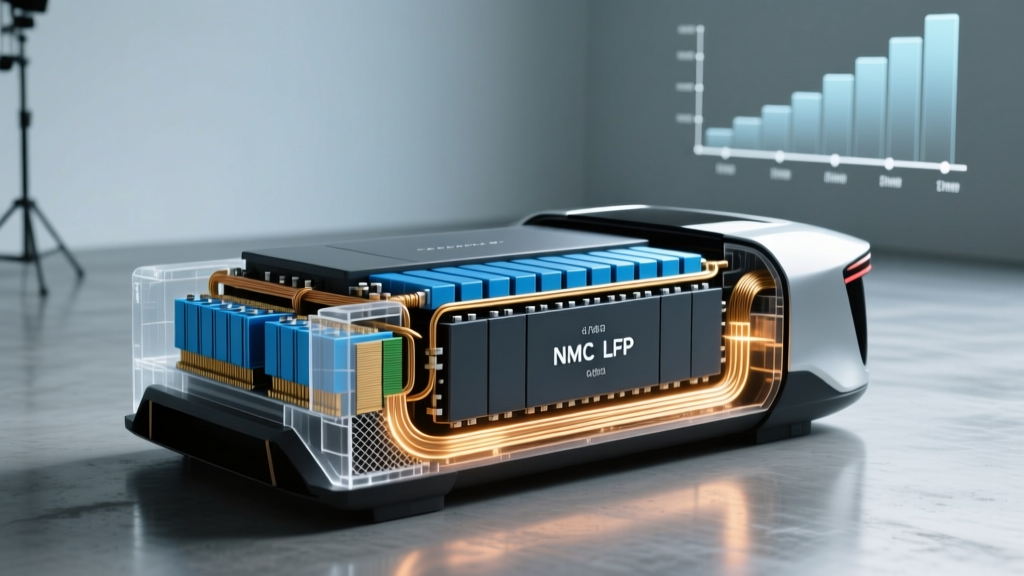
Tesla uses three main cathode chemistries across its lineup. The differences are not trivial — they affect how you charge, how the battery ages, and how the vehicle performs in cold weather.
| Attribute | LFP (Lithium Iron Phosphate) | NMC (Nickel Manganese Cobalt) | NCA (Nickel Cobalt Aluminum) |
|---|---|---|---|
| Energy Density | Lower (~160 Wh/kg cell-level) | Higher (~250 Wh/kg cell-level) | Highest (~260-270 Wh/kg cell-level) |
| Cycle Life | 3,000-5,000+ cycles | 1,000-2,000 cycles | 1,000-1,500 cycles |
| Cold-Weather Performance | More range loss in freezing temps (15-30%) | Moderate cold loss (10-20%) | Moderate cold loss (10-20%) |
| Recommended Daily Charge | 100% (Tesla recommends periodic full charges) | 80-90% daily; 100% for trips | 80-90% daily; 100% for trips |
| Cost per kWh | Lower — no cobalt or nickel | Higher — cobalt/nickel price exposure | Higher — cobalt/nickel price exposure |
| Typical Tesla Application | Model 3 RWD, Model Y RWD | Model 3 LR, Model Y LR (EU), Model Y (Berlin) | Model S, Model X, Model 3 LR (NA), Model Y LR (NA) |
| Primary Supplier(s) | CATL, BYD | LG Energy Solution, Panasonic | Panasonic |
So which is better? It depends entirely on your use case. If you want maximum range per charge and don't mind charging to 80% daily, NCA or NMC delivers. If you prioritize longevity, want to charge to 100% without guilt, and drive mostly in moderate climates, LFP is the more durable choice. LFP's lower energy density means a slightly smaller total battery (roughly 57-60 kWh usable in the Model 3 RWD vs. ~75-82 kWh in Long Range variants), which translates to less EPA-rated range — but the chemistry's superior cycle life means the battery is likely to retain more of its original capacity over 150,000+ miles.
How Long Do Tesla Batteries Actually Last?
Tesla's own 2024 Impact Report (the most recent comprehensive dataset published) showed that Model 3 and Model Y batteries retained approximately 85% of their original capacity after 200,000 miles. That represents roughly 15% degradation over a distance that exceeds what most owners will drive in a decade.
Real-world data from fleet operators and owner surveys fills in the picture further:
Typical Tesla Battery Degradation Curve (Aggregated Owner Data):
- Year 1 / 15,000 miles: 3-5% capacity loss (initial formation loss, steepest part of the curve)
- Year 3 / 45,000 miles: 7-10% total loss
- Year 5 / 75,000 miles: 9-12% total loss
- Year 8 / 120,000 miles: 12-16% total loss
- Year 10+ / 150,000-200,000 miles: 14-20% total loss
LFP-equipped vehicles tend to sit at the lower end of these ranges, while NCA packs in early Model S/X vehicles (pre-2020) showed slightly higher degradation due to less advanced thermal management.
The critical insight: degradation is non-linear. Most capacity loss occurs in the first 20,000-30,000 miles as the battery's solid electrolyte interface (SEI) layer stabilizes. After that, the curve flattens considerably. A Tesla battery that has lost 10% in the first three years is not on track to lose another 10% in the next three — the ongoing rate typically slows to 1-2% per year under normal use.
For context, Tesla designs its battery packs to retain usable functionality well beyond 300,000 miles. Complete battery failure (a pack that no longer holds a meaningful charge) is rare and typically covered under warranty. The more common scenario is gradual capacity reduction that slightly reduces range but doesn't render the vehicle unusable.
Tesla Battery Warranty: What's Actually Covered
Tesla's battery and drive unit warranty is one of the more straightforward in the EV industry, but the details matter — especially the capacity retention threshold.
| Model | Battery Warranty Duration | Mileage Limit | Minimum Capacity Retention |
|---|---|---|---|
| Model 3 Rear-Wheel Drive (LFP) | 8 years | 100,000 miles | 70% |
| Model 3 Long Range / Performance | 8 years | 120,000 miles | 70% |
| Model Y (all trims) | 8 years | 120,000 miles | 70% |
| Model S / Model X | 8 years | 150,000 miles | 70% |
What the warranty covers: If your battery drops below 70% of its original capacity within the warranty period (whichever limit — time or mileage — comes first), Tesla will repair or replace the pack at no cost. The warranty also covers defects in materials and workmanship, and any battery that fails catastrophically.
What it does not cover: Normal degradation above the 70% threshold, damage from accidents, flooding, or unauthorized modifications, and capacity loss from consistently ignoring Tesla's charging recommendations (though this is extremely difficult for Tesla to prove and rarely contested).
The 70% threshold is important to understand in context: given that real-world data shows most Tesla batteries retain 80-88% capacity at the 8-year mark under normal use, the warranty threshold represents a floor that very few packs actually reach. It is a safety net, not a prediction.
EV Battery Replacement Cost: What Tesla Owners Actually Pay
Battery replacement is the single most cited fear among prospective EV buyers. Here's what the numbers actually look like in 2026:
| Model | Battery Size (Usable) | Chemistry | Estimated Replacement Cost (Parts + Labor) |
|---|---|---|---|
| Model 3 RWD | ~57 kWh | LFP | $10,000 - $13,000 |
| Model 3 Long Range | ~75 kWh | NCA | $13,000 - $16,000 |
| Model Y Long Range / Performance | ~75-82 kWh | NCA/NMC | $14,000 - $18,000 |
| Model S / Model X | ~95-100 kWh | NCA | $18,000 - $25,000 |
These figures represent out-of-warranty replacement costs at Tesla Service Centers. Independent EV repair shops and refurbished pack options can reduce costs by 20-35%, though availability varies by region.
When is replacement typically needed? The honest answer: for the vast majority of owners, it isn't. Based on current degradation data, a Tesla battery is likely to outlast the vehicle's economic life. The scenarios where replacement becomes necessary are:
- Manufacturing defects that manifest early (covered by warranty)
- Physical damage from collisions, flooding, or ground strikes
- Extreme high-mileage use (200,000+ miles) where range reduction becomes impractical for the owner's needs
- Rare thermal events or cell imbalance issues that cannot be resolved through module-level repair
Tesla increasingly performs module-level repairs rather than full-pack replacements. The structural battery pack in newer vehicles (post-2021 Model Y with 4680 cells) makes module-level service more complex, but for older vehicles with traditional module-based packs, individual module replacement can cost $2,000-$5,000 instead of a full pack swap.
Factors That Accelerate (or Preserve) Battery Health
Not all miles are equal when it comes to battery wear. The following factors have the most significant impact on long-term State of Health (SoH):
Habits That Preserve Battery Life:
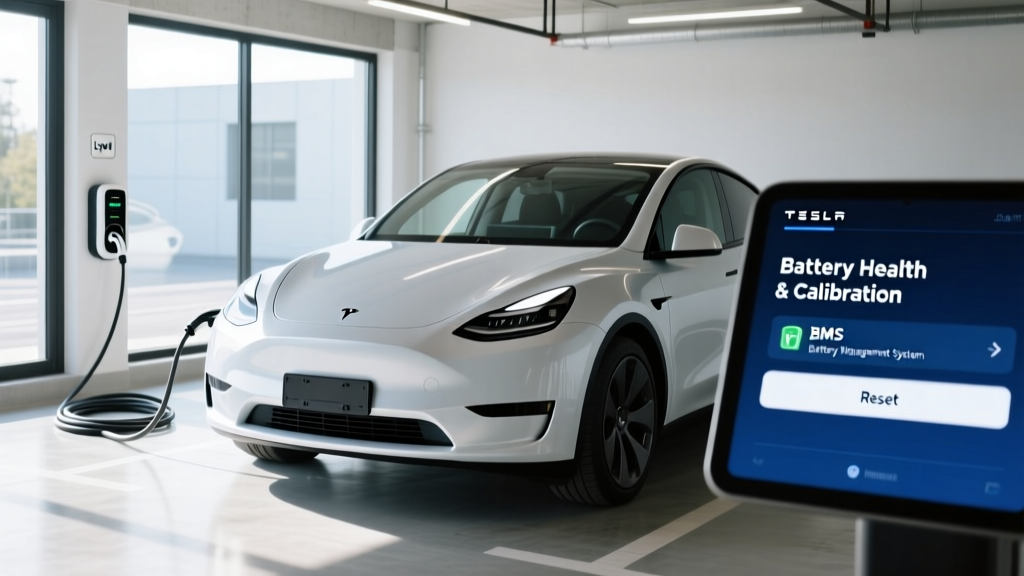
- Charge to 80% daily (for NMC/NCA vehicles) — Keeping the battery between 20-80% SoC reduces stress on the cathode. LFP owners should follow Tesla's recommendation to charge to 100% at least once per week for accurate BMS calibration.
- Use Level 2 home charging as your primary method — Slow, steady charging generates less heat and puts less stress on cells than repeated DC fast charging.
- Precondition before fast charging — Tesla's navigation-based preconditioning warms the battery to the optimal temperature for DC charging, reducing lithium plating risk in cold weather.
- Avoid prolonged storage at 100% or below 10% — If leaving the vehicle for more than a week, aim for 50-60% SoC.
- Let regenerative braking do the work — Smooth driving with regen reduces the thermal load on the battery compared to hard acceleration followed by friction braking.
Habits That Accelerate Degradation:
- Frequent DC fast charging — Occasional Supercharging is fine, but daily DC fast charging (especially at 250 kW peak rates) generates sustained heat that accelerates electrolyte breakdown. Fleet data suggests vehicles that DC fast charge more than 3x per week show 2-4% additional degradation over 100,000 miles compared to primarily Level 2-charged vehicles.
- Regularly charging to 100% on NMC/NCA — High SoC at elevated temperatures is the most damaging combination for nickel-based chemistries.
- Deep discharges below 5% — Running the battery to near-zero regularly stresses the anode and can cause copper dissolution in the cell.
- Prolonged exposure to extreme heat — Parking in direct sun in 100°F+ climates without thermal management active (the vehicle will run cooling if plugged in) accelerates calendar degradation.
How to Check Your Tesla's Battery Health (State of Health)
Tesla does not display a simple "battery health percentage" in the vehicle's interface the way some competitors do. However, there are several reliable methods to assess your pack's State of Health:
Method 1: The Range Comparison Method
Charge your vehicle to 100% (on LFP) or note the projected range at a known SoC (on NMC/NCA). Compare the displayed range at 100% to the original EPA-rated range for your model. For example, if your Model 3 Long Range originally displayed 330 miles at 100% and now displays 295 miles, that indicates approximately 10.6% degradation. Note: displayed range is affected by temperature, recent driving style, and software updates, so track this over multiple data points rather than relying on a single reading.
Method 2: Third-Party Apps
Apps like TeslaFi, Tessie, and Stats (for Tesla) log detailed charge data and can calculate estimated SoH by comparing energy added during charges against the battery's known capacity. These tools provide a more data-rich picture than the in-car display alone.
Method 3: Tesla Service Diagnostic
If you suspect abnormal degradation (e.g., a sudden drop in range that doesn't correlate with temperature), you can request a battery health diagnostic through the Tesla app. Service technicians can pull detailed cell-level data including individual module voltage variance, which reveals whether specific modules are underperforming.
Method 4: OBD-II Data (Limited)
While Tesla's OBD-II port provides less battery data than some EVs, tools like Scan My Tesla can read pack voltage, current, and individual cell voltages in real time. This is most useful for identifying cell imbalance rather than overall SoH.
What's Next: Solid-State, Silicon Anode, and Beyond
The battery landscape is evolving rapidly, but it's critical to separate announced milestones from production reality.
Solid-state batteries — Companies including Toyota, Samsung SDI, and QuantumScape have announced solid-state prototypes promising higher energy density (400+ Wh/kg at the cell level) and faster charging. However, as of 2026, no solid-state battery is in mass production for any consumer EV. Toyota's announced 2027-2028 timeline for limited production remains preliminary. Realistic widespread availability in Tesla-class volumes is likely 2029-2032.
Silicon anode technology — Tesla's 4680 cell already incorporates a silicon-composite anode (replacing traditional graphite) to improve energy density. Ongoing refinements from companies like Sila Nanotechnologies and Group14 aim to increase the silicon content further, which could yield 10-20% energy density improvements in next-generation cells. This is incremental evolution, not a revolution — but it's real and already in production.
Sodium-ion batteries — CATL has begun limited production of sodium-ion cells for lower-cost, lower-range applications. These are unlikely to appear in Tesla vehicles for the US market due to their lower energy density, but they represent a cost-reduction pathway for entry-level EVs globally.
For buyers making a decision today: current lithium-ion technology (both LFP and NMC/NCA) is mature, well-understood, and backed by extensive real-world durability data. Waiting for solid-state is a choice to delay a purchase by 4-6+ years with no guarantee of initial affordability.
Frequently Asked Questions
Does Tesla make its own batteries?
Tesla manufactures some battery cells in-house — specifically the 4680-format cells produced at its pilot facility in Fremont, California, and at Giga Texas. However, the majority of Tesla's battery supply still comes from external partners: Panasonic, CATL, LG Energy Solution, and BYD. Tesla's in-house cell production is ramping but represents a fraction of total volume as of 2026.
Are CATL batteries in Tesla as good as Panasonic?
CATL's LFP cells offer different trade-offs, not inferior quality. LFP has lower energy density (meaning less range per kWh of battery weight) but significantly longer cycle life and better thermal stability. For a Model 3 RWD used primarily for commuting and daily driving, a CATL LFP battery is arguably more durable over a 10-year ownership period than an NCA pack — though you'll have less total range.
Should I avoid Supercharging to preserve battery life?
You don't need to avoid Supercharging entirely. Tesla's battery management system actively manages thermal loads during DC fast charging. The data shows that exclusive DC fast charging (never using Level 2) correlates with slightly higher degradation — roughly 2-4% more loss over 100,000 miles. If you have access to Level 2 home charging and use it for 80%+ of your charging, occasional Supercharging on road trips will have a negligible impact on long-term health.
What happens if my Tesla battery degrades to 65% capacity?
If this occurs within the warranty period (8 years and the applicable mileage limit), Tesla will repair or replace the battery at no cost. If it occurs outside the warranty period, you would be responsible for replacement costs (see the cost table above). In practice, very few Tesla batteries reach 65% capacity within the warranty window based on published fleet data.
Can I upgrade my Tesla's battery to a larger capacity later?
No. Tesla does not offer battery capacity upgrades. The pack your vehicle was built with is the pack it will keep. Some older Model S and Model X vehicles received replacement packs with slightly higher capacity when their original packs were serviced under warranty (due to older pack configurations being discontinued), but this is not an upgrade path available by request.
How does cold weather affect Tesla battery health long-term?
Cold weather causes temporary range reduction (15-30% in freezing temperatures) but does not cause permanent damage as long as the battery is not charged at high rates while below freezing. Tesla's thermal management system prevents this by restricting charge rate and warming the pack. Long-term, vehicles in cold climates do not show meaningfully higher degradation than those in moderate climates — heat is actually more damaging to lithium-ion cells than cold.
Sources: Tesla Impact Report 2024 (tesla.com/impact), EPA fuel economy data (fueleconomy.gov), Tesla Vehicle Warranty Documentation (tesla.com/ownership/warranty).