Honda's EV Battery Supply Chain: Who Actually Builds the Cells?
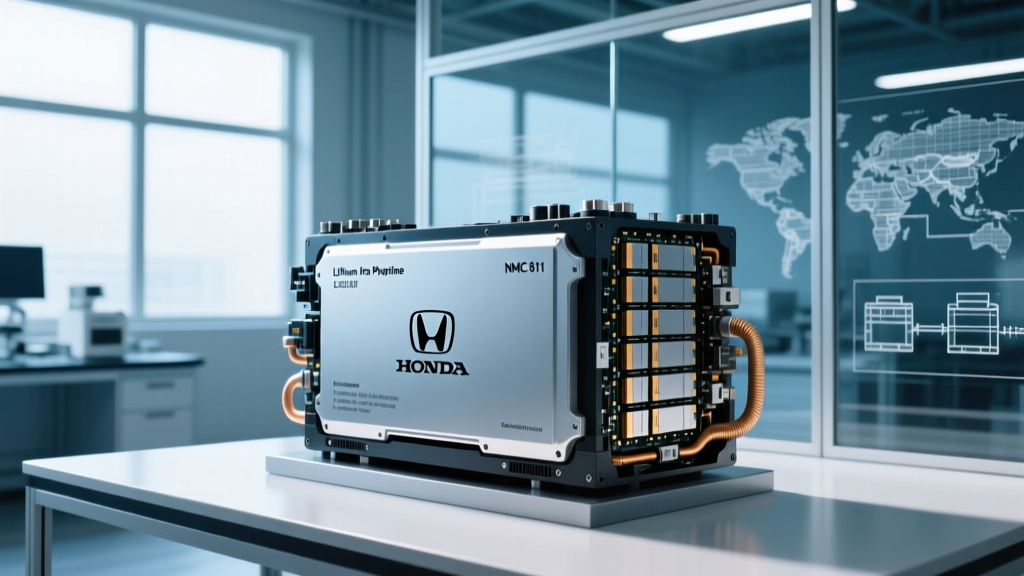
When Honda launched the Prologue as its first mass-market battery electric vehicle for North America, it leaned heavily on a long-standing partner: General Motors. The 2024–2026 Honda Prologue rides on GM's Ultium platform and uses Ultium lithium-ion battery packs assembled in the United States. The cells inside those packs are primarily manufactured by Ultium Cells LLC, a joint venture between GM and LG Energy Solution, with production facilities in Ohio, Tennessee, and Michigan.
But Honda's battery strategy extends far beyond the Prologue. For its next-generation EVs — including the Honda 0 Series vehicles announced for the late 2020s — Honda is developing in-house battery technology and diversifying its supply chain. Here is a detailed breakdown of who makes Honda batteries across current and upcoming models, the chemistry involved, and what that means for longevity, replacement cost, and real-world ownership.
Current Honda EV Battery Suppliers by Model
Understanding Honda's battery sourcing requires looking at each model individually, because the supplier and chemistry differ depending on the platform.
| Model | Platform | Battery Supplier | Chemistry | Usable Capacity | EPA Range |
|---|---|---|---|---|---|
| Honda Prologue (AWD) | GM Ultium | Ultium Cells (GM + LG Energy Solution) | NMC (Nickel Manganese Cobalt) | 85 kWh | 273–288 mi |
| Honda Prologue (FWD) | GM Ultium | Ultium Cells (GM + LG Energy Solution) | NMC | 85 kWh | 296 mi |
| Acura ZDX | GM Ultium | Ultium Cells (GM + LG Energy Solution) | NMC | 102 kWh | 308–325 mi |
| Honda e:Ny1 (Europe/Japan) | Honda e:N Architecture F | CATL / Honda JV | NMC | 68.8 kWh | ~256 mi (WLTP) |
The EPA's fueleconomy.gov lists the Prologue FWD at 296 miles of combined range, though real-world highway driving at 70+ mph and cold-weather conditions can reduce that figure by 15–25%, putting realistic highway range closer to 220–250 miles in winter.
Honda's In-House Battery Development and Future Partners
Honda has publicly committed to bringing battery cell production in-house for its next-generation EVs. The company's "Honda 0 Series" initiative, previewed at CES 2024 and targeting production from approximately 2026–2028, includes plans for proprietary thin, lightweight battery packs built on Honda's own architecture.
Key supply-chain developments include:
- LG Energy Solution partnership expansion: Honda and LG Energy Solution announced a $4.4 billion joint venture battery plant in Fayette County, Ohio, with annual production capacity of approximately 40 GWh. This facility is expected to supply cells for Honda's next-generation North American EVs starting in the late 2020s.
- In-house solid-state battery R&D: Honda has been developing all-solid-state battery technology at its demonstration line in Tochigi, Japan. The company has stated it aims to introduce solid-state batteries in EVs by the late 2020s, though mass production timelines remain uncertain.
- Envision AESC and other suppliers: For certain global markets, Honda has explored partnerships with additional cell makers, though LG Energy Solution remains the primary strategic partner for North America.
For buyers, this means current Honda EVs (the Prologue) rely on proven GM/LG technology, while future models will increasingly use Honda-designed or Honda-LG JV cells with potentially different chemistry and form factors.
LFP vs NMC Chemistry: What Honda Uses and Why
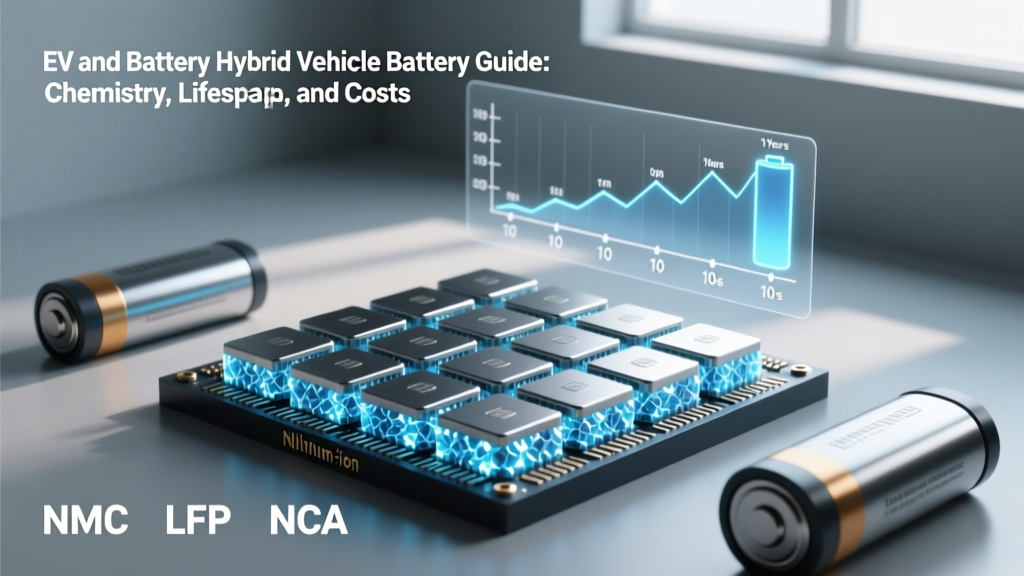
The Honda Prologue's Ultium battery pack uses NMC (nickel manganese cobalt) lithium-ion chemistry. This is the dominant chemistry for North American EVs prioritizing range and performance, but it is not the only option. Here is how NMC compares to LFP (lithium iron phosphate), the chemistry used by Tesla in standard-range models and increasingly adopted across the industry.
| Attribute | NMC (Honda Prologue) | LFP (e.g., Tesla Model 3 RWD) |
|---|---|---|
| Energy Density | Higher (~200–260 Wh/kg cell-level) | Lower (~150–180 Wh/kg cell-level) |
| Typical Cycle Life | 1,000–2,000 full cycles | 3,000–5,000+ full cycles |
| Cold-Weather Performance | Better low-temp discharge capability | More range loss in freezing conditions |
| Cost (per kWh) | Higher (~$110–140/kWh pack-level) | Lower (~$80–100/kWh pack-level) |
| Optimal Daily Charge Limit | 80% recommended for daily use | 100% acceptable (recommended weekly) |
| Thermal Stability | Good, but lower thermal runaway threshold | Excellent — higher thermal runaway threshold |
| Cobalt Content | Contains cobalt (supply chain concern) | Cobalt-free |
Which is better? For Honda Prologue owners, NMC delivers the energy density needed to fit 85 kWh of usable capacity into a midsize SUV footprint while achieving close to 300 miles of range. The trade-off is that NMC degrades slightly faster than LFP over thousands of charge cycles, and daily charging to 100% accelerates that degradation. LFP sacrifices some range per kilogram but offers significantly longer cycle life and lower cost — making it ideal for standard-range vehicles where absolute maximum range is less critical.
How Long Do Honda EV Batteries Last? Degradation Data
The most common concern among prospective EV buyers is battery longevity. Based on data from Ultium-platform vehicles and broader NMC battery studies, here is what the evidence shows:
Typical NMC Battery Degradation Curve (Ultium Platform Estimate):
- Year 1 / 15,000 miles: ~2–4% capacity loss (initial formation period)
- Year 3 / 45,000 miles: ~6–9% total capacity loss
- Year 5 / 75,000 miles: ~8–12% total capacity loss
- Year 8 / 120,000 miles: ~10–16% total capacity loss
- Year 10 / 150,000 miles: ~12–20% total capacity loss (highly usage-dependent)
Source: Aggregated fleet data from Recurrent Auto battery health reports and Ultium platform early telemetry. Individual results vary based on charging habits, climate, and fast-charging frequency.
For the Prologue's 85 kWh usable battery, a 12% loss at year 8 would mean approximately 75 kWh of usable capacity — still sufficient for roughly 260 miles of EPA-equivalent range. Most modern EV batteries are designed to retain 70–80% of original capacity well beyond 150,000 miles, and catastrophic failure (sudden inability to hold charge) is rare outside of manufacturing defects covered under warranty.
Key factors that accelerate degradation include:
- Frequent DC fast charging above 150 kW: Occasional fast charging is fine, but daily reliance on 200+ kW DC charging generates sustained heat that stresses NMC cells. Preconditioning the battery (which the Prologue supports when navigating to a charger) reduces this stress significantly.
- Consistently charging to 100%: For NMC chemistry, setting a daily charge limit of 80% and only charging to 100% for long road trips can extend battery life by several percentage points over a decade.
- Deep discharges below 10%: Letting the battery sit at very low state of charge for extended periods (days or weeks) accelerates chemical degradation.
- Extreme heat exposure: Parking in direct sunlight in 100°F+ climates for extended periods without thermal management active can degrade cells faster. Honda's liquid-cooled thermal management system mitigates this, but it is not immune.
- High-mileage fast-charge-heavy usage: Fleet data shows vehicles that DC fast-charge more than 3 times per week on average show 2–4% additional degradation over 100,000 miles compared to predominantly Level 2-charged vehicles.
Honda EV Battery Warranty: What Is Covered?
Honda provides a battery warranty that aligns with the federal minimum standard and matches most competitors in the EV space. For the Prologue, the terms are:
| Warranty Component | Coverage |
|---|---|
| High-Voltage Battery Capacity | 8 years / 100,000 miles (whichever comes first) |
| Capacity Retention Threshold | 70% of original usable capacity |
| CARB State Extension | 10 years / 150,000 miles in CARB-adopting states (CA, NY, WA, OR, CO, and others) |
| Powertrain Components (e-motor, inverter) | 5 years / 60,000 miles (standard powertrain warranty) |
| Defect Coverage | Full replacement or repair if a manufacturing defect causes failure |
The 70% capacity retention threshold is the trigger point: if your Prologue's battery degrades below 70% of its original 85 kWh (roughly 59.5 kWh usable) within the warranty period, Honda is obligated to repair or replace the battery at no cost. In practice, based on degradation data above, reaching this threshold within 8 years / 100,000 miles would require unusually aggressive usage patterns or a defective pack.
Residents of California Air Resources Board (CARB) states benefit from extended coverage — 10 years or 150,000 miles — which provides substantial additional protection. Check your state's adoption status if you are near a border or have recently relocated.
Honda EV Battery Replacement Cost: What Would It Actually Cost?
Out-of-warranty battery replacement is the scenario that generates the most anxiety. Here are current estimated costs based on industry data and Ultium platform pricing:
| Vehicle / Battery Size | Battery Cost (Parts) | Labor | Total Estimated Range |
|---|---|---|---|
| Honda Prologue (85 kWh NMC) | $12,000–$18,000 | $1,500–$3,000 | $13,500–$21,000 |
| Chevrolet Equinox EV (85 kWh Ultium) | $12,000–$17,000 | $1,500–$2,500 | $13,500–$19,500 |
| Tesla Model Y (75–82 kWh) | $12,000–$16,000 | $1,000–$2,000 | $13,000–$18,000 |
| Ford Mustang Mach-E (70–91 kWh) | $14,000–$22,000 | $1,500–$3,000 | $15,500–$25,000 |
These figures reflect 2025–2026 pricing. Battery pack costs have been declining at roughly 8–12% per year over the past decade, so replacement costs for a Prologue needing a new battery in 2034 would likely be significantly lower than today's estimates.
The critical context: the vast majority of EV batteries outlast the vehicle itself. Data from Recurrent Auto and other fleet aggregators shows that fewer than 5% of EV batteries require full replacement due to degradation alone. Most replacements occur due to manufacturing defects (covered under warranty) or physical damage from collisions. For a Prologue owner who charges primarily at home on Level 2 and follows basic battery care practices, the probability of needing an out-of-pocket battery replacement is low.
Monitoring Battery Health: How to Check State of Health (SoH)
Honda does not currently offer a granular battery State of Health (SoH) readout directly in the Prologue's infotainment system, unlike some competitors (Tesla's service mode, for instance, shows estimated capacity). However, there are several ways to monitor your battery's condition:
- Range estimation tracking: Monitor your vehicle's estimated range at a full charge over time. If a Prologue that originally showed 296 miles at 100% consistently shows 270 miles after 30,000 miles, that suggests approximately 8–9% degradation — normal for the mileage.
- OBD-II diagnostic tools: Third-party OBD-II scanners with EV compatibility (such as the OBDLink SX paired with apps like ABRP or Car Scanner) can read battery management system (BMS) data including estimated SoH percentage, cell voltage variance, and battery temperature.
- Dealer diagnostic report: Honda dealers can run a battery health diagnostic that provides a more precise capacity assessment. Request this during routine service visits, especially as you approach the warranty period's later years.
- Third-party battery health reports: Services like Recurrent Auto offer free battery health reports that connect to your vehicle's telematics and track degradation over time, providing a certified SoH figure useful for resale.
Emerging Battery Technology: What Honda Has in the Pipeline
Honda's public roadmap includes two significant battery technology advances that could reshape future models, though neither is available in production vehicles as of 2026:
All-Solid-State Batteries: Honda has operated a solid-state battery demonstration production line in Tochigi, Japan, since 2023. The company targets introduction of solid-state cells in EVs by the late 2020s, with promises of 30–50% greater energy density, faster charging, and improved cold-weather performance. Solid-state batteries replace the liquid electrolyte in current lithium-ion cells with a solid material, reducing fire risk and enabling lithium-metal anodes. Realistic mass-production timelines remain uncertain — industry-wide, solid-state batteries face manufacturing yield and cost challenges that have delayed multiple automaker targets.
Silicon Anode Technology: Honda has referenced research into silicon-dominant anode materials, which can theoretically store significantly more lithium than the graphite anodes used today. Companies like Sila Nanotechnologies and Group14 are bringing silicon anode materials to market in the 2025–2027 timeframe, though initial applications are limited to premium or high-performance vehicles due to cost. If Honda adopts silicon anode technology in its next-generation cells, expect modest energy density gains (10–20%) rather than revolutionary leaps.
Both technologies are forward-looking and should be considered in long-term planning rather than current purchase decisions. The Prologue's NMC/Ultium battery represents proven, well-understood technology with predictable degradation characteristics.
Frequently Asked Questions
Does Honda make its own EV batteries?
Not currently for North American models. The Honda Prologue uses battery packs built by Ultium Cells LLC, a joint venture between General Motors and LG Energy Solution. Honda is building its own battery JV plant with LG in Ohio for future models and is developing in-house solid-state battery technology in Japan, but as of 2026, Honda does not manufacture its own EV battery cells at scale.
How long do Honda Prologue batteries last?
Based on Ultium platform degradation data and NMC chemistry characteristics, expect the Prologue's 85 kWh battery to retain approximately 84–88% of its original capacity at 100,000 miles under normal usage (predominantly Level 2 home charging, daily limit set to 80%). The federal warranty guarantees at least 70% retention for 8 years or 100,000 miles, and most batteries significantly outperform this threshold.
How much does it cost to replace a Honda Prologue battery?
An out-of-warranty replacement for the Prologue's 85 kWh battery pack is estimated at $13,500–$21,000 including parts and labor at 2025–2026 pricing. However, battery costs decline approximately 8–12% annually, so a replacement needed in the 2030s would likely cost considerably less. More importantly, the probability of needing a full replacement due to degradation is very low — most EV batteries outlast the vehicle.
Is NMC or LFP better for Honda EVs?
For the Prologue's midsize SUV application, NMC is the practical choice — its higher energy density allows 85 kWh to fit within the vehicle's footprint while delivering nearly 300 miles of EPA range. LFP offers superior cycle life and lower cost but would require a heavier, larger pack for equivalent range. Future Honda models on dedicated platforms may adopt LFP for standard-range trims, following the industry trend.
How do I maximize my Honda Prologue's battery lifespan?
Set your daily charge limit to 80% and only charge to 100% before long trips. Use Level 2 home charging as your primary method and limit DC fast charging to road trips. Avoid letting the battery sit below 10% for extended periods. Enable battery preconditioning when navigating to a fast charger. Park in shade or a garage when possible in extreme heat. These practices collectively can preserve several additional percentage points of capacity over a decade of ownership.
Does the Honda Prologue qualify for the federal EV tax credit?
As of the 2025–2026 tax year, the Honda Prologue's eligibility for the IRS §30D clean vehicle credit depends on battery component and critical mineral sourcing requirements that change annually. The Prologue's MSRP falls below the $80,000 SUV cap, and buyer income limits apply ($300,000 joint / $150,000 single for new vehicles). Because sourcing rules tighten each year, verify current eligibility on the IRS website or through your tax professional before relying on the credit. The point-of-sale transfer option allows qualifying buyers to apply the credit as a down payment reduction at the dealership.