Which Tesla Models Use LFP Batteries in 2026?
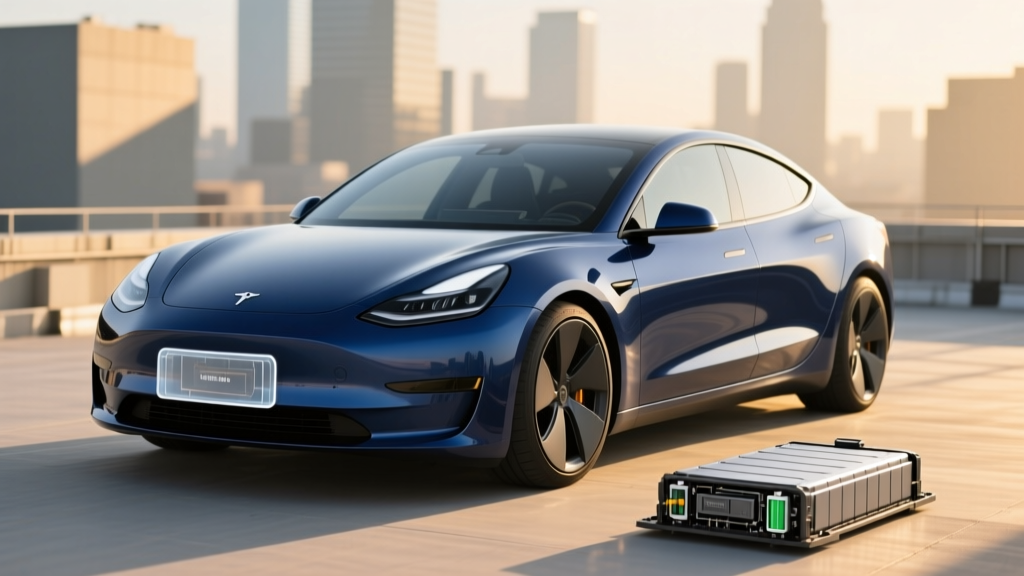
If you've been researching Tesla's battery lineup, you've likely encountered the question: which Tesla's have LFP battery packs, and does it actually matter for your ownership experience? The answer has evolved significantly since Tesla first introduced lithium iron phosphate (LFP) cells into its Standard Range vehicles in late 2021. As of the 2026 model year, LFP chemistry remains a core part of Tesla's strategy for its entry-level trims, while higher-range and performance variants continue to rely on nickel-based chemistries.
Here's the current breakdown by model and trim:
- Model 3 Standard Range (RWD): LFP — ~60 kWh usable capacity
- Model 3 Long Range / Performance: NMC (nickel manganese cobalt) — ~79 kWh usable
- Model Y Standard Range (RWD): LFP — ~60 kWh usable
- Model Y Long Range / Performance: NMC — ~79 kWh usable
- Model S / Model X: NMC/NCA — ~100 kWh usable (no LFP option)
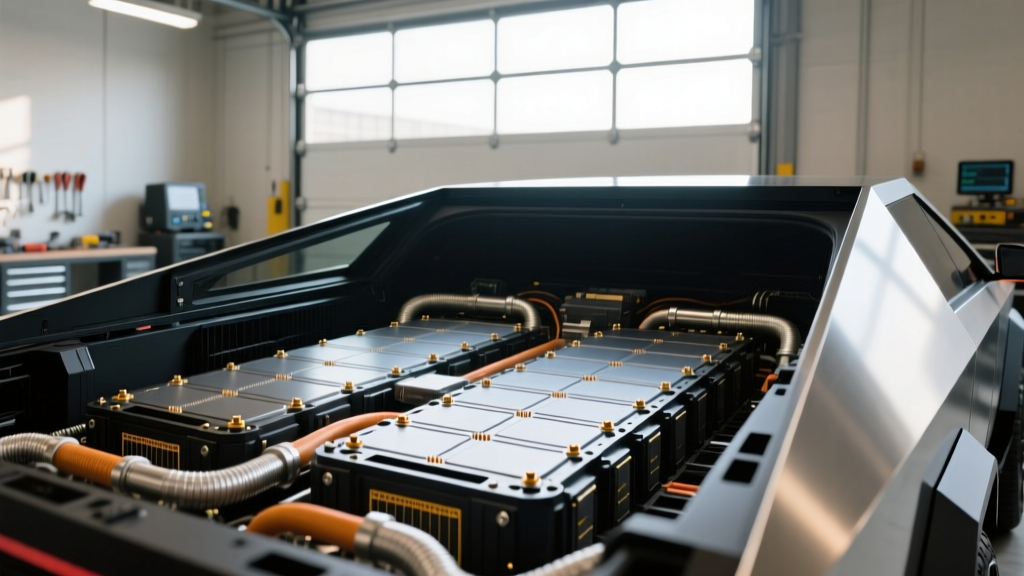
- Cybertruck (all trims): NMC-based 4680 cells — ~123 kWh usable (no LFP option)
Tesla sources LFP cells primarily from CATL (China), while its NMC and NCA cells come from Panasonic (Japan/US) and LG Energy Solution. The company does not always disclose chemistry changes mid-cycle, so verifying your specific vehicle's battery type through the Tesla app or service menu is the most reliable method.
LFP vs NMC/NCA: Chemistry Trade-Offs at a Glance
| Attribute | LFP (Lithium Iron Phosphate) | NMC / NCA (Nickel-Based) |
|---|---|---|
| Energy Density | Lower (~160 Wh/kg cell-level) | Higher (~250-280 Wh/kg cell-level) |
| Cycle Life | 3,000-5,000+ cycles to 80% SoH | 1,000-2,000 cycles to 80% SoH |
| Cold-Weather Performance | Reduced — slower charge acceptance below 32°F | Better low-temp conductivity |
| Recommended Daily SoC | 100% daily charging is fine (and recommended for BMS calibration) | 80-90% daily; 100% only for trips |
| Thermal Stability | Superior — higher thermal runaway threshold | Good, but lower thermal margin |
| Cost | ~20-30% cheaper per kWh | Higher due to nickel/cobalt content |
| Range (for same pack size) | Lower due to energy density | Higher — enables 300+ mi EPA range |
The bottom line: LFP trades range and cold-weather charging speed for longevity, safety, and cost. If your commute is under 200 miles round-trip and you live in a moderate climate, LFP is arguably the better long-term ownership bet.
Real-World Degradation: What the Data Shows
Tesla's 2025 Impact Report and independent fleet data from sources like Tesla's official sustainability disclosures and Recurrent Auto's battery tracking database paint a consistent picture: Tesla batteries degrade far slower than most buyers fear.
Typical Degradation Curves by Chemistry
| Milestone | LFP (Model 3/Y RWD) | NMC (Model 3/Y LR, S/X) |
|---|---|---|
| 1 year / 15,000 mi | ~2-3% capacity loss | ~3-4% capacity loss |
| 3 years / 45,000 mi | ~4-6% capacity loss | ~6-8% capacity loss |
| 5 years / 75,000 mi | ~6-8% capacity loss | ~8-11% capacity loss |
| 8 years / 120,000 mi | ~8-12% capacity loss | ~10-15% capacity loss |
| 10 years / 150,000 mi | ~10-14% capacity loss | ~13-18% capacity loss |
Two patterns emerge from this data. First, degradation is not linear — the steepest losses occur in the first 12-18 months (calendar aging and initial SEI layer formation), after which the curve flattens considerably. Second, LFP packs consistently show 2-4 percentage points less degradation than NMC at equivalent mileage, largely due to the inherent chemical stability of the iron-phosphate cathode.
A practical example: a 2023 Model 3 RWD with an original EPA range of 272 miles would, after 75,000 miles over five years, likely retain approximately 250-256 miles of range — a noticeable but entirely livable reduction.
Tesla Battery Warranty: What's Actually Covered
Tesla's battery and drive unit warranty is among the most straightforward in the industry. Here's what each model carries as of the 2026 model year:
| Model | Warranty Period | Mileage Limit | Minimum Capacity Retention |
|---|---|---|---|
| Model 3 RWD (LFP) | 8 years | 100,000 miles | 70% |
| Model 3 Long Range / Performance | 8 years | 120,000 miles | 70% |
| Model Y RWD (LFP) | 8 years | 100,000 miles | 70% |
| Model Y Long Range / Performance | 8 years | 120,000 miles | 70% |
| Model S / Model X | 8 years | 150,000 miles | 70% |
| Cybertruck | 8 years | 120,000 miles | 70% |
The 70% retention threshold means Tesla guarantees your battery will hold at least 70% of its original usable capacity for the warranty duration. If it drops below that, Tesla will repair or replace the pack at no cost. In practice, very few Tesla batteries hit this threshold within the warranty period — the degradation data above shows most packs retain 85-92% capacity at the 8-year mark.
What the warranty does not cover: gradual capacity loss above the 70% threshold, cosmetic issues, or damage from accidents, flooding, or unauthorized modifications. It does cover manufacturing defects and cell/module failures regardless of capacity level.
Battery Replacement Cost: The Real Numbers
This is where most EV anxiety concentrates, so let's ground it in actual figures. Battery replacement is rare — Tesla reports that less than 1% of its vehicles have required a traction battery replacement under or out of warranty — but costs are substantial when needed.
| Model / Pack Size | Out-of-Warranty Replacement Cost | Typical When Needed |
|---|---|---|
| Model 3 / Y RWD (~60 kWh LFP) | $10,000 – $14,000 | 150,000+ mi or 12+ years (if ever) |
| Model 3 / Y LR (~79 kWh NMC) | $13,000 – $18,000 | 150,000+ mi or 12+ years |
| Model S / X (~100 kWh NMC/NCA) | $18,000 – $25,000 | 150,000+ mi or 10+ years |
| Cybertruck (~123 kWh 4680 NMC) | $20,000 – $30,000 | Too new for reliable data |
Context matters enormously here. Most EV batteries outlast the vehicle's useful economic life. According to data aggregated by Recurrent Auto, the average EV battery retains 85-90% capacity at 100,000 miles. For a vehicle typically driven 12,000-15,000 miles per year, that's 7-8 years of service before most owners consider trading in. The battery will almost certainly outlive your ownership period.
It's also worth noting that Tesla increasingly performs module-level repairs rather than full pack replacements, which can cost $3,000-$7,000 instead of the full pack price. Independent EV shops are also emerging as lower-cost alternatives for out-of-warranty service.
Factors That Actually Affect Battery Longevity
Battery degradation isn't random — it's driven by specific, controllable factors. Understanding these is the difference between a pack that retains 90% capacity at 100,000 miles and one that drops to 80%.
Battery Care Checklist for Maximum Longevity
- State of Charge habits: For NMC packs, keep daily SoC between 20-80%. For LFP packs, Tesla recommends charging to 100% at least once a week for accurate BMS calibration. Avoid leaving any pack at 100% for extended periods (days) unless departing on a trip.
- DC fast charging frequency: Occasional Supercharging (1-2x/week) shows negligible extra degradation. Daily DC fast charging at 250 kW can add 1-3% additional degradation over 100,000 miles compared to Level 2 home charging. The heat generated during high-C-rate charging accelerates electrolyte breakdown.
- Temperature management: Tesla's thermal management system is among the best in the industry, but extreme heat is the enemy. In hot climates (Arizona, Texas), park in shade when possible and use scheduled departure to precondition while plugged in. In cold climates, always precondition before Supercharging — cold LFP cells accept charge very slowly below 32°F and can experience lithium plating if forced.
- Storage: If storing a Tesla for weeks, set SoC to approximately 50% and leave it plugged in with a scheduled departure or charge limit. Avoid storing at 100% or below 10%.
- Regenerative braking: Standard regen is fine. There is no meaningful degradation difference between standard and low regen modes — the battery management system limits regen current to safe levels regardless of setting.
One underappreciated factor: calendar aging. Even a Tesla that sits in a garage and is rarely driven will lose capacity over time. A 2022 Model 3 with only 15,000 miles on the odometer in 2026 may show 5-7% degradation — mostly from calendar aging rather than cycle wear. This is normal and affects all lithium-ion chemistries.
How to Check Your Tesla's Battery Health (State of Health)
Tesla does not expose a direct State of Health (SoH) percentage in the vehicle's main interface the way some competitors do, but there are several reliable methods to assess your pack's condition:
Method 1: The Energy App. Navigate to the Energy screen on your Tesla's touchscreen. The "Trips" tab tracks your average consumption (Wh/mi) over various distances. Compare your current efficiency to EPA-rated figures — a significant increase in Wh/mi over time may indicate degradation, though driving style and tire condition also affect this metric.
Method 2: Full-charge range comparison. Charge your vehicle to 100% (especially useful for LFP owners who charge to full regularly). Note the displayed range. Compare this to the original EPA sticker range. A 2024 Model 3 RWD with an EPA rating of 272 miles that now shows 255 miles at 100% SoC has experienced approximately 6% degradation — entirely normal for 2-3 years of use.
Method 3: Third-party apps. Tools like Tessie, TeslaFi, or Stats (for iOS) can log detailed battery telemetry, including estimated SoH calculations based on energy-in vs. range-out ratios over multiple charge cycles. These are not Tesla-official numbers but are generally accurate within 1-2%.
Method 4: Service diagnostic. If you suspect abnormal degradation (e.g., range dropping more than 5% in a single year), schedule a service appointment. Tesla can run a full battery diagnostic that provides a precise SoH reading and cell-balance report.
For NMC owners, note that displayed range at 100% SoC can fluctuate by 3-5 miles based on recent driving patterns and ambient temperature. This is the BMS estimating capacity, not an actual physical change. LFP packs have a flatter voltage curve, which makes SoC estimation harder — this is exactly why Tesla recommends periodic 100% charges for LFP vehicles.
Looking Ahead: Solid-State and Silicon Anode Batteries
The next major leap in battery technology involves two parallel development tracks, neither of which is available in production Tesla vehicles as of 2026:
Solid-state batteries replace the liquid electrolyte with a solid material (ceramic, sulfide, or polymer), promising higher energy density (potentially 400+ Wh/kg), faster charging, and improved safety. Toyota has announced solid-state EVs for 2027-2028, and QuantumScape continues to develop cells with Volkswagen backing. However, manufacturing scalability remains the primary bottleneck. Realistic mass-market availability: 2028-2030 at the earliest, likely debuting in premium segments before reaching Tesla's price points.
Silicon anode technology replaces or supplements the graphite anode with silicon, which can store roughly 10x more lithium ions per gram. Companies like Sila Nanotechnologies and Group14 are already supplying silicon-dominant anode materials for some applications. Tesla's own 4680 cell development has explored silicon-anode integration. Expect incremental silicon-anode adoption in Tesla's NMC cells over the 2026-2028 timeframe, yielding 5-10% energy density improvements rather than revolutionary leaps.
Neither technology changes the current buying decision. LFP and NMC chemistries will remain Tesla's primary battery platforms through at least 2028, and both have proven more than adequate for the vehicle's useful life.
Frequently Asked Questions
How long do Tesla batteries last in years and miles?
Based on fleet data, most Tesla batteries retain 85-90% of original capacity at 150,000 miles or 10 years. LFP packs tend to outlast NMC packs by 2-4 percentage points at equivalent mileage. Tesla's warranty guarantees 70% retention at 8 years / 100,000-150,000 miles depending on model, but real-world degradation rarely approaches this threshold. Many Tesla batteries will outlast 200,000 miles before reaching 70% SoH.
How much does a Tesla battery cost to replace?
Out-of-warranty replacement costs range from approximately $10,000 for a Model 3/Y RWD LFP pack to $25,000+ for a Model S/X pack. However, battery replacement is rare — Tesla reports less than 1% of vehicles require it. Module-level repairs ($3,000-$7,000) are increasingly common as an alternative to full pack replacement. Most Tesla batteries outlive the vehicle's economic lifespan.
What does the Tesla battery warranty actually cover?
Tesla's battery warranty covers capacity loss below 70% of original capacity within 8 years and 100,000 miles (Model 3/Y RWD) or 120,000-150,000 miles (Long Range, S/X). It also covers manufacturing defects and cell failures at any capacity level. It does not cover gradual degradation above 70%, accident damage, or unauthorized modifications. The warranty transfers to subsequent owners.
How do I check and maximize my Tesla battery health?
Check health by comparing your 100% charge displayed range to the original EPA figure, using the Energy app's consumption tracking, or employing third-party apps like Tessie or TeslaFi. Maximize longevity by keeping NMC packs between 20-80% SoC daily, charging LFP packs to 100% weekly, minimizing daily DC fast charging, preconditioning in cold weather, and avoiding long-term storage at extreme SoC levels.
LFP vs NMC — which Tesla battery is better?
Neither is universally better — it depends on your use case. LFP wins on longevity (3,000-5,000+ cycles vs 1,000-2,000), cost (~20-30% cheaper), thermal safety, and daily convenience (100% charging is fine). NMC wins on energy density (enabling 320+ mile range), cold-weather charging performance, and power delivery. If your daily driving is under 200 miles and you have home charging, LFP is the pragmatic choice. If you need maximum range for frequent road trips or live in a very cold climate, NMC is preferable.
Can I tell which battery chemistry my Tesla has?
Yes. In the Tesla app, go to your vehicle's charging settings. If the recommended daily charge limit is set to 100%, your vehicle has an LFP battery. If it defaults to 80%, it has an NMC/NCA battery. You can also check under Settings → Software → Additional Vehicle Information on the touchscreen, which may list the battery type. The RWD/Standard Range trims are almost always LFP; Long Range and Performance trims are NMC.