If you've ever popped the hood of an electric vehicle and wondered which battery cable to remove first, you're likely staring at the 12-volt auxiliary battery — not the massive high-voltage traction pack under the floor. That distinction matters enormously, because confusing the two can mean the difference between a safe maintenance procedure and a life-threatening arc-flash event. This guide clarifies exactly what you can safely disconnect yourself, what you must never touch, and how to monitor and maximize the health of the high-voltage battery that actually powers your EV.
The 12V vs. Traction Battery: Know the Difference Before You Disconnect
Every modern EV carries two battery systems:
- 12V auxiliary battery — A small lead-acid or lithium-ion battery that powers the vehicle's computers, door locks, lights, infotainment, and — critically — the contactors that connect the high-voltage pack to the drivetrain. Typical capacity: 12–16V, 40–70 Ah.
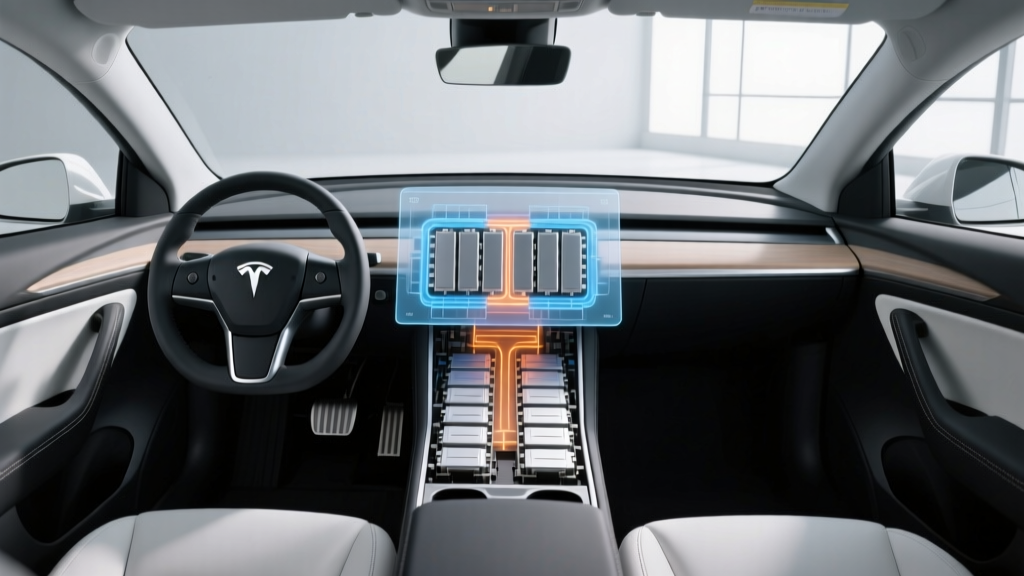
- High-voltage traction battery — The main energy storage pack (typically 50–110 kWh usable) operating at 350V–800V that drives the electric motors. Housed in a sealed, crash-protected enclosure under the vehicle floor.
When owners search for which battery cable to remove first, they are almost always performing maintenance on the 12V system — resetting electronics, replacing the auxiliary battery, or preparing the vehicle for long-term storage. The traction battery has no user-serviceable cables.
Which Battery Cable to Remove First on an EV's 12V System
The universal rule for any automotive 12V battery — including the auxiliary battery in an EV — is straightforward:
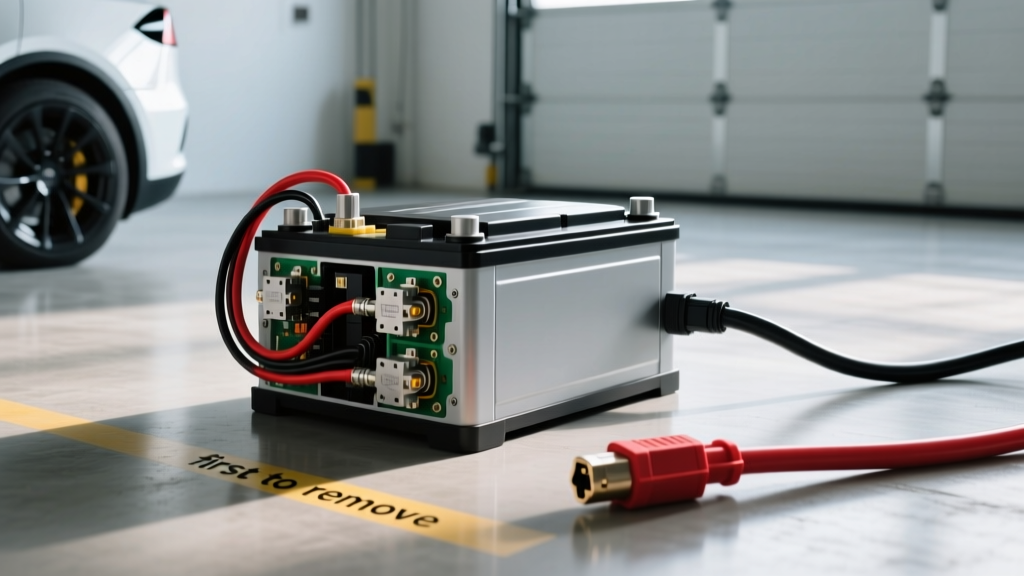
- Remove the negative (−) cable first. This is typically the black cable connected to the chassis-ground terminal. Disconnecting negative first prevents a short circuit if your wrench contacts the vehicle's metal frame while loosening the positive terminal.
- Remove the positive (+) cable second. The red cable, once the negative is safely isolated and tucked away from the terminal.
- On reinstallation, reverse the order: positive first, then negative last.
This procedure applies to the 12V auxiliary battery in every major EV on the road in 2026 — the Tesla Model 3/Y (which uses a 16V lithium-ion auxiliary unit), the Hyundai Ioniq 5, the Ford F-150 Lightning, the Chevrolet Equinox EV, and others. Consult your owner's manual for the exact battery location; in many EVs, the 12V battery is tucked under the rear seat, in the frunk, or behind a trim panel rather than under the hood in the traditional position.
EV Traction Battery Chemistry: LFP vs. NMC Explained
The high-voltage traction battery is the most expensive component in your EV and the one buyers worry about most. Understanding its chemistry is essential for setting realistic expectations about range, longevity, and care. Two dominant chemistries power the 2026 EV market:
| Attribute | LFP (Lithium Iron Phosphate) | NMC / NCA (Nickel-based) |
|---|---|---|
| Energy Density | Lower (~160–180 Wh/kg cell-level) | Higher (~230–300 Wh/kg cell-level) |
| Cycle Life | 3,000–5,000+ cycles to 80% SoH | 1,000–2,000 cycles to 80% SoH |
| Cold-Weather Performance | Weaker; greater range loss below 32°F | Better low-temp discharge capability |
| Thermal Stability | Excellent; highly resistant to thermal runaway | Good with active thermal management required |
| Recommended Charging Habit | Can charge to 100% daily; periodic full charges help BMS calibration | Daily limit of 80%; 100% only for trips |
| Cost per kWh | Lower (~$90–110/kWh pack-level, 2026) | Higher (~$120–150/kWh pack-level, 2026) |
| Common In 2026 Models | Tesla Model 3/Y RWD, Ford Mustang Mach-E Select, BYD models | Long-range/AWD trims, Hyundai Ioniq 5, BMW iX, Rivian |
Neither chemistry is universally "better." LFP wins on longevity and cost but trades off some energy density and cold-weather range. NMC/NCA delivers more range per kilogram but requires more careful state-of-charge management to maximize lifespan. If you commute short distances and can charge at home nightly, an LFP-equipped EV charged to 100% is a low-maintenance choice. If you need maximum range for road trips and live in a cold climate, NMC with an 80% daily limit is the pragmatic pick.
How Long Do EV Batteries Last? Real Degradation Data
The fear that an EV battery will need replacement at 80,000 miles is largely a relic of early-generation EVs. Modern liquid-cooled packs with sophisticated battery management systems (BMS) degrade far more slowly than early air-cooled designs. Here's what the data shows for typical 2020–2026 model-year EVs:
- Year 1–2 (0–30,000 miles): 2–5% capacity loss. This initial drop is normal and represents the formation of the solid electrolyte interphase (SEI) layer stabilizing.
- Year 3–5 (30,000–75,000 miles): Degradation slows to roughly 1–2% per year. Most EVs at this age retain 88–94% of original capacity.
- Year 6–10 (75,000–150,000 miles): Continued gradual decline. Data from fleet studies and owner-reported fueleconomy.gov tracking shows most modern packs retain 80–90% capacity at 150,000 miles.
- Beyond 150,000 miles: Degradation continues but the battery rarely "fails" catastrophically. It simply holds less energy, reducing range. A pack starting at 310 miles EPA range might deliver 250–270 miles at 200,000 miles — still usable for most drivers.
Real-world data from Tesla's 2025 Impact Report indicates its fleet averages approximately 12% degradation at 150,000 miles across both NMC and LFP chemistries. Hyundai/Kia reports similar figures for its E-GMP platform vehicles. Early Nissan Leaf models (air-cooled, no active thermal management) degraded significantly faster, losing 20–30% capacity in hot climates within 5 years — a cautionary tale that drove the industry toward liquid cooling as standard.
What Does the EV Battery Warranty Cover?
Federal regulation mandates a minimum 8-year/100,000-mile warranty on EV traction batteries for emissions-related compliance, and nearly every automaker matches or exceeds this baseline. Here's how major 2026 warranties compare:
| Manufacturer | Coverage Period | Capacity Retention Threshold | Notes |
|---|---|---|---|
| Tesla | 8 yr / 120,000 mi (Model 3/Y RWD); 8 yr / 120,000 mi (Long Range/Performance) | 70% | Covers defects and excessive degradation below threshold |
| Hyundai / Kia | 10 yr / 100,000 mi | 70% | Among the longest coverage in the industry |
| Ford | 8 yr / 100,000 mi | 70% | Applies to Mustang Mach-E, F-150 Lightning |
| GM (Chevrolet/Cadillac) | 8 yr / 100,000 mi | 70% (Ultium platform) | Transferable to subsequent owners |
| BMW | 8 yr / 100,000 mi | 70% | Covers cell module replacement, not always full pack |
| Rivian | 8 yr / 175,000 mi (R1T/R1S) | 70% | Higher mileage cap reflects truck duty cycle |
The critical detail is the capacity retention threshold — typically 70%. If your battery's State of Health drops below 70% of its original capacity within the warranty period, the manufacturer will repair or replace it (often with a refurbished pack, not necessarily brand-new cells). In practice, warranty claims for degradation are rare; most claims involve manufacturing defects like faulty cell groups or BMS failures.
How Much Does an EV Battery Replacement Cost?
Out-of-warranty battery replacement is the scenario that generates the most anxiety. Here's what it actually costs in 2026 — and how often it's needed:
| Vehicle / Pack Size | Battery Capacity | Estimated Replacement Cost | Typical Replacement Trigger |
|---|---|---|---|
| Tesla Model 3 RWD | ~60 kWh (LFP) | $8,000–$12,000 | Rarely needed; 200,000+ mi expected life |
| Tesla Model Y Long Range | ~75 kWh (NMC) | $12,000–$16,000 | Cell module failure, not full degradation |
| Hyundai Ioniq 5 | 77.4 kWh (NMC) | $11,000–$15,000 | 10-yr warranty covers most ownership period |
| Ford F-150 Lightning Extended | ~131 kWh (NMC) | $18,000–$25,000 | Large pack = higher cost; module repair possible |
| Chevrolet Equinox EV | ~85 kWh (NMC, Ultium) | $10,000–$14,000 | Modular Ultium design enables partial replacement |
Context matters here. The vast majority of EV batteries outlive the vehicle's useful economic life. According to data compiled by NHTSA and independent fleet analyses, fewer than 2% of modern EV batteries require full replacement due to degradation alone. When replacements do occur, they're more often due to manufacturing defects (covered under warranty), physical damage from road debris or collisions, or coolant system failures that damage specific cell modules — not gradual wear.
Additionally, pack costs continue to decline. Battery pack prices averaged roughly $115/kWh at the cell level in 2025 according to BloombergNEF, down from over $1,200/kWh in 2010. As second-life markets and refurbished packs mature, out-of-warranty replacement costs will likely continue to fall.
Factors That Accelerate EV Battery Degradation
Not all miles age a battery equally. These are the primary factors that accelerate capacity loss — and the habits that minimize them:
- Limit DC fast charging to road trips. Frequent 150–350 kW DC fast charging generates sustained heat that stresses cells. Weekly fast-charging can add 1–3% additional annual degradation versus primarily Level 2 home charging.
- Avoid extreme state-of-charge storage. For NMC batteries, don't leave the car parked at 100% SoC for days. For long-term storage (2+ weeks), set the charge limit to 50–60%. LFP batteries tolerate 100% storage better but still benefit from moderate SoC for multi-month storage.
- Use scheduled charging and preconditioning. Most 2026 EVs let you schedule charging to finish just before departure. This keeps the battery at optimal temperature and avoids sitting at high SoC overnight.
- Minimize exposure to extreme heat. Parking in shade or a garage during summer significantly reduces thermal stress. Battery temperatures above 104°F (40°C) accelerate SEI layer growth and capacity loss.
- Don't baby it too much. Modern BMS systems are sophisticated. Occasional 100% charges (for NMC on road trips) and regular DC fast charging on trips won't meaningfully harm your battery. The biggest risk factor is consistent daily fast-charging combined with extreme temperatures.
- Keep cooling system maintained. Follow the manufacturer's coolant flush interval (typically every 4–5 years). A failing thermal management system is one of the few things that can cause rapid, severe degradation.
How to Check and Monitor EV Battery Health (State of Health)
State of Health (SoH) is expressed as a percentage of the battery's current maximum capacity relative to its original capacity when new. A new battery is 100% SoH; a battery that can now store only 77 kWh of its original 84 kWh is at roughly 91.7% SoH.
Here's how to monitor it:
- In-vehicle displays: Some manufacturers (notably Tesla via the service menu, and Hyundai/Kia via the infotainment system in 2024+ models) display an SoH percentage or degradation indicator directly.
- OBD-II diagnostic tools: Third-party tools like the OBDLink SX paired with apps such as EV Health or Car Scanner can read the BMS-reported SoH value on most EVs. This is the most accessible owner-level method.
- Dealer diagnostic check: Any authorized service center can pull a full battery health report. Some will do this during routine service at no charge; others bill a diagnostic fee ($50–$150).
- Manual calculation: Charge to 100% (or your known max), note the displayed range, and compare it to the EPA-rated range when new. Adjust for temperature — cold weather can temporarily suppress displayed range by 10–30% without indicating permanent degradation.
A practical note: SoH readings fluctuate slightly based on temperature, recent charging patterns, and BMS calibration. Don't panic over a 1–2% swing. Track the trend over months, not days. If you observe a sudden drop of 5%+ in a short period, have the battery inspected — this may indicate a faulty cell module rather than normal degradation.
Emerging Battery Technology: What's Next and When
Two technologies dominate the forward-looking conversation, though neither is available in production vehicles as of early 2026:
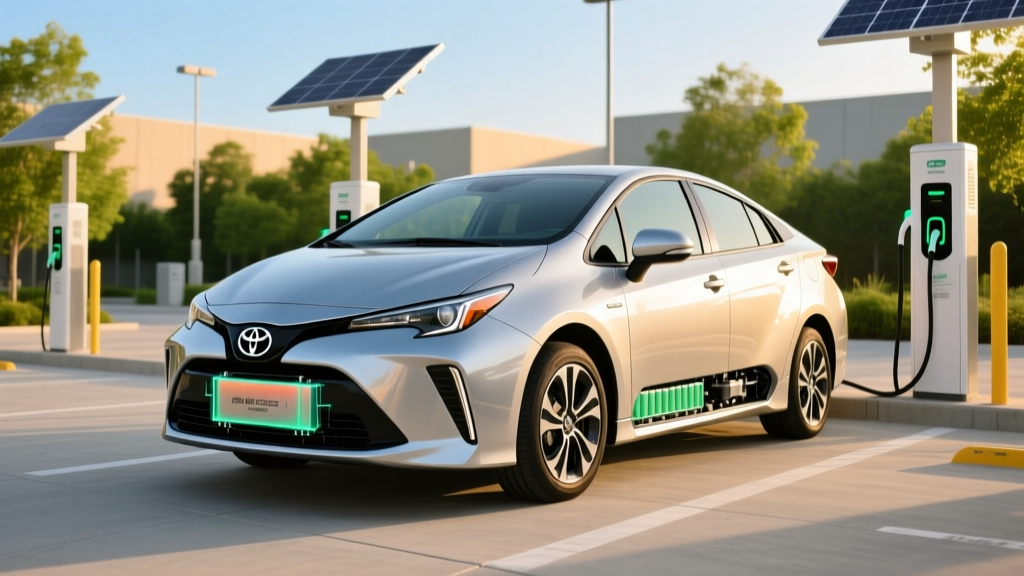
Solid-state batteries replace the liquid electrolyte with a solid ceramic, polymer, or sulfide conductor. Promised benefits include 30–50% higher energy density, faster charging (potentially 10–80% in under 10 minutes), and improved safety. Toyota has announced plans for limited solid-state production in 2027–2028, initially in low volumes for premium models. Samsung SDI and QuantumScape are targeting similar timelines. Realistically, solid-state batteries won't reach mainstream, cost-competitive EVs until approximately 2030–2032 at the earliest. Announced specs should be treated as preliminary until independent third-party validation of production cells is available.
Silicon-anode batteries replace the graphite anode with silicon, which can store roughly 10x more lithium ions per gram. This translates to higher energy density without changing the cathode chemistry. Companies like Sila Nanotechnologies and Group14 are already supplying silicon-composite anodes for some 2025–2026 model-year vehicles in limited applications. Expect gradual adoption as an incremental improvement (10–20% energy density gain) rather than a sudden revolution.
For buyers today: don't delay an EV purchase waiting for solid-state. Current LFP and NMC batteries already deliver 200,000+ mile lifespans with manageable degradation, and the cost-per-mile advantage over gasoline vehicles is immediate.
Frequently Asked Questions
Can I disconnect the EV traction battery myself?
No. The high-voltage traction battery (350V–800V) has no user-serviceable disconnect. Only certified high-voltage technicians with proper insulated tools and lockout/tagout training should service the traction battery. You can safely disconnect the 12V auxiliary battery following the negative-first procedure described above, which will open the high-voltage contactors as a secondary effect.
Does fast charging really damage my EV battery?
"Damage" is too strong, but frequent DC fast charging does accelerate degradation. Data from Tesla and independent studies suggest that vehicles charged primarily via DC fast charging (3+ times per week) degrade roughly 1–3% faster annually than those charged primarily on Level 2. The heat generated at 150–350 kW charge rates is the primary stressor. For daily use, a Level 2 home charger at 7–11 kW is ideal; reserve DC fast charging for road trips.
Should I charge my EV to 100% every night?
It depends on chemistry. LFP batteries (Tesla Model 3/Y RWD, some Ford and BYD models) can and should be charged to 100% regularly — Tesla recommends at least weekly full charges for BMS calibration. NMC/NCA batteries should be limited to 80% for daily use, with 100% reserved for when you need maximum range. Check your owner's manual for chemistry-specific guidance.
How do I know if my EV battery needs replacement?
You likely won't need to replace it. Signs that warrant professional inspection include: sudden and significant range loss (not explained by cold weather), the vehicle entering a reduced-power "limp" mode, visible coolant leaks near the battery enclosure, or a dashboard battery fault warning. Gradual range loss of 1–2% per year is normal and does not indicate a need for replacement.
Is it worth buying a used EV given battery degradation concerns?
Yes, provided you verify the battery's State of Health before purchase. Request an SoH reading from the seller or have a pre-purchase inspection done at a dealer. A 3-year-old EV at 92% SoH with 40,000 miles still has the vast majority of its battery life ahead. Factor in the remaining warranty coverage — most 8-year/100,000-mile battery warranties transfer to subsequent owners. Check current IRS §30D guidelines for used-EV credit eligibility, which can provide up to $4,000 toward a qualifying pre-owned electric vehicle.
For authoritative data on EV efficiency and range, the EPA's fueleconomy.gov database remains the most reliable source for comparing real-world MPGe and kWh/100mi figures across every model sold in the United States.