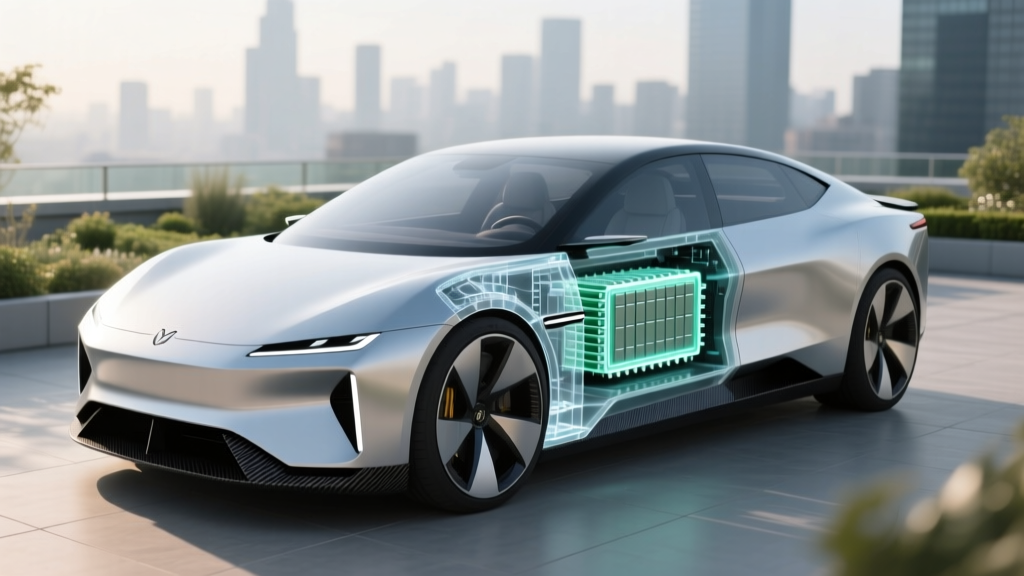
When an electric vehicle battery reaches end of life — whether from age, damage, or capacity loss — you cannot simply drop it at a municipal landfill or a conventional auto-parts store. High-voltage EV traction batteries (typically 50–120 kWh) contain lithium, cobalt, nickel, manganese, and other materials that require specialized handling, transport, and recycling. So where can you dispose of car batteries from an EV, and what does the full lifecycle actually look like?
This guide walks through EV battery disposal pathways, the chemistry inside these packs, how long they actually last, what warranties cover, and what replacement costs if you need a new one before recycling the old one.
Where Can You Dispose of EV Car Batteries?
Unlike a 12V lead-acid auxiliary battery (which most auto-parts stores accept for free), a high-voltage EV traction battery requires a licensed, certified disposal or recycling pathway. Here are the primary options:
- Franchised dealership or OEM-authorized service center: If your EV battery needs replacement under warranty or out of pocket, the dealer handles removal and ships the old pack back to the manufacturer or a contracted recycler. This is the most common path.
- Certified EV battery recyclers: Companies like Redwood Materials, Li-Cycle, and Cirba Solutions (formerly Retriev) operate dedicated lithium-ion recycling facilities in the US. These accept batteries from repair shops, salvage yards, and fleet operators.
- Automotive salvage and recycling yards: Licensed salvage yards that handle EVs will remove and sell or recycle traction batteries. Many partner with recyclers for end-of-life packs that no longer hold sufficient charge for resale.
- Manufacturer take-back programs: Tesla, GM, Ford, Hyundai, and others maintain battery take-back agreements. When a pack is replaced at an authorized center, the OEM manages downstream logistics.
The EPA provides guidance on lithium-ion battery recycling and classifies damaged or defective EV batteries as potentially hazardous, requiring compliance with DOT transport regulations (UN3480/UN3481). Never attempt to ship or dispose of a high-voltage EV battery yourself — the risk of thermal runaway and legal liability is significant.
What's Inside an EV Battery? LFP vs NMC Chemistry
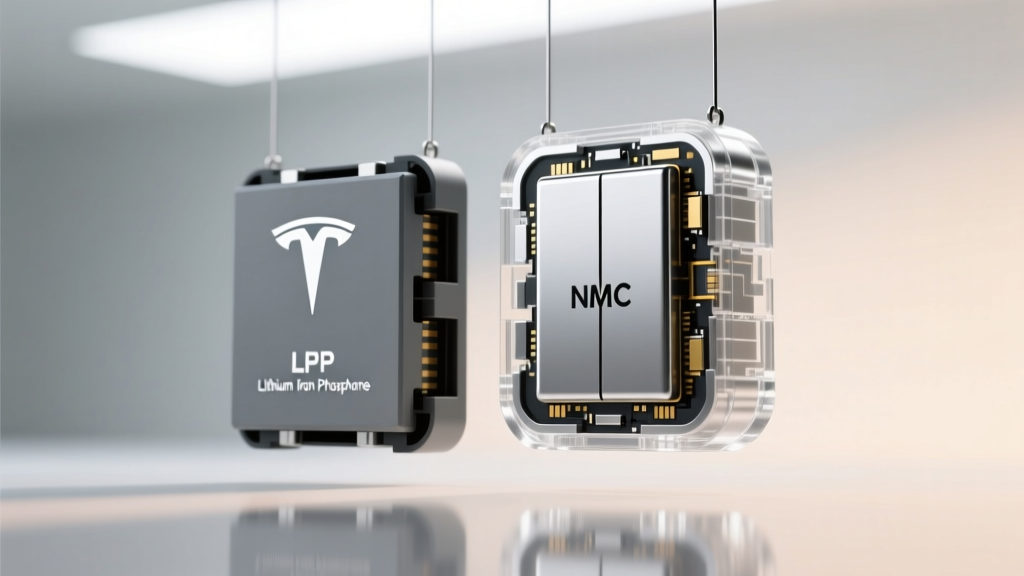
Understanding what you're disposing of — or replacing — starts with chemistry. Two lithium-ion chemistries dominate the current EV market, each with distinct trade-offs in energy density, lifespan, cold-weather performance, and cost.
| Attribute | LFP (Lithium Iron Phosphate) | NMC/NCA (Nickel Manganese Cobalt / Nickel Cobalt Aluminum) |
|---|---|---|
| Energy Density | Lower (~160 Wh/kg cell-level) | Higher (~250–300 Wh/kg cell-level) |
| Cycle Life | 3,000–5,000+ cycles to 80% SoH | 1,000–2,000 cycles to 80% SoH |
| Cold-Weather Performance | Moderate range loss (~30–40% at 20°F) | Better cold performance (~20–30% loss at 20°F) |
| Cost | Lower (no cobalt or nickel) | Higher (cobalt/nickel commodity exposure) |
| State-of-Charge Flexibility | Can charge to 100% daily without degradation concern | Best kept 20–80% for daily use |
| Recyclability | Lower material recovery value | Higher recovery value (cobalt, nickel) |
| Common In (2026 Models) | Tesla Model 3/Y RWD, Ford Mustang Mach-E Select, BYD, Rivian Standard | Tesla Long Range, Hyundai Ioniq 5/6, GM Ultium, BMW iX, Porsche Taycan |
For disposal purposes, NMC/NCA packs have higher recycling value because cobalt and nickel command strong commodity prices. LFP packs contain abundant, cheap iron and phosphate, making their economics more dependent on volume and process efficiency. Recyclers like Redwood Materials use hydrometallurgical processes to recover lithium, cobalt, nickel, and copper from both chemistries.
How Long Do EV Batteries Last?
The data from hundreds of thousands of EVs on the road shows that modern lithium-ion traction batteries significantly outlast early-generation fears. Most will outlive the vehicle they're installed in.
| Timeframe | Typical Capacity Retained | Context |
|---|---|---|
| Year 1 / ~15,000 mi | 95–98% | Initial formation loss; normal |
| Year 3 / ~45,000 mi | 90–95% | Linear degradation phase |
| Year 5 / ~75,000 mi | 87–93% | Still well within warranty threshold |
| Year 8 / ~120,000 mi | 82–90% | End of standard warranty period |
| Year 10+ / 150,000+ mi | 75–85% | Usable but noticeably reduced range |
Tesla's 2024 Impact Report noted that Model 3/Y batteries retain approximately 85% of original capacity at 200,000 miles. Data aggregated by Geotab from over 10,000 EVs shows an average annual degradation rate of approximately 1.8% per year across all makes — meaning a typical battery still holds around 82% capacity after 10 years.
Replacement is rarely needed before 150,000 miles under normal use. Most EVs are scrapped for collision damage, electronics failure, or economic reasons long before the battery becomes unusable.
What Does the EV Battery Warranty Cover?
Federal law mandates that EV battery warranties cover a minimum of 8 years / 100,000 miles (10 years / 150,000 miles in CARB states including California, New York, Massachusetts, and others). Here's how major manufacturers structure coverage as of the 2026 model year:
| Manufacturer | Warranty Period | Capacity Retention Threshold | Notes |
|---|---|---|---|
| Tesla (Model 3/Y) | 8 yr / 120,000 mi (LR) or 100,000 mi (RWD) | 70% | LFP RWD: 100k mi; NMC LR: 120k mi |
| Hyundai / Kia | 10 yr / 100,000 mi | 70% | Among the longest coverage in the industry |
| GM (Ultium platform) | 8 yr / 100,000 mi | 70% | Covers Bolt EV/EUV, Blazer EV, Equinox EV, Cadillac Lyriq |
| Ford (Mach-E, F-150 Lightning) | 8 yr / 100,000 mi | 70% | Includes battery components and management system |
| Rivian | 8 yr / 175,000 mi | 70% | Highest mileage threshold among major OEMs |
| BMW (iX, i4, i7) | 8 yr / 100,000 mi | 70% | Includes 12V lithium battery on some models |
The warranty covers defects in materials and workmanship, plus capacity loss below the stated threshold. If your battery drops below 70% of original capacity within the warranty window, the manufacturer will repair or replace it — often with a refurbished pack that meets the threshold, not necessarily a brand-new unit. The warranty does not cover damage from accidents, flooding, unauthorized modifications, or use as a stationary power source beyond V2H/V2L specifications.
How Much Does an EV Battery Cost to Replace?
Out-of-warranty battery replacement is expensive, but it's important to contextualize: the vast majority of EV owners will never need one. When replacement is required — typically due to collision damage, manufacturing defect outside warranty, or extreme high-mileage degradation — here's what it costs in 2026:
| Vehicle | Battery Size (kWh) | Chemistry | Replacement Cost (Parts + Labor) |
|---|---|---|---|
| Tesla Model 3 RWD | 60 kWh | LFP | $12,000–$14,000 |
| Tesla Model Y Long Range | 82 kWh | NMC | $14,000–$18,000 |
| Hyundai Ioniq 5 | 77.4 kWh | NMC | $14,000–$17,000 |
| Ford Mustang Mach-E Extended Range | 91 kWh | NMC | $18,000–$22,000 |
| Ford F-150 Lightning Extended Range | 131 kWh | NMC | $25,000–$32,000 |
| Chevrolet Equinox EV | 85 kWh | NMC (Ultium) | $15,000–$19,000 |
| Rivian R1T (Large Pack) | 149 kWh | NMC | $28,000–$35,000 |
These costs include the battery module or full pack plus labor at an authorized service center. Independent EV repair shops are emerging as a lower-cost alternative, with some offering module-level repair (replacing individual degraded modules rather than the entire pack) for $5,000–$10,000 on certain models.
The cost per kWh for replacement packs has trended downward, from approximately $200/kWh in 2020 to roughly $130–$170/kWh in 2026 at the service-counter level. As recycling infrastructure scales and second-life markets mature, expect these costs to continue declining.
Factors That Affect EV Battery Lifespan
Not all batteries age equally. Usage patterns, climate, and charging habits materially influence how quickly capacity degrades. Here are the primary factors, ranked by impact:
Battery Longevity Best Practices
- Daily charge limit: Set to 80% for NMC/NCA batteries; LFP batteries can and should be charged to 100% regularly (per Tesla and Ford guidance) to maintain cell-balancing accuracy.
- DC fast-charging frequency: Occasional DC fast charging is fine, but exclusive reliance on 150+ kW DCFC accelerates degradation by approximately 0.3–0.5% per year versus Level 2 home charging, per Geotab data.
- Extreme heat exposure: Prolonged parking in 100°F+ ambient temperatures without thermal management active accelerates calendar aging. Garage parking or preconditioning helps.
- Extreme cold charging: Charging at high power in sub-freezing temperatures without battery preconditioning can cause lithium plating. Most modern EVs manage this automatically, but precondition before fast-charging in cold weather.
- Storage at extremes: Storing an EV at 100% SoC or below 10% SoC for weeks causes stress. Aim for 50–60% for long-term storage.
- Regenerative braking settings: High regen doesn't harm the battery; the BMS manages charge acceptance. No action needed.
The battery management system (BMS) in modern EVs is sophisticated — it buffers the top and bottom of the charge window, manages thermal conditioning, and limits charge rates when the pack is cold or hot. Most degradation from "bad habits" is already mitigated by software. The biggest controllable factor is avoiding consistent 100% charges on NMC packs and minimizing exclusive DCFC use.
How to Check and Monitor Battery Health (State of Health)
State of Health (SoH) is expressed as a percentage of original usable capacity. A new battery is 100% SoH; a battery holding 85% of its original kWh is at 85% SoH. Here's how to check it:
- In-vehicle displays: Some EVs (notably Tesla, Hyundai/Kia, and BMW) display battery health or degradation estimates in the settings menu or service mode. Tesla's "Battery Health" test, accessible through the service menu, runs a diagnostic and provides a capacity estimate.
- OBD-II diagnostic tools: Devices like the OBDLink SX paired with apps such as EVNotify or LeafSpy (for Nissan Leaf) can read SoH data directly from the BMS. More advanced tools like ScanGauge or manufacturer-specific diagnostic software provide module-level voltage data.
- Dealership diagnostic: Any authorized service center can run a full battery health report, typically during routine service visits. Request this if you're evaluating a used EV purchase.
- Third-party services: Companies like Recurrent Auto offer battery health reports based on connected-car telematics data, available for many popular models.
For used-EV buyers, a battery health check should be a non-negotiable part of the pre-purchase inspection — just as you'd check a timing belt on a gas car. A pack at 88% SoH with 60,000 miles tells a different story than one at 88% with 120,000 miles.
Emerging Battery Tech: What Comes After Lithium-Ion?
Several next-generation battery technologies are in development, but none are commercially available in production EVs as of 2026. Here's a realistic timeline assessment:
- Solid-state batteries: Toyota, Samsung SDI, and QuantumScape are leading development. Toyota has announced a solid-state battery targeting 745 km (~463 miles) of range with 10-minute fast charging, expected in limited production vehicles around 2027–2028. Mass-market availability is not expected before 2030. Solid-state cells replace the liquid electrolyte with a solid material, promising higher energy density and improved safety, but manufacturing scalability remains the primary hurdle.
- Silicon-dominant anode batteries: Companies like Sila Nanotechnologies and Group14 are supplying silicon-anode materials to battery manufacturers. These increase energy density by 20–40% over graphite anodes. Limited deployment is expected in premium EVs by 2027–2028.
- Sodium-ion batteries: CATL and BYD have begun producing sodium-ion cells for lower-cost, shorter-range applications. These are unlikely to appear in US-market EVs before 2028 due to supply chain and regulatory timelines.
For disposal and recycling planning, these future chemistries will require updated processes. Solid-state batteries may be simpler to recycle (no liquid electrolyte), while sodium-ion packs will have different material recovery economics. Current recycling infrastructure is optimized for today's lithium-ion NMC and LFP chemistries.
End-of-Life Pathways: Recycling, Repurposing, and Second Life
When an EV battery drops below ~70% capacity, it's no longer ideal for automotive use — but it's far from worthless. The industry has developed a three-tier end-of-life hierarchy:
- Second-life applications (60–80% SoH): Retired EV packs are repurposed for stationary energy storage — solar-plus-storage systems, grid frequency regulation, and commercial backup power. Companies like B2U Storage Solutions and Betteries use second-life packs in containerized storage systems.
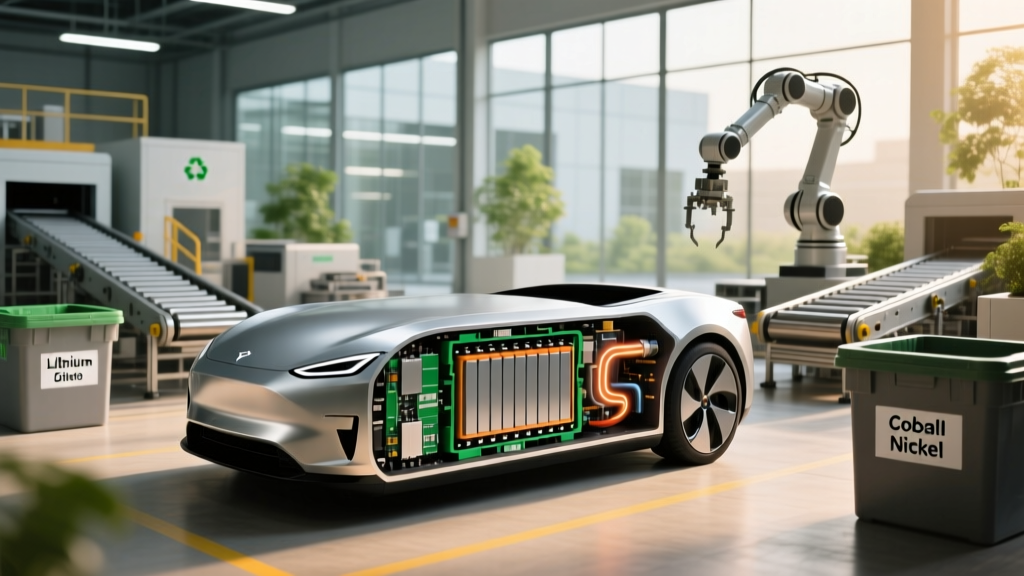
- Material recycling (below 60% SoH or damaged): Hydrometallurgical recycling recovers 95%+ of lithium, cobalt, nickel, and copper. Redwood Materials, Li-Cycle, and Cirba Solutions operate at scale in the US, feeding recovered materials back into new battery production.
- Refurbishment and module replacement: Some service centers and independent shops replace individual degraded modules within a pack rather than scrapping the entire unit, extending pack life at lower cost.
The US Department of Energy reports that over 95% of critical battery materials can be recovered through modern recycling processes. This is a significant improvement over early recycling methods and means that EV battery disposal is increasingly a materials-recovery operation rather than waste management.
Frequently Asked Questions
Can I recycle my EV battery at a regular auto-parts store?
No. Auto-parts stores accept 12V lead-acill or AGM auxiliary batteries, not high-voltage EV traction batteries. EV batteries require licensed recyclers or OEM take-back programs due to their size, voltage (400V–900V), and hazardous-material classification during transport.
How long do EV batteries last in real-world use?
Most modern EV batteries retain 82–90% of original capacity after 8 years and 100,000+ miles. Full end-of-life (below 60% capacity) typically occurs at 15–20 years or 200,000+ miles. Data from Tesla, Geotab, and Recurrent consistently show that the majority of EV batteries outlast the vehicle itself.
What does the federal battery warranty mandate require?
Federal emissions warranty rules require EV battery coverage for at least 8 years / 100,000 miles. In CARB-adopting states, this extends to 10 years / 150,000 miles. The warranty covers defects and capacity loss below a manufacturer-defined threshold (typically 70% of original capacity). Check the IRS clean vehicle credit page for related incentive information, as battery sourcing requirements also affect tax credit eligibility.
How much does it cost to replace an EV battery out of warranty?
Replacement costs range from approximately $12,000 for a 60 kWh LFP pack (Tesla Model 3 RWD) to $35,000 for a 149 kWh NMC pack (Rivian R1T Large Pack). Most owners never need a replacement — degradation is gradual, and most batteries remain functional at 75–85% capacity at 150,000+ miles.
LFP vs NMC — which chemistry lasts longer?
LFP batteries generally offer longer cycle life (3,000–5,000+ cycles vs 1,000–2,000 for NMC) and tolerate daily 100% charging better. NMC offers higher energy density and better cold-weather performance. For owners prioritizing longevity and daily full charges, LFP is the better choice. For maximum range and cold-climate driving, NMC remains preferred.
What happens to EV batteries after they're recycled?
Recovered materials — lithium, cobalt, nickel, copper, aluminum — are refined and sold back to battery cell manufacturers. Redwood Materials, for example, supplies recycled cathode and anode materials directly to Panasonic and other cell producers, creating a closed-loop supply chain. This reduces dependence on mining and lowers the carbon footprint of new battery production.
Is it safe to drive an EV with a degraded battery?
Yes. A degraded battery simply provides less range — it does not pose a safety risk. The BMS continues to manage cell voltages, temperatures, and charge rates regardless of overall capacity. If degradation is uneven across modules, you may notice reduced range more sharply, but the vehicle remains safe to operate.
Understanding where and how to dispose of EV batteries — and what to expect over their full lifecycle — removes one of the last major uncertainties for EV buyers. The data is clear: modern lithium-ion traction batteries are durable, warrantied, recyclable, and almost always outlive the car they power.