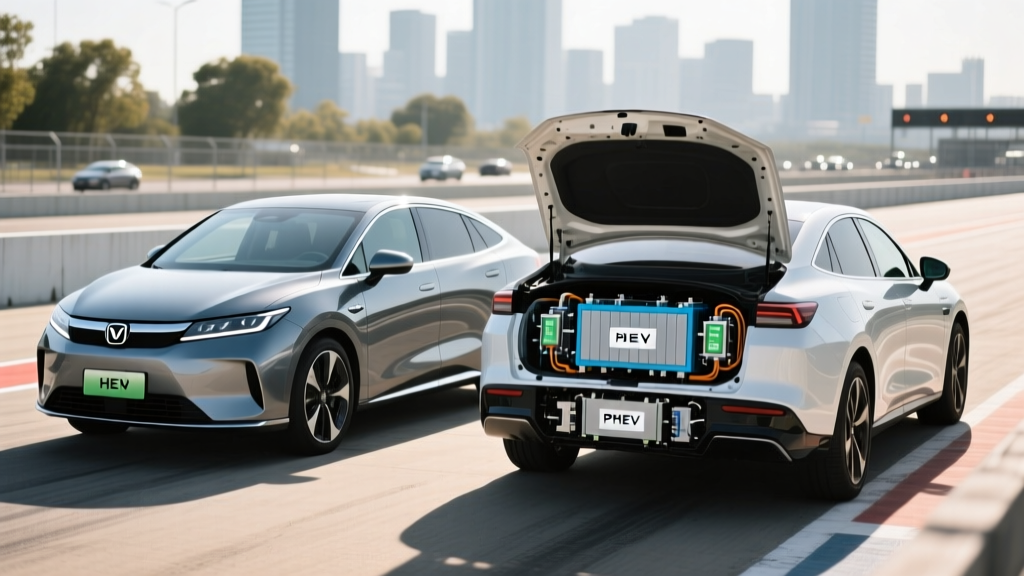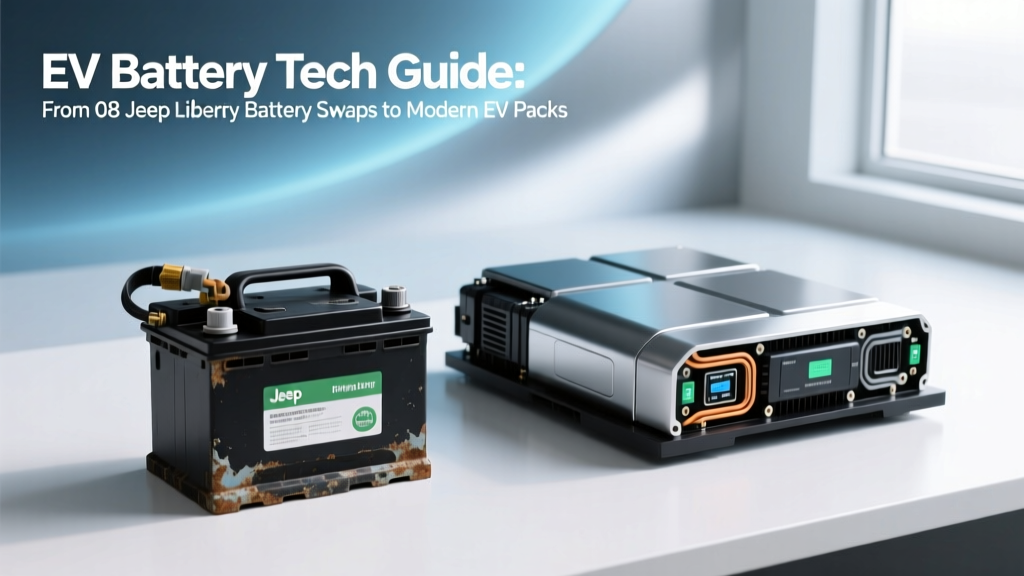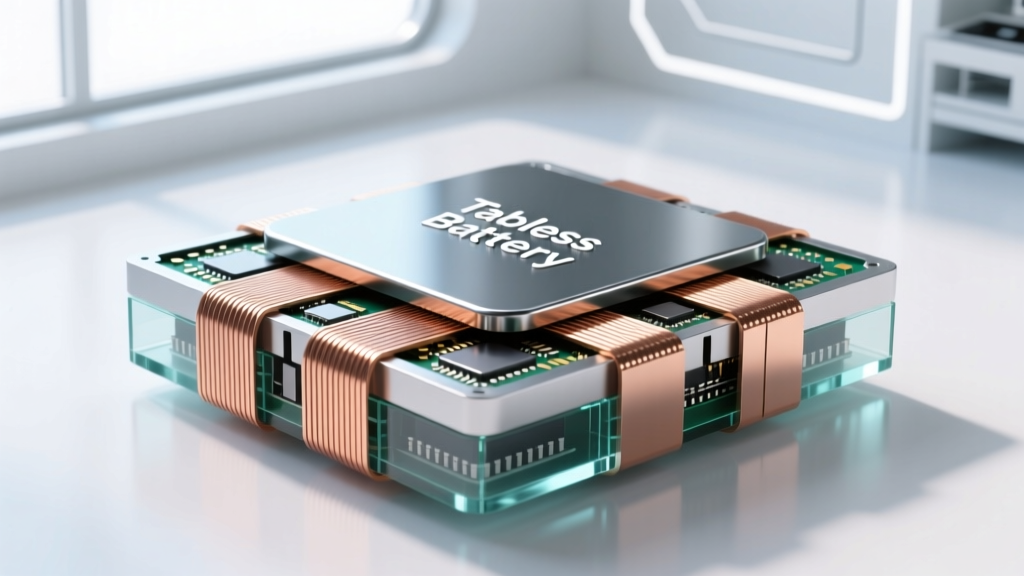
If you have been reading EV spec sheets or following battery headlines, you have likely encountered the term "tabless battery" — most often in connection with Tesla's 4680 cells. But what does "tabless" actually mean, and does it matter to you as a buyer or owner? The short answer: it is an internal cell-design change that reduces electrical resistance, improves thermal management, and enables faster charging and manufacturing. The longer answer intersects with everything from chemistry choice (LFP vs. NMC/NCA) to long-term degradation and warranty coverage. This guide unpacks the engineering, then zooms out to the battery-ownership questions that actually affect your wallet.
The Tab Problem: Why Conventional Cells Have Limits
Inside every lithium-ion cylindrical or prismatic cell, the anode and cathode are long foils rolled into a jellyroll. In a conventional cell, thin metal strips — tabs — connect those foils to the positive and negative terminals. Electrons travel the full length of the foil to reach the tab, which creates electrical resistance. That resistance generates heat, especially during high-rate charge and discharge, and it limits how fast the cell can safely accept energy.
As cells got physically larger — from the 18650 to the 2170 to Tesla's 46 mm diameter x 80 mm tall 4680 format — the foil length grew and the tab bottleneck worsened. A single-tab design in a 4680-sized cell would mean electrons traversing roughly a meter of foil before exiting the cell. That is a thermal and efficiency problem, not just an electrical one.
What Is a Tabless Battery, Exactly?
A tabless battery eliminates the discrete metal tab. Instead, the edge of the electrode foil is laser-patterned into hundreds of tiny shingles that fold over to make continuous contact with the cell's end cap. Tesla calls its implementation the "tabless" design (sometimes referenced by the shingle pattern). Other manufacturers use similar full-tab or multi-tab concepts under different names.
The practical consequences:
- Shorter electron path. Electrons only travel a few millimeters into the nearest shingle rather than the full foil length, dramatically reducing internal resistance.
- Better heat distribution. Heat spreads across the end cap rather than concentrating at a single tab weld, which improves thermal uniformity and cooling efficiency.
- Higher sustained power. Lower resistance means the cell can accept higher charge rates (kW) and deliver higher discharge power without overheating — important for fast charging and performance driving.
- Manufacturing simplification. Removing the tab-welding step reduces a common failure point in cell assembly.
For context, Tesla introduced the 4680 tabless cell at its 2020 Battery Day and began production deployments in Model Y vehicles built at Giga Texas starting in 2022. As of the 2026 model year, 4680 tabless cells are used in specific Cybertruck and Model Y configurations, while other Tesla vehicles continue on 2170-format cells sourced from Panasonic and CATL. The design itself is chemistry-agnostic — it can be applied to NMC, NCA, or LFP cathodes — though most production 4680 cells to date use high-nickel NCA/NMC chemistries for energy density.
LFP vs. NMC/NCA: Chemistry Still Drives the Trade-Offs
Tabless is a structural innovation. The chemistry of the cathode — the material that stores and releases lithium ions — determines energy density, cycle life, cold-weather behavior, and cost. Here is how the two dominant EV chemistries compare in 2026 production vehicles:
| Attribute | LFP (Lithium Iron Phosphate) | NMC / NCA (Nickel-based) |
|---|---|---|
| Energy density (cell-level) | ~160–180 Wh/kg | ~230–300 Wh/kg |
| Typical cycle life | 3,000–5,000+ cycles to 80% SoH | 1,000–2,000 cycles to 80% SoH |
| Cold-weather performance | Weaker; more range loss below 32°F | Better low-temp conductivity |
| Recommended daily SoC | 100% OK (and often recommended for BMS calibration) | 80% daily; 100% for trips only |
| Cost per kWh (cell) | Lower (~$70–90/kWh in 2026) | Higher (~$100–130/kWh) |
| Cobalt / nickel content | None | Significant (sourcing/ethics factor) |
| Common 2026 vehicles | Tesla Model 3/Y RWD, Ford Mustang Mach-E Select (LFP option), BYD models | Hyundai Ioniq 5, Kia EV6, Ford F-150 Lightning Extended, Rivian, most long-range trims |
Which is better? It depends on your use case. If you commute daily, charge at home, and want maximum longevity with minimal SoC micromanagement, LFP is the stronger fit — and it pairs well with tabless designs that reduce charge-session heat. If you need maximum range per charge, tow frequently, or live in a cold climate where every Wh matters, NMC/NCA remains the pragmatic choice.
How Long Do EV Batteries Actually Last?
The fear that an EV battery will "die" at 100,000 miles is largely a carryover from early-2010s Nissan Leaf experience with passive-cooled NMC packs. Modern thermally managed packs — especially LFP — tell a very different story.
Real-world degradation data points (2026 context):
- Tesla fleet data (2024–2025 impact report): Model 3/Y packs retain approximately 85–88% capacity after 150,000 miles on average.
- Geotab fleet study (across ~10,000 EVs): Average annual degradation of ~1.8% per year for thermally managed packs, implying roughly 82% State of Health (SoH) at 10 years.
- LFP-specific observations: Multiple fleet operators report LFP packs (CATL, BYD Blade) exceeding 90% SoH after 100,000+ miles with daily 100% charging.
- Early 4680 tabless cells: Limited long-term public data as of 2026, but lower internal resistance theoretically reduces per-cycle thermal stress, a key degradation driver.
Rule of thumb: a modern, thermally managed EV battery should outlast the vehicle's economic life for most original owners. Replacement is the exception, not the expectation.
What the Battery Warranty Actually Covers
Federal law (EPA emissions-warranty precedent and CARB-influenced state rules) has pushed automakers to offer robust battery coverage. In 2026, most mainstream EV battery warranties converge around a common structure:
| Manufacturer | Duration | Mileage | Capacity Retention Threshold |
|---|---|---|---|
| Tesla (Model 3/Y) | 8 years | 100,000–120,000 mi (trim-dependent) | 70% |
| Hyundai / Kia | 10 years | 100,000 mi | 70% |
| Ford (F-150 Lightning, Mach-E) | 8 years | 100,000 mi | 70% |
| GM (Ultium-based) | 8 years | 100,000 mi | 70% |
| Rivian | 8 years | 175,000 mi (R1T/R1S) | 70% |
| BMW / Mercedes (2026 EVs) | 8 years | 100,000 mi | 70% |
Key nuances:
- What triggers a claim: The pack must fall below the stated SoH threshold as measured by the manufacturer's diagnostic tool — not your dashboard guess-o-meter.
- What's covered: Repair, module replacement, or full pack replacement at the manufacturer's discretion. You rarely get a brand-new pack; refurbished or re-manufactured units are standard.
- What voids it: Salvage title, unauthorized modifications, or confirmed abuse (e.g., repeated deep-discharge storage, flood damage).
- Transferability: Most battery warranties transfer to subsequent owners, which supports used-EV resale values.
How Much Does an EV Battery Replacement Cost?
Out-of-warranty replacement remains expensive, but the scenario is rare for modern packs. Here is the current pricing landscape for 2026:
| Battery Size / Vehicle Class | Typical Pack Cost (parts) | Labor + Diagnostics | Total Installed Range |
|---|---|---|---|
| 50–65 kWh (compact EV, e.g., Bolt, base Model 3) | $7,000–$11,000 | $1,500–$3,000 | $8,500–$14,000 |
| 75–90 kWh (mid-size sedan/SUV, e.g., Model Y LR, Ioniq 5) | $11,000–$17,000 | $2,000–$4,000 | $13,000–$21,000 |
| 100–135 kWh (truck/large SUV, e.g., F-150 Lightning Ext, Rivian) | $17,000–$26,000 | $3,000–$5,000 | $20,000–$31,000 |
Context that matters: most 2026 EV batteries will never need replacement under original ownership. The packs that do fail tend to do so within the warranty period (manufacturing defects) or after 200,000+ miles (gradual wear). Cell-level price declines — now approaching $70–90/kWh for LFP at the factory gate — continue to compress out-of-pocket replacement costs year over year.
Factors That Actually Drive Battery Degradation
Degradation is not random. It is driven by a small set of physical stressors, all of which you can manage:
- Extreme State of Charge. Sitting at 100% SoC for days (NMC/NCA) or at 0% for extended periods accelerates electrolyte decomposition. For NMC/NCA, set daily charge limit to 80%; for LFP, periodic 100% sessions help the BMS calibrate cell balancing.
- Heat, not cold, is the longevity enemy. Sustained pack temperatures above 95°F (35°C) — from repeated DC fast charging in summer or parking in Phoenix sun — drive calendar degradation. Cold reduces range temporarily but does not meaningfully harm long-term SoH.
- DC fast-charging frequency. Occasional 150–250 kW sessions are fine. Daily 350 kW sessions on a hot pack without preconditioning will compound wear. Use Level 2 home charging as your baseline; DCFC for road trips.
- Depth of discharge. Shallow cycles (20–80%) are gentler than deep 100→0% cycles. This is why LFP's tolerance for 100% daily SoC is notable — it can absorb deeper cycles without the same penalty.
- Storage conditions. If storing an EV for weeks, target ~50% SoC in a cool garage. Never store at 100% or below 10%.
Tabless designs, by reducing internal resistance and distributing heat more evenly, theoretically reduce per-session thermal stress during fast charging — one reason Tesla has pushed the architecture for high-power 4680 deployments.
How to Check and Monitor Battery Health (SoH)
State of Health is expressed as a percentage of original capacity. Most owners never need to obsess over it, but here is how to stay informed:
- In-vehicle displays. Tesla, Hyundai, Kia, and BMW provide varying levels of battery-health visibility in the service or energy menus. Tesla's "Battery Health" test (introduced in 2023–2024) runs a controlled cycle and reports SoH.
- OBD-II dongles + apps. Tools like OBDeleven, LeafSpy (Nissan), or manufacturer-specific diagnostic apps read the BMS-reported SoH directly. This is the gold standard for used-EV purchases.
- Manual calculation. Charge to 100%, note the displayed range, and compare to the original EPA figure adjusted for your typical conditions. Persistent 15%+ shortfall from EPA-new suggests meaningful degradation.
- Dealer diagnostics. Any authorized service center can pull a formal SoH report — useful for warranty claims or pre-purchase inspections.
What Comes After Tabless? Solid-State, Silicon Anodes, and Realistic Timelines
Tabless is a manufacturing and thermal improvement to existing lithium-ion cells. The next generational leaps are chemistry- and materials-based:
- Silicon-dominant anodes. Replacing graphite with silicon increases theoretical energy density by 2–10x at the anode. Companies like Sila Nanotechnologies and Group14 are in early automotive production as of 2025–2026, with Mercedes and others integrating partial-silicon anodes in limited models. Expect broader availability 2027–2030.
- Solid-state batteries. Replacing the liquid electrolyte with a solid conductor promises higher energy density, faster charging, and improved safety. Toyota, Samsung SDI, and QuantumScape have announced pilot production, but volume automotive deployment remains announced for 2027–2029 at the earliest, with realistic mass-market availability closer to 2030+. Treat any "solid-state EV available now" claim with skepticism.
- Sodium-ion cells. Lower energy density than LFP but cheaper and free of lithium/cobalt. CATL and BYD are deploying sodium-ion in Chinese-market city cars as of 2025–2026; US-market relevance is medium-term (2028+).
None of these technologies invalidate the tabless concept. In fact, tabless/full-tab electrode designs are likely to be carried forward into next-gen cells because the thermal and resistance benefits are chemistry-independent.
FAQ: Tabless Batteries and EV Battery Ownership
Do tabless batteries last longer than tabbed cells?
Potentially, yes — but the mechanism is indirect. Lower internal resistance means less heat generated per charge/discharge cycle, and heat is the primary driver of lithium-ion degradation. Long-term fleet data specific to 4680 tabless cells is still accumulating as of 2026, but the physics favors better cycle life under equivalent use conditions.
Can I buy a non-Tesla EV with a tabless battery?
Not yet in volume. Tesla holds the primary production experience with tabless 4680 cells. Other manufacturers (Panasonic, LG Energy Solution, CATL) have announced multi-tab or full-tab designs for large-format cells, but mainstream non-Tesla vehicles in 2026 still use conventional tabbed 2170 or prismatic cells.
LFP vs NMC — which should I choose?
Choose LFP if you charge at home daily, want to minimize SoC management, prioritize longevity, and can accept slightly lower range per kWh. Choose NMC/NCA if you need maximum range, tow regularly, or operate in consistently cold climates. Both chemistries are mature and well-supported by current warranty terms.
How long do EV batteries last in real-world use?
Modern thermally managed packs — NMC or LFP — routinely exceed 150,000 miles while retaining 80–88% of original capacity. LFP packs in fleet use have demonstrated 200,000+ miles with 90%+ retention. Most batteries will outlast the vehicle's economic life under original ownership.
How much does it cost to replace an EV battery?
Out-of-warranty replacement typically ranges from $8,500 to $31,000 installed depending on pack size, with most mid-size SUVs falling in the $13,000–$21,000 range. However, the vast majority of modern EV batteries never require replacement under original ownership, and any failure within the 8-year/100,000-mile warranty window is covered.
Does DC fast charging damage the battery?
Occasional DC fast charging (150–250 kW) does not meaningfully harm a modern, thermally managed pack. Daily high-power sessions on a hot pack without preconditioning will accelerate wear. Best practice: Level 2 at home for routine use, DCFC for road trips, and always precondition the pack before a fast-charge stop.
How do I check my EV's battery State of Health?
Use the in-vehicle battery health test (Tesla, select others), an OBD-II diagnostic app reading BMS data, or request a formal SoH report from an authorized dealer. For used-EV purchases, a dealer diagnostic report is the most defensible data point.
Tabless battery design is a genuine engineering improvement — not marketing theater — but it is one variable in a much larger ownership equation. Chemistry choice, charging habits, thermal management, and warranty terms matter more to your long-term experience than any single cell-level innovation. Buy the pack that fits your daily pattern, charge it intelligently, and let the warranty handle the tail risk.