Today's EV Batteries vs. Tomorrow's: Why This Matters Now
If you've spent any time reading EV news, you've seen the phrase "solid-state battery" attached to promises of 600-mile range, 10-minute charging, and zero fire risk. But as a buyer in 2026, you can't drive home in a solid-state EV from any mainstream automaker. What you can buy is a vehicle powered by proven lithium-ion chemistries — LFP or NMC/NCA — that, with basic care, will outlast the car itself.
This guide covers what solid-state batteries actually are, where the technology stands, and — more importantly — everything you need to know about the batteries in EVs you can buy today: chemistry trade-offs, real degradation data, warranty coverage, replacement costs, and how to monitor and maximize your battery's health over a decade of ownership.
What Is a Solid-State Battery, Exactly?
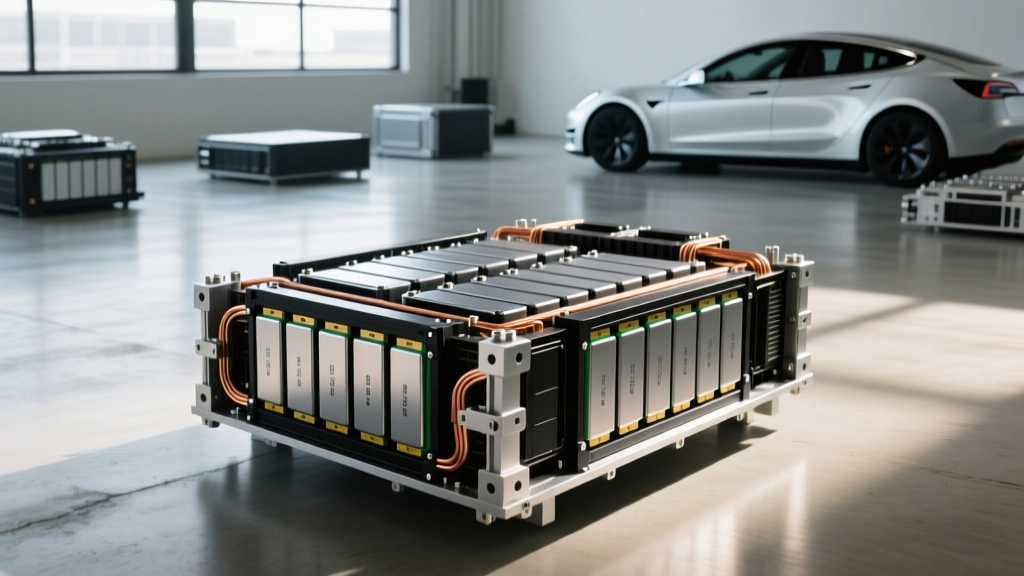
A solid-state battery replaces the liquid electrolyte in a conventional lithium-ion cell with a solid material — typically a ceramic, sulfide-based glass, or polymer. In today's EV batteries, lithium ions travel between the cathode and anode through a liquid electrolyte solution. That liquid is flammable, adds weight, and limits the types of anode materials engineers can use.
The theoretical advantages of going solid are significant:
- Higher energy density: Solid electrolytes can enable lithium-metal anodes, potentially doubling the energy stored per kilogram compared to graphite anodes. That translates to more range in the same physical battery pack, or the same range in a lighter, smaller pack.
- Faster charging: Solid-state cells can theoretically accept higher charge rates without the lithium-plating risk that limits fast charging in liquid-electrolyte cells. Targets of 10–80% in under 10 minutes have been demonstrated in lab settings.
- Improved safety: No flammable liquid electrolyte means dramatically reduced thermal runaway risk.
- Wider temperature tolerance: Solid electrolytes are less sensitive to extreme cold and heat, potentially reducing the 20–30% range loss EVs experience in sub-freezing weather.
LFP vs. NMC/NCA: The Chemistries You Can Actually Buy
Every EV sold in the US in 2026 uses one of two lithium-ion cathode chemistries: LFP (lithium iron phosphate) or NMC/NCA (nickel manganese cobalt / nickel cobalt aluminum). The choice between them affects your range, charging habits, long-term durability, and price.
| Attribute | LFP (Lithium Iron Phosphate) | NMC / NCA (Nickel-based) |
|---|---|---|
| Energy density | Lower (~160 Wh/kg cell-level) | Higher (~250–300 Wh/kg cell-level) |
| Typical use | Standard Range trims (Tesla Model 3/Y RWD, Ford Mustang Mach-E Select) | Long Range / Performance trims, most luxury EVs |
| Cycle life | 3,000–5,000+ cycles to 80% capacity | 1,000–2,000 cycles to 80% capacity |
| Cold-weather performance | Greater range loss in freezing temps (~30–35%) | Better cold performance (~20–25% loss) |
| Charging to 100% daily | Recommended — Tesla and others advise regular 100% charges for LFP calibration | Not recommended — daily limit of 80% extends lifespan |
| Cobalt/critical minerals | Zero cobalt, zero nickel | Contains cobalt and/or nickel |
| Cost per kWh | Lower (~$80–100/kWh at cell level) | Higher (~$110–140/kWh at cell level) |
| Thermal stability | Excellent — much higher thermal runaway threshold | Good, but lower thermal runaway margin |
Which is better? It depends on your usage pattern. If you charge at home daily, commute under 60 miles round-trip, and want a lower purchase price, LFP is the pragmatic choice — it lasts longer, costs less, and doesn't mind sitting at 100%. If you need maximum range for road trips, live in a cold climate, or want the fastest DC charging speeds, NMC/NCA delivers higher energy density and better cold-weather efficiency. Neither chemistry is "bad." The right choice maps to how you'll actually use the car.
How Long Do EV Batteries Last? Real Degradation Data
The fear that an EV battery will "die" like a phone battery after two or three years is the single biggest misconception in EV adoption. High-voltage traction batteries are engineered for longevity that far exceeds consumer electronics, with active thermal management systems and large buffers that protect the cells.
- Tesla Model 3/Y (NMC, 2018–2022): ~5–7% capacity loss at 100,000 miles; fleet data from Tesla's 2024 Impact Report shows ~12% average degradation at 200,000 miles. (Source: Tesla Impact Report)
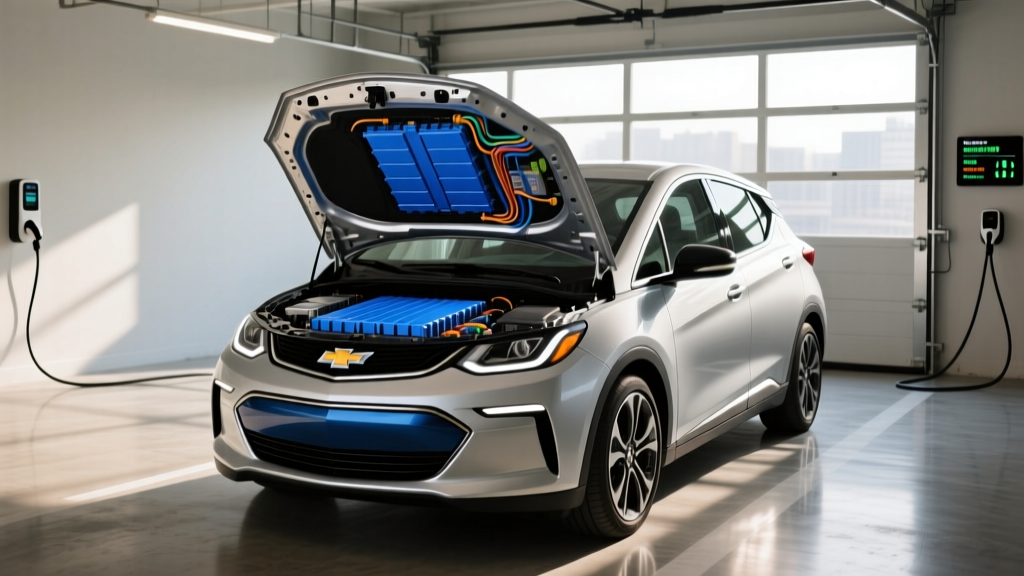
- Chevrolet Bolt EV/EUV (NMC, 2017–2023): Widely reported 5–10% loss at 80,000–100,000 miles among owner communities. The Bolt's generous 65 kWh usable pack and conservative buffer contribute to strong longevity.
- Hyundai Ioniq 5 / Kia EV6 (NMC, 2022–present): Early data at 50,000–70,000 miles shows 3–5% degradation. E-GMP platform thermal management is highly effective.
- Tesla Model 3 RWD (LFP, 2021–present): LFP packs show minimal measurable degradation in the first 60,000 miles, often under 3%. The higher cycle-life ceiling of LFP suggests these packs will retain 90%+ capacity well past 150,000 miles.
- Nissan LEAF (passive air cooling, 2011–2017): A cautionary tale — early LEAFs without active thermal management showed 15–25% degradation at 80,000 miles, particularly in hot climates. Modern EVs with liquid cooling avoid this issue entirely.
The bottom line on lifespan: A modern, liquid-cooled EV battery should retain 80–90% of its original capacity at 150,000 miles and 10–15 years of service. Most batteries will outlast the vehicle they're installed in. Complete failure (sudden death) is extraordinarily rare; degradation is a slow, linear decline — not a cliff.
What Does the Battery Warranty Actually Cover?
Federal law in the United States mandates that EV battery warranties cover a minimum of 8 years or 100,000 miles (whichever comes first). In California and states that follow CARB (California Air Resources Board) emissions standards, the requirement extends to 10 years or 150,000 miles. Most automakers meet or exceed these minimums.
| Manufacturer | Warranty Period | Capacity Retention Threshold |
|---|---|---|
| Tesla (Model 3/Y RWD — LFP) | 8 years / 100,000 mi | 70% |
| Tesla (Model 3/Y LR, Model S/X) | 8 years / 120,000 mi | 70% |
| Hyundai / Kia (Ioniq 5, EV6, EV9) | 10 years / 100,000 mi | 70% |
| Ford (Mustang Mach-E, F-150 Lightning) | 8 years / 100,000 mi | 70% |
| GM (Chevrolet Equinox EV, Blazer EV, Silverado EV) | 8 years / 100,000 mi | 60% (some trims 70%) |
| BMW (i4, iX, i7) | 8 years / 100,000 mi | 70% |
| Volkswagen (ID.4) | 8 years / 100,000 mi | 70% |
| Rivian (R1T, R1S) | 8 years / 175,000 mi | 70% |
Key warranty details buyers miss:
- The threshold matters. A warranty that guarantees 70% capacity means you'd need to lose more than 30% of your original range before a claim is valid. On a 300-mile EPA vehicle, that's still 210 miles — usable for most drivers.
- "Defect" vs. "degradation." Warranties cover defects in materials and workmanship, and capacity falling below the stated threshold. Normal, gradual degradation (e.g., losing 1% per year) is expected and not a warranty claim.
- Transferability. Most factory battery warranties transfer to subsequent owners, which supports EV resale value. Confirm with the manufacturer before buying used.
- CARB-state extension. If you register your EV in California, Colorado, Connecticut, Maine, Maryland, Massachusetts, New Jersey, New York, Oregon, Rhode Island, Vermont, Virginia, or Washington, you may be entitled to the 10-year/150,000-mile coverage regardless of the manufacturer's base policy.
How Much Does It Cost to Replace an EV Battery?
This is the question that generates the most anxiety — and the most misleading headlines. Here's the reality: the vast majority of EV owners will never need a battery replacement. The battery will outlast the car's useful economic life. But if you plan to keep an EV for 15+ years or buy a high-mileage used EV, here's what replacement looks like in 2026.
| Vehicle / Pack Size | Battery Cost (Parts) | Labor | Total Estimated Range |
|---|---|---|---|
| Tesla Model 3 RWD (~60 kWh LFP) | $8,000–$11,000 | $1,500–$2,500 | $9,500–$13,500 |
| Tesla Model Y LR (~75 kWh NMC) | $12,000–$16,000 | $1,500–$2,500 | $13,500–$18,500 |
| Hyundai Ioniq 5 (~77 kWh NMC) | $11,000–$15,000 | $2,000–$3,000 | $13,000–$18,000 |
| Ford F-150 Lightning Ext. Range (~131 kWh) | $20,000–$28,000 | $2,500–$4,000 | $22,500–$32,000 |
| Chevrolet Bolt EV (~65 kWh NMC) | $9,000–$14,000 | $1,500–$2,500 | $10,500–$16,500 |
| BMW iX xDrive50 (~111 kWh NMC) | $18,000–$25,000 | $2,500–$4,000 | $20,500–$29,000 |
Important context on these numbers:
- Cell prices are falling. Battery cell prices have dropped from over $1,200/kWh in 2010 to roughly $100–130/kWh in 2025–2026, per BloombergNEF data. Replacement costs in 2030 will likely be materially lower than today.
- Module-level repair is increasingly viable. Many shops can now replace individual modules (a fraction of the full pack) rather than the entire battery, reducing costs to $2,000–$6,000 for a localized failure.
- Third-party and refurbished packs are becoming available for older models like the LEAF and early Model S, offering 40–60% savings over OEM new packs.
- When is replacement typically needed? Based on current degradation curves, a full battery replacement for capacity reasons (not accident damage) would typically be considered at 200,000+ miles or 15–20 years — if ever. By that point, the vehicle's residual value is often less than the replacement cost, and most owners will have moved on.
Factors That Affect Battery Life — and What You Can Control
Not all miles are equal when it comes to battery wear. Understanding the factors that accelerate degradation lets you make informed choices about how you charge, drive, and store your EV.
- Limit DC fast charging frequency. Occasional road-trip fast charging is fine. But daily reliance on 150+ kW DC charging accelerates degradation. If you have home Level 2 charging, use it as your primary method. Studies from Idaho National Laboratory have shown that exclusive DC fast charging can increase degradation rates by 2–4% over 50,000 miles compared to Level 2 charging.
- Avoid extreme State of Charge (SoC) for NMC/NCA. For nickel-based batteries, set your daily charge limit to 80%. Only charge to 100% when you need the full range for a trip. For LFP batteries, manufacturers like Tesla recommend charging to 100% at least weekly for accurate BMS calibration.
- Don't let the battery sit at 0% or 100% for extended periods. If storing the vehicle for more than a week, aim for 50–60% SoC. Most EVs have a "storage mode" or scheduled departure feature that manages this.
- Use preconditioning. Preconditioning warms or cools the battery to its optimal operating temperature before driving or charging. This is especially important in cold weather — a cold battery accepting a fast charge is under significant stress. Most EVs automatically precondition when you set a navigation destination to a charger.
- Park in shade or a garage when possible. Prolonged exposure to ambient temperatures above 95°F (35°C) while at high SoC accelerates chemical degradation. A garage or shaded spot meaningfully reduces this stress.
- Don't obsess over regenerative braking settings. Regen intensity has negligible impact on battery longevity. Use whatever setting you prefer for driving comfort.
How to Check and Monitor Your Battery's State of Health
State of Health (SoH) is the percentage of your battery's original capacity that remains usable. A new battery is at 100% SoH; a battery that has degraded to hold only 85 kWh of its original 100 kWh is at 85% SoH. Monitoring SoH gives you an early signal of abnormal degradation and helps you make informed decisions about warranty claims, resale, or long-term ownership.
How to check SoH in 2026:
- In-vehicle displays: Tesla provides a battery health estimate in the service menu (accessible via the touchscreen). Hyundai/Kia's infotainment system includes an EV battery status page showing SoH percentage on 2024+ models. BMW's iDrive system displays SoH under the vehicle status menu.
- OBD-II diagnostic apps: Tools like OBDLink MX+ paired with apps such as EV Bat Health or Car Scanner can read the BMS (Battery Management System) directly and report SoH, cell voltage spread, and pack temperature. This works on most EVs with a standard OBD-II port.
- Dealer diagnostic reports: Any authorized dealer can pull a full battery health report. Request this during routine service visits, and always request one before purchasing a used EV.
- Manual calculation: Fully charge the vehicle to 100%, note the displayed range, and compare it to the original EPA range adjusted for the battery's usable kWh. For example, if your Ioniq 5 originally showed 303 miles at 100% and now shows 278 miles, your SoH is approximately 278/303 = 91.7%. (Note: displayed range is affected by recent driving efficiency, so this method is an approximation.)
What's normal vs. concerning: Losing 1–2% SoH per year in the first 3–5 years is typical. A sudden drop of 3%+ in a short period, or any individual cell showing a voltage delta of more than 0.2V from the pack average, warrants a dealer diagnostic visit.
Silicon Anodes, Sodium-Ion, and Other Near-Term Advances
While solid-state batteries remain 2–4 years from meaningful production volume, other battery innovations are entering vehicles now:
- Silicon-dominant anodes: Companies like Sila Nanotechnologies and Group14 Technologies are supplying silicon-blend anode materials to automakers. Silicon can store roughly 10x more lithium ions than graphite, boosting energy density by 20–40% at the cell level. The Mercedes G-Class electric (upcoming) has been announced with silicon-anode cells from Group14. Expect incremental adoption in performance and luxury EVs through 2027–2028.
- Sodium-ion batteries: CATL has begun mass-producing sodium-ion cells, which use abundant, inexpensive sodium instead of lithium. Energy density is lower than LFP, making sodium-ion best suited for affordable, shorter-range urban EVs. Chinese-market vehicles like the Chery iCAR are already using them. US-market availability is likely 2028+.
- LMFP (lithium manganese iron phosphate): An evolution of LFP that adds manganese to boost energy density by ~15–20% while retaining LFP's cost and safety advantages. CATL and Gotion are producing LMFP cells, with adoption expected in 2026–2027 model-year vehicles from multiple brands.
These near-term technologies improve on today's batteries incrementally — they are not the paradigm shift that solid-state promises. But they will meaningfully reduce costs and increase range in the vehicles available in the next 2–3 model years.
Frequently Asked Questions
How long do EV batteries last in years and miles?
Modern liquid-cooled EV batteries are designed to last 15–20 years and 200,000+ miles while retaining 70–80% of their original capacity. Fleet data from Tesla shows an average of ~12% degradation at 200,000 miles. LFP batteries, with their higher cycle-life ceiling, may exceed 300,000 miles before reaching 70% capacity. The battery is very likely to outlast the vehicle's economic life.
How much does an EV battery cost to replace in 2026?
Full pack replacement ranges from approximately $9,500 for a Tesla Model 3 RWD (60 kWh LFP) to $32,000 for a Ford F-150 Lightning Extended Range (131 kWh NMC), including parts and labor. However, most owners never need a replacement. Module-level repairs for localized failures cost $2,000–$6,000. Prices continue to decline as cell costs fall and the refurbished/third-party market matures.
What does the EV battery warranty cover?
Federal law mandates a minimum 8-year/100,000-mile warranty. CARB states extend this to 10 years/150,000 miles. The warranty covers defects in materials and workmanship, and guarantees the battery will retain a specified percentage of its original capacity (typically 70%, though GM uses 60% on some models). Normal gradual degradation within the threshold is not covered. Most warranties transfer to subsequent owners.
How do I check my EV battery's State of Health?
Check your vehicle's built-in battery health display (available on Tesla, Hyundai/Kia, BMW, and others), use an OBD-II dongle with an EV diagnostic app like Car Scanner or EV Bat Health, or request a diagnostic report from your dealer during service. Manually, you can compare your current 100% charge displayed range to the original EPA figure for an approximate SoH calculation.
LFP vs. NMC — which battery chemistry is better for me?
Choose LFP if you charge at home daily, commute under 60 miles, want a lower purchase price, prefer to charge to 100% without worry, and prioritize maximum cycle life. Choose NMC/NCA if you need maximum EPA range for road trips, live in a cold climate where LFP's greater cold-weather range loss would be painful, or want the highest DC fast-charging speeds. Both chemistries are proven and reliable — the right choice depends on your driving and charging patterns.
When will solid-state batteries be available in production EVs?
Based on current manufacturer timelines, the earliest limited-production solid-state EVs may appear in 2027–2028 (Toyota, Samsung SDI). Meaningful volume production across multiple brands is unlikely before 2030. Solid-state technology remains in the prototype and pilot-line stage as of 2026. If you need an EV now, today's lithium-ion batteries are mature, well-warrantied, and more than adequate for the vast majority of drivers.
Does frequent DC fast charging damage my battery?
Exclusive reliance on DC fast charging (150+ kW) can increase degradation by 2–4% over 50,000 miles compared to primarily using Level 2 home charging, per Idaho National Laboratory research. Occasional fast charging on road trips has negligible impact. The practical recommendation: use Level 2 as your daily charging method and reserve DC fast charging for trips. Modern BMS systems actively manage charge rates and temperatures to mitigate fast-charging stress.
Battery technology data sourced from manufacturer specifications, fueleconomy.gov, Tesla Impact Reports, and Idaho National Laboratory EV charging studies. Warranty terms reflect 2026 model-year coverage and are subject to change. For the most current federal tax credit and battery-sourcing rules, consult IRS.gov §30D guidance.