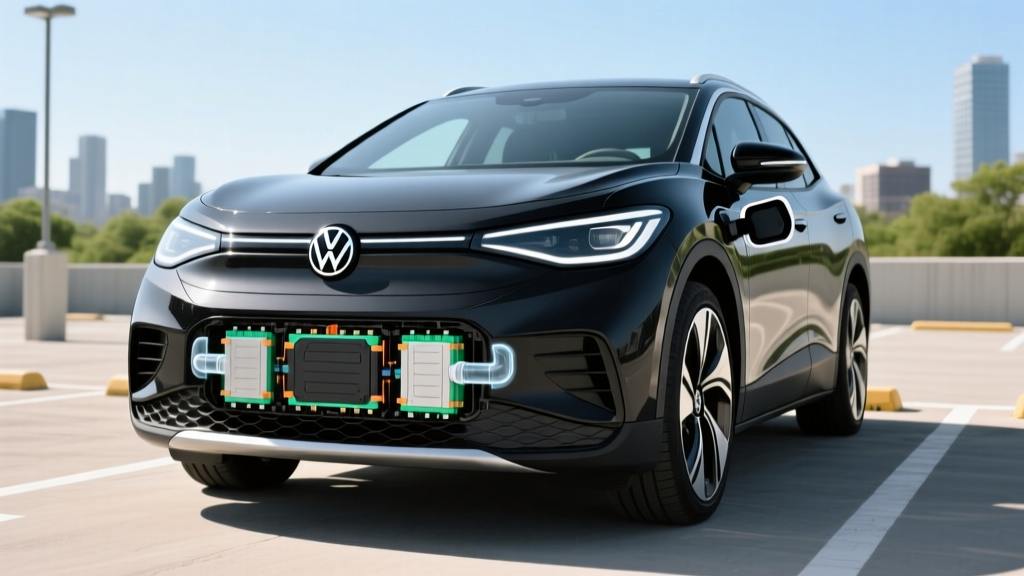
If you own or are shopping for a Volkswagen ID.4, the high-voltage traction battery is the single most expensive component in the vehicle — and the one that generates the most long-term ownership questions. The ID.4's lithium-ion battery pack is engineered to outlast the typical ownership cycle, but understanding exactly what the warranty covers, how degradation works, and what replacement would cost if you ever need it is essential for making an informed decision.
This guide breaks down the VW ID.4 battery warranty terms, real-world degradation data from the NMC chemistry inside the pack, replacement cost ranges, and practical steps to maximize battery health over the vehicle's life.
What the VW ID.4 Battery Warranty Actually Covers
Volkswagen backs the ID.4's high-voltage traction battery with an 8-year or 100,000-mile warranty (whichever comes first). This is consistent with the federal minimum mandated by the EPA for EV battery systems, and it matches the coverage offered by most mainstream competitors including the Hyundai Ioniq 5, Kia EV6, and Ford Mustang Mach-E.
The critical threshold: Volkswagen guarantees the battery will retain at least 70% of its original net capacity over the warranty period. If the battery degrades below 70% State of Health (SoH) within 8 years or 100,000 miles, VW will repair or replace the battery at no cost to the owner.
| Parameter | Detail |
|---|---|
| Warranty Duration | 8 years / 100,000 miles (whichever first) |
| Capacity Retention Threshold | 70% of original net capacity |
| What's Covered | Defects, excessive degradation below 70% SoH |
| What's NOT Covered | Damage from accidents, modifications, improper charging, neglect |
| Transferable? | Yes — transfers to subsequent owners automatically |
| Battery Chemistry | NMC (Nickel Manganese Cobalt) — all trims |
A few nuances worth noting. The warranty covers the traction battery only — not the 12V auxiliary battery that powers accessories and computers, which is a separate conventional lead-acid or lithium unit with its own shorter warranty. The battery warranty also does not cover gradual capacity loss above the 70% threshold. If your battery drops to 75% SoH at year 7, that's considered normal wear and is not a warranty claim.
Volkswagen's warranty is transferable, which is important for resale value. A used ID.4 with 4 years and 50,000 miles remaining on the battery warranty carries more buyer confidence than one sold without that coverage. For full warranty documentation, consult Volkswagen's official ID.4 page or your dealer's warranty booklet.
ID.4 Battery Chemistry: NMC Explained
The VW ID.4 uses an NMC (Nickel Manganese Cobalt) lithium-ion battery across all trims. The usable capacity is 77 kWh (gross capacity approximately 82 kWh) on the Pro and Pro S trims sold in the US market. NMC chemistry was chosen for its balance of energy density, performance, and thermal stability.
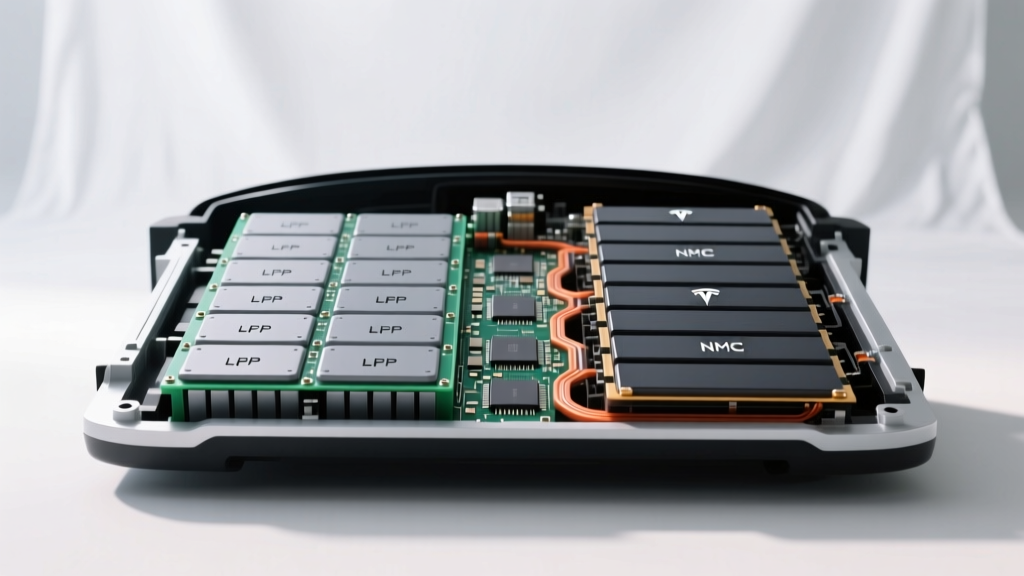
Unlike some competitors — notably the standard-range Tesla Model 3 and certain BYD models — the ID.4 does not use LFP (Lithium Iron Phosphate) chemistry. Understanding the trade-offs between these two chemistries helps explain VW's choice and what it means for your ownership experience.
| Attribute | NMC (ID.4) | LFP |
|---|---|---|
| Energy Density | Higher — more range per kg | Lower — heavier pack for same kWh |
| Cycle Life | ~1,000–2,000 cycles | ~3,000–5,000+ cycles |
| Cold-Weather Performance | Better low-temp capacity retention | More affected by cold; needs preconditioning |
| Recommended Charge Limit | 80% daily, 100% for trips | 100% OK regularly — benefits from periodic full charge |
| Cost | Higher (cobalt/nickel content) | Lower (no cobalt, abundant iron) |
| Thermal Stability | Good with active thermal management | Excellent — inherently more stable |
| Typical Degradation | ~10-15% over 8 years | ~5-10% over 8 years |
The practical takeaway: NMC gives the ID.4 a competitive EPA-estimated range of up to 291 miles from a relatively compact, lightweight pack. But it requires more deliberate charging habits — specifically, keeping daily State of Charge (SoC) between roughly 20% and 80% to minimize long-term degradation. LFP owners can charge to 100% daily without the same concern, which is why some buyers prefer LFP for urban commuting vehicles.
Real-World Degradation: What to Expect Over Time
Battery degradation is a fact of lithium-ion chemistry, but it is neither linear nor catastrophic. The typical degradation curve shows a steeper initial drop in the first year or two (often 2-4%), followed by a much slower, nearly linear decline for the remaining lifespan.
Typical NMC Degradation Trajectory (based on aggregated fleet data and OEM projections):
- Year 1 / 15,000 mi: ~2-4% capacity loss (initial settling)
- Year 3 / 45,000 mi: ~6-9% total loss
- Year 5 / 75,000 mi: ~8-12% total loss
- Year 8 / 100,000 mi: ~10-15% total loss (well above the 70% warranty threshold)
- Year 10+ / 150,000+ mi: ~15-20% total loss in many cases
These figures assume moderate DC fast-charging use (not daily), climate-appropriate charging habits, and active thermal management — which the ID.4 has via its liquid-cooled battery system. Data from Recurrent Auto, which tracks over 15,000 EVs in real-world conditions, shows that most modern EVs with active thermal management retain 85-90% of original capacity at the 8-year mark.
For the ID.4 specifically, early owner reports and fleet data suggest degradation is tracking within expected NMC norms. A 2021 ID.4 Pro S with the 77 kWh usable pack that has covered 60,000 miles might show approximately 6-9% degradation — meaning roughly 70-72 kWh usable. That translates to roughly 260-270 miles of real-world range instead of the original 291 EPA estimate. Noticeable, but not debilitating.
Importantly, the 70% warranty threshold provides a generous safety net. For an ID.4 battery to qualify for warranty replacement, it would need to lose over 30% of its capacity — dropping below about 54 kWh usable. Based on current degradation data, reaching that point within 100,000 miles would be highly unusual and likely indicative of a defect rather than normal wear.
Battery Replacement Cost: What If You're Out of Warranty?
This is the question that looms largest for prospective EV buyers, and it deserves an honest answer grounded in actual numbers rather than fear.
| Vehicle / Pack Size | Battery Cost (parts) | Labor | Total Estimate |
|---|---|---|---|
| VW ID.4 (82 kWh gross / 77 kWh net) | $12,000–$16,000 | $1,500–$3,000 | $13,500–$19,000 |
| Tesla Model Y (~75 kWh) | $10,000–$14,000 | $1,000–$2,000 | $11,000–$16,000 |
| Ford Mach-E (91 kWh ext. range) | $14,000–$18,000 | $1,500–$2,500 | $15,500–$20,500 |
| Hyundai Ioniq 5 (77.4 kWh) | $11,000–$15,000 | $1,200–$2,500 | $12,200–$17,500 |
These are ballpark figures based on current OEM parts pricing and independent shop labor rates. Actual costs vary by region, dealership, and whether the replacement is a new, refurbished, or module-level repair. In many cases, a failing battery can be repaired at the module level — replacing only the degraded cells rather than the entire pack — for $2,000–$5,000.
Context matters here. The vast majority of ID.4 batteries will never need replacement during the vehicle's useful life. Modern liquid-cooled NMC packs are designed for 200,000+ miles before reaching end-of-life (defined as 70-80% SoH). If you plan to own the ID.4 for 8-10 years and sell or trade it at 100,000-130,000 miles, the battery will almost certainly still be functional with 80-85% capacity remaining.
Battery prices are also declining steadily. According to BloombergNEF, average lithium-ion battery pack prices fell from over $1,200/kWh in 2010 to approximately $130/kWh by late 2024, with further declines expected. If you do need a replacement in year 12 or 15, the cost will likely be significantly lower than today's estimates.
Factors That Accelerate (or Slow) Battery Degradation
Not all miles are created equal when it comes to battery wear. Several factors influence how quickly your ID.4's pack loses capacity over time.
Battery Care Best Practices for the ID.4
- Set daily charge limit to 80%: Use the vehicle's charge settings or the VW app to cap routine charging at 80% SoC. Reserve 100% charges for road trips.
- Avoid frequent DC fast charging: Occasional fast charging is fine, but daily use of 150+ kW DC chargers accelerates degradation due to sustained high heat. Rely on Level 2 home charging for daily needs.
- Don't let the battery sit at extremes: Avoid leaving the ID.4 parked for weeks at 100% SoC or below 10% SoC. If storing for extended periods, aim for ~50% charge.
- Use preconditioning: The ID.4's navigation-based battery preconditioning warms the pack before DC fast charging in cold weather, reducing stress on cells. Always navigate to a charger rather than just driving there.
- Park in shade or a garage when possible: Prolonged exposure to extreme heat (above 95°F/35°C) accelerates chemical degradation. A garage or shaded spot meaningfully extends battery life in hot climates.
- Moderate regenerative braking in cold weather: The ID.4 limits regen when the battery is very cold. Don't force aggressive regen on a freezing-cold pack — let it warm up first.
Fast-charging frequency deserves special attention. A study by the Idaho National Laboratory found that EVs charged exclusively with DC fast charging showed measurably higher degradation than those charged primarily on Level 2. The difference wasn't catastrophic — roughly an additional 3-5% loss over 100,000 miles — but it's meaningful. For ID.4 owners with home Level 2 charging, the practical recommendation is to fast-charge only on road trips, perhaps 20-30 times per year.
Extreme temperatures affect batteries in two ways. Heat accelerates chemical degradation permanently, while cold temporarily reduces available capacity (you'll notice less range in winter, but it returns when temperatures rise). The ID.4's liquid thermal management system mitigates both, but it can't eliminate physics entirely. Owners in Phoenix or Miami will see slightly faster long-term degradation than those in San Francisco or Seattle.
How to Check Your ID.4 Battery Health (State of Health)
Monitoring your battery's State of Health (SoH) helps you track degradation and plan ahead. Here are the methods available to ID.4 owners:
1. VW Car-Net / myVW App
Volkswagen's connected services platform provides battery status information, including current charge level and estimated range. While the app doesn't display a precise SoH percentage directly, consistent range estimates over time serve as a practical proxy. If your full-charge range drops noticeably from the original EPA figure, it may indicate degradation.
2. OBD-II Diagnostic Tools
Third-party OBD-II readers like the OBD11 or Carista adapter, paired with apps such as Car Scanner or OBDeleven, can read the ID.4's Battery Management System (BMS) data directly. This gives you access to real SoH percentage, individual cell voltages, battery temperature, and charge cycle count. This is the most accurate DIY method and costs under $50 for the hardware.
3. Dealer Diagnostic Check
Any VW dealer can run a full battery health diagnostic, providing an official SoH reading. This is useful if you're approaching the warranty threshold and want documentation. Request this during routine service visits — most dealers will perform it at no charge.
4. Third-Party Battery Health Reports
Services like Recurrent Auto (free for owners) monitor your battery remotely via connected car data and provide detailed degradation reports, comparing your pack to a fleet of similar vehicles. This is particularly useful for tracking trends over months and years.
Emerging Battery Tech: What's Next Beyond NMC
The battery landscape is evolving rapidly, and several technologies are in development that could reshape EV ownership within the next decade. It's important to note that none of these are currently available in production vehicles sold in the US — they are forward-looking and subject to timeline changes.
Solid-state batteries replace the liquid electrolyte with a solid material, promising higher energy density, faster charging, and improved safety. Toyota has announced plans for a solid-state EV by 2027-2028, while Samsung SDI targets 2027 for mass production. However, manufacturing scale-up remains a significant challenge, and initial deployments will likely be limited to premium models with high price tags.
Silicon anode technology increases the amount of silicon in the anode (replacing graphite), boosting energy density by 20-40%. Companies like Sila Nanotechnologies and Group14 are supplying early silicon-anode materials to automakers, with initial applications appearing in 2025-2026 model-year vehicles in limited configurations.
Sodium-ion batteries use abundant sodium instead of lithium, offering lower cost and excellent cycle life at the expense of lower energy density. CATL has begun production in China, but US-market availability is likely 3-5 years away and will initially target lower-range urban vehicles.
For current ID.4 owners and buyers, these technologies are context rather than a reason to wait. The NMC pack in the ID.4 is a proven, well-managed system that will serve reliably for the vehicle's full lifespan. Next-generation chemistries will benefit future model years, not invalidate current ones.
Frequently Asked Questions
How long do EV batteries last in years and miles?
Modern liquid-cooled EV batteries like the one in the ID.4 are designed to last 15-20 years or 200,000+ miles before reaching end-of-life (typically defined as 70-80% of original capacity). Most will outlast the vehicle itself. Real-world fleet data from sources like Recurrent Auto shows median degradation of 10-15% at the 8-year mark for NMC packs with active thermal management.
How much does a VW ID.4 battery cost to replace?
A full battery replacement for the ID.4 (82 kWh gross pack) is estimated at $13,500–$19,000 including parts and labor as of 2025-2026. However, module-level repairs — replacing only the degraded sections — can cost $2,000–$5,000. Most ID.4 batteries will never require replacement during the vehicle's useful life, and battery prices continue to decline year over year.
What does the ID.4 battery warranty cover?
The VW ID.4 battery warranty covers defects and excessive degradation (below 70% of original net capacity) for 8 years or 100,000 miles, whichever comes first. It does not cover damage from accidents, unauthorized modifications, improper charging equipment, or normal wear above the 70% threshold. The warranty is transferable to subsequent owners.
How do I check my ID.4 battery health?
The most accurate DIY method is using an OBD-II reader (OBD11, Carista) with an app like OBDeleven or Car Scanner to read the Battery Management System's State of Health percentage directly. You can also request a dealer diagnostic, use the Recurrent Auto monitoring service, or track your full-charge range over time via the myVW app as a practical proxy.
Is LFP or NMC better for the ID.4?
Neither is universally "better" — they serve different priorities. The ID.4's NMC battery offers higher energy density (more range from a lighter pack) and better cold-weather performance, but requires 20-80% daily charging habits for optimal longevity. LFP offers longer cycle life, lower cost, and the convenience of daily 100% charging, but is heavier and less cold-tolerant. VW chose NMC for the ID.4 to maximize range and performance within the vehicle's design envelope.
Does frequent DC fast charging damage the ID.4 battery?
Frequent DC fast charging accelerates degradation slightly — roughly 3-5% additional capacity loss over 100,000 miles compared to Level 2-only charging, according to Idaho National Laboratory research. Occasional fast charging on road trips (20-30 times per year) has minimal impact. The ID.4's thermal management system and navigation-based preconditioning help mitigate fast-charging stress. For daily charging, a home Level 2 charger at 7-11 kW is the best option for battery longevity.
Will my ID.4 battery need to be replaced before the car is retired?
Statistically, this is unlikely. The majority of modern EV batteries reach the vehicle's end of life before the battery itself fails. At 200,000 miles, a well-maintained ID.4 battery should still retain 80-85% of its original capacity — well above the 70% warranty threshold and still providing over 230 miles of real-world range. Battery replacement is most common in early-generation EVs without liquid cooling, not in modern platforms like the MEB.