The Volkswagen ID.4 is one of the most popular mainstream electric SUVs in the U.S., and for good reason: practical range, solid charging speeds, and a starting price that undercuts many competitors. But for buyers and current owners alike, the high-voltage traction battery remains the single biggest long-term question. How long will it last? What does the Volkswagen ID.4 battery warranty actually cover? And if the worst happens, what does a replacement cost?
This guide breaks down the ID.4's battery chemistry, real-world degradation data, warranty terms, replacement economics, and the daily habits that extend (or shorten) pack life. We'll also compare NMC vs LFP chemistries and look at where solid-state technology realistically stands.
Volkswagen ID.4 Battery Specs and Chemistry Explained
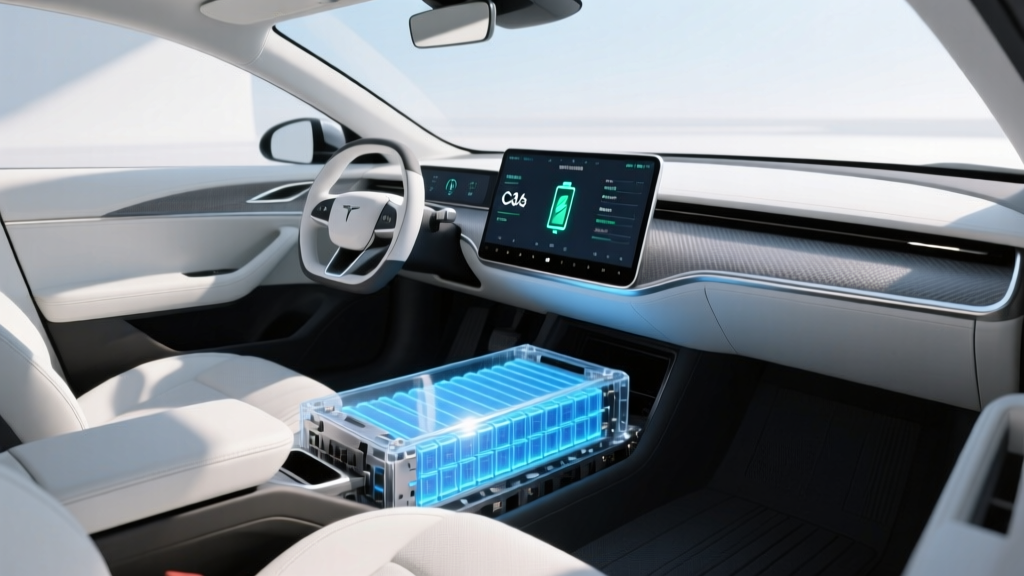
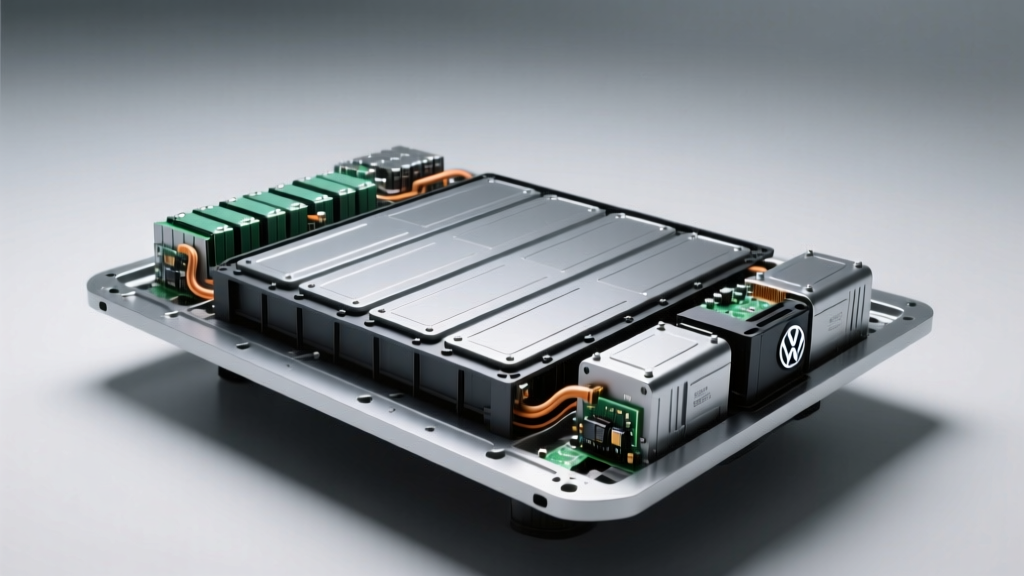
The U.S.-spec Volkswagen ID.4 (2024–2026 model years) uses a lithium-ion battery pack with NMC (nickel manganese cobalt) cathode chemistry. Two battery sizes are available depending on trim:
- Standard Range (Pro trim): 62 kWh usable capacity, EPA-estimated 206 miles of range
- Long Range (Pro S, AWD Pro S): 82 kWh usable (77 kWh net usable in some model years), EPA-estimated 245–291 miles depending on drivetrain
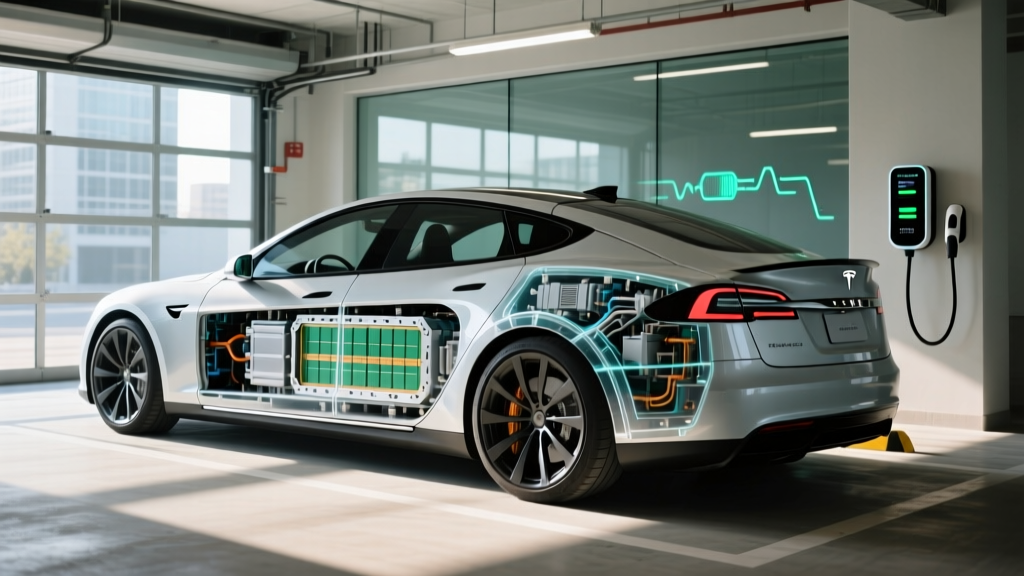
NMC chemistry was chosen for its balance of energy density and power delivery. The ID.4's pack uses a liquid thermal management system with active heating and cooling — critical for maintaining cell health during DC fast charging and cold-weather operation. According to fueleconomy.gov, the 2025 ID.4 Pro S AWD achieves 104 MPGe combined with a 263-mile EPA range estimate.
LFP vs NMC: How They Compare for EV Buyers
| Attribute | NMC (ID.4 uses this) | LFP (Tesla Model 3 RWD, BYD) |
|---|---|---|
| Energy Density | High (~250 Wh/kg cell-level) | Lower (~170 Wh/kg cell-level) |
| Cycle Life | ~1,000–1,500 full cycles | ~3,000–5,000 full cycles |
| Cold-Weather Performance | Better low-temp capacity retention | More capacity loss below 32°F |
| Max Recommended SoC | 80% for daily use | 100% OK regularly |
| Cost per kWh | Higher (cobalt/nickel content) | Lower (iron/phosphate) |
| Typical Use Case | Long-range / AWD models | Standard-range / fleet vehicles |
The ID.4's NMC pack delivers strong range per kilogram, which matters for an SUV with AWD availability. The trade-off is that NMC cells degrade faster if routinely charged to 100% or exposed to sustained high temperatures — which is where the warranty and proper care come in.
How Long Do EV Batteries Last? Degradation Data
The most common question from prospective ID.4 buyers: "Will I need a new battery in five years?" The short answer is almost certainly no. Modern EV battery packs are engineered to outlast the typical ownership cycle of the vehicle itself.
Based on aggregated fleet data from sources like Recurrent Auto and Geotab, NMC-based EV batteries typically show the following degradation curve:
Typical NMC Battery Degradation Curve (Fleet Averages)
| Time / Mileage | Average Capacity Retention | Real-World ID.4 Impact |
|---|---|---|
| Year 1 / ~12,000 mi | 95–97% | ~5–8 mi range loss on 82 kWh pack |
| Year 3 / ~36,000 mi | 90–93% | ~18–25 mi range loss |
| Year 5 / ~60,000 mi | 86–90% | ~25–35 mi range loss |
| Year 8 / ~100,000 mi | 80–87% | ~35–50 mi range loss |
| Year 10+ / 150,000+ mi | 75–85% | Varies widely by usage pattern |
Source: Aggregated data from Recurrent Auto battery health reports and Geotab fleet degradation studies. Individual results vary based on climate, charging habits, and thermal management usage.
Two things to note. First, degradation is non-linear — the steepest drop happens in the first 12–18 months, then the curve flattens significantly. Second, the ID.4's active thermal management system gives it an advantage over passively cooled packs (like older Nissan Leaf models) in hot climates.
A 2024 ID.4 Pro S with 291 miles of EPA range that degrades to 85% capacity at year 8 still delivers roughly 247 miles — more than adequate for daily driving and most road trips.
Volkswagen ID.4 Battery Warranty: Full Terms Breakdown
The Volkswagen ID.4 battery warranty is one of the most important protections for buyers. Here are the exact terms as published by Volkswagen for U.S.-spec models:
| Warranty Component | Details |
|---|---|
| Duration | 8 years or 100,000 miles (whichever comes first) |
| Capacity Retention Threshold | 70% of original usable capacity |
| What Triggers a Claim | Battery SoH drops below 70% under normal use |
| Remedy | Repair, module replacement, or full pack replacement at VW's discretion |
| Transferable? | Yes — transfers to subsequent owners automatically |
| Exclusions | Damage from accidents, floods, modifications, or use as a stationary power source |
| Additional Coverage | 3-year/36,000-mile limited vehicle warranty; 4-year/50,000-mile powertrain |
The 70% threshold is the industry standard, matching what Tesla, Hyundai, Ford, and most other automakers offer. If your ID.4's 82 kWh pack drops to 57.4 kWh of usable capacity or less within 8 years or 100,000 miles, Volkswagen is obligated to remedy it. In practice, very few claims are filed because most packs retain well above 80% at the warranty boundary.
One nuance worth flagging: Volkswagen's warranty covers capacity degradation, not range. If your range drops due to increased accessory use, tire changes, or driving in extreme cold, that's not a warranty claim — only measured cell capacity counts.
EV Battery Replacement Cost: What ID.4 Owners Should Budget For
Here's the reality that calms most buyer fears: the vast majority of EV batteries never need a full replacement during the vehicle's useful life. Data from Recurrent Auto shows that fewer than 2% of EV battery packs across all brands have been replaced under or outside of warranty as of 2025.
That said, if you plan to keep an ID.4 well past 150,000 miles, or buy one used with high mileage, here's what replacement economics look like:
| Component | Estimated Cost Range (2025–2026) |
|---|---|
| Full 82 kWh pack replacement (out of warranty) | $15,000–$22,000 |
| Full 62 kWh pack replacement (out of warranty) | $12,000–$17,000 |
| Individual module replacement (if supported) | $1,500–$4,000 per module |
| Labor (high-voltage certified technician) | $1,500–$3,000 |
| Diagnostic and programming | $300–$600 |
Costs based on industry estimates and dealer service bulletins. Prices vary by region and dealer. Battery prices have declined ~14% annually since 2020 but remain the single most expensive EV component.
Module-level repair is becoming more common. If only one or two cell modules within the pack degrade disproportionately, a certified technician can replace individual modules rather than the entire pack — dramatically reducing cost. Volkswagen's MEB platform (which underpins the ID.4) was designed with modular battery service in mind.
For context, a $18,000 battery replacement at 160,000 miles works out to roughly $0.11/mile in battery cost alone — comparable to what a gas-car owner spends on a single engine rebuild or transmission replacement at similar mileage.
Factors That Accelerate (or Preserve) ID.4 Battery Health
Battery degradation isn't random. It's driven by measurable factors, most of which are within the owner's control. Here's a prioritized list based on cell-chemistry research and fleet data:
Battery Care Priorities for NMC Packs
- State of Charge (SoC) habits: Set your daily charge limit to 80%. Reserve 100% charges for road trips. Sustained time at 100% SoC stresses NMC cathodes through electrolyte oxidation.
- Avoid deep discharges: Try not to regularly drop below 10–15% SoC. The ID.4 has a buffer below 0% displayed, but habitually running the pack very low still accelerates wear.
- DC fast-charging frequency: Occasional DC fast charging (1–2 times per week) is fine. Daily DC fast charging at 135+ kW generates sustained heat that degrades cells faster. Use Level 2 home charging as your primary method.
- Temperature management: In extreme heat (above 95°F), park in shade or a garage when possible. The ID.4's active cooling system runs even when parked to protect cells, but reducing thermal load helps.
- Preconditioning for fast charging: Use the ID.4's navigation-based battery preconditioning when routing to a DC fast charger. This warms or cools the pack to optimal temperature, reducing charge time and thermal stress.
- Storage: If storing the ID.4 for more than two weeks, leave it at 50–60% SoC and plugged in with a charge limit set. Never store at 100% or near 0%.
The single highest-impact habit is the 80% daily charge limit. A study by Geotab found that EVs charged to 100% daily degraded roughly twice as fast as those kept between 20–80% SoC over a three-year period.
How to Check Your ID.4 Battery Health (State of Health)
Unlike a gas car's compression test, checking EV battery health requires software-level access to the Battery Management System (BMS). Here are the methods available to ID.4 owners:
Method 1: Volkswagen Dealership Diagnostic
Any VW dealer can run a full battery health report using the ODIS diagnostic tool. This provides a precise State of Health (SoH) percentage, individual cell voltage balance data, and historical charge/discharge logs. Ask for this during routine service — most dealers provide it free.
Method 2: OBD-II Dongle + App
Third-party tools like Carista or OBDeleven can read BMS data from the ID.4's OBD-II port. The Car Scanner app (iOS/Android) with a compatible ELM327 Bluetooth adapter can display estimated SoH, cell voltages, and battery temperature in real time. Cost: ~$30–$60 for hardware.
Method 3: Real-World Range Tracking
The simplest method: track your ID.4's miles-per-kWh efficiency over time using the trip computer or a tool like A Better Routeplanner's logging feature. If your average efficiency drops significantly while driving patterns remain the same, it may indicate cell degradation. This method is imprecise but costs nothing.
For used-car buyers, a pre-purchase battery health check at a VW dealer is strongly recommended. A SoH reading above 90% on a 2–3-year-old ID.4 is typical and healthy.
Emerging Battery Tech: Solid-State and Beyond
Volkswagen has invested heavily in next-generation battery technology through its subsidiary PowerCo and partnerships with QuantumScape. Here's where things stand as of 2026:
- Solid-state batteries (QuantumScape): VW holds a significant stake in QuantumScape, which has demonstrated prototype cells with 800+ cycle life at 80%+ retention and faster charging. However, mass production for consumer vehicles is not expected before 2028–2030. These cells are not available in any current production vehicle.
- Unified Cell (PowerCo): Volkswagen's "Unified Cell" prismatic format is designed to accept multiple chemistries (NMC, LFP, and eventually solid-state) in a single form factor. This began rolling into European-market EVs in 2025 but has not yet appeared in U.S.-spec ID.4 models.
- Silicon anode technology: Companies like Sila Nanotechnologies are developing silicon-dominant anodes that increase energy density by 20–40%. Early production applications are appearing in limited volumes but are not yet in mainstream EV packs.
The practical takeaway: today's ID.4 NMC battery is mature, well-understood technology. Next-generation chemistries will offer meaningful improvements, but they remain 2–5 years from high-volume production. If you're buying now, the current pack technology is proven and well-supported by warranty.
Frequently Asked Questions
How long will the Volkswagen ID.4 battery last in real-world use?
Based on fleet degradation data, the ID.4's NMC battery should retain 80–87% of its original capacity at 8 years / 100,000 miles. Most packs remain functional well beyond 150,000 miles with gradual capacity loss. Full failure is rare — fewer than 2% of EV batteries across all brands require replacement.
What exactly does the Volkswagen ID.4 battery warranty cover?
The warranty covers capacity degradation below 70% of original usable capacity for 8 years or 100,000 miles. If your 82 kWh pack drops to 57.4 kWh or less under normal use, Volkswagen will repair or replace it. The warranty is transferable to subsequent owners and excludes damage from accidents, flooding, or unauthorized modifications.
How much does it cost to replace the ID.4 battery out of warranty?
A full 82 kWh pack replacement costs an estimated $15,000–$22,000 including labor. However, module-level repair (replacing only degraded modules) can cost $1,500–$4,000 per module. Battery prices continue to decline, and most packs never need replacement during the vehicle's life.
Is the ID.4's NMC battery better or worse than LFP?
It depends on your priorities. NMC offers higher energy density (more range per kg), better cold-weather performance, and faster charging. LFP offers longer cycle life (3,000–5,000 vs 1,000–1,500 cycles), lower cost, and the ability to charge to 100% daily without accelerated degradation. For a long-range SUV like the ID.4, NMC is the practical choice.
Does frequent DC fast charging damage the ID.4 battery?
Occasional DC fast charging is fine — the ID.4's thermal management system actively cools the pack during high-power sessions. However, daily DC fast charging at 135+ kW generates cumulative thermal stress that accelerates degradation over years. For daily use, Level 2 home charging (7–11 kW) is significantly gentler on cells and costs less per mile.
Can I check my ID.4 battery health myself?
Yes. The most reliable method is a dealer diagnostic using VW's ODIS tool, which provides a precise SoH percentage. For DIY monitoring, an OBD-II adapter (like Carista or OBDeleven) paired with the Car Scanner app can display SoH, cell voltages, and pack temperature. You can also track your miles-per-kWh efficiency over time as a rough health indicator.
Will my ID.4 battery degrade faster in a hot climate?
Sustained exposure to ambient temperatures above 95°F does accelerate NMC cell degradation. However, the ID.4's active liquid cooling system mitigates this significantly — it runs even when the car is parked to keep cells within safe temperature ranges. Owners in Arizona or Texas may see slightly faster degradation (1–3% more over 5 years) compared to temperate-climate owners, but it's not a major concern given the 70% warranty threshold.
Does the Volkswagen ID.4 qualify for the federal EV tax credit?
As of 2026, the U.S.-built ID.4 may qualify for up to $7,500 under IRS §30D, subject to buyer income limits ($150K single / $300K joint), MSRP caps ($80K for SUVs), and battery sourcing requirements. The credit can be transferred to the dealer as a point-of-sale discount. Always verify current eligibility on IRS.gov and confirm with your tax professional, as sourcing rules have tightened since 2024.