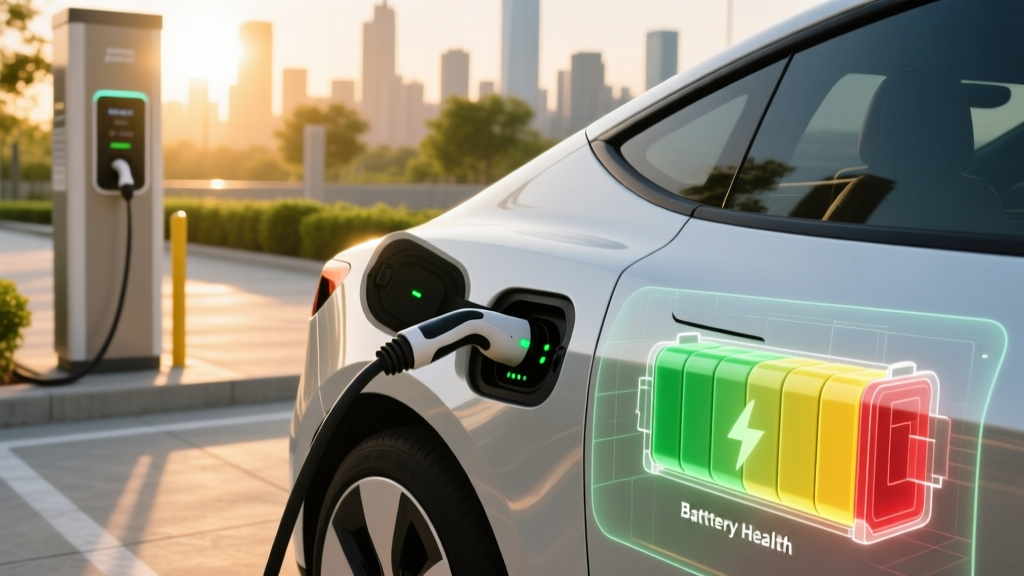
Volkswagen's $1.4 billion investment in Gotion High-Tech has made the Chinese battery maker a central pillar of VW's electrification strategy. As the automaker pushes toward next-generation energy storage, the phrase "Volkswagen Gotion solid-state battery" surfaces frequently in EV forums and investor briefings. But what does this partnership actually mean for buyers in 2026, and how does it compare to the lithium-ion batteries powering today's ID.4, ID.7, and rival EVs?
This guide unpacks VW's Gotion battery roadmap, then grounds it in the practical realities every EV owner and shopper needs: chemistry trade-offs, real-world degradation data, warranty coverage, replacement costs, and the habits that determine whether your traction battery lasts 150,000 miles or 300,000.
Volkswagen, Gotion, and the Solid-State Battery Timeline
Volkswagen holds roughly 25% of Gotion High-Tech, making it the largest shareholder in the Hefei-based battery manufacturer. Gotion currently supplies LFP (lithium iron phosphate) cells for Volkswagen's entry-level EVs in Europe and China, including the ID.2all platform expected to reach global markets by 2027. These are conventional lithium-ion cells — proven, affordable, and durable, but not solid-state.
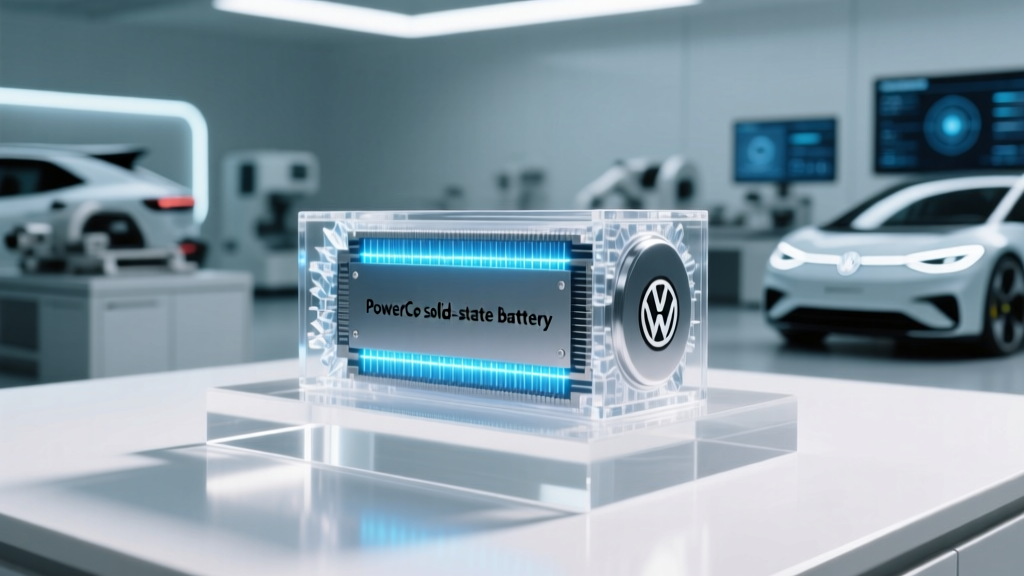
The solid-state battery aspiration is a separate engineering track. VW's PowerCo subsidiary (which absorbed VW Group Components' battery division) is developing solid-state cells in partnership with QuantumScape, not Gotion. QuantumScape's anodeless lithium-metal design promises energy density above 800 Wh/L at the cell level and 10-80% DC fast charging in under 15 minutes. However, as of early 2026, QuantumScape cells remain in validation testing, with limited production anticipated no earlier than 2028-2029.
Gotion's role in VW's strategy is more immediate: scaling affordable LFP cells to bring EV pricing down, particularly for sub-€30,000 models. This matters because LFP chemistry directly affects the range, longevity, and charging behavior you'll experience as an owner.
LFP vs. NMC vs. NCA: The Chemistry That Defines Your EV
Every EV battery uses one of three dominant cathode chemistries. The choice affects range, lifespan, cold-weather behavior, and the price you pay at the dealership.
| Attribute | LFP (Lithium Iron Phosphate) | NMC (Nickel Manganese Cobalt) | NCA (Nickel Cobalt Aluminum) |
|---|---|---|---|
| Energy Density | 160-180 Wh/kg (cell level) | 220-260 Wh/kg (cell level) | 250-270 Wh/kg (cell level) |
| Cycle Life | 3,000-5,000+ cycles to 80% SoH | 1,000-2,000 cycles to 80% SoH | 800-1,500 cycles to 80% SoH |
| Cold-Weather Performance | Moderate — greater range loss below 32°F; slower charging without preconditioning | Better low-temp conductivity; less range loss in winter | Similar to NMC; thermal management critical |
| Cost per kWh | $80-$100 (pack level, 2025-2026) | $110-$140 (pack level) | $115-$145 (pack level) |
| Optimal SoC Range | Can charge to 100% daily without accelerated degradation | 20-80% daily; 100% for trips only | 20-80% daily; 100% for trips only |
| Thermal Stability | Excellent — higher thermal runaway threshold (~270°C) | Moderate — requires robust BMS and cooling | Lower thermal threshold; advanced cooling mandatory |
| Common Applications (2026) | Tesla Model 3 RWD, BYD Seal, VW ID.2all (upcoming), Ford Mustang Mach-E Select LFP | Hyundai Ioniq 5, Kia EV6, VW ID.4, BMW i4, most long-range EVs | Tesla Model S/X/3 LR, Rivian R1T/R1S, Lucid Air |
Which is better? It depends on your use case. If you commute 30 miles daily and charge at home every night, LFP's ability to sit at 100% SoC without penalty and its 3,000+ cycle life make it the durability champion. If you need 300+ miles of EPA range for road trips and live in a cold climate, NMC's higher energy density and better cold-weather conductivity serve you better. NCA occupies a similar niche to NMC but with slightly higher energy density at the cost of cycle life.
Gotion's LFP cells for Volkswagen prioritize cost and longevity over maximum range — a deliberate choice for urban-focused, price-sensitive models.
How Long Do EV Batteries Actually Last?
The short answer: almost certainly longer than you'll own the car. The long answer requires looking at degradation data from millions of real-world miles.
Degradation is not linear. Most batteries experience a steeper drop in the first 12-18 months (typically 3-5% total loss as the solid electrolyte interphase layer stabilizes), then settle into a slow, linear decline. Tesla's 2024 Impact Report, which covers Model S/X/3/Y fleets with cumulative billions of miles, shows average capacity retention of approximately 85% at 200,000 miles for NCA packs.
For context, a 2026 Volkswagen ID.4 Pro S with a 77 kWh usable NMC battery and 275 miles of EPA range would, at average degradation rates, still deliver approximately 225-240 miles of range at 150,000 miles — well within the usable life of the vehicle.
When is replacement typically needed? Catastrophic battery failure (sudden loss of function, not gradual degradation) is rare and typically covered under warranty. Gradual degradation to below 70% capacity — the threshold where most owners notice meaningful range reduction — takes 12-18 years for the average driver covering 12,000-15,000 miles annually. Most EV batteries will outlive their original owners.
What the Battery Warranty Actually Covers
Federal law mandates that EV batteries carry a minimum warranty of 8 years/100,000 miles (10 years/150,000 miles in California Air Resources Board states). But the specifics vary significantly by manufacturer.
| Manufacturer | Duration | Mileage | Capacity Retention Threshold | Notes |
|---|---|---|---|---|
| Volkswagen (ID.4/ID.7) | 8 years | 100,000 miles | 70% | Covers defects and capacity loss below threshold |
| Tesla (Model 3/Y) | 8 years | 100,000-120,000 miles | 70% | 120,000 mi for Long Range/Performance |
| Hyundai/Kia | 10 years | 100,000 miles | 70% | Industry-leading duration |
| GM (Ultium platform) | 8 years | 100,000 miles | 60-70% | Varies by model; Bolt EUV at 60% |
| Ford (Mach-E, F-150 Lightning) | 8 years | 100,000 miles | 70% | Covers capacity below threshold |
What's covered: Manufacturing defects, cell failures, and capacity loss below the stated threshold (typically 70% of original capacity). If your 77 kWh ID.4 battery degrades to 52 kWh (67.5%) within 8 years/100,000 miles, Volkswagen must repair or replace it at no cost.
What's not covered: Damage from accidents, flooding, or improper modification. Some warranties exclude capacity loss from repeated DC fast charging above certain thresholds or from leaving the vehicle at 100% SoC for extended periods — though these exclusions are difficult for manufacturers to enforce without telematics data.
EV Battery Replacement Cost: The Numbers
If your battery does fail outside of warranty — or you're buying a used EV with an expired battery warranty — replacement is a significant expense. Here's what it actually costs in 2026.
| Vehicle | Battery Size (Usable kWh) | Chemistry | Estimated Replacement Cost | Notes |
|---|---|---|---|---|
| VW ID.4 (2024-2026) | 77 kWh | NMC | $12,000 - $16,000 | Includes labor; module-level repair may reduce cost |
| Tesla Model 3 RWD | 57 kWh | LFP | $8,000 - $12,000 | LFP packs cheaper to produce |
| Tesla Model Y Long Range | 75 kWh | NCA/NMC | $13,000 - $18,000 | Structural pack design adds labor complexity |
| Hyundai Ioniq 5 | 77.4 kWh | NMC | $11,000 - $15,000 | E-GMP platform; widely available |
| Ford F-150 Lightning Ext. Range | 131 kWh | NMC | $22,000 - $30,000 | Largest consumer pack; highest cost |
| Chevrolet Bolt EV/EUV | 65 kWh | NMC | $14,000 - $16,000 | Post-recall replacement pack pricing |
Critical context: These costs are steadily declining. In 2015, pack-level battery costs averaged $350/kWh; by late 2025, the industry average fell below $120/kWh for NMC and under $90/kWh for LFP, according to BloombergNEF. A 77 kWh NMC pack that cost $27,000 to replace in 2018 might cost $12,000-$14,000 in 2026.
Additionally, many independent EV shops now offer module-level repairs. Instead of replacing the entire pack, technicians can identify and swap degraded modules for $3,000-$6,000 — a fraction of a full replacement. This option is increasingly available for high-volume platforms like Tesla, VW MEB, and Hyundai E-GMP.
Five Factors That Accelerate Battery Degradation
Your battery's lifespan isn't just about age — it's about how you treat it. Here are the five most impactful factors, ranked by severity.
- High State of Charge + Heat: Storing an NMC or NCA battery at 100% SoC in hot weather (above 85°F) is the single most damaging habit. The combination accelerates electrolyte decomposition and cathode structural degradation. LFP chemistry is far more resilient here, tolerating 100% storage with minimal penalty.
- Exclusive DC Fast Charging: Repeated high-power DC charging (150+ kW) generates internal heat and can promote lithium plating on the anode. Tesla's own data shows vehicles that DC fast charge more than 90% of the time experience roughly 1-2% additional degradation over 100,000 miles compared to predominantly Level 2-charged vehicles. Occasional road-trip fast charging is fine; daily fast charging as a routine adds wear.
- Deep Discharge Cycles: Regularly running the battery below 10% SoC stresses the cells. The battery management system (BMS) maintains a hidden buffer (typically 3-5% at the bottom), but routinely draining to 0% displayed still cycles the usable range more aggressively.
- Extreme Cold Without Preconditioning: Charging a cold battery (below 32°F) at high power can cause lithium plating — metallic lithium deposits on the anode that permanently reduce capacity. Modern EVs with active thermal management mitigate this by preconditioning the battery when a charger is set in the navigation system. Always use preconditioning in cold weather.
- Calendar Aging: Even a parked EV battery degrades over time. A battery stored at 50% SoC in moderate temperatures loses roughly 1-2% capacity per year from calendar aging alone. This is unavoidable but minimal compared to cycle-based wear.
- Set daily charge limit to 80% (or 90% for LFP)
- Use Level 2 home charging as your primary routine
- Enable battery preconditioning before DC fast charging in cold weather
- Avoid leaving the vehicle at 100% SoC for more than a few hours
- If storing for 2+ weeks, set SoC to 50% and plug in (or use a scheduled charge to maintain)
- Limit DC fast charging to road trips and occasions when needed
Monitoring Your Battery's State of Health (SoH)
State of Health (SoH) is the percentage of original capacity your battery currently holds. A new battery is 100% SoH; at 70% SoH, your 275-mile ID.4 would display roughly 192 miles at full charge.
How to check SoH:
- In-vehicle displays: Tesla provides a battery health readout in the Service menu. Most other manufacturers (VW, Hyundai, Ford, GM) do not expose SoH directly on the dash.
- OBD-II diagnostic apps: Tools like Leaf Spy (Nissan), Car Scanner, or OBDeleven (VW/Audi) can read SoH from the BMS via the OBD-II port. Expect to spend $20-$50 on a compatible Bluetooth adapter.
- Dealer diagnostic reports: Request a battery health check during service visits. Dealerships can print a SoH report from manufacturer diagnostic tools — ask for this when buying a used EV.
- Third-party services: Companies like Recurrent Auto offer free battery health reports by connecting to your vehicle's telematics (with permission), providing SoH estimates and degradation trend lines.
If you're evaluating a used EV, a SoH reading above 90% for a vehicle under 50,000 miles is typical and healthy. Below 85% at that mileage warrants further investigation or price negotiation.
Silicon Anodes and Beyond: What Comes After Lithium-Ion
While solid-state batteries dominate headlines, silicon-anode technology is arriving sooner and may have a larger near-term impact. Silicon anodes replace the graphite anode in conventional lithium-ion cells, increasing energy density by 20-40% without requiring a wholesale manufacturing overhaul.
Group14 Technologies (backed by Porsche) and Sila Nanotechnologies (partnered with Mercedes-Benz and Panasonic) are scaling silicon-anode materials for production vehicles expected between 2026-2028. The Mercedes G-Class electric SUV is slated to use Sila's silicon-anode cells, targeting a 40% energy density improvement over conventional graphite anodes.
Sodium-ion batteries represent another near-term development. CATL and BYD are already producing sodium-ion cells for low-range urban EVs in China, with energy densities around 140-160 Wh/kg. These batteries eliminate lithium, cobalt, and nickel entirely, offering dramatically lower cost (~$50/kWh projected at scale) and excellent cold-weather performance, though at the trade-off of lower range. Expect sodium-ion in budget EVs and energy storage by 2027-2028.
For Volkswagen specifically, the PowerCo/QuantumScape solid-state program remains the long-range ambition. If QuantumScape achieves manufacturing scale, VW could offer 500+ mile EVs with 10-minute fast charging by the early 2030s. But for the 2026 buyer, Gotion's LFP cells and conventional NMC packs from LG, SK On, and Samsung SDI are the batteries you'll actually drive.
Frequently Asked Questions
How long do EV batteries last in years and miles?
Based on fleet data from Geotab and manufacturer reports, the average EV battery retains 77-85% of its original capacity after 10 years or 150,000-200,000 miles. LFP batteries tend toward the higher end of that range. Complete failure is rare; most batteries remain functional for the life of the vehicle with gradual range reduction.
How much does it cost to replace an EV battery in 2026?
Full pack replacement costs range from $8,000 for a compact LFP pack (Tesla Model 3 RWD) to $30,000 for a large NMC pack (F-150 Lightning Extended Range). Most mid-size crossover EVs (ID.4, Ioniq 5, Model Y) fall in the $11,000-$18,000 range including labor. Module-level repairs can reduce costs to $3,000-$6,000. Prices continue to decline as pack-level costs drop below $120/kWh.
What does the EV battery warranty cover?
Federal law requires a minimum 8-year/100,000-mile warranty (10 years/150,000 miles in CARB states). Coverage includes manufacturing defects and capacity loss below a stated threshold — typically 70% of original capacity for VW, Tesla, Hyundai, and Ford. If your battery degrades below that threshold within the warranty period, the manufacturer must repair or replace it at no cost.
How do I check and maximize my EV battery health?
Check SoH via OBD-II diagnostic apps (OBDeleven, Car Scanner), dealer service reports, or services like Recurrent Auto. Maximize longevity by charging to 80% daily (100% for LFP), using Level 2 home charging as your routine, preconditioning before DC fast charging in cold weather, and avoiding prolonged storage at 100% or below 10% SoC.
Is LFP or NMC better for my EV?
LFP is better if you prioritize longevity, charge at home nightly, don't need maximum range, and want the freedom to charge to 100% daily. NMC is better if you need 280+ miles of EPA range, regularly drive in cold weather, or take frequent road trips where energy density matters. Neither is universally superior — the right choice depends on your driving patterns.
Will Volkswagen's Gotion solid-state battery be available soon?
Not in the near term. Gotion currently supplies conventional LFP cells to Volkswagen for budget-oriented EVs. VW's solid-state battery development is through PowerCo and QuantumScape, with production not expected before 2028-2029 at the earliest. No solid-state battery is available in any production vehicle as of 2026.
Sources: Battery degradation data from Geotab EV Battery Health Study; warranty terms from manufacturer specifications; cost data from BloombergNEF Battery Price Survey; federal warranty requirements per EPA Green Vehicles guidance.